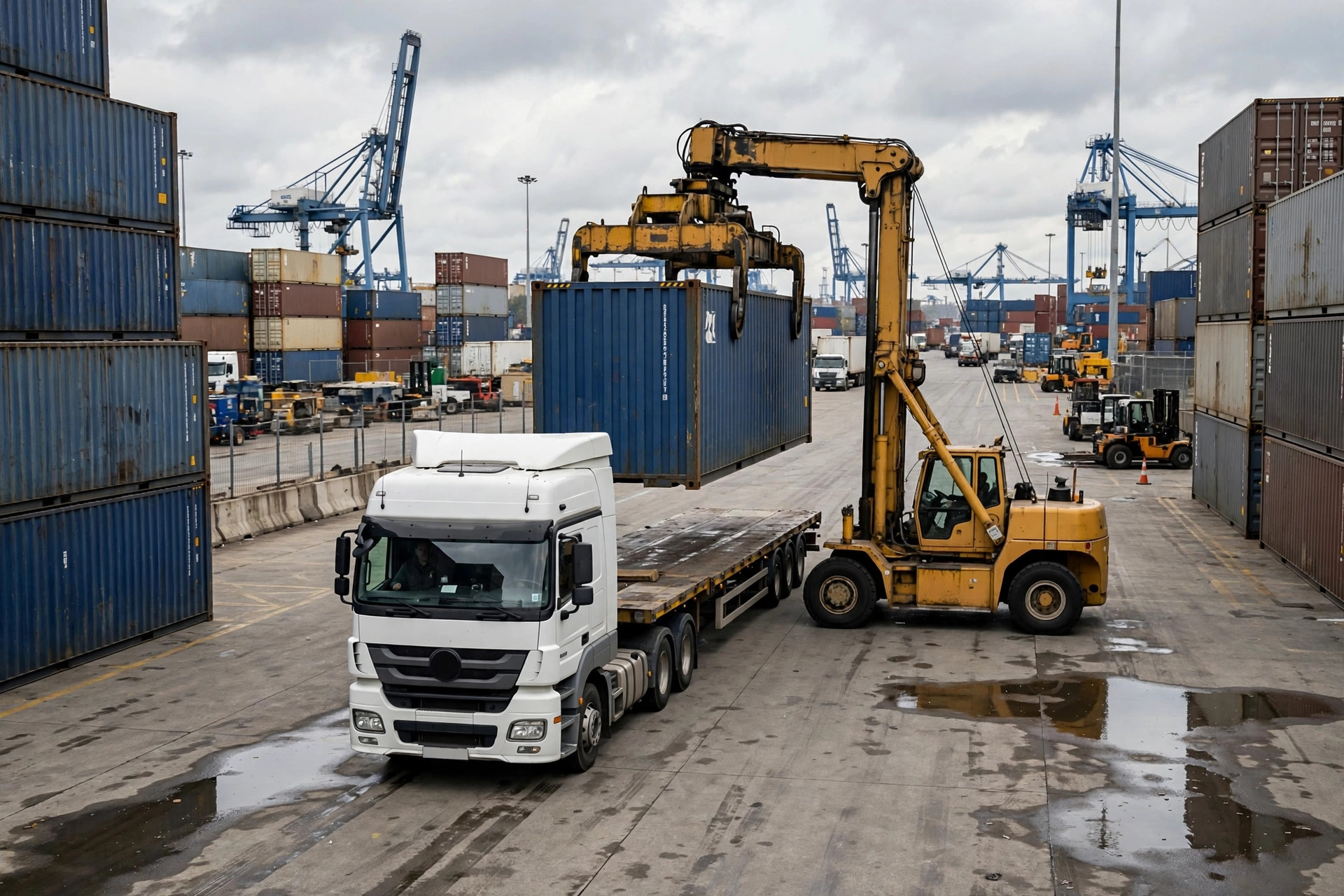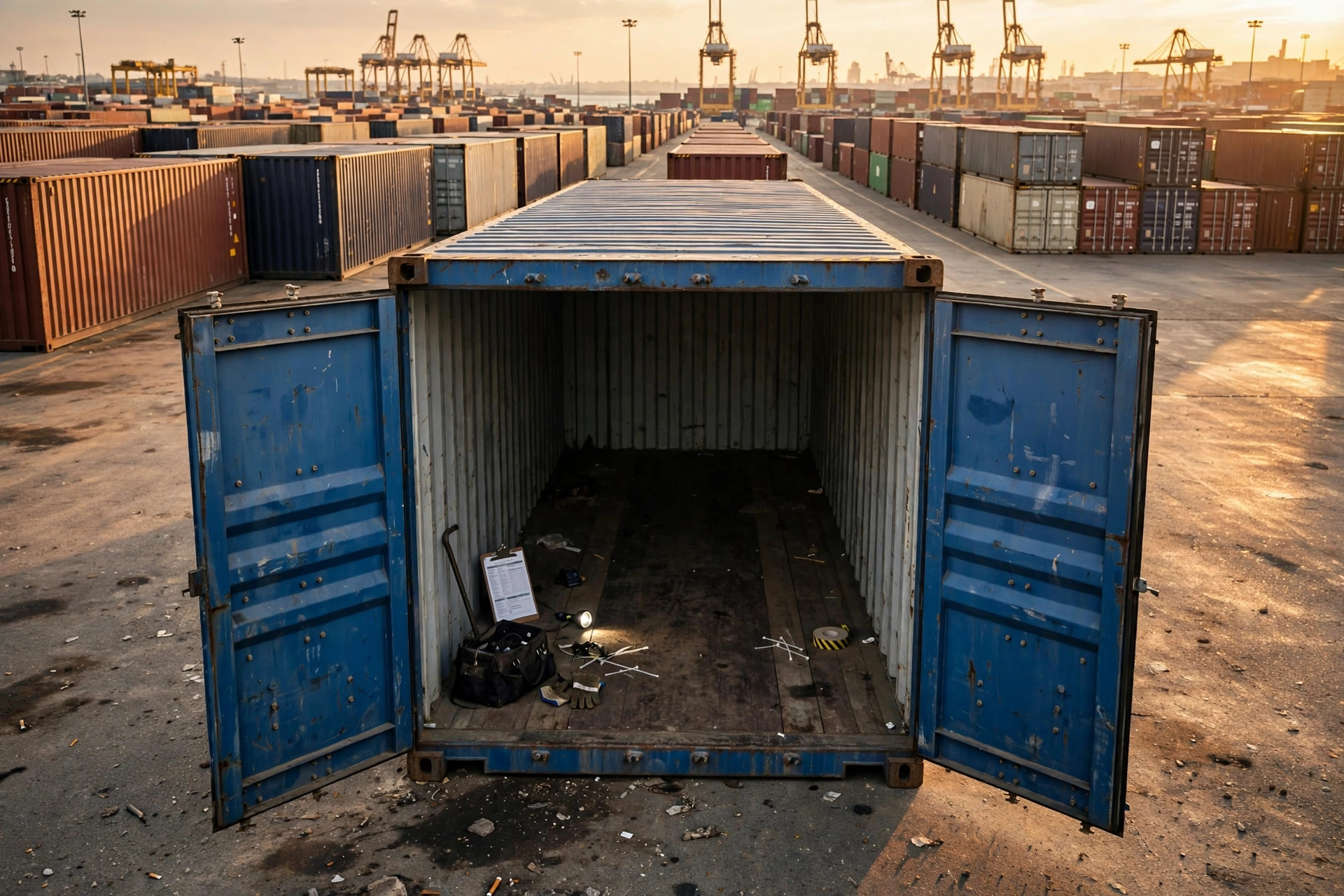
March 2024, Port of Long Beach. I'm sitting in my rig waiting for a pickup when I watch a 40-footer get slapped with a customs seal and towed into the exam yard. The importer's voice is shaking on the phone: "Shifu, that's my container of solar panels — my customer needs them next week!" I tell him to breathe. Because here's the thing: if you're googling "uflpa detention what to do" at 2 a.m., you're exactly the person this story is for.
Fifteen years behind the wheel, and I'll tell you straight — those five letters, UFLPA, are the nightmare of half the importers I know. The law took effect June 21, 2022, and it works on one brutal principle: if your goods were made wholly or partly in Xinjiang, or touched a company on the UFLPA Entity List, Customs presumes forced labor was involved and your goods don't come in. Notice the word "presumes." Customs doesn't have to prove you're guilty. You have to prove you're clean. The burden is upside down.
What the Detention Notice Means, and How the 30 Days Work
Under 19 CFR §151.16, once your merchandise is presented for Customs examination, CBP has 5 days (weekends and holidays don't count) to decide: release it or detain it. If they detain it, you get a Notice of Detention within 5 days. From the day the goods were presented, CBP has 30 days to make a final admissibility decision.
Now the counterintuitive part — listen carefully, because this is where rookies get burned: if the 30 days run out with no decision, that is NOT an automatic release. By law it's treated as an exclusion. Your goods still don't come in, and your options shrink to filing a protest or re-exporting. Plenty of first-timers think "if I just wait out the 30 days, I'm fine." Dead wrong.
So what do you actually do when CBP detains your container under UFLPA? You have two real paths. One, an applicability review: prove your shipment has nothing to do with the region or the listed entities — a case of mistaken identity. Two, an exception review: admit the supply chain might touch the risk zone, but rebut the presumption with "clear and convincing evidence." Submissions go through CBP's Forced Labor Portal, and the exact requirements are whatever CBP's current published policy says — check it, don't guess.
The Solar Panel Guy: A Closed Evidence Loop Wins in 29 Days
Back to my friend with the solar panels. The broker read the notice and knew instantly: Customs suspected the polysilicon in the modules. His first reaction was outrage — "these are from a legit factory!" I told him: outrage doesn't open containers. Evidence does.
His luck was that his factory kept real records. The trade lawyer walked him up three tiers: the module maker, the wafer supplier, then the polysilicon source. What they handed CBP looked like this: purchase contracts and wire transfer records showing the silicon came from suppliers in Germany and the U.S.; the wafer plant's production logs; the module factory's input-output reconciliation — so many tons of silicon in, so many wafers out, so many panels assembled, every number tying together; plus supplier declarations at each tier. Filed on day 24. Released on day 29.
What did those 30 days cost him? Lawyer fees plus port demurrage — call it the better part of twenty grand. A 40-footer sitting at the terminal for a month racks up storage by the day, and that's before the real damage: his customer's deadline. The lesson isn't about legal fees. It's about time. Every day your freight sits, your customer relationship bleeds.
The Glove Seller: One Broken Link Sinks the Whole Chain
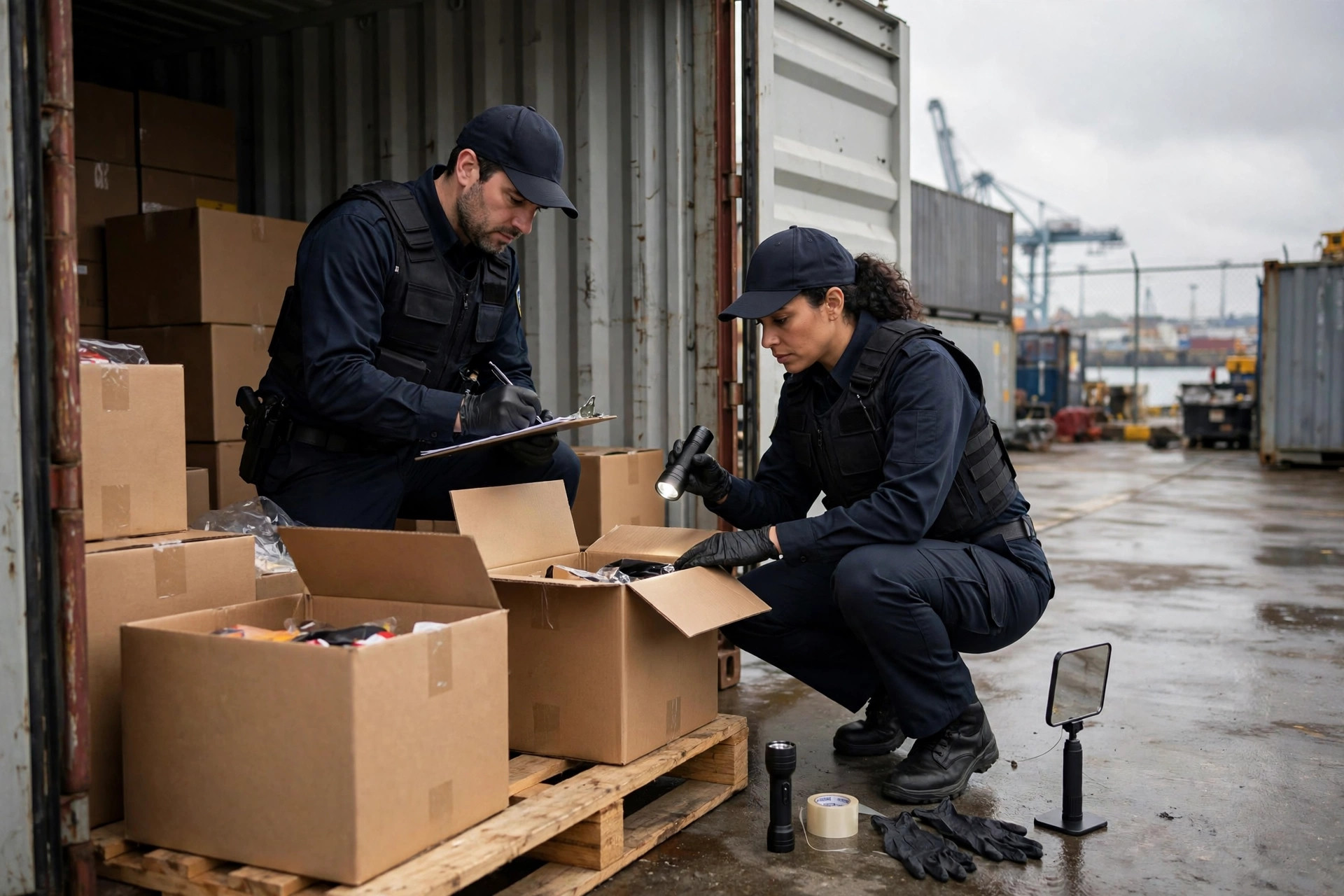
The second story doesn't end as well. In 2025, a small seller of work gloves had a shipment held in Los Angeles over cotton origin. Cotton, tomatoes, polysilicon — these are the commodities UFLPA watches hardest.
His problem? He could produce the garment factory's purchase contract. He had the yarn mill's declaration. But one tier up — which gin supplied the cotton, where are the payment records — the chain went dark. The yarn mill mumbled something about "Central Asian cotton" but couldn't name the gin, show a contract, or produce a single wire receipt. His lawyer was blunt: with a gap like that, an exception review won't survive, because "clear and convincing" means no missing links.
The 30 days expired. The goods were deemed excluded. He chose re-export — sold the load on to a buyer in Mexico at a loss. That stung, but it beat letting the freight rot at the terminal. And that's the second hard truth from the road: when your evidence can't win, re-exporting is the dignified way to stop the bleeding. Don't throw good money after bad. Freight in Customs' hands costs you every single day.
Your 30-Day Action Timeline After a UFLPA Detention
When that notice lands, don't panic — read it, then move. This is the rhythm I've watched importers work through:
| When | What to do | Why it matters |
|---|---|---|
| Day 0–1 | Read the notice, call your broker AND a trade lawyer | First decide: mistaken identity (applicability review) or rebuttal (exception review) |
| Day 1–3 | Freeze downstream promises | Don't tell your customer "arriving next week" — penalties cost more than storage |
| Day 3–10 | Gather tier-one evidence: the document pack | PO, commercial invoice, packing list, bill of lading — prove this shipment is this shipment |
| Day 7–20 | Gather tiers two and three: traceability + labor conditions | Supplier lists at every tier, contracts, BOMs, origin certificates, payment records, input-output reconciliation; worker rosters, payroll records |
| Day 20–25 | Lawyer reviews, file via the Forced Labor Portal | Don't file it yourself — have counsel sanity-check the logic |
| Day 25–30 | Follow up with CBP, prep Plan B | If the case looks weak, start pricing re-export sailings now |
The Three Evidence Buckets: What Customs Actually Wants
Based on CBP guidance and how these cases have actually played out, the evidence falls into three buckets. Miss one and you're likely getting bounced:
Bucket one — shipment documents. PO, invoice, packing list, bill of lading. Their job is to nail your evidence to the detained shipment, so nobody thinks you're substituting paperwork from some other load.
Bucket two — supply chain traceability. A supply chain map, supplier lists at every tier, contracts, bills of materials, certificates of origin, payment records, production logs. One requirement rules them all: the inputs must reconcile with the outputs. Tons of raw material in, finished units out — the math has to close. The solar guy won on this. The glove seller lost on this.
Bucket three — labor conditions. Worker rosters at the implicated facilities, hiring and payroll records, proof of no ID retention, no forced overtime, no government labor-transfer schemes. Most small importers can't produce this on demand — which is exactly why you make your suppliers keep it on file before trouble starts.
One sentence to tape to your wall: more paper doesn't win; a closed loop wins. A stack of declarations with mismatched input-output numbers gets ignored.
Straight Talk for Importers and Warehouse Folks
First, build the evidence file before you need it. Map three tiers of your supply chain now. Archive supplier declarations and payment records as you go. Trying to squeeze documents out of an upstream supplier after a detention notice lands? Good luck with that.
Second, keep a broker and a trade compliance lawyer in your phone. UFLPA cases are not regular brokerage work — you need counsel who lives in trade compliance. Hiring one in a panic costs double and wastes days.
Third, warehouse friends — buffer your receiving plans. When a customer says "2,000 cartons arriving next week," ask one question: "is it cleared?" Never put detained freight into your safety stock math or your labor schedule. Freight doesn't arrive, your crew stands around, and the forklift shifts go sideways.
Fourth, write a UFLPA clause into your supplier contracts. Suppliers warrant their chain stays clear of high-risk regions and will cooperate with traceability requests; spell out who eats the cost if a shipment gets held. An ugly conversation upfront beats a lawsuit later.
Fifteen years on the road taught me this: in front of Customs, everybody talks with evidence, and tough talk buys nothing. Keep your chain clean and documented, and you can sleep even when a container gets held. Run it sloppy, and when the day comes, nobody can save you. An ounce of prevention — that saying never gets old.
By Shifu Zhao, Trucking Veteran (15 yrs)