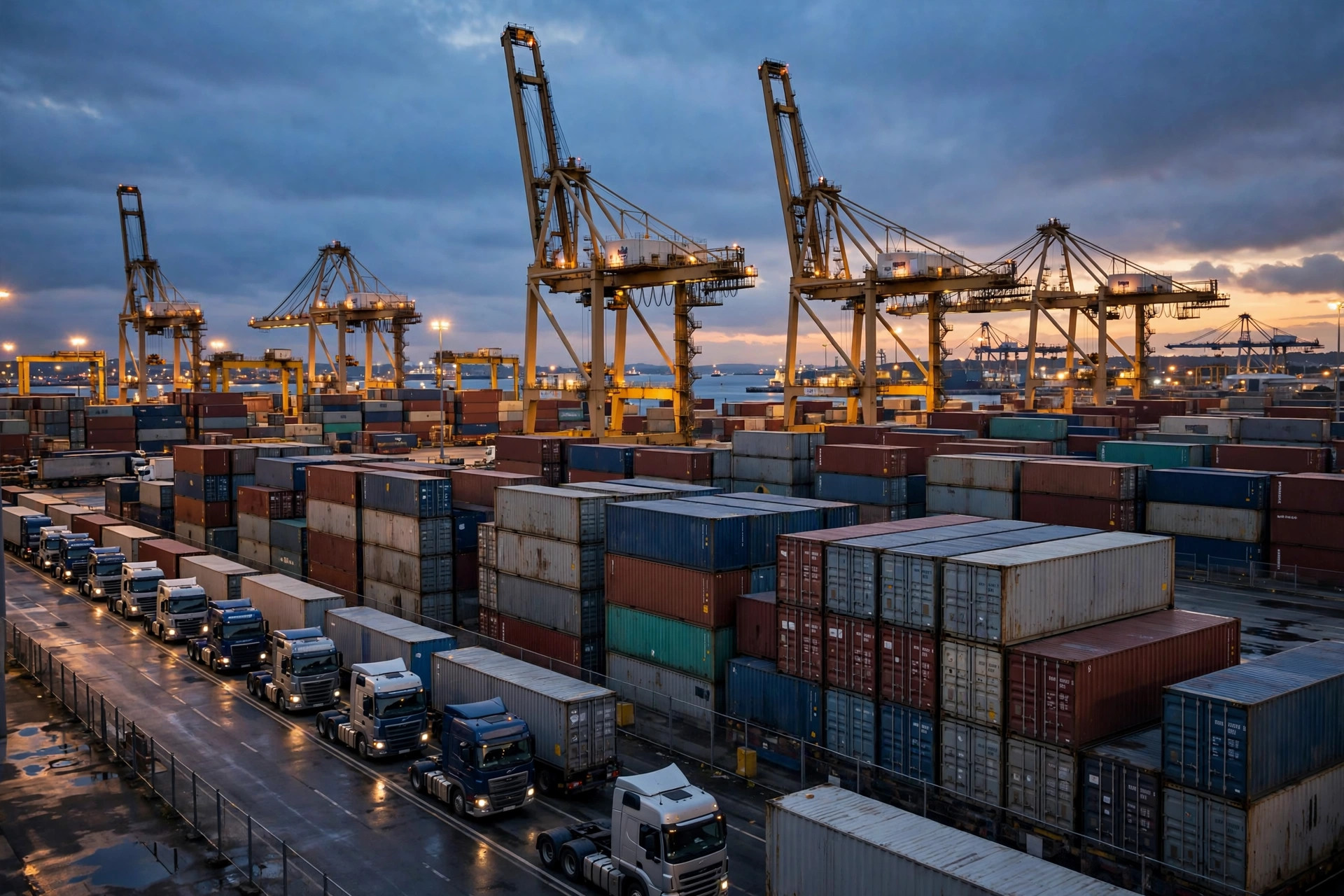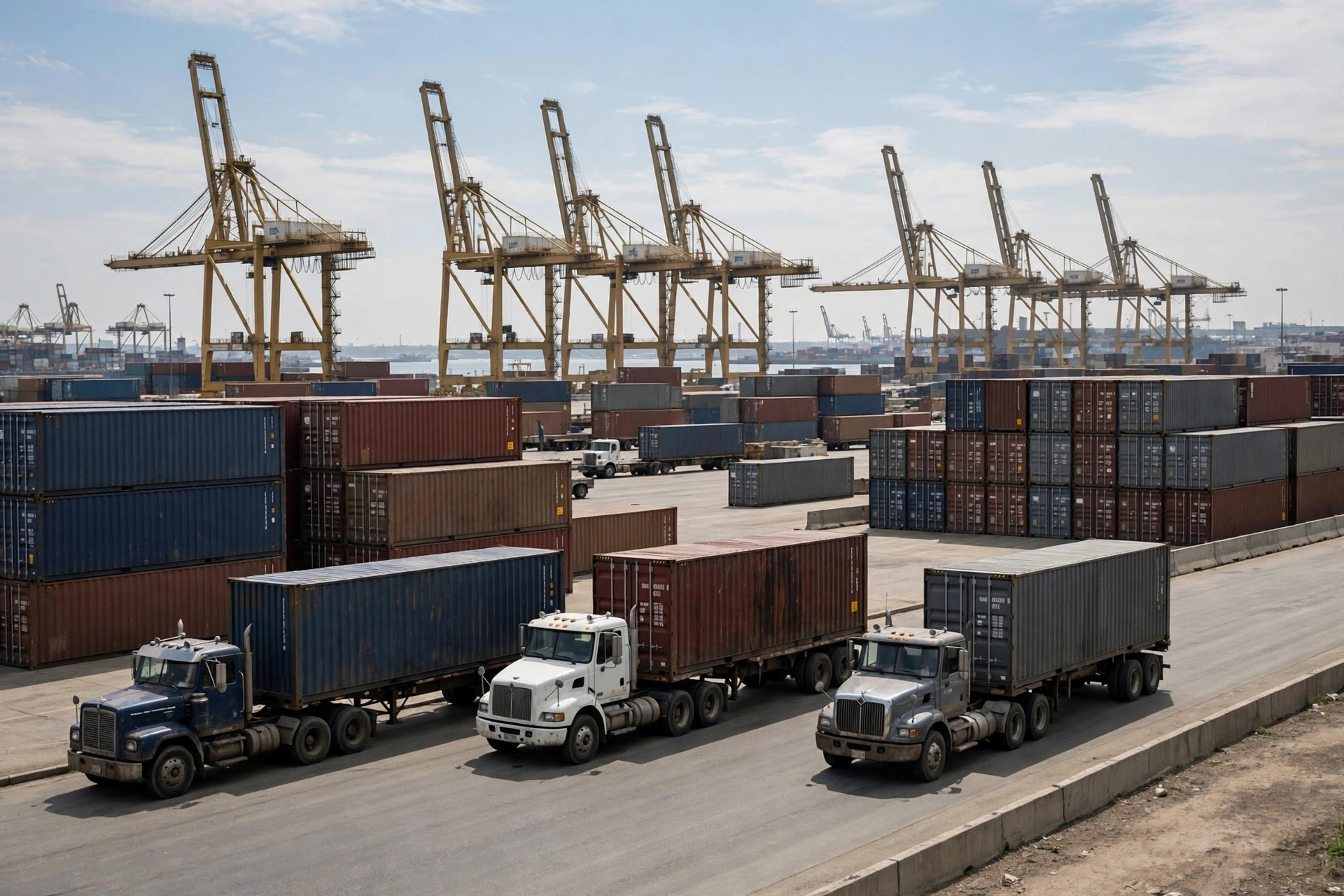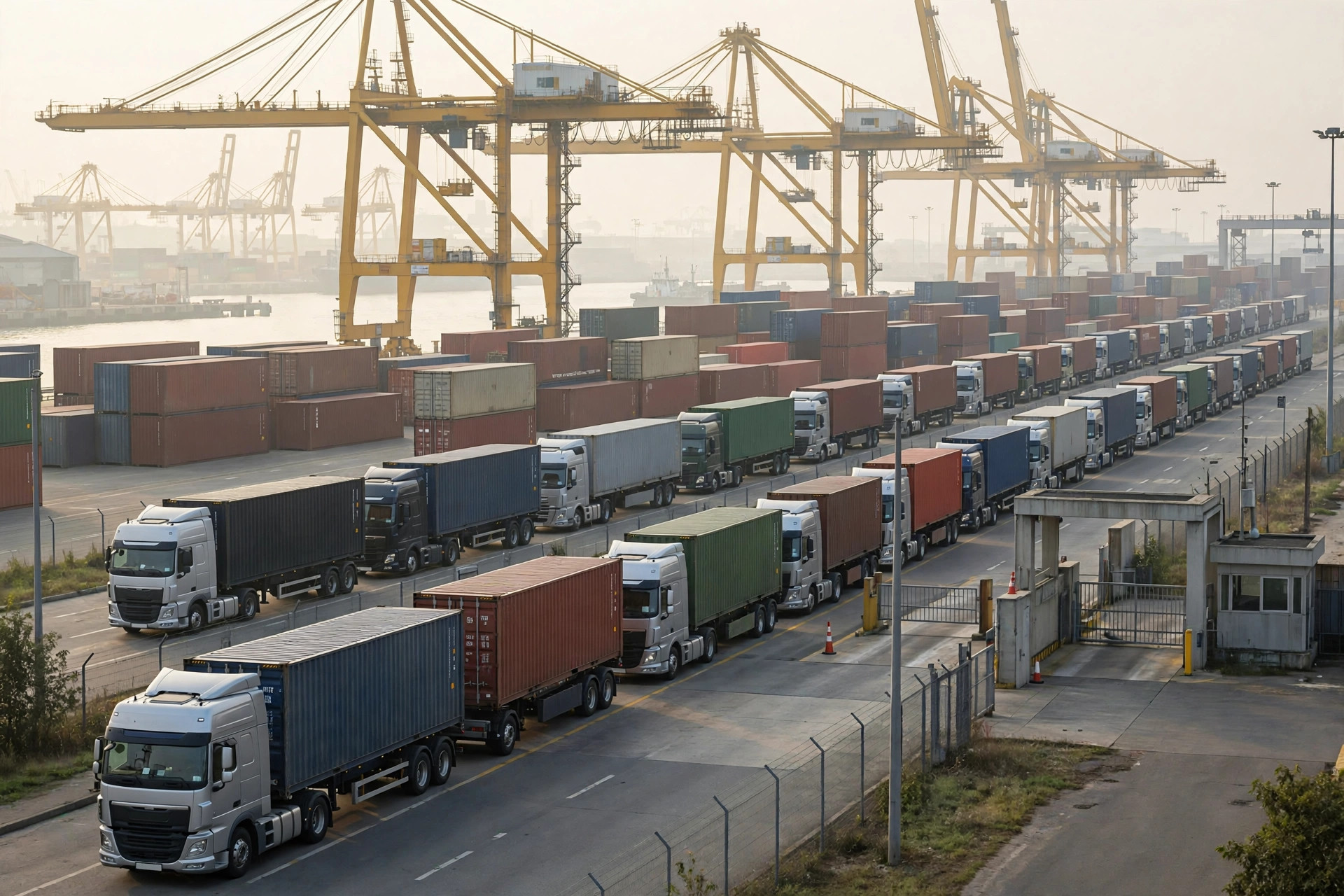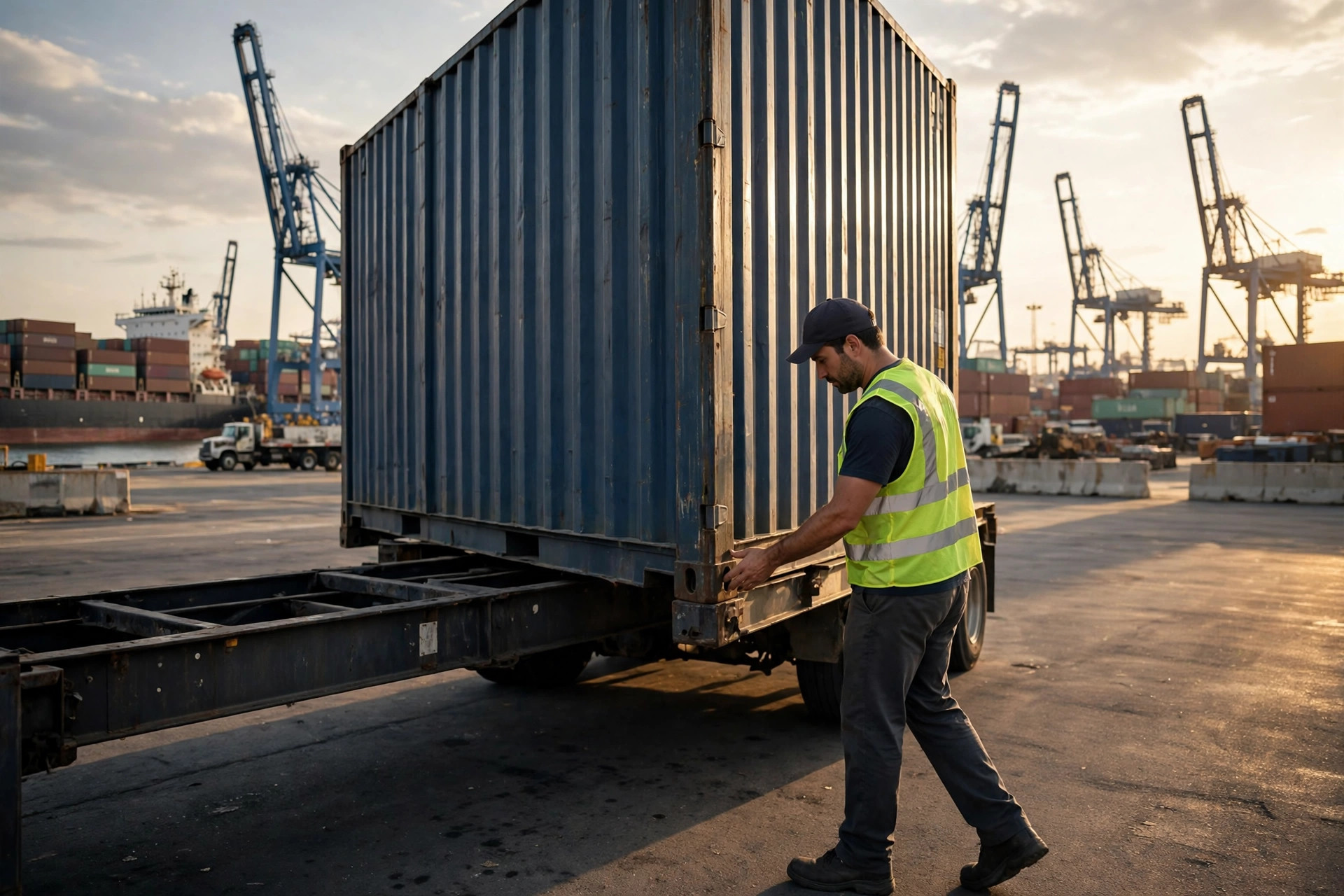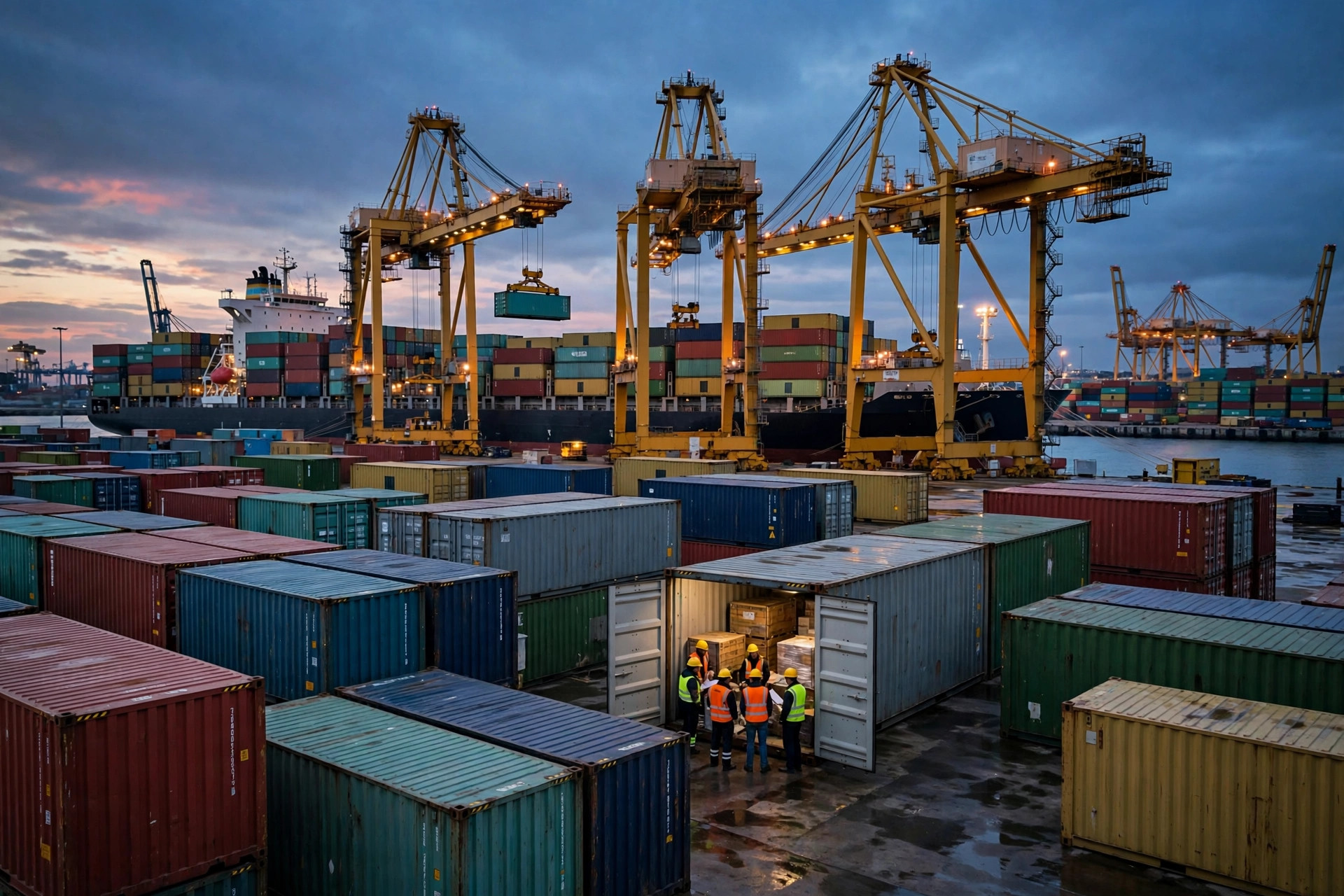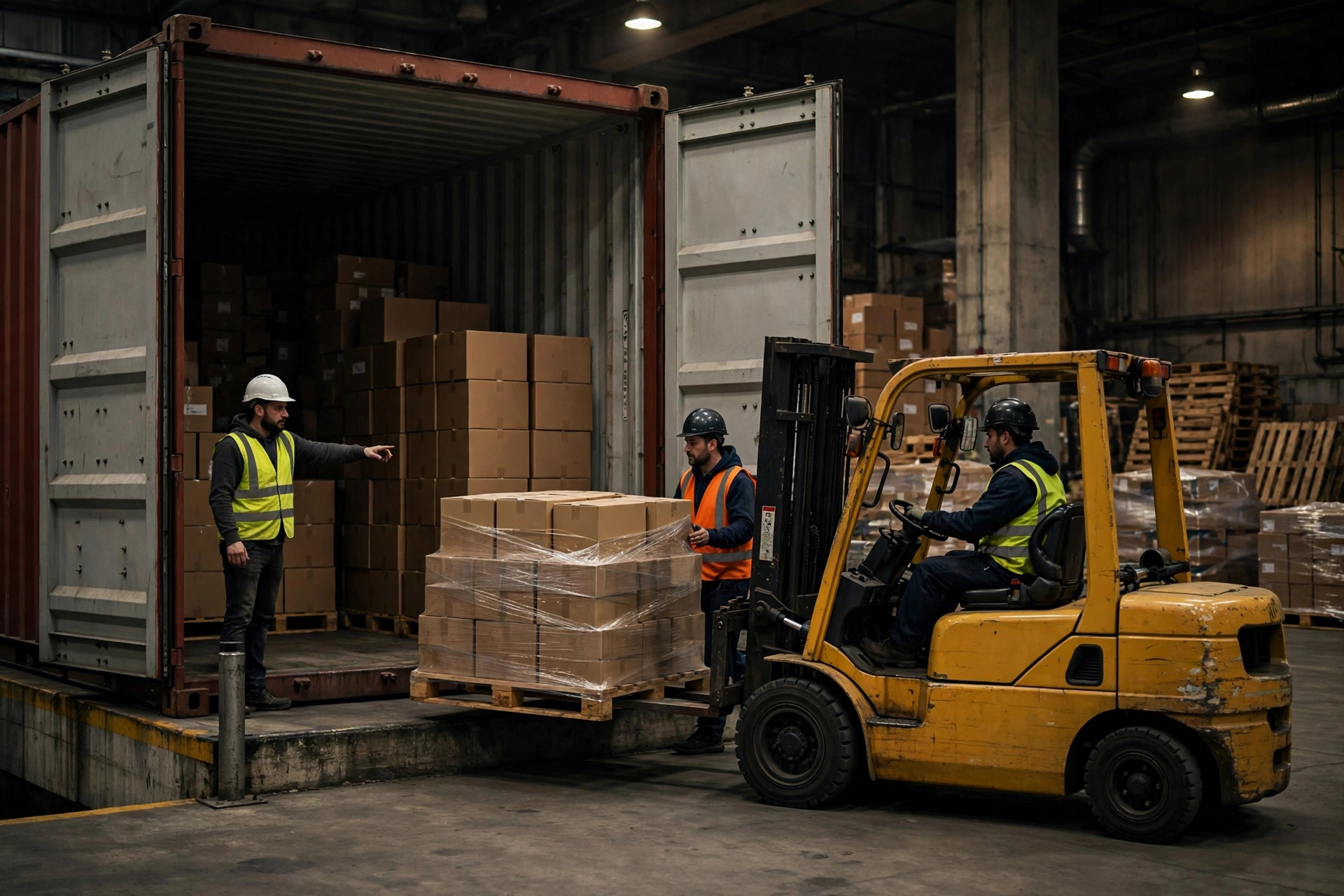
Let me tell you — last November I was sitting in the pickup queue outside the Port of Long Beach, and the driver ahead of me was pacing next to his day cab. We got talking about the transload vs direct delivery cost math, and it turned out his container's free time expired the next day while his warehouse said the dock was fully booked. He asked me: "Shifu, if this box sits here two extra days, what does that cost me?" I ran the numbers. His face went pale.
After all these years on the road, I've watched plenty of shippers get burned on this exact choice: the container lands — do you haul the whole box back to your own warehouse and unload it slowly, or transload near the port and split the freight right there? It looks like a freight-rate question. It's really a total-cost question. Today I'll break it down, piece by piece.
Two True Stories, Both Seen From the Road
First story: the trap of direct delivery. September 2024, an auto parts shipper pulled a 40-footer from Long Beach to his warehouse in Fontana — $1,150 for the drayage, smooth sailing. Except his warehouse was short-handed, and the box sat by the door for six days before they finished unloading. The ocean carrier gave him 4 days of free time. Two days over: container detention plus terminal storage at $280 a day — another $560. The chassis sat out six days at $45 a day — another $270. One container, and "waiting" alone cost him over $800 extra. He told me: "Should've just devanned it near the port."
Second story: transload done right. April 2025, a home goods shipper had three SKUs in one 40-footer, headed to three different Amazon fulfillment centers. He didn't haul it to his own warehouse. He transloaded near the port: $450 for the short drayage to the devan facility, $500 to unload, then split by SKU into three 53-foot dry vans — $1,050 total for the three outbound legs. Three days, and everything was inside its Amazon appointment window. He told me: "If I'd unloaded at my place and split it myself, labor and time alone would've taken a week."
Here's what these stories tell you: every dollar after the container lands belongs in the total. The drayage rate is just the first line. Free time, chassis fees, devanning, warehouse receiving labor — not one left out. Shippers tell me: "Shifu, I negotiated $200 off my ocean freight." And I say: "How many days of chassis does that $200 buy?" Ocean freight is the big number, but the stretch after arrival is where budgets go to die.
Pitfalls Nobody Warns You About
First pitfall: how free time is actually counted. People think it starts when they pick up the box. In practice, the clock starts the day the carrier releases the container — weekends and holidays included. Around Thanksgiving last year, a shipper I know had his box available Wednesday; he figured he'd grab it Monday after the holiday. Two of his four free days burned on the holiday. Remember: free time doesn't observe holidays.
Second pitfall: chassis aren't always there. In peak season the port chassis pool runs tight — your box is available, but no chassis, so you sit two days while free time ticks away. Old hands book the chassis and the pickup two days before the vessel arrives. Don't wait.
Third pitfall: the operator's cargo-handling discipline. Devanning is where freight goes missing. A good operator photographs every pallet, counts pieces on the spot, both sides sign. A sloppy one just stacks it on pallets — two cartons short and you'll never know where they went. First time, visit the site and look at what their tally sheets look like.
Fourth pitfall: the "return trip" in the drayage quote. Short-haul rates near the port look cheap, but some carriers price the round trip — the empty drive back is on your dime too. Ask one extra question when you get the quote: "Is that one-way or round-trip?" It saves real money.
The Full Math: Transload vs Direct, One 40-Footer, 2,000 Cartons
Assume a 40-foot container, 2,000 cartons, about 40 pallets, and the shipper needs it all digested within 7 days. Estimated from typical Southern California 2025–2026 market rates (your quotes will vary):
| Cost item | Option A: Direct to own warehouse | Option B: Transload near port |
|---|---|---|
| Drayage | about $1,150 (to inland warehouse) | about $450 (short haul to devan site) |
| Devanning fee | $0 (own crew) | about $500 |
| Chassis | about $225 (5 days × $45) | about $90 (2 days × $45) |
| Free time overage risk | High (slow self-unload, about $560 for 2 days over) | Low (pro devan done in 1–2 days) |
| Warehouse receiving labor | about $600 (6 people, half day) | $0 |
| Split outbound freight | $0 (all in one warehouse) | about $1,050 (3 trucks, split delivery) |
| Total | about $2,535 (with overage) | about $2,090 |
See it? Direct delivery looks cheaper — no devan fee, no split freight — but once free time overage, chassis, and labor pile on, it costs more. With one big caveat: this math assumes the freight needs splitting. If all 2,000 cartons go into your single warehouse, Option A totals $1,975 — cheaper than B.
One more thing: that $600 of receiving labor is the line most shippers skip — "my crew is salaried anyway." True enough, but in peak season every hour spent devanning is an hour not picking orders. Backlogged orders, late shipments — and Amazon dings your metrics. Hidden costs are still costs.
The Counterintuitive Part: Bigger Box, Bigger Wreck
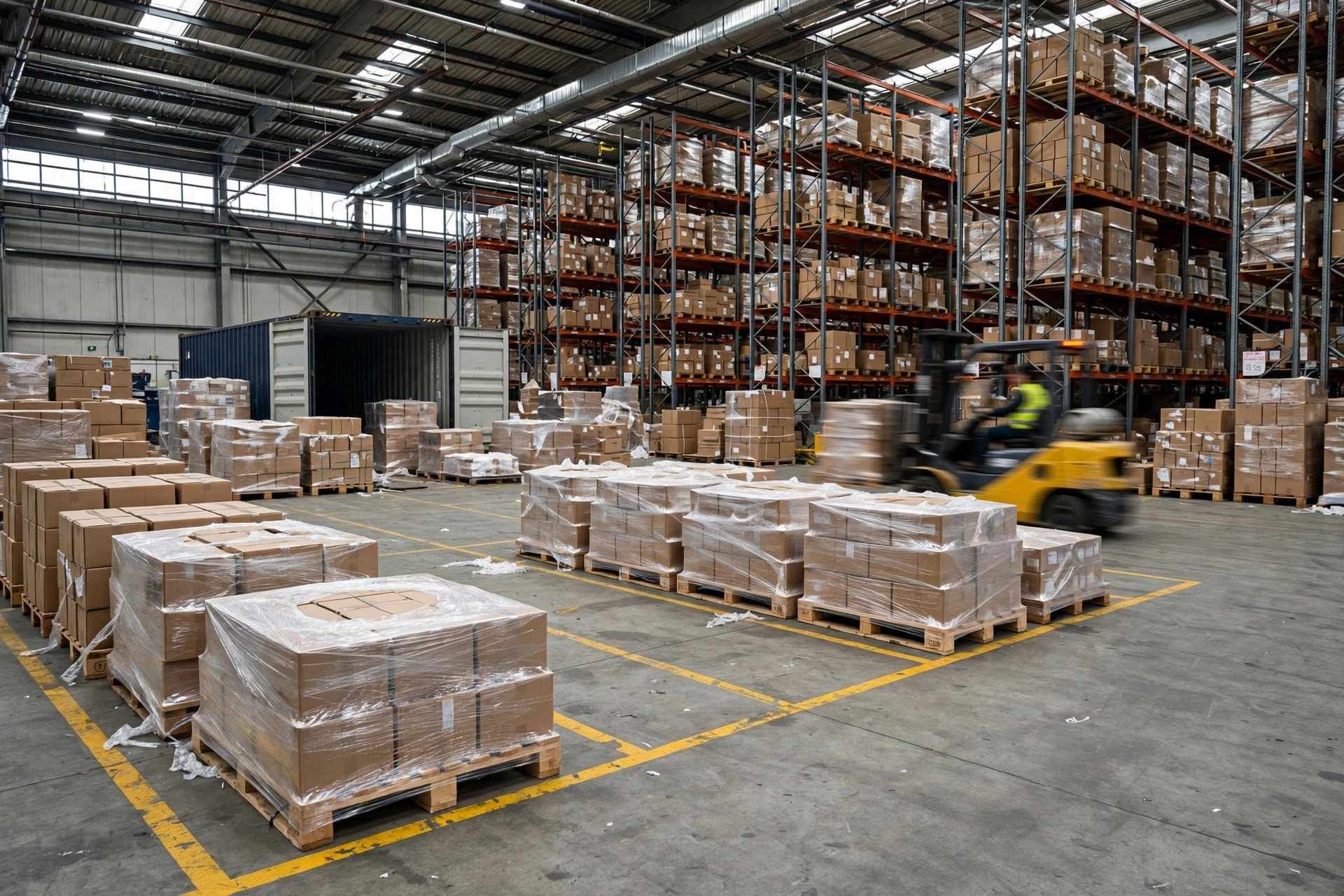
Most people figure a 40-footer has better unit economics than a 20-footer, so it's always the smarter play. After all these years, here's the counterintuitive truth: the bigger the box, the bigger the wreck. End of 2024, a small-appliance shipper pulled a 40-footer home, devanned it, and found 30% was dead stock — last season's slow models stuffed in just to fill the container. That 30% sat in the warehouse eating a month of storage, and the space cost plus tied-up cash dwarfed whatever he saved on ocean freight.
Containers are priced by "how full." Warehouses are priced by "what sells." Stuffing a big box feels great for a day; sitting on dead stock is a slow bleed.
Decision Framework: Three Dimensions
Don't agonize — just check the table:
| Dimension | Go direct | Go transload |
|---|---|---|
| Where the freight goes | Whole box to one warehouse | One box split across warehouses/platforms |
| SKU mix | Single SKU, fast turnover | Multiple SKUs, split by order |
| Timing | No rush, your dock has space | Chasing Amazon appointments, racing to shelf |
| Warehouse capacity | Your crew and equipment can devan | No crew, or no warehouse at all |
| Cost sensitivity | Worried about split-delivery freight | Worried about free time, chassis, detention |
In one line: the more scattered the freight and the tighter the clock, the better transload fits; the more consolidated the freight and the emptier your dock, the better direct works.
Straight Advice for Shippers and Warehouses
First: decide how the box moves before you book the ocean freight, not after it lands. Free time starts the day the container is available — not the day you remember it exists. Worst case I ever saw: a shipper remembered his box a full week after arrival. Free time long gone, $2,000-plus in detention — enough to devan two containers.
Second: when you get a drayage quote, ask what's included — chassis, how many days. Cheap quotes often include only 2 chassis days, then metered after that, and the total ends up higher. Also ask about wait time: driver waits at your dock past 2 hours, that's $75–$100 an hour in detention, and it belongs in the total too.
Third: first time with a transload operator, visit the site. Devanning is all about tally accuracy and photo documentation. One lost carton means a month of finger-pointing. For an ongoing relationship, negotiate a monthly or tiered rate — cheaper than per-box billing.
Fourth: if you're devanning at your own warehouse, stage the dock and crew ahead of time. Before the box arrives: dock appointment confirmed, unload team assigned, pallets and stretch wrap ready. Every extra day at your door is another day of chassis fees and free time.
There's an old saying among drivers: sharpen the axe before you chop. Run this math before the container lands — far better than stomping your feet after.
By Shifu Zhao, Trucking Veteran (15 yrs)