Tea warehouse storage looks, at first glance, like a humidity problem. In practice it is a time problem: every extra month a lot spends on the shelf changes the direction of its aroma and its price, and that change rarely announces itself on the day the tea arrives. It usually settles later, when the tea is brewed and judged. Judging by the receiving logs and humidity records of several tea warehouses, what devalues a lot is seldom a single accident: moisture, aroma contamination, and shelf-life management compounding quietly until they are paid for together in one lost reputation.
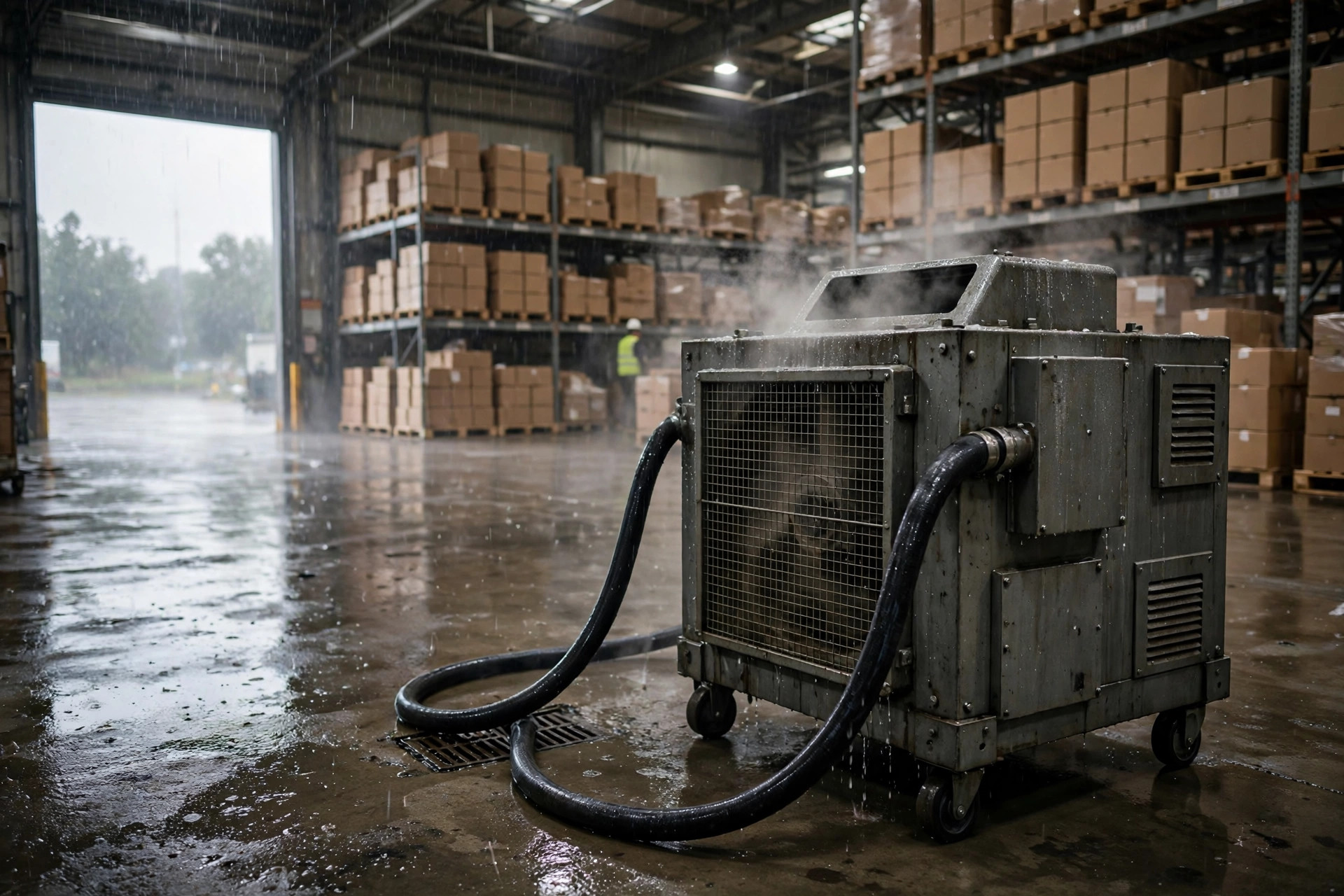
In June 2025, a warehouse in Zhejiang province that handled both Longjing green tea and black tea learned this the expensive way. During the rainy season, the bottom shelves on the window side were the first to show trouble: several cartons had softened outer packaging, and once opened, the tea smelled flat and dull. The problem was not whether the dehumidifiers had been switched on. They had, but they only covered the middle of the room, while the window side sat in still air and the humidity sensor happened to be mounted on the drier side, so the records looked normal throughout. The affected lot was split in two. The lightly damp portion was re-fired and rechecked, but its aroma never returned to its arrival condition, so it was sold at a lower grade. The more seriously damp portion was no longer sold as drinking tea at all and was diverted to internal use and sampling. The owner later put the arithmetic plainly: re-firing labour and energy, plus the downgrade price difference, far exceeded one extra sensor and one round of damp-proofing — money that could have been spent early, on an inspection sheet, instead of late, on a damaged lot.
Tea Warehouse Storage Starts with Moisture: Damage Rarely Shows on Day One
Every tea warehouse knows tea fears dampness; the hard part is turning that knowledge into routines that survive a busy season. The Zhejiang warehouse later adopted rules worth borrowing. Incoming goods are checked for seal integrity before booking in, and a bag with a broken seal is re-bagged first. Cartons are kept off the floor and away from walls, because wall condensation and rising damp usually appear before the room's humidity reading turns alarming. Inspection means walking to the window side, the doorway, and the bottom shelves, feeling for softened packaging and opening a carton to check for a dull aroma. When dampness is found, isolate first and grade second; do not force unsalvageable tea back into a normal lot, since mixing it into a healthy batch saves one round of sorting and risks every customer who receives that batch.
There is a counterintuitive point here, cutting against the instinct to run dehumidifiers as hard as possible. Tea kept too dry loses aroma just as surely as tea kept too damp, and delicate green teas show it first: over-dried leaves brew with an empty fragrance and a thin taste. The real target is not the lowest number a machine can reach but a stable band held week after week, so leaves neither absorb moisture nor cycle repeatedly between drying and reabsorbing. In tea storage, the most damaging curve is rarely a single high day; it is the repeated swing that ages the leaf faster than either condition alone.
Aroma Contamination Is a Separation Failure, Not Bad Luck
Tea absorbs odours almost as readily as it absorbs water. In autumn 2024, a Guangdong warehouse provided the cautionary example. Tea shared a storage zone with strongly aromatic seasonings, separated by only two rows of racking, with no partition and no separate ventilation. Half a month later, customers reported an aroma in a batch of oolong that did not belong to the tea itself. By the time the complaint was traced, it was difficult to establish which neighbouring consignment had caused the transfer, and the whole batch was downgraded. The loss dwarfed what a small separate room or one partition wall would have cost. The core difficulty is irreversibility: damp tea can sometimes be re-fired, but absorbed aroma has almost no way back.
Separation therefore has to work on three levels at once. In space, tea is not stored in the same room as coffee, spices, seasonings, or household chemicals; where a separate room is genuinely unavailable, an independently ventilated partitioned area is the minimum, not a longer gap between racks. In packaging, the inner bag's seal is the first defence and the outer carton a second layer, while any bag opened for split sales must be resealed and logged the same day, never left open overnight. In daily work, high-odour goods are labelled on arrival, and picking and stocktaking handle tea before strongly scented goods, so gloves and trolleys do not become aroma carriers. If any one level fails, the investment in the other two is discounted accordingly.
Tea Warehouse Storage and Aging: Older Is Not Always Better
Aging is the most romanticised part of this subject and the easiest ledger to get wrong. Green tea is valued for freshness, so longer shelf time only moves its flavour downwards: shelf time here is a cost, not an asset. Black tea and oolong have a reasonable storage window, but it is not open-ended, and past its flavour peak a tea's aroma turns dull and flat. Only some teas known for maturing with age reward long, stable storage, and even those require regular tasting from opened cartons rather than sealing boxes and checking back years later. Treating every tea as if it improves with age locks working capital onto shelves and charges rent and shrinkage for the privilege.
The table below is the internal management guide later adopted by the Zhejiang warehouse. It is that warehouse's own working practice, not a universal industry standard, but its value lies in forcing a question at receiving: how long is this lot meant to stay, and how is it meant to earn its keep?
| Tea type | Storage priority | Shelf-life action |
|---|---|---|
| Green tea | Sealed, protected from light, stable environment, shipped first | Queue by receiving batch, first in first out, with alerts before expiry |
| Black tea | Sealed against dampness, protected from odours | Mark the flavour peak by batch and accelerate turnover before it approaches |
| Oolong tea | Sealed against dampness, tasted from opened cartons on a schedule | Taste by batch and downgrade or promote batches whose flavour is declining |
| Teas suited to aging | Stable environment, checked regularly even during long storage | Sample every quarter and record changes in aroma and taste |
A table like this earns its place through the discipline it imposes: if a receiving team cannot answer how long a lot will stay and what it will earn, that lot should be priced and scheduled as fast-moving stock, not booked in as long-term stock.
Split Packs and Blending: Move Small Lots First
Split sales are the quietest source of loss in a tea warehouse. Once a carton is opened, remaining loose tea loses aroma and picks up foreign odours far faster than sealed stock if merely tied off in an ordinary bag. The disciplined routine is to split and pack in the same movement: split only what will be packed that day, seal it the same day, and mark the bag with its original batch and split date. Picking then takes split bags before full cartons, keeping first-in-first-out honest and preventing shelves from accumulating bags of uncertain origin. The same logic governs pre-blending control: different batches and years of one variety are stored and labelled separately, drawn in recipe proportions with a record kept, and the finished blend gets its own batch identity. Leftover blend is never tipped back into an original batch, because that shortcut breaks the flavour traceability of the next batch.
Taken together, none of this is mysterious: sensors in dead-air corners rather than convenient ones, scented goods moved out rather than merely moved further away, split bags sealed on the day rather than left until tomorrow. Each action looks minor alone, and together they decide whether the tea leaving the warehouse is still the tea that arrived. The open question is simple: if only one change could be made tomorrow, should it be shifting a humidity sensor into a dead corner, or getting strongly scented goods out of the tea storage area? The answer usually says more about a warehouse's real standard than any new system purchase would.
By Dr. Chen, Supply Chain Researcher