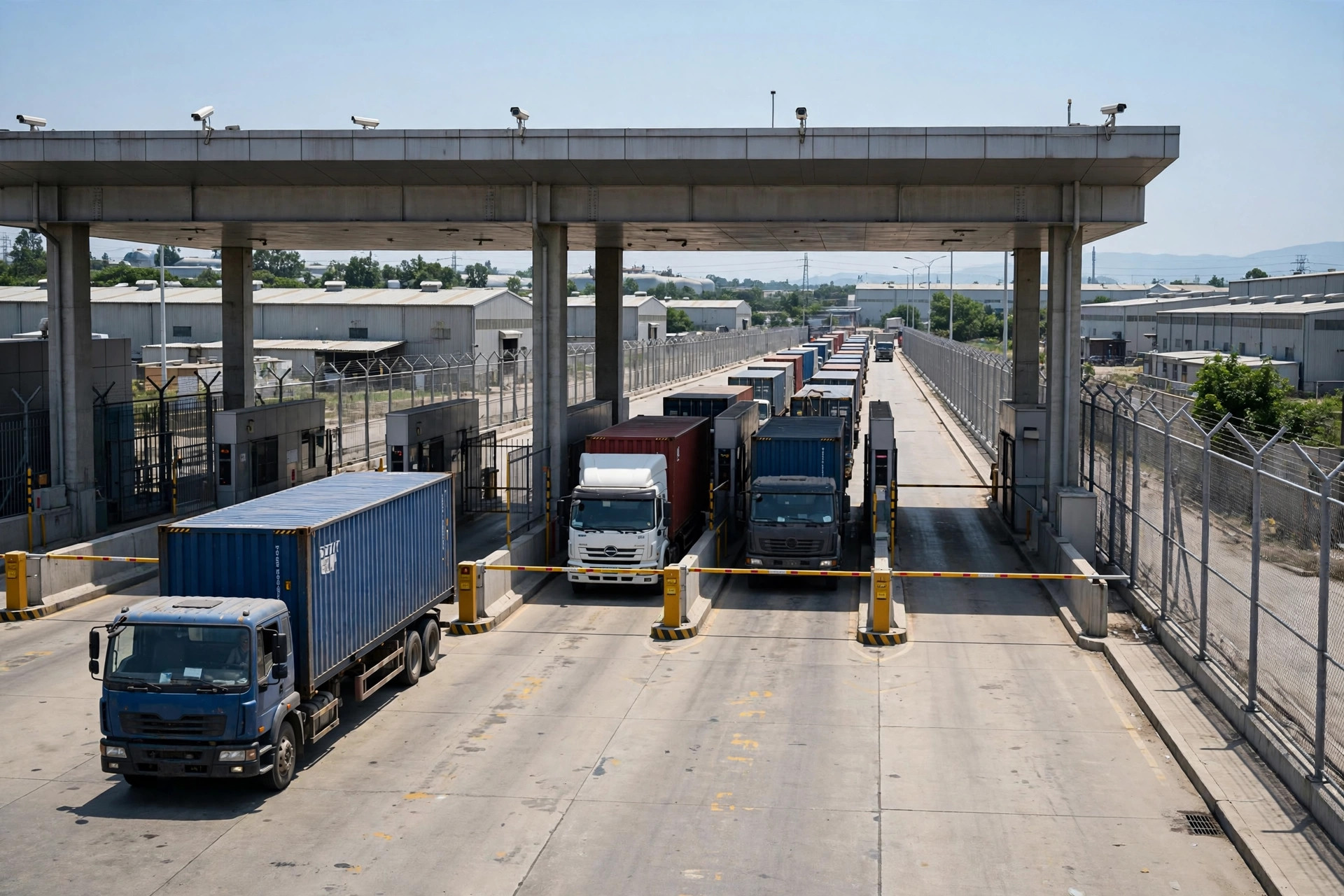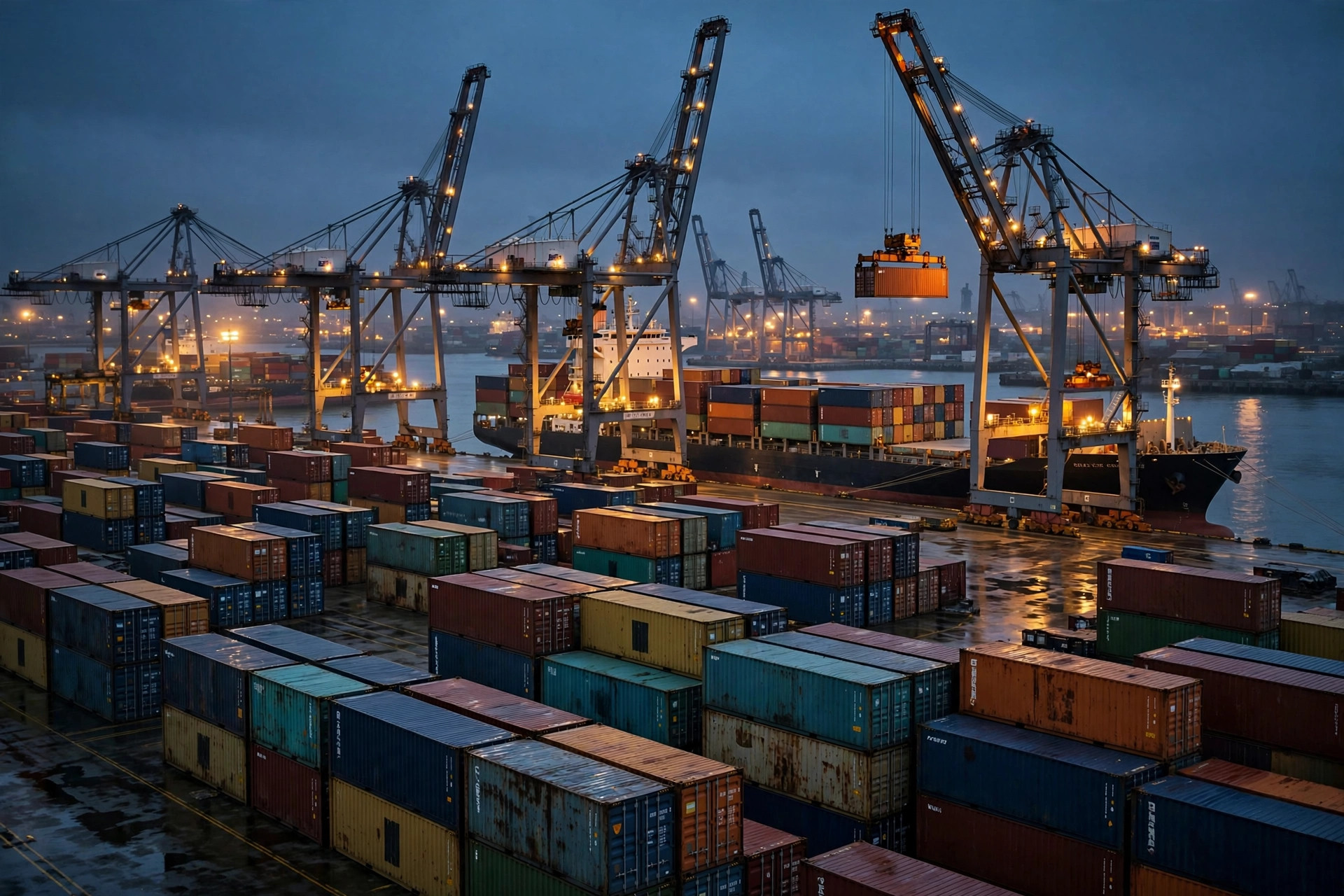
Here's the uncomfortable truth about importing warehouse automation from China: most US buyers are overpaying duties, and it usually isn't the tariff schedule's fault. It's because nobody ever looked at their HTS classifications, their product design, or their import structure with duty optimization in mind. The legal name for this work is tariff engineering, and US courts have upheld it for decades. There is also a bright red line — relabeling Chinese goods through a third country — where the penalty can reach the full domestic value of the merchandise. This article covers the legal side in detail, and the red line only as a warning.
Your Classification Is Probably Wrong
In the summer of 2024, the US Trade Representative published the results of its four-year review of the Section 301 tariffs on China. Nothing was rolled back; several rates went up. Lithium-ion batteries for non-EV use, for example, rose from 7.5% to 25% effective January 1, 2026. American energy-storage buyers felt that change on every container landed after New Year's Day. The rules keep shifting, but the game stays the same: classification decides everything.
Every import lives or dies by its HTS number, and the single most common mistake I see is inertia. Whatever the broker filed in year one gets copied for five years straight, and nobody ever asks whether the classification still holds. I've walked a 120,000-square-foot 3PL outside Ontario, California where the racking and conveyor all came from China under a classification chosen half a decade earlier. Nobody had rechecked it once.
The fix is cheap. Start with CBP's CROSS database — the public archive of binding rulings — and search how similar equipment has been classified. If the answer is ambiguous, request a binding ruling from CBP itself: a written determination, honored at every US port. I've met few mid-size importers who have ever done this. The ones who have usually find money.
There is a second lever most buyers have never heard of: the first-sale rule. If you buy through a trading company that bought from the factory, CBP lets you declare dutiable value based on the factory-to-trader price — the "first sale" — rather than what you paid the trader. A $100,000 system might have a first-sale price of $70,000, which cuts the duty base by nearly a third. It is fully legal, but the paper trail has to be airtight: factory invoice, trader invoice, payment records, all matching. I know systems integrators who overpaid for years simply because nobody told them this rule exists.
Design the Product, Design the Duty
The most famous tariff-engineering story isn't about warehouses at all. In 1978, Subaru wanted to sell a small pickup — the Brat — in the US. Light trucks faced a 25% import duty, the so-called chicken tax; passenger cars paid 2.5%. Subaru bolted two rear-facing jump seats into the cargo bed, declared it a passenger vehicle, and CBP agreed. Same truck, different design presentation, one-tenth the duty. That is tariff engineering in its purest form: change the product's structure and its classification story, not its essential function, and do it all in the open.
The same logic applies to automation. A four-way shuttle, an AS/RS crane, or an AMR imported as a complete machine can classify very differently from the same system imported as components — control cabinet, motors, and sensors each under their own headings. Software license fees and on-site commissioning charges can sometimes sit outside dutiable value when they are genuinely separate transactions with real contracts behind them. Fabricating that separation, on the other hand, is exactly the kind of thing CBP challenges.

My rule of thumb: get the customs broker involved at the design stage, not after the purchase order is signed. Most companies call the broker when the equipment is already built and the contract is locked, and by then the room to maneuver is tiny. Three months of early involvement — a packaging change here, a supply-structure tweak there — can move the duty line by six figures. Run the math on a hypothetical container: $500,000 of goods at a 25% Section 301 rate is $125,000 in duty. Reclassify to a 7.5% heading and the bill drops to $37,500. Layer the first-sale rule on top to bring dutiable value to $400,000, and you're at $30,000. One container, roughly $95,000 saved; twenty containers a year, nearly $2 million. The shipment values are illustrative, but the arithmetic is how duties actually work — value times rate, and every variable is negotiable.
Money You Already Paid Might Come Back
Foreign trade zones are the most underused tool in this space. Goods enter the zone duty-deferred: you pay only when they enter US commerce, and if they ship onward to another country, you pay nothing at all. The real prize for equipment makers is inverted-tariff relief. Assemble imported components into a finished system inside the zone, and CBP lets you pay duty at the finished product's rate. When the finished rate sits below the component rates, the spread is pure margin. Zones ring the ports of Long Beach and Los Angeles, and for a company importing a few million dollars a year, activating a subzone typically pays for itself within a year — get a real quote before deciding.
Then there is duty drawback. Import the goods, pay the duty, export them again — and claim back 99% of what you paid. Cross-border integrators use this constantly: import components from China, assemble and test in the US, then deliver the system to a project site in Mexico or Canada. The catch is bookkeeping. Every import entry has to link to its export, cleanly, because CBP will audit the chain. Companies that discover drawback late routinely find they've been leaving money on the table for two or three years. Of all the legal duty-reduction tools available, drawback accounting has the best return on effort for anyone with re-export business. Nothing else comes close.
The Line You Don't Cross
The illegal version of this story is transshipment: ship Chinese goods to Vietnam or Thailand, swap the paperwork, and import them as though the 301 tariffs don't apply. CBP has made this a top enforcement priority. Under 19 U.S.C. 1592, a fraudulent violation carries a penalty of up to the full domestic value of the merchandise — the value of the goods, not the duty evaded. Gross negligence can draw up to four times the lost duties. CBP can also open an EAPA investigation and suspend the importer's clearance privileges while it runs.
Do the expected-value math: you risk the entire shipment to save a fraction of it. And once origin fraud is established, the exposure stops being purely civil. I don't teach this path, I don't describe its mechanics, and I mention it only so you understand the stakes. There are plenty of legal ways to lower your duty bill. Betting the company isn't one of them.
Three things you can start next week. First, list your five highest-value imported SKUs and ask your broker for a classification review — check CROSS for comparable rulings while you're at it. Most companies find one or two headings worth challenging. Second, ask your broker whether the first-sale rule applies to your supply chain, and lay out the factory-to-trader-to-you paper trail to see if dutiable value can be restated. Third, total up what you actually paid in Section 301 duties this year. If the number is large enough to matter, price out a foreign-trade-zone subzone and set up drawback accounting. The numbers will tell you what to do next.