A friend called me last month, sounding stressed. "Xiao Ma, quick question. My client wants to sell electric warehouse equipment into China. An agent quoted 120,000 yuan for a 'full CCC certification package.' Is that legit?"
I told him: hold on, don't wire the money yet. 120,000 yuan isn't pocket change. If they certify the wrong thing, you've burned the cash and your goods still can't clear customs. Our little warehouse can't afford to burn money like that — figure out the rules before spending a cent.
So I spent the past month asking around — friends at certification bodies, old contacts in foreign trade, plus my own digging online. Here's what I learned about CCC certification, for anyone selling equipment into China.
What CCC Certification Actually Is
In one sentence: CCC (China Compulsory Certification), a.k.a. "3C certification," is China's mandatory product certification system, administered by the CNCA (Certification and Accreditation Administration), in force since May 1, 2002.
How mandatory? If your product is in the CCC catalog and you don't have the certificate, you cannot manufacture it, sell it, import it, or even use it in China. Customs and market regulators genuinely check — this isn't decorative.
The catalog covers roughly 20 broad categories and 150+ product types, from wires and cables to low-voltage electrical gear, power tools, and home appliances. The question every warehouse equipment seller asks: is MY product in the catalog? Always check the latest catalog on the CNCA website — it gets updated, so don't rely on a three-year-old version.
Which Warehouse Equipment Needs CCC: Check the Catalog, Then the Components
This is where agents love to take you for a ride. After digging, I found warehouse equipment falls into three buckets, and the cost difference between them is enormous.
Bucket one: purely mechanical racking — generally no CCC needed.
Selective pallet racking, mezzanines, steel platforms — pure steel structures, no electricity, no motors — aren't in the CCC catalog. If someone tells you "racking needs CCC too," ask them to show you the catalog entry. The racking in my own little warehouse never needed any of this.
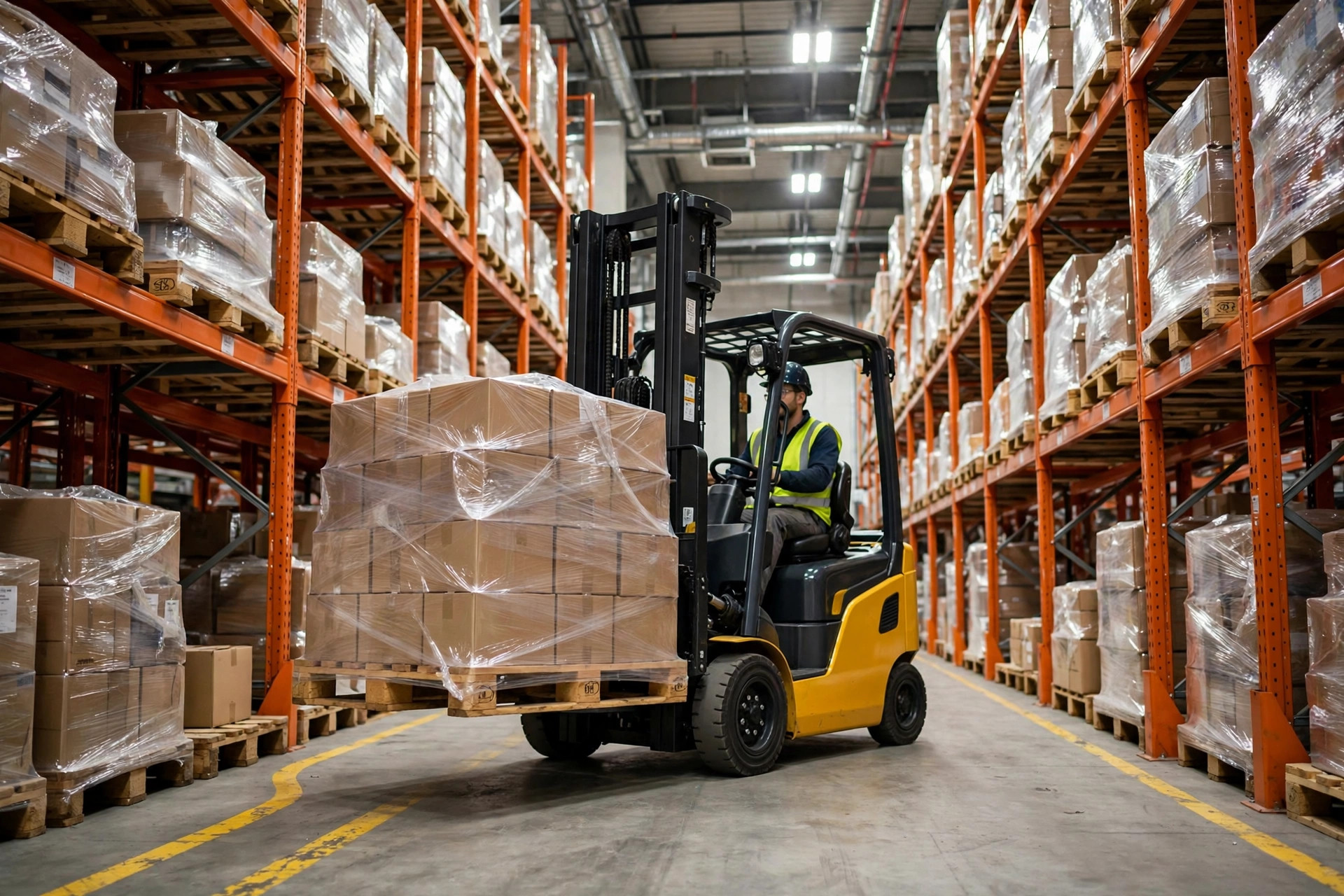
Bucket two: electric forklifts and electric pallet trucks — probably NOT CCC; it's a special-equipment license instead.
This was the most valuable thing I learned. Forklifts, pallet trucks, and tractors are regulated in China as "special equipment" — officially, motorized industrial vehicles for use inside plants and yards. To sell them in China you need a special equipment manufacturing license through the market supervision authorities, not a whole-machine CCC certificate.
My friend's agent kept saying "full-machine CCC package," and I just laughed: they've got the wrong certificate entirely — what exactly are they packaging? Wrong direction, and that 120,000 yuan is pure waste. Always re-verify against the latest CNCA catalog and market supervision policies before you act; rules change.
Bucket three: electrical controls — probably yes, at the component level.
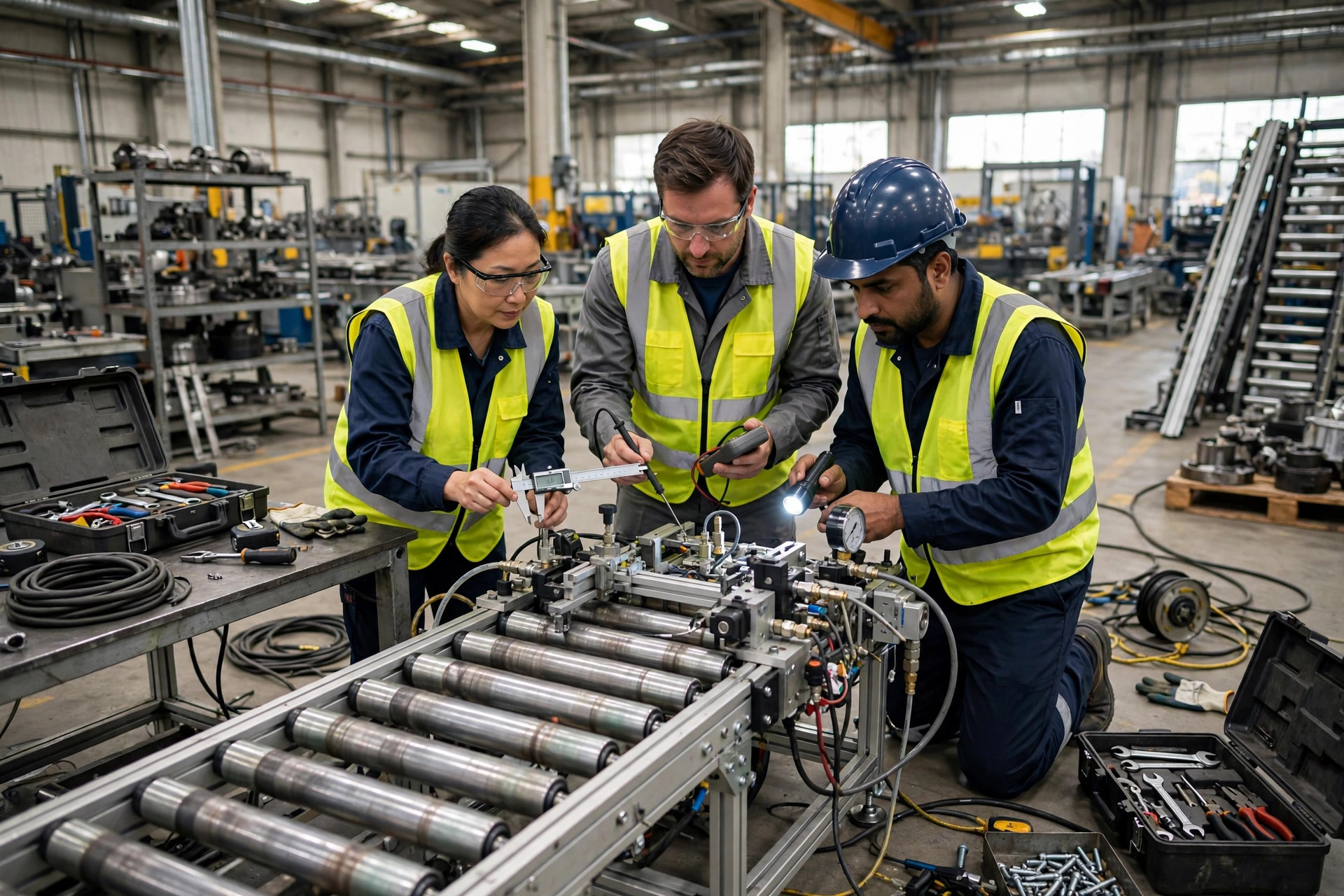
Conveyor lines, sorters, and lifts as whole machines generally aren't in the CCC catalog either. But here's the catch: the electrical components inside them might be — breakers, contactors, and switching power supplies in the control cabinets. A lot of low-voltage electrical apparatus requires CCC.
So the right approach: check the whole machine against the catalog first; if it's not there, break it down to the key electrical components and check each one. Components that already carry CCC certificates don't need to be re-certified; ones that don't, get them certified. Don't blindly order a giant whole-machine package.
Here's the three-step self-check I made for my friend: step one, check the CNCA catalog to confirm whether the whole machine is listed; step two, list the key electrical components and check each against the catalog; step three, take that list to a certification body. Run through it once and you'll at least be able to talk to an agent without sounding like a total rookie.
The CCC Process: How Long It Takes and What It Costs
The process itself is straightforward, four steps:
- Application: file with a designated certification body (like CQC) and define the certification unit.
- Type testing: send samples to a designated lab for testing against the applicable GB standards.
- Initial factory inspection: auditors visit your factory to check production consistency and quality systems.
- Evaluation and issuance: pass everything, get the certificate.
Getting certified isn't the end of it: certificates are valid for 5 years, with annual surveillance inspections in between. Change a key component's brand, move your factory address — you must report it, and serious changes mean re-testing. Apply for renewal within 90 days before expiry; one day expired counts as uncertified.
How long does it take? With complete documents, samples passing on the first try, and a smooth factory inspection, 3–5 months is the typical range. Samples needing two or three rounds of fixes, or a factory inspection full of corrective actions — dragging past six months is normal too. If you're rushing to ship, budget extra time.
I broke down the costs for my friend. Based on certification bodies' published fee schedules, the big items are:
| Fee item | Standard rate |
|---|---|
| Application fee | 500 yuan per certification unit |
| Registration fee | 800 yuan per certification unit |
| Product testing fee | Per lab rate card — varies hugely by product |
| Initial factory inspection | 2,500 yuan per inspector-day, plus auditor travel |
| Annual certificate and marking fees | Small amounts, per certificate/per year |
See the picture? Fixed fees (application + registration) are just over a thousand yuan. The real money is in testing and factory inspection. Testing fees depend on product complexity — a few thousand for simple stuff, tens of thousands for complex gear. Get a quote from the certification body for your specific case.
So when an agent quotes "120,000 all-inclusive," make them itemize: how much for testing, how many inspectors for how many days, travel costs, service fee. Line by line. The inflated parts reveal themselves. My friend ended up getting direct quotes from two designated bodies for the same certification unit — the quotes differed by nearly 2x. Tell me that's not money down the drain.
Selling Without a Certificate: Weigh the Consequences Yourself
Some people think: sell first, deal with it if caught. I'd advise against that thinking.
Market regulators and customs genuinely inspect catalog products. Getting caught selling uncertified goods means product delisting and fines at minimum. Here's an industry story that made the rounds: a second-tier air conditioner brand quietly swapped its fuse for a cheaper uncertified one to cut costs. A market spot-check caught it — certificate revoked on the spot, plus the company landed on a regulatory blacklist, with every subsequent product launch put under a microscope. That's the textbook "save pennies, lose fortunes" ending.
The sneakier trap is certificate expiry. The 5-year validity ends, you didn't apply for renewal within the 90-day window, the certificate lapses automatically, and your product instantly becomes "uncertified goods." A factory owner I know keeps a certificate ledger with triple reminders — six months, three months, one month before expiry. Small shops without dedicated staff can just set phone calendar alerts. Low-tech works fine.
Xiao Ma's Money-Saving Playbook (Summary)
- Check the catalog yourself: the CNCA website, ten minutes, see if your product is even in there. It's free — don't pay someone to do it.
- Separate whole machine from components: if the whole machine isn't cataloged, break it down to components; already-certified components don't need redoing.
- Get multiple quotes: ask at least two designated certification bodies directly, then compare against the agent's quote. Walk away from absurd markups.
- Track your certificates: 5-year validity, annual surveillance, renew 90 days before expiry. Set reminders so certificates never lapse.
One honest word to close: the CCC money you genuinely owe — spend every cent of it. It's the ticket into the Chinese market. But don't spend a cent of stupid money. The certificate type, the certification unit, every line of the fee breakdown — ask about all of it.
Small warehouses have their own way of surviving: big companies have legal and compliance teams; we don't. But we have the patience to ask one more question. And sometimes that one question is worth tens of thousands.
By Xiao Ma, Small Warehouse Owner