If you run a food warehouse in the United States, here is a practical guide on how to prepare for an SQF audit in a food warehouse — and the timing matters. According to SQFI's published schedule, Edition 10 of the SQF Food Safety Code was released on March 1, 2026, and audits switch to the new edition on January 2, 2027. That puts every food warehouse preparing for certification today inside the last audit window of Edition 9. Meanwhile, more retailers and food brands are writing SQF certification into supplier requirements, which makes the certificate a commercial threshold for any warehouse chasing retail business. This guide breaks preparation into three workstreams: documents, the floor, and people.
The landscape: a food warehouse SQF audit is not a plant audit
Warehousing and distribution sites are assessed against the SQF Food Safety Code for Storage and Distribution. The audit covers two parts: the system elements of Module 2 (management commitment, document control, HACCP, verification, traceability and recall, training) and the good storage and distribution practices of Module 12 (site construction, personnel hygiene, storage and transport, foreign matter control, pest control, waste). In other words, the auditor spends half the time in your document system and half walking your aisles. Industry sources put a standalone storage and distribution audit at three to three and a half days — shorter than a plant audit, but dense: the warehouse floor is the entire operating picture.
That structure yields a basic judgment: preparing for an SQF audit is not a last-minute paperwork sprint. It is making sure your documents, your floor, and your people tell the same story in front of the auditor. If any one of the three contradicts the others, the credibility of the other two gets discounted.
How to prepare the documents for an SQF audit
Why documents first? Consider a public data point: in a 2025 published final SQF audit report for a fresh produce distribution warehouse, the auditor raised a minor non-conformance under clause 2.2.2 (document control) because document version numbers and dates were inconsistent in several places. The site had documents — it just did not control them carefully. Documentation findings run persistently high in storage and distribution audits, partly because warehouse document systems look simpler than a plant's, which makes managers underestimate their weight.
The scoring arithmetic matters. Under the published Edition 9 rules, a minor costs 1 point, a major costs 5, and a critical costs 50; the bands run Excellent at 96–100, Good at 86–95, Complies at 70–85, and fail at 0–69. A single minor looks harmless, but documentation minors travel in packs — document control, records, and verification findings tend to arrive together. Prioritize your document preparation in this order:
| Priority | Clause area | Preparation action |
|---|---|---|
| Highest | Document control (2.2.2) | Every document carries a version number and effective date; obsolete versions removed from the floor |
| Highest | Records (2.2.3) | Records legible, traceable to the person who performed the activity, retention periods set per shelf life or regulatory requirements |
| High | Product storage requirements (2.3.1) | Temperature, storage, and handling requirements documented and approved for every product |
| High | Verification and internal audit records | Internal audits, management reviews, and verification activities executed on schedule with evidence |
| Medium | Pest, sanitation, and training records | Third-party pest reports, sanitation checklists, training sign-ins and assessments complete |
One detail auditors exploit: they pick a random day's records and then verify that day against the physical floor. A log that reads "daily inspection normal" next to a bait station that has clearly been moved tells a worse story than a missing document. That is the discipline at the heart of how to prepare for an SQF audit: not looking ready for one day, but being provably consistent every day.
The food warehouse floor: where the auditor's eyes go

Module 12 is where the floor audit happens. The typical auditor route: receiving dock, storage aisles, refrigerated zones, chemical storage, waste areas, shipping dock.
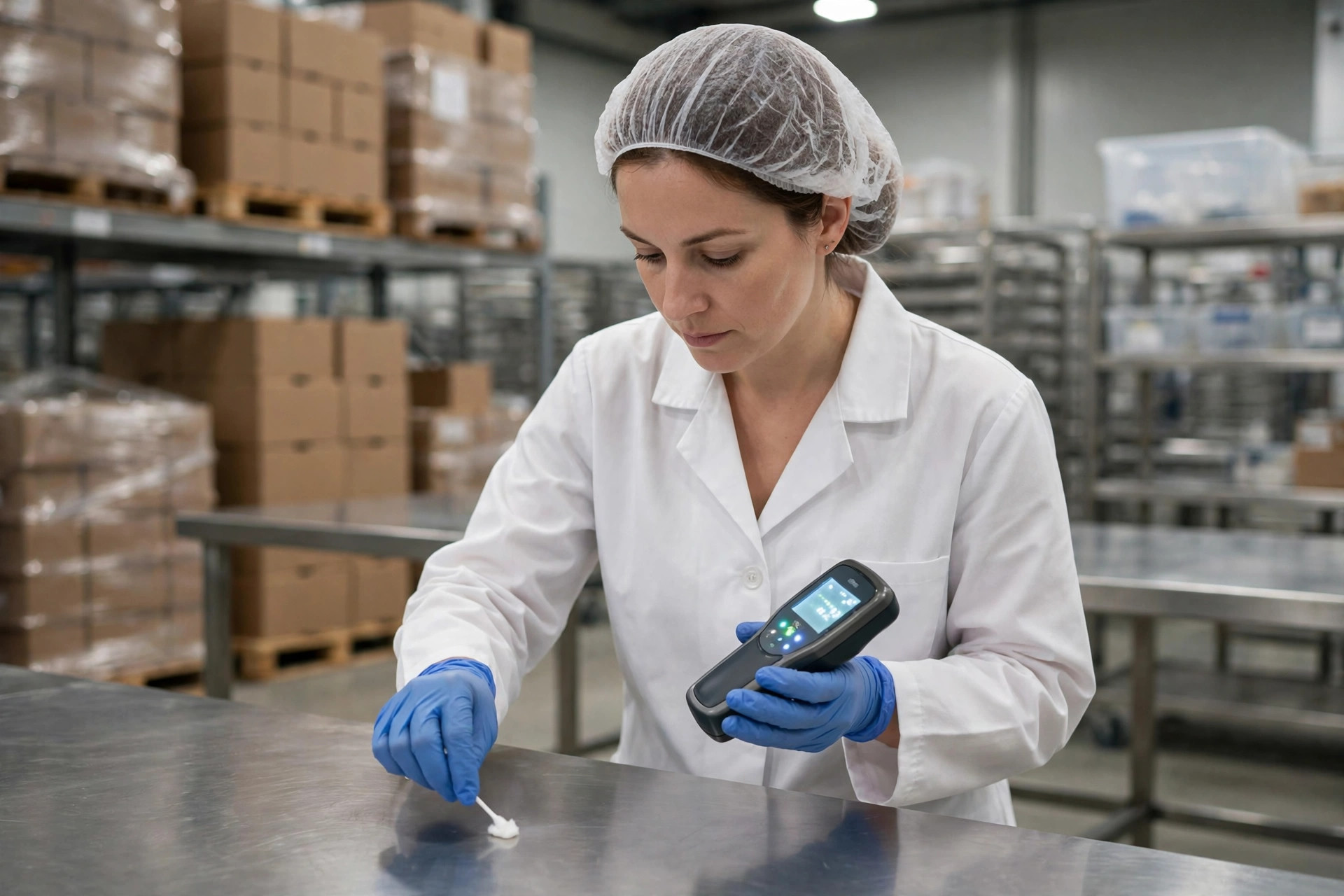
- Temperature control: Are monitoring records for chilled and frozen product continuous with no unexplained gaps? Are probes within their calibration window? Published audit reports repeatedly flag unexplainable blank periods in temperature logs as a floor finding.
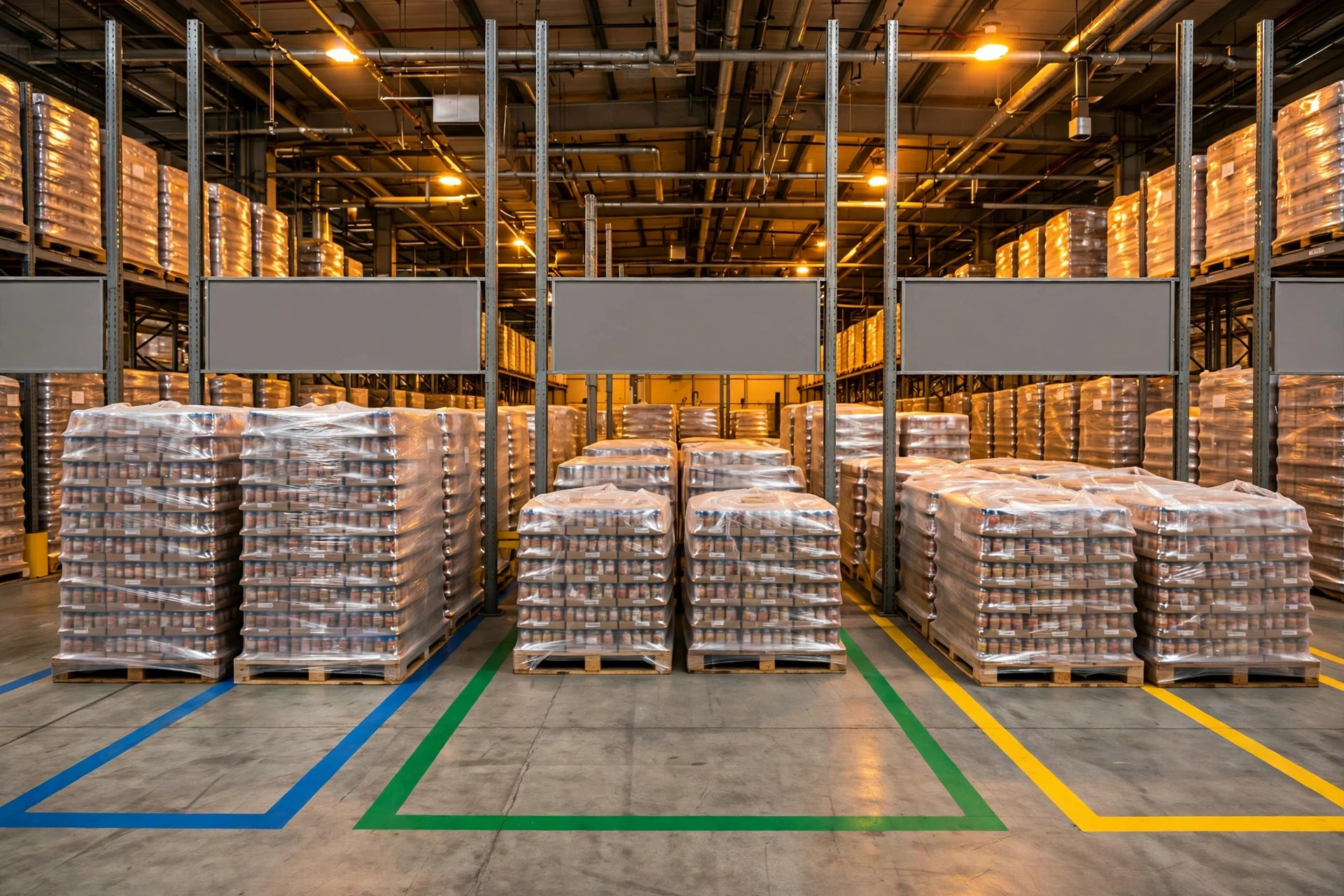
- Storage and handling (12.6): Are food, chemicals, and packaging materials segregated? Is product stored off the floor and away from walls in practice, not just on paper? Is first-in-first-out supported by records?
- Personnel hygiene (12.3): Clothing and handwashing for anyone entering food storage areas, visitor control. Whether truck drivers can wander into the warehouse unescorted is a question auditors routinely ask.
- Foreign matter and pests: Are light fixtures shielded? Does the bait station map match what is actually on the floor? Does anyone read the trend analysis in the pest reports?
Here is the counterintuitive judgment: many warehouses spend the bulk of their preparation budget on a deep clean, but the auditor's most valuable findings usually come from contradictions between records and the floor. A spotless floor with no trace of the pest treatment the records claim happened last week, or temperature logs reading normal while the probe calibration expired months ago — once a contradiction surfaces, the auditor reasonably doubts the whole system and widens the sampling. The correct logic for floor preparation is not "look clean." It is "every condition on the floor has a matching piece of evidence in the records."
People: the questions your team cannot afford to fumble
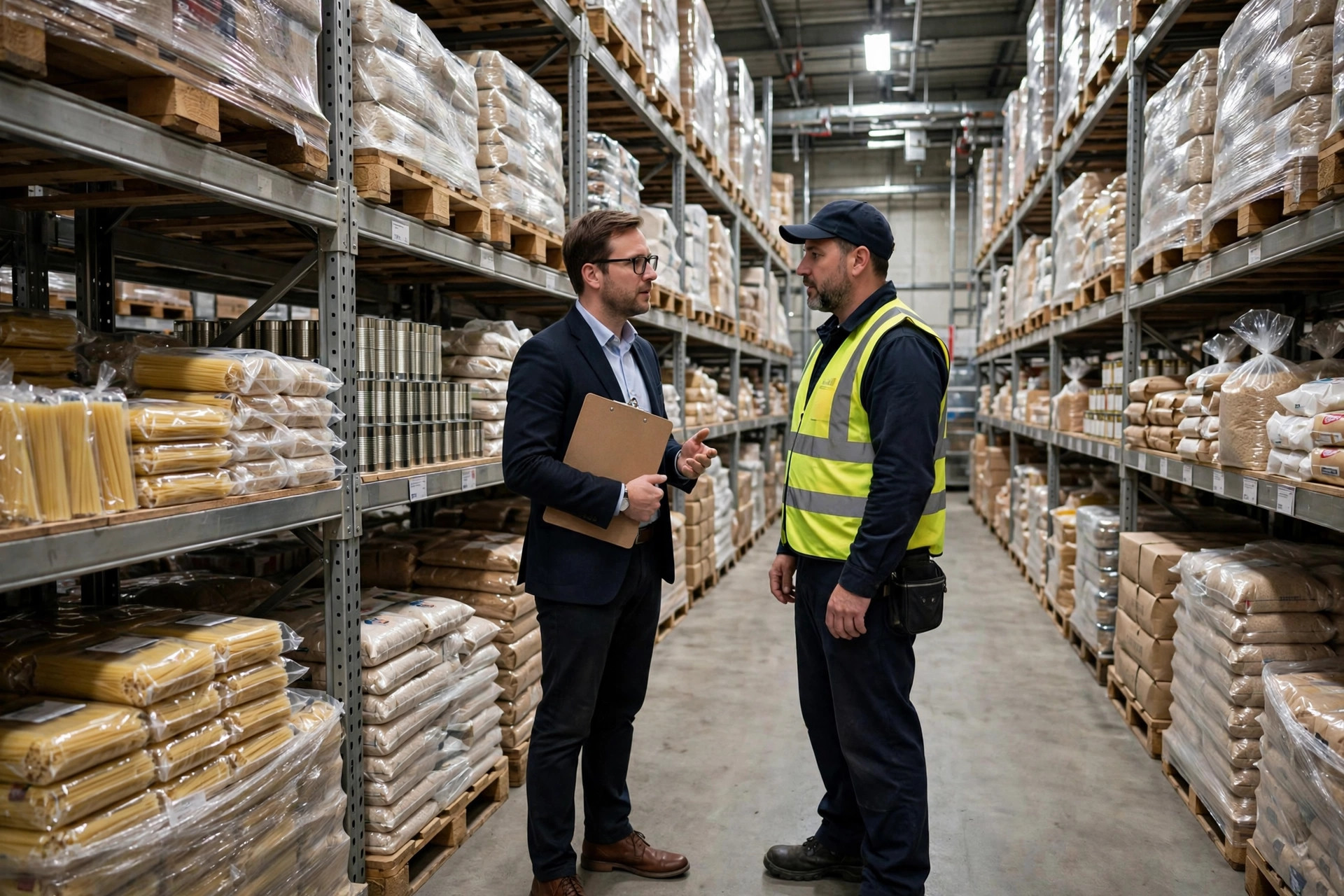
The third workstream is people. SQF requires the site to designate an SQF practitioner: a full-time company employee with responsibility for the system, who has completed HACCP training and understands the Storage and Distribution Code. The auditor will interview this person separately and also stop floor staff at random: what do you do when you find a temperature excursion? Who do you call for a chemical spill? What is the procedure for a visitor entering the warehouse? Blank stares become evidence of an ineffective training system.
The real variable, though, is Edition 10. SQFI's published changes add three requirements that land directly on warehouses: a food safety culture assessment plan (the site must have a documented culture evaluation approach, which the auditor verifies by interviewing staff at all levels, including temporary workers), change management (now a standalone clause, 2.3.5), and strengthened environmental monitoring. The scoring model changes too: findings against core clauses now cost 2 points for a minor and 7 for a major instead of 1 and 5, the Excellent/Good labels are gone, and certification status is set by score band (80–100 certified for 12 months; 70–79 certified with a surveillance audit at 6 months).
All three changes point in one direction — the audit's center of gravity is moving from "do you have documents" to "do you actually do this every day." Putting food safety culture on the checklist means the auditor is no longer satisfied with training sign-in sheets; they want to judge whether people follow the rules when nobody is watching. For food warehouses, this is a turn in preparation logic. In the Edition 9 window, documents, floor, and people remain the whole game. But looking toward 2027, sites should start accumulating "evidence of the everyday" now — interview records, culture assessments, change logs. Nice-to-have under Edition 9; mandatory questions under Edition 10.
A 12-week preparation timeline
Mapped onto a calendar: how to prepare for an SQF audit in a food warehouse on a 12-week clock. Assumes a site starting from scratch; existing systems can compress it:
| Phase | Weeks | Documents | Floor | People |
|---|---|---|---|---|
| Baseline | 1–2 | Gap analysis against the Code; list of missing documents | Full walk-through against Module 12, photo-documented | Confirm the SQF practitioner; map training gaps |
| Build-out | 3–6 | Complete documents and record templates; establish document control | Fix temperature control, segregation, sanitation blind spots; calibrate probes | All-staff food safety training; HACCP training for the practitioner |
| Verify | 7–9 | Full internal audit (auditor must not be the system owner) | Mock floor walk along the auditor's route; close findings | Mock interviews: quiz random staff, debrief recordings |
| Sprint | 10–12 | Freeze document versions; assemble the auditor's document pack | Final floor confirmation; submit blackout dates to the certification body | Complete management review; implement its decisions |
Caveat: clause details and audit scheduling follow the latest SQFI published policy. Clause numbering may shift in the digital-first Edition 10, so work from the current Code text your certification body provides.
An open question to close
Zoom out. For a decade, GFSI-benchmarked certification has been doing one thing: turning "prove it to me" into "prove you do it every day." Writing food safety culture into the mandatory questions and weighting core-clause findings is the latest confirmation of that trend. For a food warehouse operator, the real question may not be "can we pass this audit" but this: if the audit arrived unannounced tomorrow, would your records, your floor, and your people still tell the same story? The last Edition 9 window is closing, and the Edition 10 exam paper is already out — warehouses that start building their everyday evidence now will be the first to benefit after January 2027. Or is your warehouse already ready to answer that question?
By Dr. Chen, Supply Chain Researcher