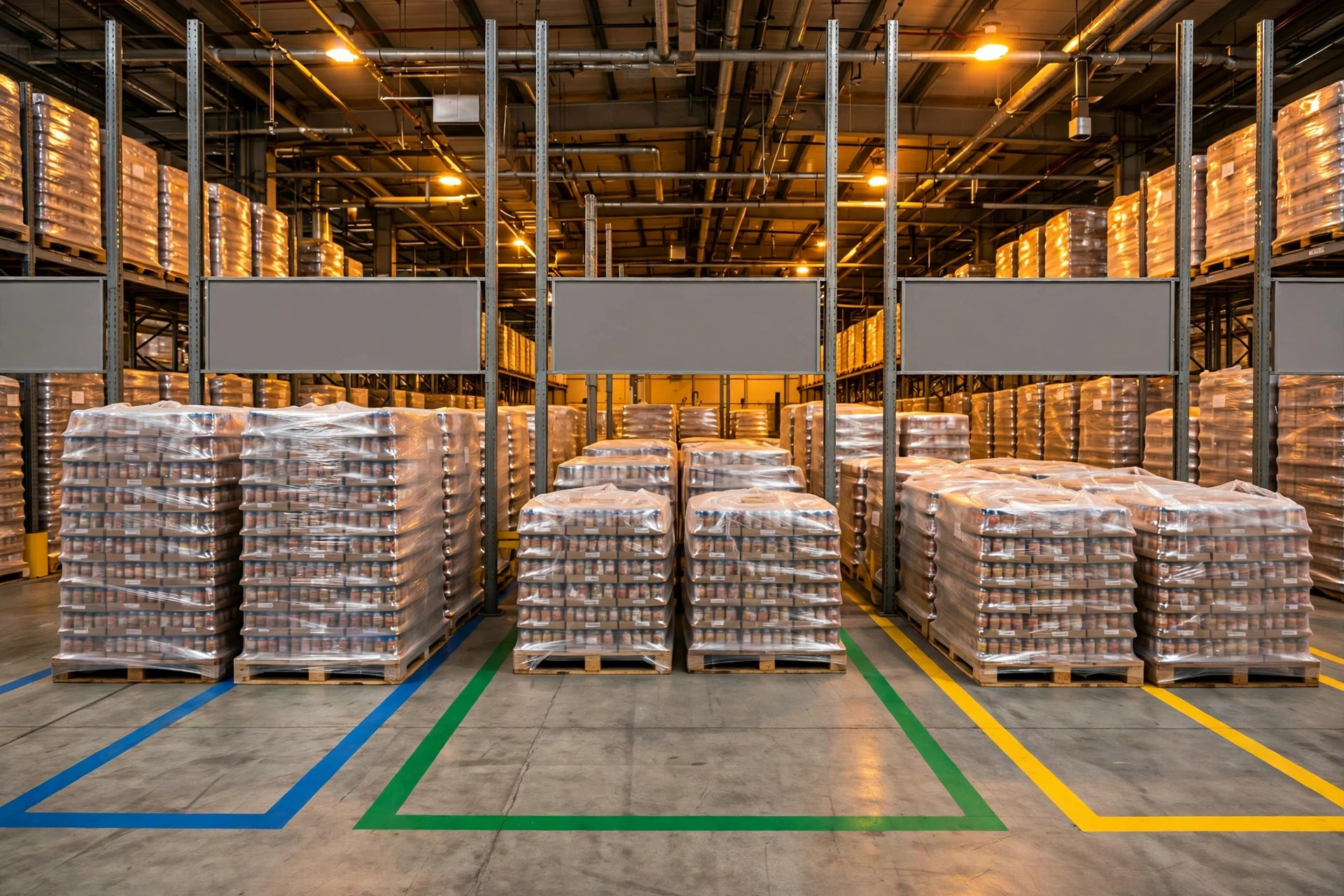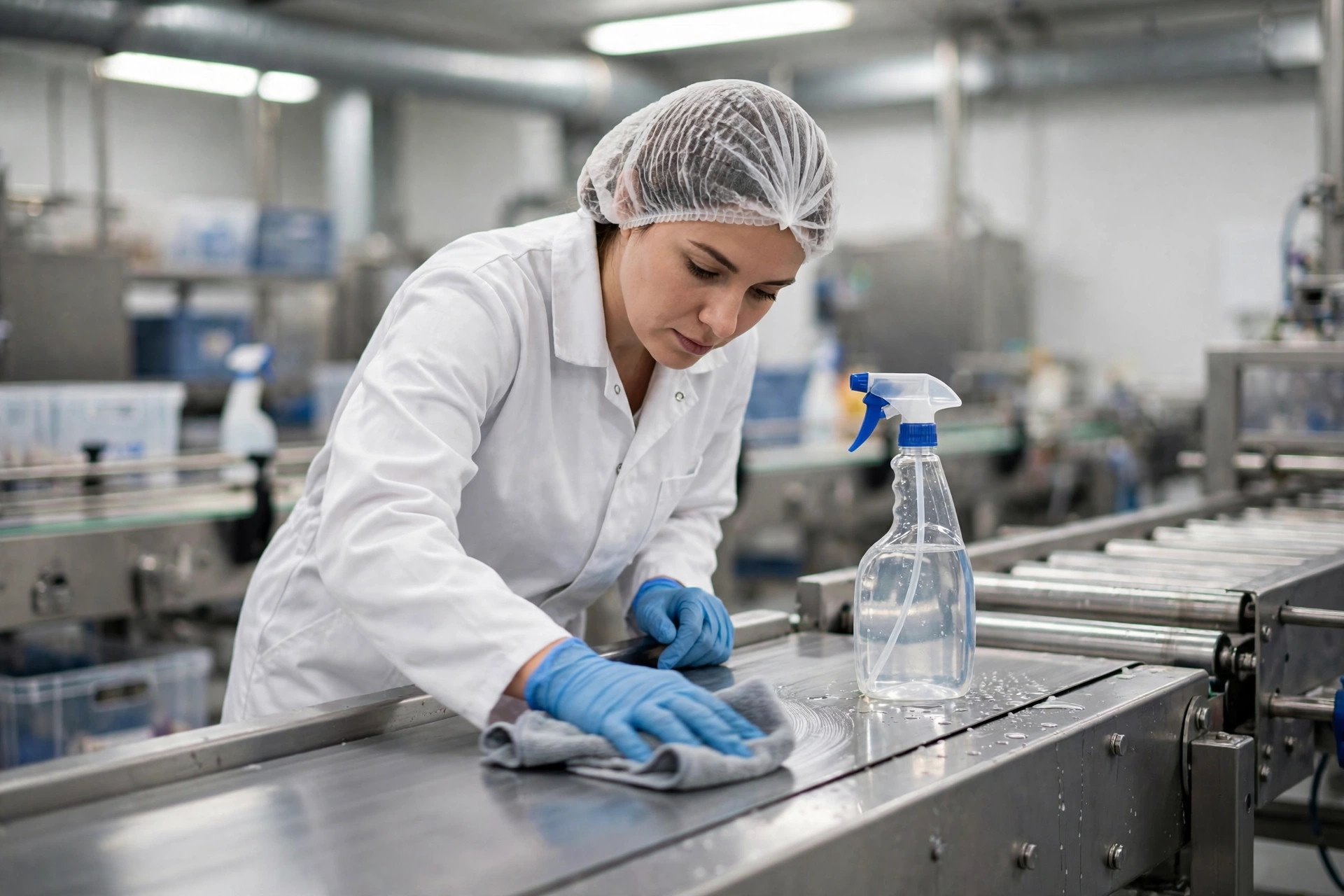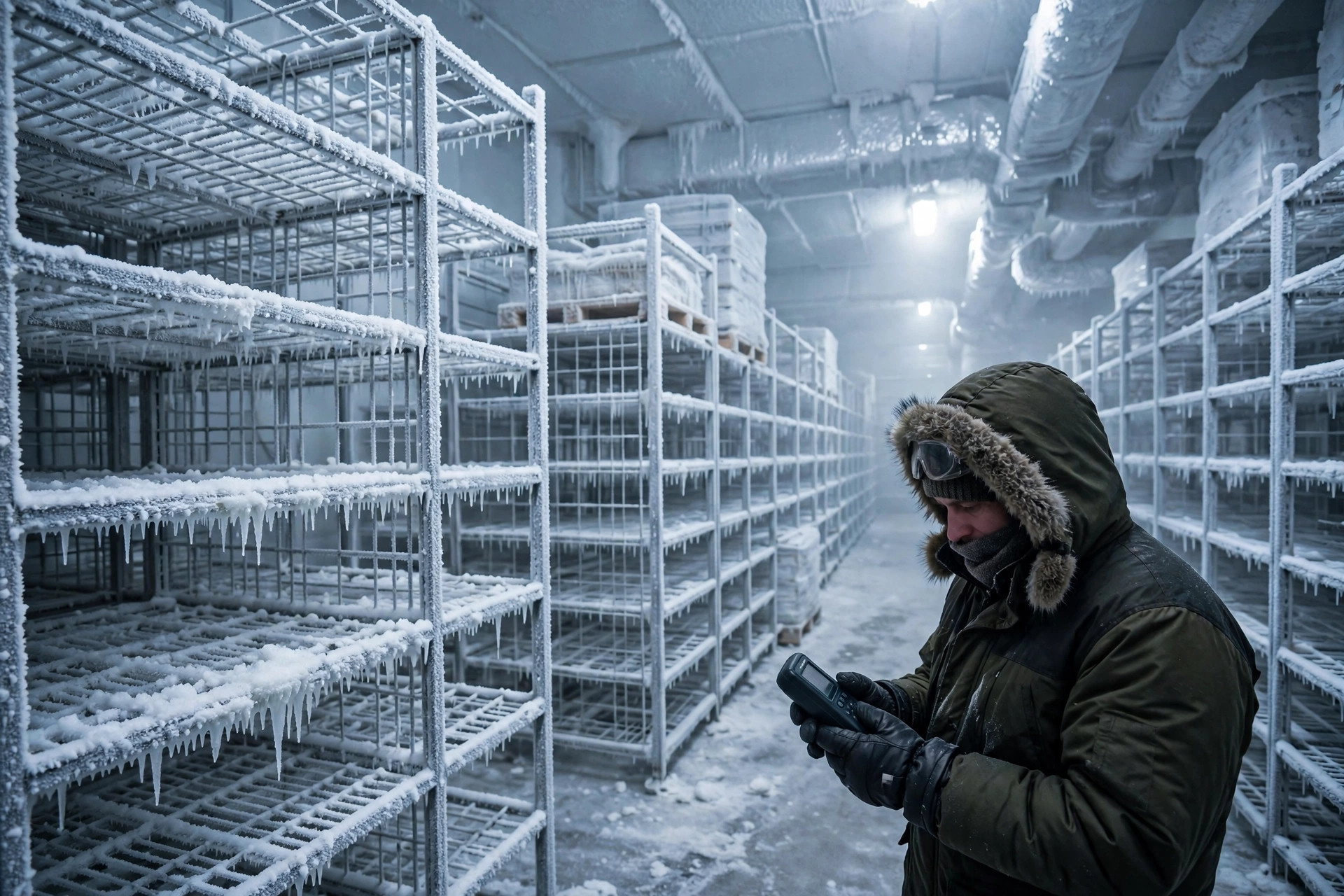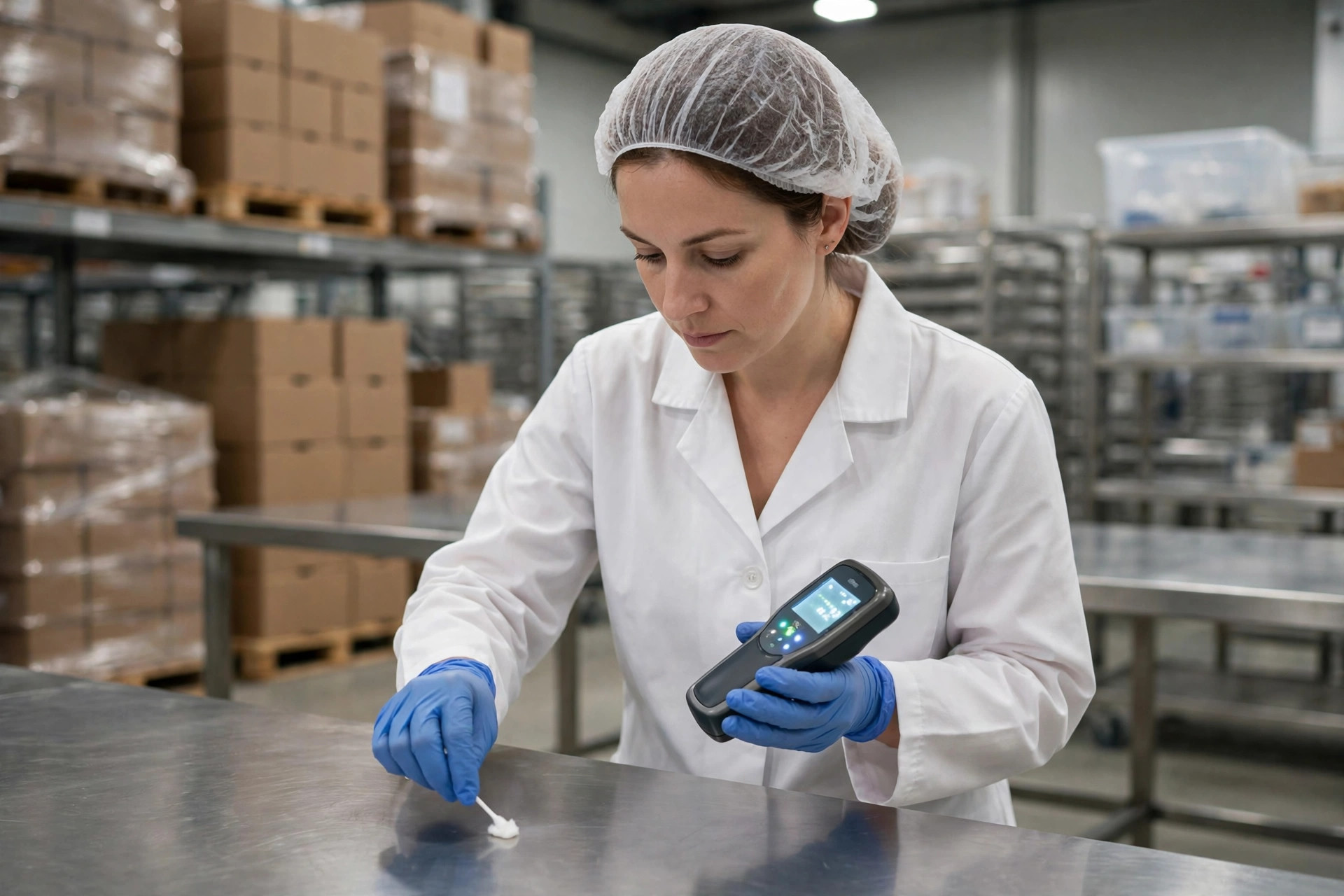
In September 2024, a cold-storage 3PL warehouse of about 60,000 square feet in Ontario, California, received a customer auditor from a regional grocery chain — an ATP swab food warehouse cleaning verification visit. At the outbound staging area, the auditor pulled an ATP swab from a bag, wiped it across a stainless steel sorting table, and inserted it into a handheld luminometer. Fifteen seconds later, the reading came back at more than three times the facility's internal limit. The warehouse manager froze: the table had been cleaned half an hour earlier and had passed a visual check. The audit report recorded "insufficient cleaning verification effectiveness," and the 3PL dropped a tier in its annual vendor rating.
ATP swab testing has become a fixture in food warehouse audits across the US. Its promise is seductively simple: is the cleaning actually working? Fifteen seconds tells you. But the simpler the promise, the wider the room for misreading. This piece answers three questions: what an ATP swab actually measures, how it compares with the other verification methods, and what a workable sampling program looks like.
What an ATP swab actually measures in those 15 seconds
ATP — adenosine triphosphate — is present in nearly all living cells and most organic residues. After swabbing, the luciferase reagent reacts with ATP to produce light, and the luminometer converts that light into an RLU (relative light unit) reading. A higher reading means more organic residue on the surface, which means the cleaning was not done properly. No culturing, no lab — a QA technician can do it right there on the floor. That compression of the verification feedback loop, from days to seconds, is the fundamental reason food warehouses have adopted it so widely in recent years.
But one boundary has to be drawn before anything else: an ATP swab measures total organic residue, not pathogens. It cannot tell whether the reading comes from a scrap of meat, a drop of juice, or Salmonella. In other words, it answers "was the cleaning done right," not "is this surface safe." Cleaning verification and microbial validation are two different logics — the former checks whether the cleaning process was executed properly, the latter checks whether pathogens are controlled. Treating a low ATP reading as proof of sterility is the industry's most common misuse, and the counterintuitive point worth correcting first: a low reading only means little organic residue was found. There is a long logical chain between that and "safe."
ATP swabs vs. microbial culture vs. visual inspection: the real trade-offs
In practice, cleaning verification is a combination of all three; none works alone. The differences are not about which is "more accurate" — they answer different questions:
| ATP swab | Microbial culture (contact plates / lab swabs) | Visual inspection | |
|---|---|---|---|
| Time to result | ~15 seconds, on the spot | 24–72 hours | Instant |
| Cost per test | A few dollars per swab; one-time luminometer cost (common models: low thousands) | Tens of dollars per sample (per lab pricing) | Near zero |
| What it detects | Total organic residue, high sensitivity | Specific colonies, qualitative and quantitative | Only macroscopic soil |
| Core limitation | Cannot distinguish pathogens; disinfectant residues and some cleaners interfere with readings | Too slow — the suspect lot has shipped by the time results arrive | Subjective; blind to microbes and thin-film residues |
The trade-off is plain: ATP swabs win on speed and on-floor operability, and lose on the fact that they can only verify the cleaning process, never microbial safety; culture wins on evidentiary weight and loses on time; visual inspection wins on cost and loses on almost everything else. Relying on visual inspection alone to face audits is a common misconfiguration — it falls apart the moment an auditor brings their own swab.
The second case comes from that same 3PL's remediation. After the deduction, they hired a consulting firm to rebuild their cleaning verification program. The QA supervisor sampled 12 fixed points daily for two weeks, and a clear pattern emerged: the outbound table, the pallet-wrap station handle, and the cold storage door's inside pull hovered near the caution line day after day, while every other point stayed stable. The attribution was not complicated — these were the spots "written into the cleaning plan but skipped by the crew cutting corners." The table got wiped, but the seam between the table and the wall did not. This is where the real value of an ATP swab shows up: it is not a tool for proving "we are clean," it is a tool for locating "where it was not done."
The math is straightforward. A swab costs a few dollars; sampling one point once a day puts a mid-size food warehouse's annual consumable cost in the low thousands of dollars, scaling with the number of points. Compare that with what a failed customer audit can cost — that 3PL later lost a regional chain's off-season replenishment business, and the lost margin was dozens of times its annual swab spend.
A low ATP reading is not the same as safe: the most common misuse
A low reading has two possible explanations: the surface is genuinely clean, or the surface is coated with some chemical residue that contains no ATP. Some quaternary ammonium disinfectants, for example, inhibit the luciferase reaction itself, producing falsely low readings — the surface "passes verification" while the test has effectively been blinded. The reverse happens too: a surface sprayed with disinfectant and not properly rinsed can read falsely high, failing a cleaning job that was actually done right. That is why proper protocols generally require the surface to be dry before sampling, and sampling to avoid the window right after disinfectant application, per the device manufacturer's instructions.
There is a second trade-off here, at the management level, worth pulling out on its own. The real disruption of the ATP swab is not technical: it turns "cleaning quality" from a subjective judgment into quantified, recorded, traceable data. And once data exists, it gets used for performance reviews and pulled during customer audits. Many warehouses resist ATP programs not because the technology is complex, but because "once you measure it, you own the problem." Yet customers arriving with their own swabs is increasingly common, and large retailers are shifting own-brand supplier sanitation audits from annual spot checks toward unannounced visits. Being measured by the customer's swab is a losing position; owning the data yourself is not a technology choice — it is a game-theory choice.
What a workable ATP sampling program looks like
Once the above is clear, the program itself is not complicated. What matters is that every step has an explicit decision rule:
First, site selection. Pick the hardest-to-clean, highest-touch spots: food-contact surfaces first, then handles, switches, and door pulls. Fix the location and the sampling area for each point (a common practice is 10cm × 10cm), photograph it, and keep it on file.
Second, set the baseline. Sample for two weeks with no pass/fail judgments — data collection only — then use your own history to set three tiers: pass, caution, fail. Note that RLU scales are not fully comparable across device manufacturers; limits must be set per your own device and baseline, per the manufacturer's guidance. Never copy someone else's numbers.
Third, set the cadence. High-risk points every shift, routine points on a weekly rotation. Sample after cleaning is complete and before production or outbound work begins.
Fourth, close the loop on failures. The standard response to an exceedance: re-test immediately to rule out sampling error, re-clean, re-test, and log the cause — a missed spot, a wrong chemical dilution, or an equipment dead zone. A point that fails three times in a row gets promoted to a focus point, and the cleaning SOP or the tools get revised.
Fifth, manage the data. Log readings by point, shift, and operator, and review trends monthly. In practice, a slow drift in the mean says more than a single failure — it usually means the chemical is fading, tools are wearing out, or execution is slipping.
FSMA wrote "verification" into the basic framework of food safety management, but how often to verify, with what method, and how long to keep the records still leaves wide discretion to the facility — check the latest official FDA policy for the current requirements. Worth watching: as more customer auditors arrive with their own swabs, and ATP readings start appearing as KPI clauses in contract appendices, does warehouse sanitation stop being "the sanitation department's business" and become "a customer-relationship business"? Who owns the verification data, who interprets it, and how it is presented may matter more than the detection technology itself.
By Dr. Chen, Supply Chain Researcher