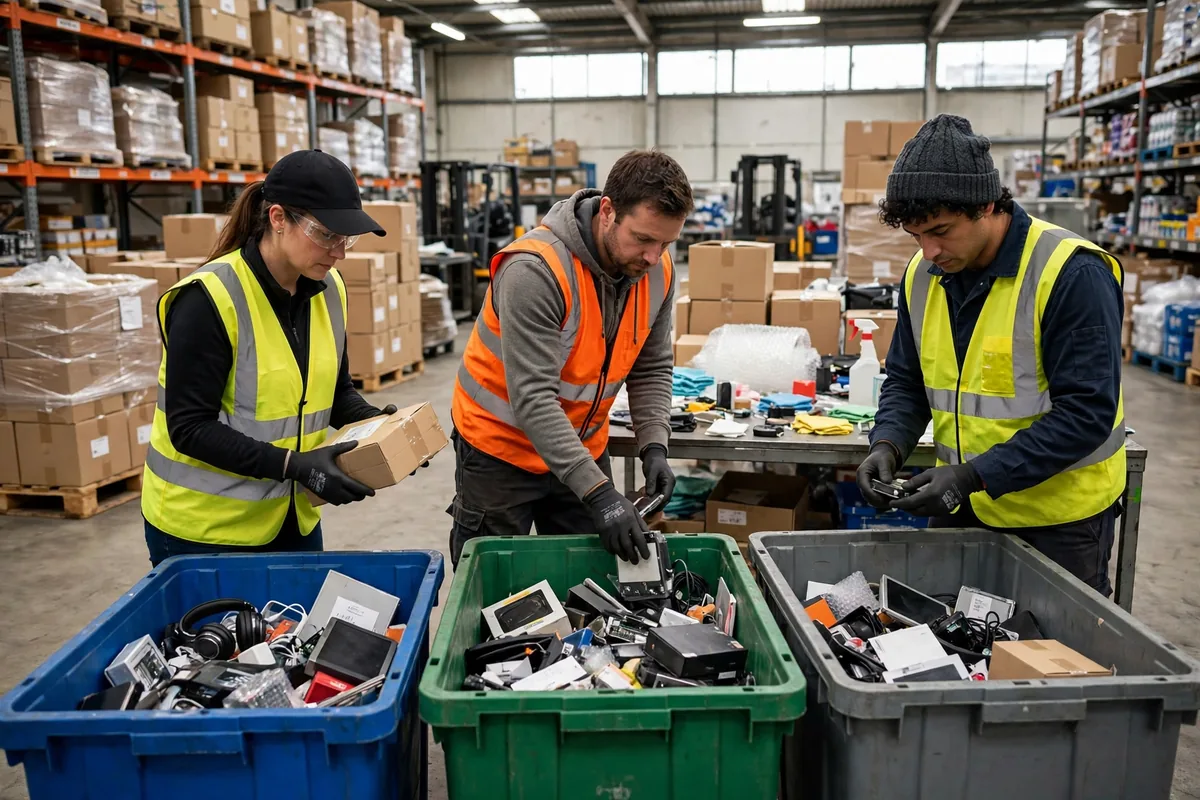
Here is the conclusion first: for most cross-border returns in South America, do not ship the goods back to China by default. When you work through south america cross-border returns local disposal properly, the math is blunt. International freight, a second customs clearance, domestic receiving and re-inspection stack up until the cost of bringing a low- or mid-priced item home approaches or exceeds its value. The profitable move is to triage the return while it is still in South America: refurbish what can be sold again, discount what can still move, destroy or donate what cannot, and reserve the return-to-China lane for high-value, small, brand-sensitive items that genuinely justify the trip. I have set up this triage in warehouse projects again and again, and the pattern never changes: the earlier you split the flow, the less money you lose.
Why South American returns are expensive in the first place is worth stating plainly, because sellers often price only the freight leg and miss the rest. First, distance and handoffs. A return travels from the buyer back to a collection point, then to an overseas warehouse, then onto an ocean or air leg, then through import clearance in China, then into a domestic warehouse for inspection. Every handoff costs money and adds waiting time. Second, customs and tax appear twice. The goods cleared once on the way out and must clear again on the way back, and any mismatch in product name, quantity or declared value can hold the shipment and generate storage fees. Tax and refund rules vary by country and declaration method, so always check the latest official policy before putting a number in your cost model; do not copy an old rate from a forum post. Third, condition deteriorates in transit. Long transit means more broken packaging, moisture damage and missing accessories, so a meaningful share of returned goods cannot be sold at full price even after they arrive. Add those three together and many sellers discover they are not recovering value at all. They are paying to move a problem from one continent to another.
Two real-world patterns illustrate the point. In June 2024, a Shenzhen seller of small home appliances held about two thousand units in a São Paulo warehouse and saw more than forty returns a month. At first the team shipped everything back to China. One batch of one hundred and twenty returns took almost two months to arrive, and on inspection more than twenty units had damaged outer packaging and over a dozen were missing accessories. Fewer than half could go straight back on sale. Once freight and labour were counted, the per-unit return cost was already higher than the factory cost of the product. I have seen this exact mistake three times, and it always starts the same way: the belief that sending goods home cannot be a loss, followed by a larger loss on arrival. Contrast that with a second seller, an apparel brand using a front warehouse in Santiago, Chile, in March 2025. Returns were graded locally within days. Items with light stains went to a discount channel, items with tags intact were refurbished and relisted, and genuine scrap stayed below ten percent of returns. Within three months, return handling cost fell by roughly forty percent and cash came back a full month faster than the ship-back route. The difference was not the product. It was where triage happened.
South America Cross-Border Returns Local Disposal: A Four-Tier Triage
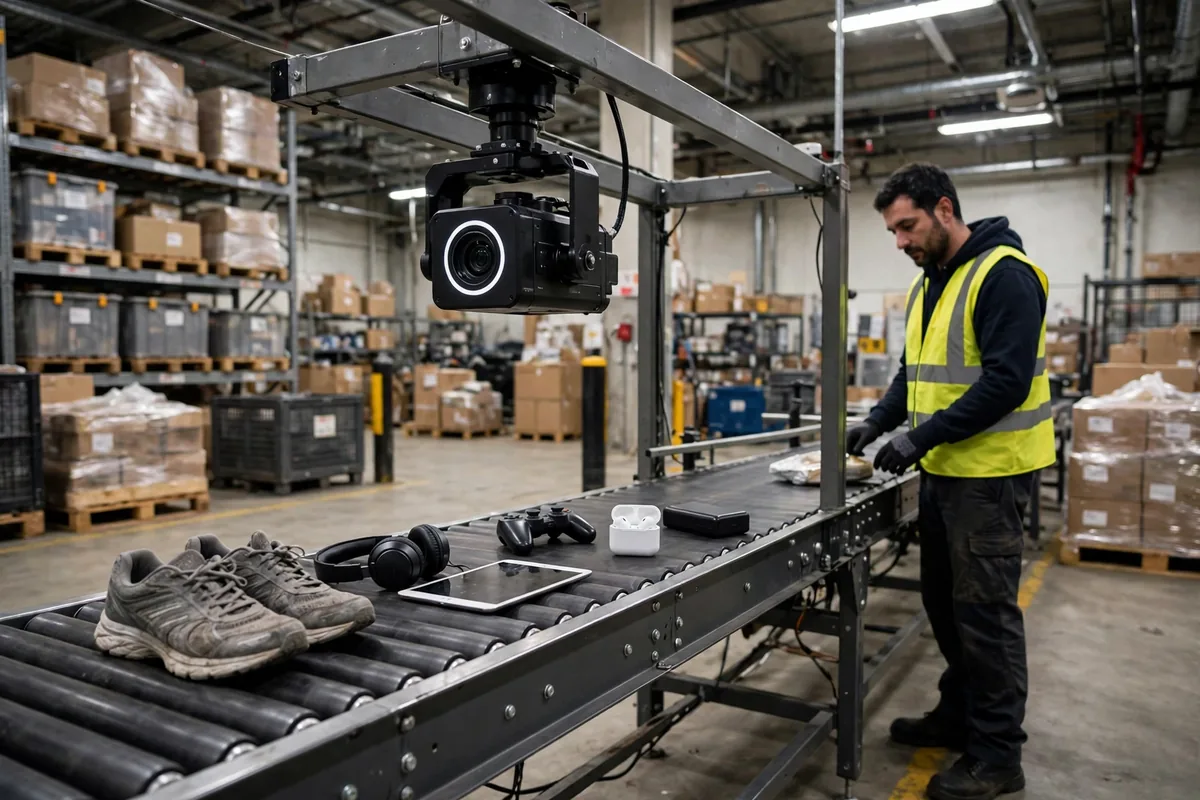
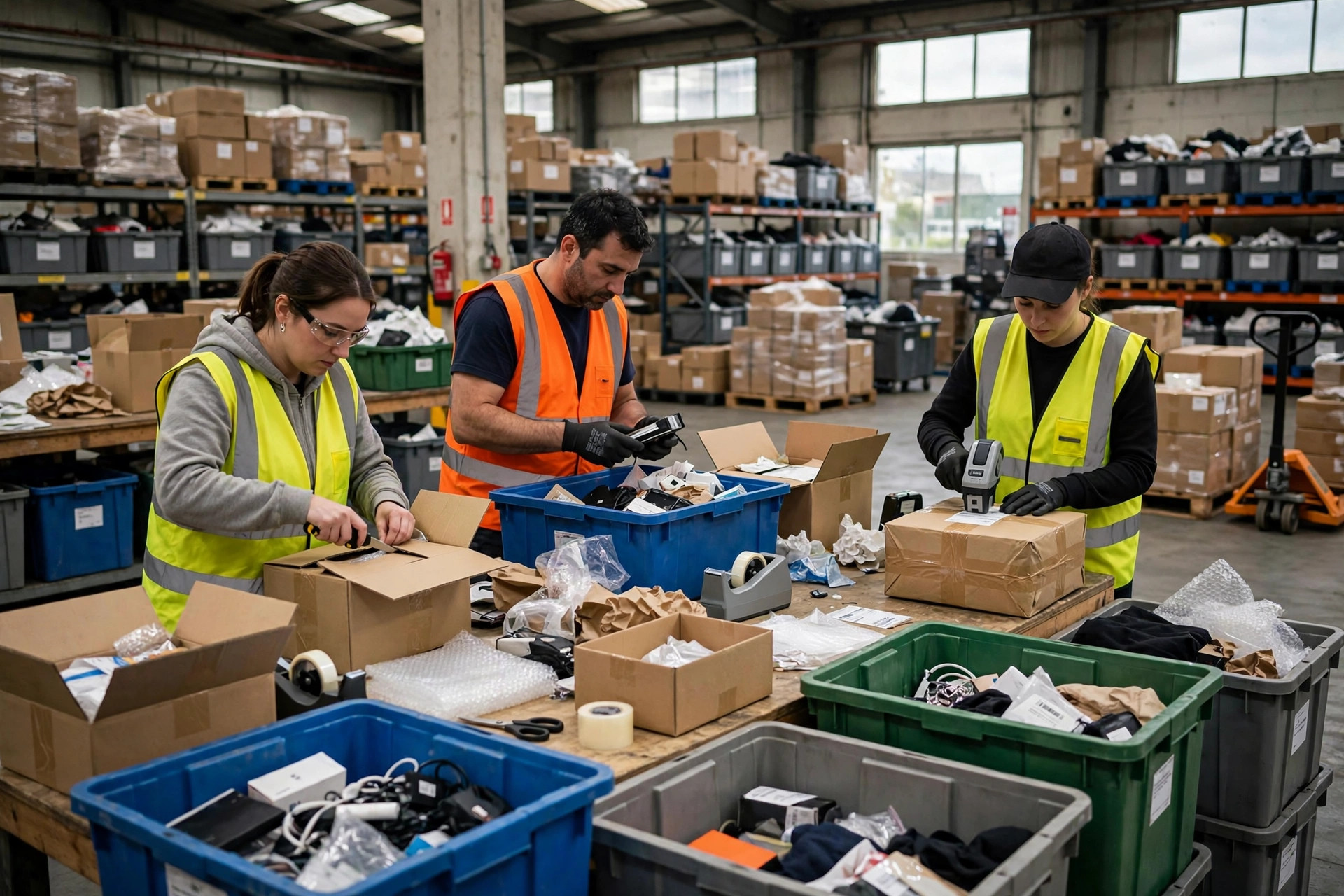
Triage should not depend on gut feeling. Grade every return into four tiers with written criteria and photo evidence. Tier one is directly resalable: packaging intact, function normal, tags and accessories complete. After a quality check it goes straight back to sellable stock. Tier two is refurbishable: minor cosmetic flaws or damaged packaging but a sound product. Replace the packaging, top up accessories, re-inspect, and relist at full or slightly reduced price. Tier three is discount clearance: functionally sound but out of season or lightly used. Move it through a local discount channel, a bundle offer or a clearance lot. Tier four is destruction or donation: damaged, expired, unsafe, or worth less than the cost of refurbishing. Do not force it back to market. Destroy it through a compliant channel with proof, or donate it where local rules allow and the recipient is properly documented. The grading standard belongs in a written work instruction with a photo checklist, so two inspectors reach the same answer on the same item.
South America Cross-Border Returns Local Disposal: A Step-by-Step Process
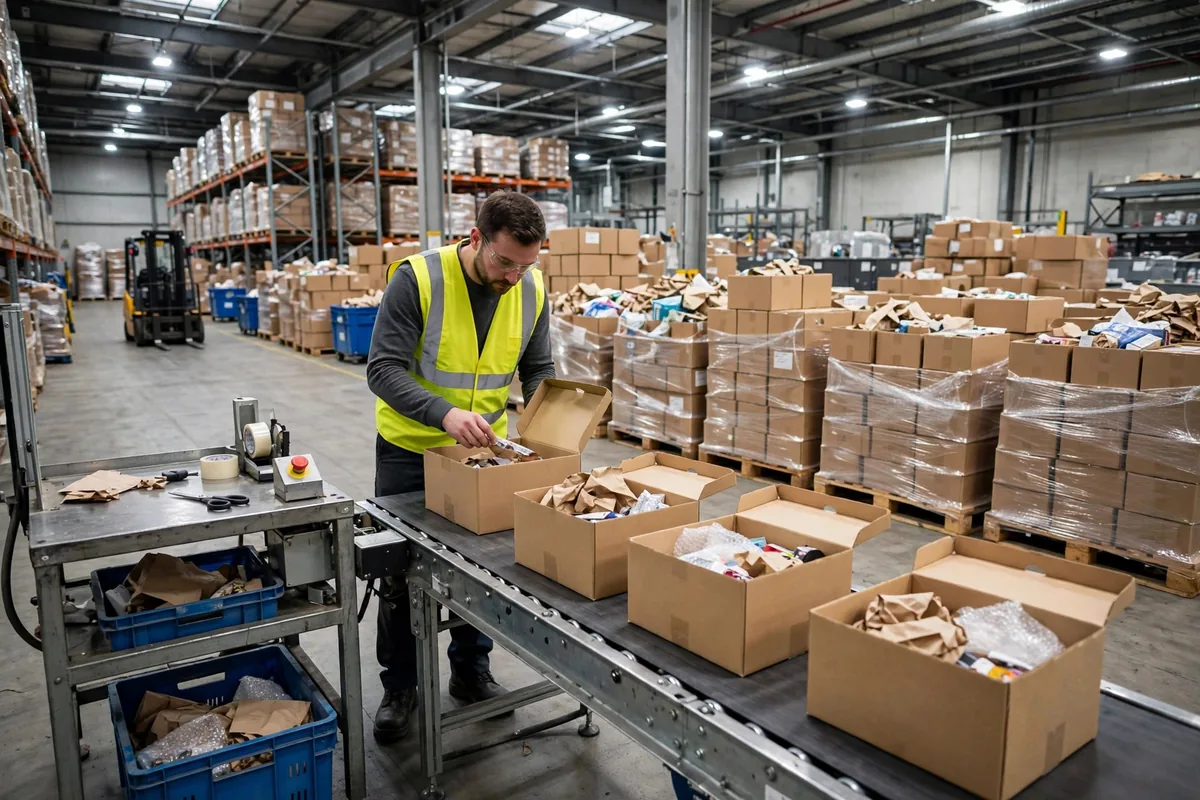
Step one is to create the return record before the goods move. When a buyer opens a return, customer service should collect the reason, the order number and photos of the product condition, and the system should create a return order. The overseas warehouse receives against that order only, never against an unrecorded parcel. Step two is an initial inspection within twenty-four hours of arrival. Inspectors do only three things at this stage: verify identity, take six-sided photos, and assign a tier label. The result goes to the seller for confirmation of the disposal direction. Step three is triage within seventy-two hours. Directly resalable goods return to stock, refurbishable goods move to a refurbishment zone, discount goods enter the clearance pool, and destruction or donation goods are isolated pending approval. Step four is evidence. Refurbishment keeps before-and-after photos and inspection records, discounting keeps pricing approval, destruction keeps a destruction certificate and site photos, and donation keeps a receipt from the recipient. Step five is a weekly review of return reasons. Sort reasons into quality, sizing, description mismatch and transit damage. If one reason climbs for two weeks in a row, fix the listing, the size chart, the packaging or the inspection standard at the front end, instead of endlessly processing returns at the back end.
The Cost Comparison: Shipping Back Versus Local Handling
Take the same one hundred mid-priced returns and compare the two routes. Shipping back involves domestic collection in South America, warehouse packing, international transport, import clearance in China and domestic receiving and inspection: five cost stages, measured in months, with further loss on arrival. Local handling involves domestic collection, local inspection and triage: three stages, measured in days, with refurbishment and discounting recovering part of the value. A simple decision rule works for most sellers. If the total per-unit cost of shipping back exceeds thirty percent of the product value, dispose locally. If the item is high value, small and must be recovered for brand control, ship it back under separate approval. Everything in between should be refurbished or discounted first, and only destroyed if it still does not move. The counterintuitive finding is that faster return handling can actually reduce the return rate over time. Careful triage produces accurate reason data, accurate reason data points to the real front-end problem, and fixing that problem prevents the next return. Returns are not just a cost centre. They are the closest mirror you have to product and listing problems.
Customs and Tax Watchpoints for Local Disposal
Local disposal has its own compliance traps, and they deserve explicit attention. First, the declaration identity of a return should match its outbound record. Mismatched names, quantities or values will stall clearance. Second, destruction is not simply throwing goods away. Product categories governed by environmental or safety rules need a compliant channel, and the destruction certificate must be filed; confirm the current official requirements for your category and country. Third, discounted sales should go through a proper local selling entity with invoices, not through personal accounts patched up later. Fourth, donation requires a qualified recipient and a confirmed tax treatment, which varies by place; do not assume donation automatically means a tax benefit. Fifth, every disposal must reconcile in the system. A stock reduction on paper must match a physical disposal, or the next stock count will not reconcile. These points sound administrative, but in South America compliance cost often hides exactly here. Doing them by checklist in advance is far cheaper than reconstructing documents afterwards.
The common failure modes are predictable, which means they are preventable. Mixing all returns together without reason codes hides the fixable problems. Letting refurbishment standards drift between inspectors destroys trust in refurbished stock. Destroying goods without a certificate leaves you defenceless in a dispute. Discounting without price separation undercuts your full-price channel and angers existing customers. And counting only freight while ignoring two months of capital tied up and warehouse fees makes the ship-back route look cheaper than it is. Cost the full cycle, grade every return, keep the evidence, and review reasons weekly. Done that way, south america cross-border returns local disposal stops being a bleeding wound and becomes an ordinary, controllable operation, and the money you save is only half the benefit. The other half is what those returns teach you about your product.
By Lin Xiao, WMS Implementation Consultant