Returns inspection has long been one of the hardest steps in a warehouse to standardize, and the reason is not mysterious. Two inspectors looking at the same returned item will often reach two different condition grades, and while that disagreement is manageable at low volume, it turns into re-inspection, disputes, and delayed relisting once returns scale up. AI visual inspection for returns quality grading in warehouses enters this picture with a specific promise: to turn "how does it look" into a process that can be repeated, reviewed, and recorded.
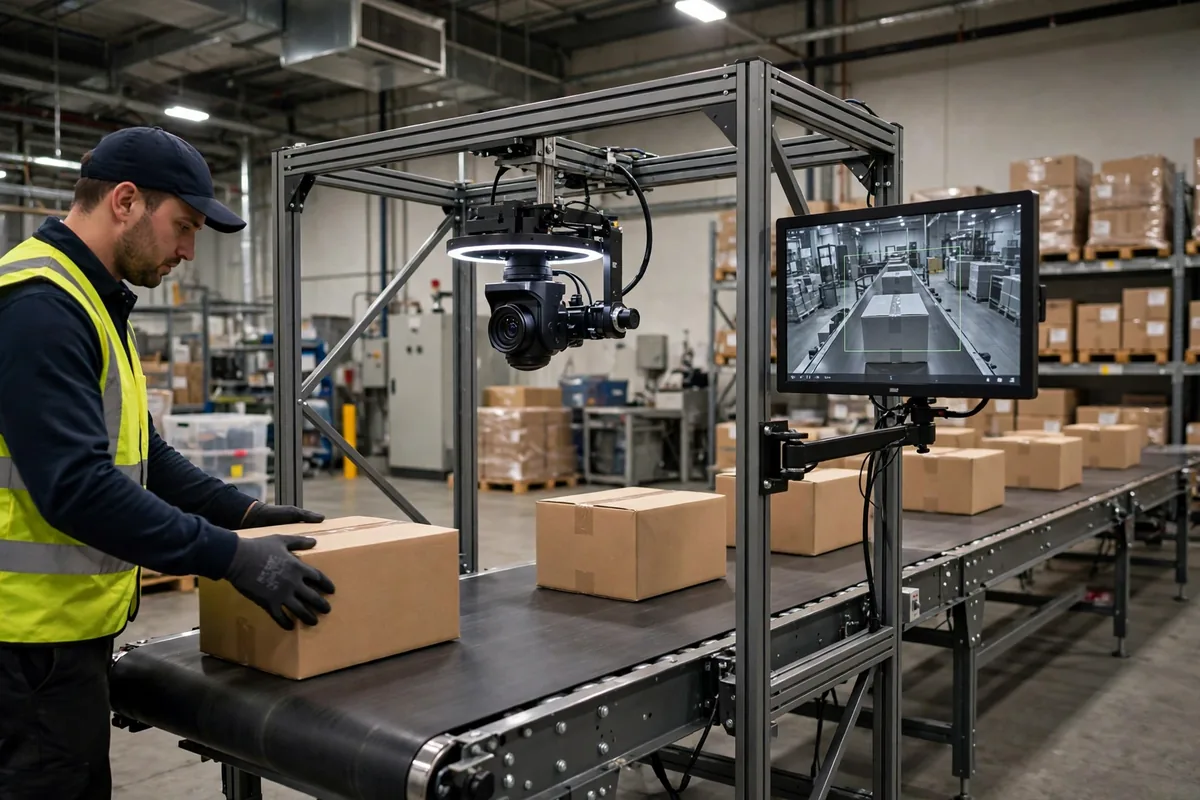
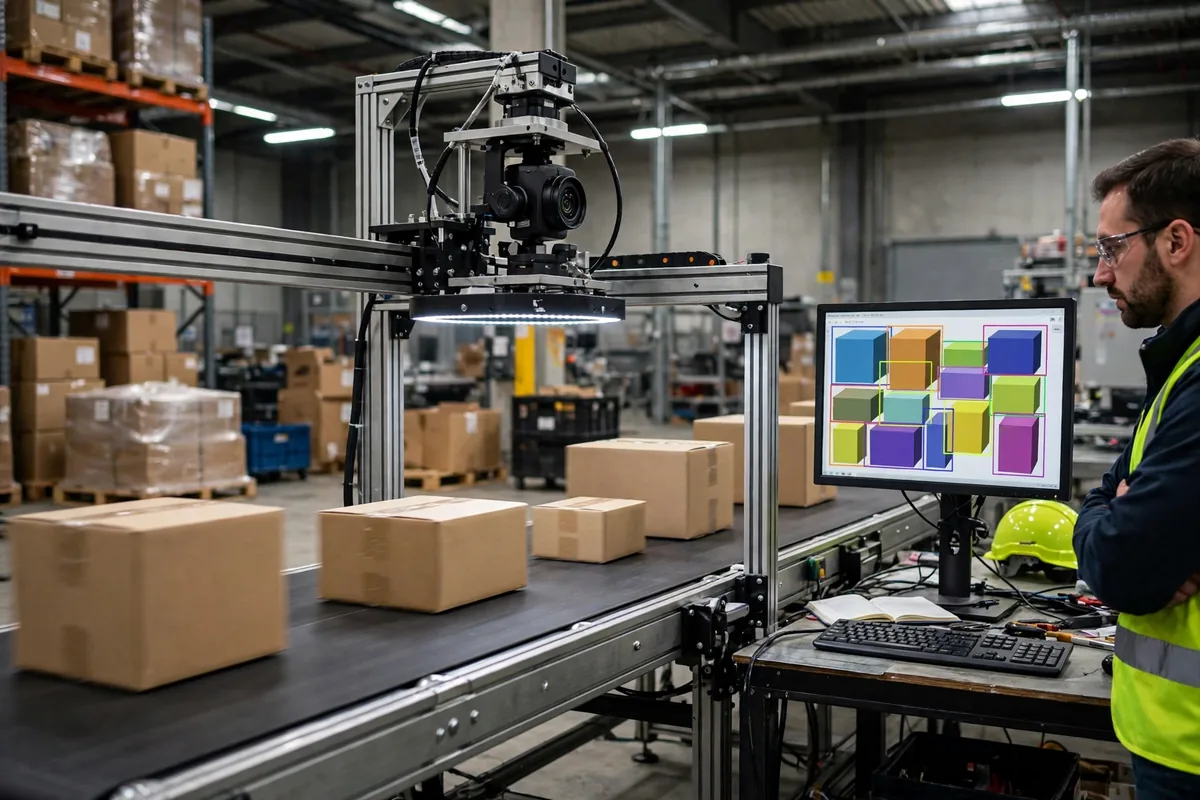
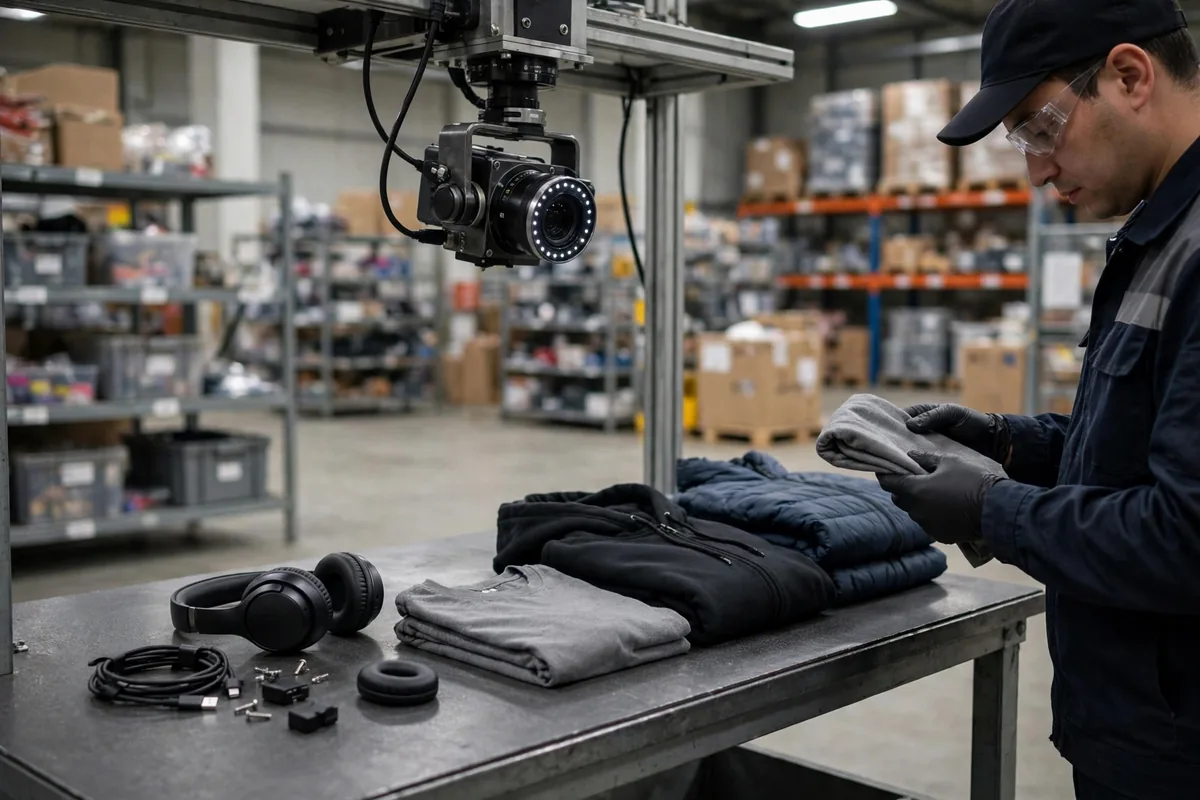
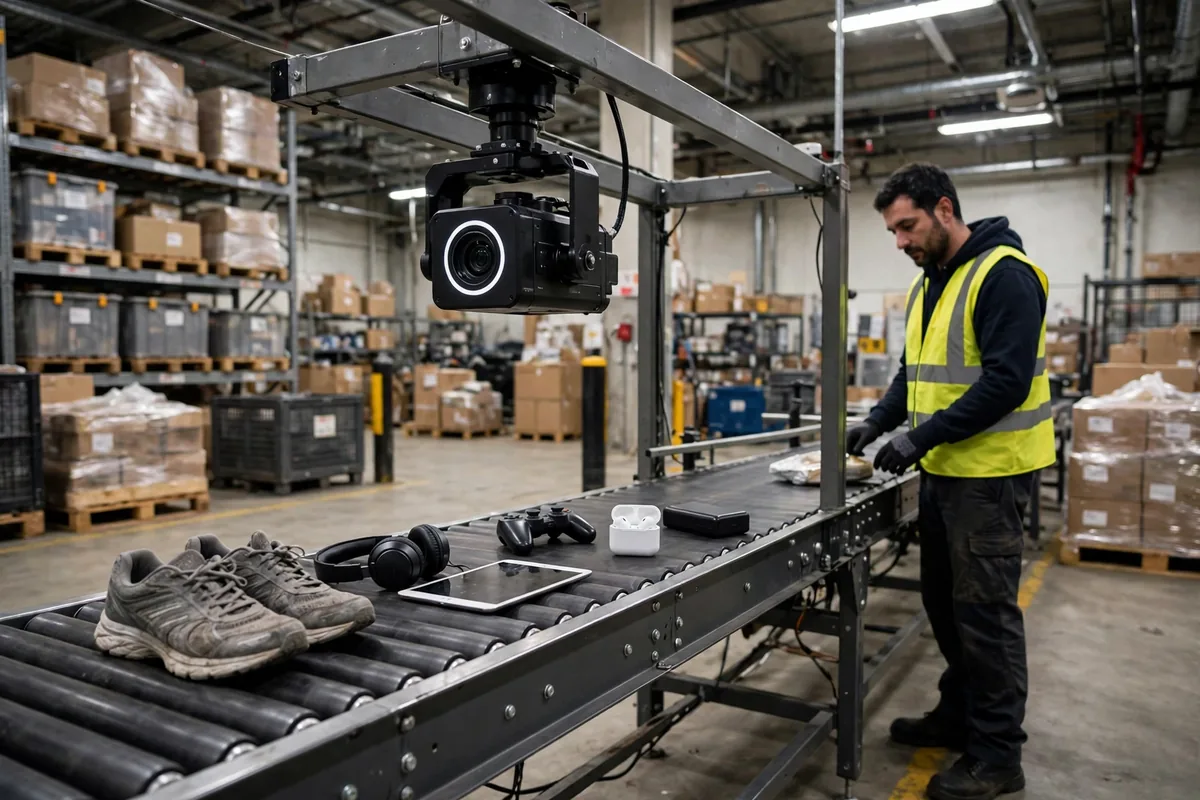
It is worth defining the scope before judging the promise. The systems discussed here are image-recognition tools deployed at returns inspection: a fixed camera or handheld device photographs the returned item, a model flags scratches, wear, deformation, missing parts, and stains, and it proposes a condition grade that a human reviewer then confirms. The point is not that a camera sees better than a person in every case. The point is that it can apply the same decision logic to every item, and leave a visual record behind, so that human time can move toward the borderline cases where judgement actually matters.
The Phenomenon: AI Visual Inspection Returns Quality Grading Warehouse Work Starts With Consistency
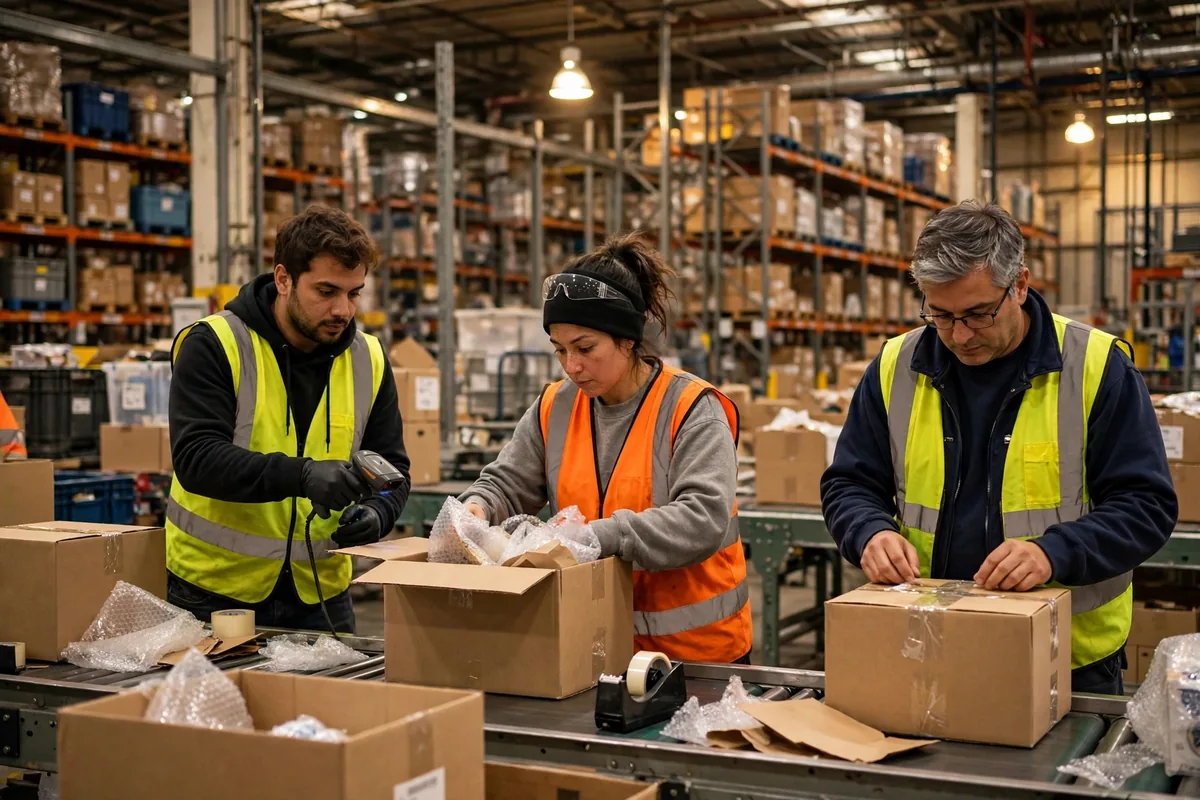
In the second half of 2025, during research at an e-commerce returns warehouse in East China, I watched a familiar scene unfold. Three inspectors grading the same batch of returned sneakers produced visibly different results in a single day. A crease on one shoe's upper was read by one inspector as light wear and by another as a condition defect. That disagreement did not show that anyone was unprofessional. It showed that purely visual grading, without a reproducible scale, will drift by person, by shift, and by fatigue.
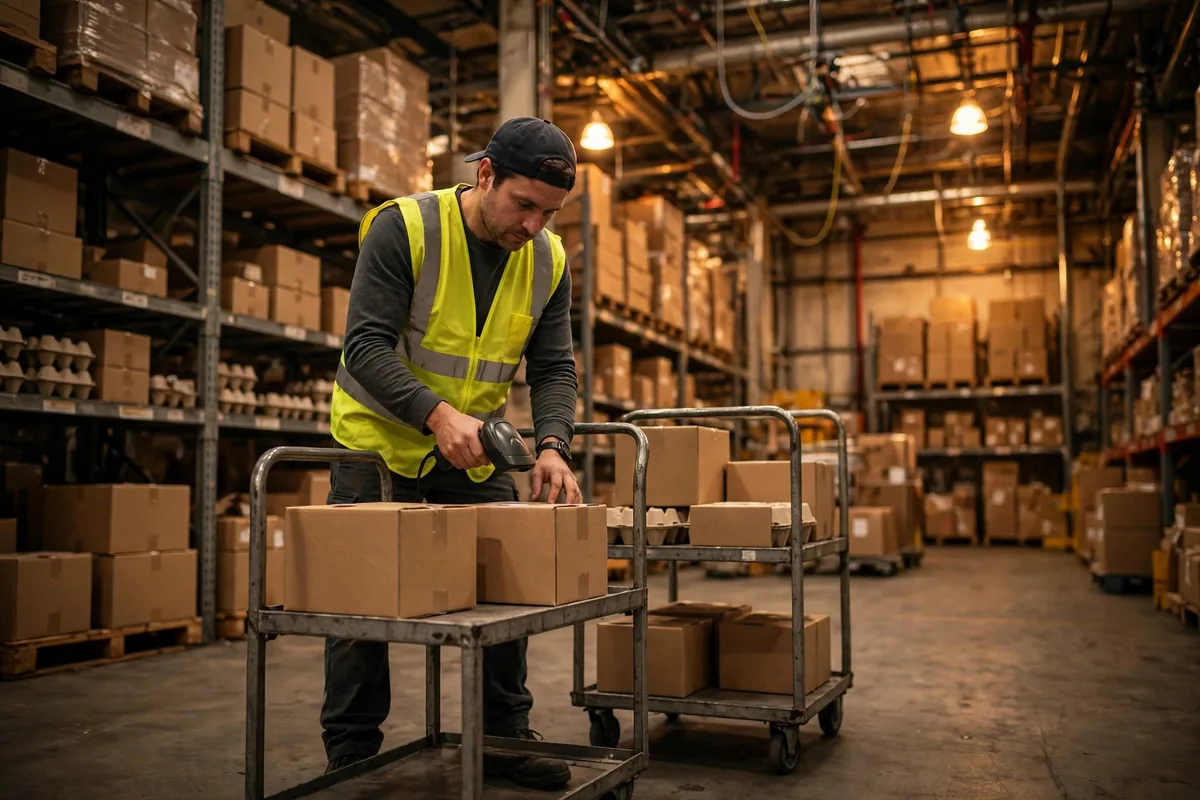
A second scene, from a consumer-electronics returns warehouse in North China in March 2026, shows a different benefit. The site processed roughly 400 returns a day, and its inspection benches were chronically queued. After it introduced photographed intake and model-proposed grades, the most obvious change was not speed alone but traceability. Every return now carried an intake image, and customer-service teams handling "it arrived damaged" disputes finally had an original record to consult. According to the site's internal review, dispute handling became noticeably faster. That does not mean disputes disappeared. An intake image proves condition at intake; it cannot prove what happened in transit, and that boundary should be stated plainly to customers and to management alike.
Data and Human Review: AI Visual Inspection Returns Quality Grading Accuracy Inside a Review Framework
Any discussion of model accuracy that ignores human review is incomplete. According to general industry practice and vendors' public materials, vision models tend to perform well at detecting visible surface defects, but condition grading involves subjective boundaries, and relying on a model alone to finalize a grade still carries risk. The more defensible arrangement is tiered: high-confidence routine cases move through quickly on the model's suggestion, low-confidence borderline cases go to human review without exception, and human decisions feed back into refining the standard.
The table below is a decision framework, not a promise that fits every warehouse:
| Situation | Handling | Human role |
|---|---|---|
| Appearance intact, accessories complete, high model confidence | Grade on suggestion, with sample audits | Audit and exception handling |
| Light scratches or wear, medium model confidence | Model suggestion plus human confirmation | Final grading decision |
| Obvious defect, missing part, or low model confidence | Full human inspection | Full judgement and documentation |
| High-value goods or dispute-prone categories | Human review regardless of model output | Final accountability |
Behind this framework sits a counterintuitive judgement: the largest gain from visual AI is often not the elimination of human labor but its reallocation, from "inspect every item from scratch" to "inspect only the items worth inspecting." If a warehouse adopts visual inspection and its reviewers stay just as busy, only busy in a different way, the problem is probably that its grading standard never converged. A machine can only be trusted as far as the standard it was trained to apply, and a vague standard produces suggestions that reviewers must constantly override.
That leads to a structural point about return on investment. The calculation should not rest on seconds saved per item alone. A complete account includes at least four elements: the one-time cost of cameras and system deployment, the ongoing cost of model maintenance and standard iteration, the labor released when review becomes selective rather than universal, and the quieter gains from fewer disputes and faster relisting. The first two are certain costs. The last two depend heavily on product category and returns mix, so any return-on-investment claim that ignores category should be treated with caution.
Consider a framework example, not a universal result: an inspection team handling 400 returns a day moves from full manual inspection of every item to deep human review of roughly one third of items, the borderline cases, while the rest move on suggestion or sample audit. The labor released in that model is structural, not merely incremental. But the model only holds if the suggestion quality has been validated on that warehouse's own data. Apparel creases and electronics scratches are not equally legible to a camera, and a figure borrowed from another warehouse proves nothing about yours.
Where Visual Inspection Does Not Fit
At least three situations deserve caution. First, goods whose defects depend on touch or function, such as faults found only by pressing, bending, or powering on a device, cannot be judged from a photograph alone. Second, goods whose condition standard is deeply subjective, such as second-hand luxury items where grading shades into authentication, where imaging can assist but professional appraisal still carries the final call. Third, returns that arrive disassembled, missing key parts, or repackaged in irregular ways, where unstable photographic conditions directly degrade judgement quality.
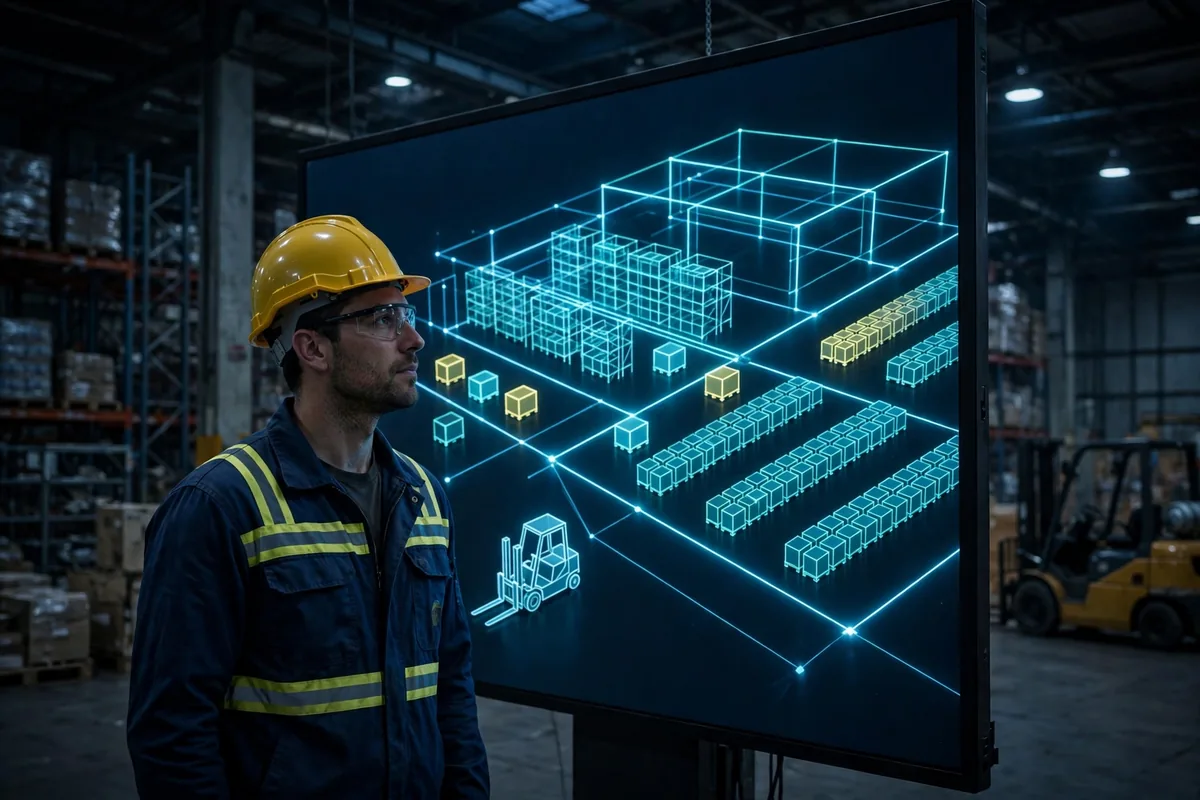
The trend worth watching, then, is probably not a simple replacement story. Returns grading looks more likely to be restructured: machines provide consistency, traceability, and large-scale screening, while people provide boundary judgement, accountability, and the evolution of the standard itself. In that structure, the human role does not vanish as it shrinks; it moves toward standard-setting and exception handling. Which raises an open question rather than a conclusion: if more warehouses adopt similar visual grading systems, will condition grading converge from scattered house experience toward a mutually recognizable common language, and if it does, will the warehouses that documented their standards first gain an advantage in returns handling and resale circulation that has not yet been fully priced in?
By Dr. Chen, Supply Chain Researcher