It was 1:47 in the morning, in the middle of winter 2023, when my phone rang.
My night-shift supervisor: "Chen, we're completely dark. Stage 6. The whole park is out."
Our warehouse sat outside Kempton Park, east of Johannesburg — a 3PL facility with about 200 people across three shifts. Twelve guys were mid-shift. Lights died, conveyor stopped, scanner docks dead, and worst of all the WMS server started screaming — the UPS was counting down.
When I got there, a driver was in a shouting match with my supervisor. His reefer had arrived at 2 a.m. to a pitch-black dock, dead electric forklifts, nobody able to unload him. "Your warehouse turns into a haunted house every night!" he yelled from the cab. The supervisor just shrugged: Stage 6, several times a day, no warning.
Honest truth: in South Africa, load shedding isn't a power problem for a warehouse. It's a payroll problem. Two hundred people, wages running, nothing moving. I've done this math for you.
Load Shedding Gets Paid For in Wages and Lost Orders
The cold store incident is the one I'll never forget.
July 2023, a Saturday afternoon, Stage 6. We were holding a meat exporter's stock, probes set at -22°C. Forty minutes after the power died: -19°C. Ninety minutes: -16°C. Then the email: temperature excursion, full inspection, a claim if anything failed.
I called our insurance broker. He shut me down: spoilage from scheduled load shedding is excluded under most policies, some only engaging after 12 to 24 hours of continuous outage. The fine print is clear. When the power dies on a cold store, the risk is entirely yours.
Then the WMS crash. Our server UPS was rated for 25 minutes. The generator never auto-started — the ATS battery was dead, never checked. The server went down hard; inventory data rolled back half an hour. Next morning's count was off by forty-plus cartons. The whole warehouse stopped for half a day of manual reconciliation. The IT guy and I stood in the server room all morning, silent.
After that I ran the numbers: during the worst Stage 6 months, the hours we lost — wages plus late-delivery penalties — would have paid for half a generator. From that day, backup power moved in our budget from "emergency spend" to "fixed investment."
A Bigger Generator Is Not Better, and a UPS Protects Data, Not Production
We bought our first generator wrong.
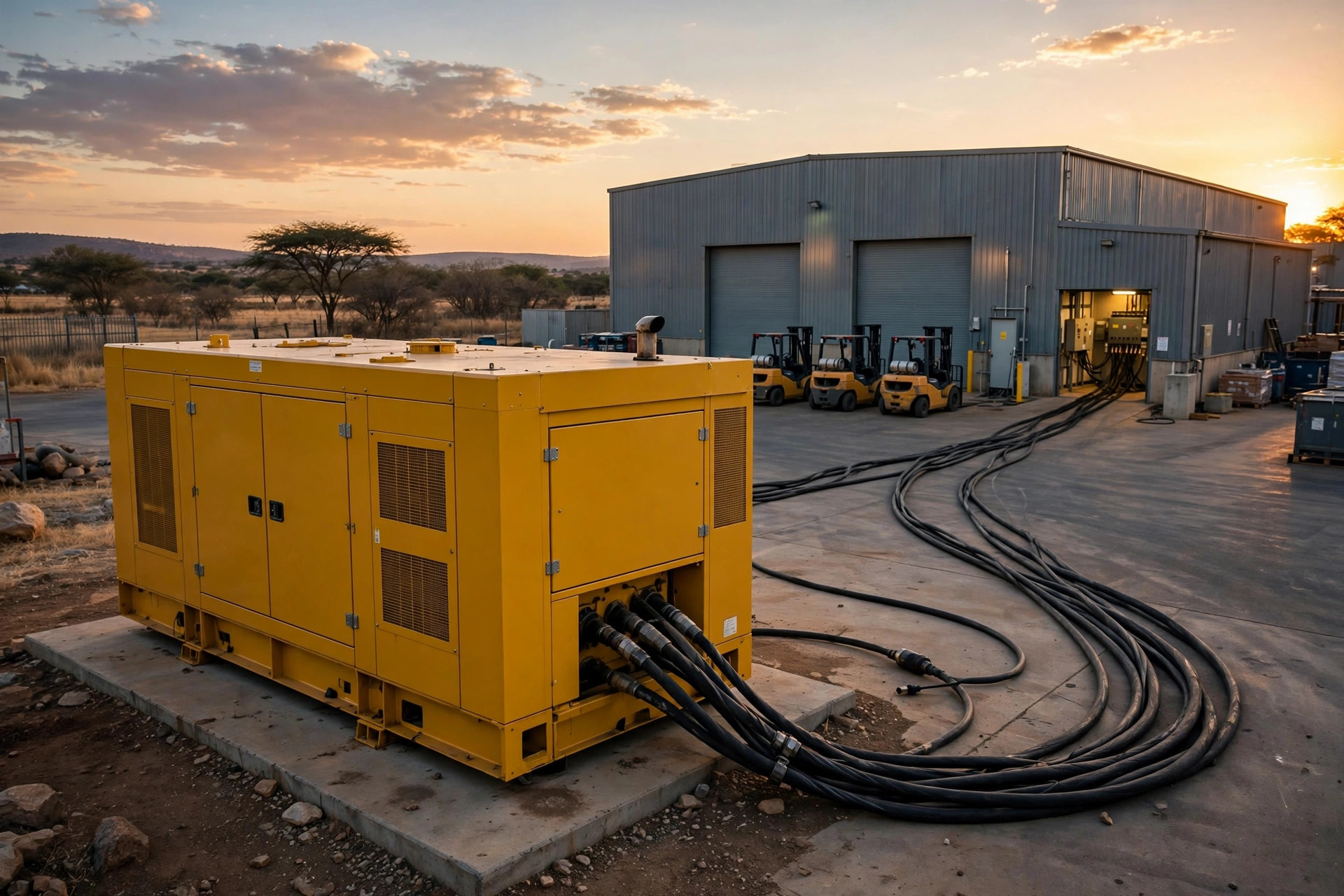
The boss: "Buy big. Do it once, do it right." So we got a 275kVA unit. But our genuinely critical loads — cold store compressors, servers, lighting, the forklift charging bay — barely added up to 80kVA. The big machine ran at thirty percent load all day, never burned clean, carboned up, every service pricier. A diesel running chronically light-loaded burns more per kWh, not less.
Real talk: the first rule of generator sizing is "just enough," not "as big as possible." We switched to a 100kVA set for the critical loads. At seventy to eighty percent load, the machine was happier, healthier, cheaper to feed. Datasheets tell the story: a 100kVA-class diesel burns roughly 18 to 22 litres an hour at 75 percent load — check the datasheet of whatever you buy. At the official October 2026 diesel price, about R32 a litre wholesale inland, that's R580 to R700 an hour in fuel alone. After that math, nobody said "buy bigger" again.
Now the UPS. Many operators think a UPS means production continues. Blunt truth — a UPS protects data, not production. Those batteries buy you a graceful shutdown: servers save state, the generator gets 30 seconds to crank, you finish the paperwork in progress. Running the whole floor off a UPS for two hours? The batteries can't, and if they could, you'd be burning money.
Our rule: the UPS feeds servers, network switches, and WMS terminals. Nothing else. The rest belongs to the generator.
The Backup Power Cost Math for a South Africa Warehouse
The South Africa warehouse load shedding backup power cost question really comes down to three buckets: the machine, the fuel, and everything around it. Every figure below is public — South African dealers and industry reports. Prices move fast here, so confirm against your supplier's latest quote.
The machine first. Local dealers quoted roughly R85,000 ex VAT and up for a 10–20kVA three-phase set, and R543,000 to R665,000 ex VAT for a 275kVA Volvo-class unit. The 100kVA band — the warehouse sweet spot — sits between, depending on brand and whether the ATS cabinet is included. Buy it with the ATS included. Manual changeover is the same as no changeover — nobody gets up fast enough at 2 a.m.
Then fuel, the real bill. A 100kVA set at 70–80 percent load drinks 18 to 22 litres an hour. At R32 a litre: R580–R700 an hour. During Stage 4, with several outages daily, assume 8 generator hours: about R5,000 a day in diesel. Twenty load-shedding days a month means R100,000 a month in fuel alone. Industry estimates put the true all-in cost of generator power — fuel, servicing, depreciation, labor — at R8.50 to R11.00 per kWh, several times grid price. One analysis: a medium site on a 350–500kVA connection, running its generator just 40 hours a month, burns R100,000 to R180,000 monthly in diesel. Painful. Real.
UPS and solar? Local handling-equipment firms publish reference pricing: a 10–20kWh UPS system installs for R80,000 to R150,000; a 15–30kWp rooftop solar array with 20–40kWh storage runs R200,000 to R450,000. Solar costs more upfront, but at R33–R35 a litre retail (October 2026), the long-term side of the South Africa warehouse load shedding backup power cost equation favors it. We skipped it — leased building, landlord said no to the roof. If you lease, ask the landlord before spending a cent.
The forgotten cost: forklift charging. Local operators report: during Stage 4, electric fleets without backup charging lose 15 to 30 percent of a shift's planned time. Our fix: the charging bay got its own circuit on the generator feed, prioritized during outages. Diesel forklifts run without grid power, sure — but with lights out, dock levellers dead, and WMS down, one diesel forklift can't work alone.
Our four standing rules:
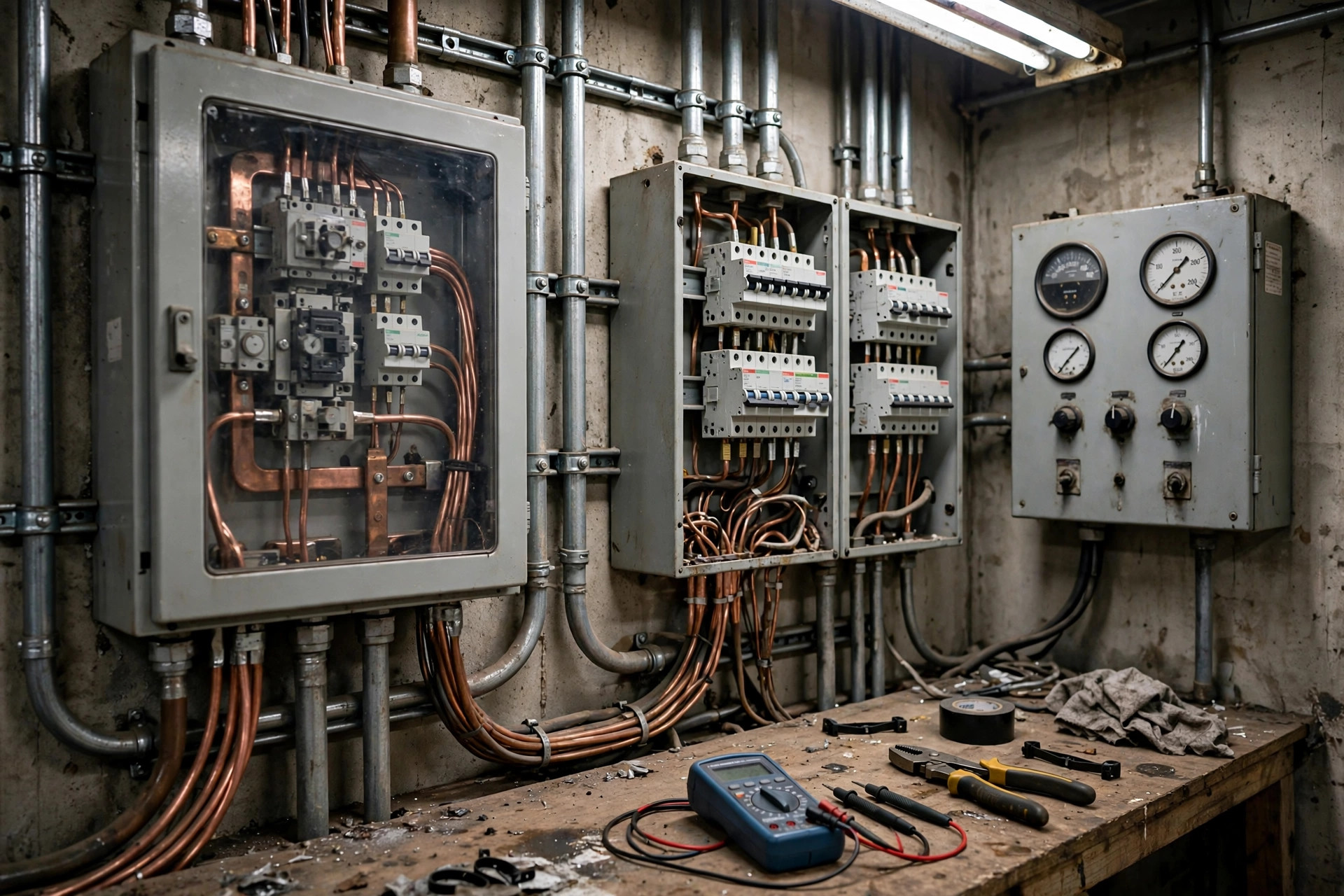
One: zone the power, don't back up everything. Cold store, servers, lighting, charging bay, dock doors go on the ATS. Office aircon and non-critical lines stay dark. No debate.
Two: size to fit, not to impress. 100kVA for the critical loads at seventy to eighty percent. That's the machine's happy place.
Three: the UPS protects data. Servers, switches, WMS terminals. Nothing else gets plugged in.
Four: test weekly. Every Friday afternoon: 15 minutes unloaded, ATS changeover tested, tank never below half. ATS battery replaced every six months — don't ask how I learned that. Ask the WMS rollback.
It's 2026 and Load Shedding Has Paused. Still Worth It?
You're thinking: it's 2026, Eskom says 500-plus days without national load shedding. Still worth it?
Eskom's October 2026 statement: no national load shedding since 16 May 2025, fleet availability around 68 percent, diesel spend down roughly 80 percent year-on-year. Real. The grid recovered.
We haven't sold a single generator. Three reasons.
First, no national load shedding doesn't mean no outage at your site. Aging municipal networks, transformer failures, cable theft — local faults never stopped. Eskom still runs load reduction in parts of Gauteng and KwaZulu-Natal, 200,000-plus customers affected, official target March 2027 to clear it. A warehouse can't wait for an official target.
Second, load shedding didn't teach us to "buy a generator" — it taught us the outage playbook. Our SOP now: ATS transfers within 30 seconds, the night supervisor confirms cold-store temperature curves within 5 minutes, key customers get order updates within 15 minutes. That procedure, bought with real money in the Stage 6 years, is worth more than the generator.
Third, diesel got pricier, but downtime got pricier faster. At R33–R35 a litre, self-generation hurts — but weigh it against 200 people's wages, a cold store of stock, or one customer claim.
My call: backup power in a South African warehouse has moved from "emergency equipment" to "fixed asset." Like the annual forklift inspection — part of operations, not optional. So if you're still running the South Africa warehouse load shedding backup power cost numbers in 2026, run them against downtime, not against the grid.
Parting reminders, all bought with our mistakes:
- Size from a real load survey. An electrician lists every critical load, line by line. No guessing.
- The ATS must be automatic. Manual is the same as nothing. Battery on a six-month schedule.
- UPS feeds servers and network gear only. Not the kettle.
- Never let diesel run low. Suppliers queue too — we once waited three days at the Stage 6 peak.
- Leasing? Clear generator installation with the landlord before spending anything.
- Cold-store alarms must reach the duty phone, not just wail in an empty office.
In South Africa you can't count on the grid — you underwrite the power yourself. A generator won't make you money. But when it's time to make money, it keeps you from dropping the ball.
By Chen Feng, Warehouse Operations Manager