Let me tell you something. After all these years driving south africa mining logistics routes, the thing I dread most is not a long haul. It is the phone call from the customer. First sentence: "Driver, where are you?" Second sentence: "The mine is waiting to start work." I ran a load down to Rustenburg once, mining pump spares out of Johannesburg, up the N4. The satnav said 147 kilometres, a little over two hours. Then a toll plaza cost me more than forty minutes, and when I reached the mine gate, the warehouse lads said the pump could go straight on — except the hoist was still missing a seal, so the whole line sat idle anyway. That day I learned the real lesson of mining logistics: it does not matter how fast the truck runs. It matters whether the spares are all there.
The US Geological Survey put South African platinum production in 2025 at about 120,000 kilograms, roughly 71% of a world total of 170,000 kilograms, and more than 80% of the world's known platinum-group metal reserves sit in South Africa too. Almost all of it comes out of the Bushveld Complex, and Rustenburg sits on its western limb, ringed by mines. Impala Platinum's Rustenburg operation milled more than 7.6 million tonnes of ore in the nine months to March 2025. With a machine that size, the underground equipment cannot stop for a day. Stop for a day, and the losses are frightening.
The mines are remote, so the road is a lifeline. The N4's western stretch is the Platinum Highway: from the Botswana border past Rustenburg and Pretoria to Mozambique, 718 kilometres, tolled end to end. The Rustenburg to Johannesburg stretch is the artery for everything the mines need. Toll plazas, weighbridges and the odd incident will eat your schedule alive. Old hands in south africa mining logistics will tell you: plan 147 kilometres as three hours, not two, and keep the extra hour for the toll queue, for traffic, and for the security check at the mine gate.
A mining spares warehouse is not a city warehouse. A city warehouse lives on fast turnover. A mining spares warehouse lives on one word: having it. Hoists, ventilation fans, crushers — the big machines' spares sit on the shelf looking like scrap metal, until one of them breaks, and then without it the whole mine stops. So the first rule of a mining spares warehouse: critical spares must be held in safety stock, and they must sit as close to the mine gate as possible. I have seen mines keep spares in Johannesburg for faster sourcing — until a bearing failed underground and the mine lost half a day waiting for the part. They learned. They built a forward store at the mine gate, stocked with seals, bearings, hydraulic parts and filters, and kept only the big expensive items at the central warehouse in Johannesburg. The maths is simple: a year of extra rent on a forward store is a fraction of what half a day of downtime costs.
South Africa mining logistics: one missing seal, half a day of waiting
Let me work the numbers — a hypothetical example to show the structure. A mid-sized platinum mine with the shafts stopped loses ore, loses concentrate, and still pays the labour — easily tens of thousands of dollars an hour in direct losses. Half a day stopped is hundreds of thousands. And the seal that caused it? A few hundred dollars. A bearing? A few thousand. Holding a few tens of thousands of dollars of fast-moving spares in a forward store looks like tied-up cash, until you realise what it is actually holding down: the risk of stopping. Customers see spares as dead stock until they stop once. Then they understand: a spares warehouse is insurance.
But you cannot pile spares up blindly either. I have seen a mine warehouse with motors on the shelf that had not moved in three years, for a machine model retired long ago. On the books they were worth good money. In reality they were scrap. So the second rule is: spares follow the equipment. When the equipment is retired, the old spares go. Count the stock once a year, pull out everything that has not moved in twelve months, and sit down with the maintenance crew: is this machine still running? Still running, keep it. Retired, clear it out. Dead spares eat floor space, cash and attention — the team looks after scrap while the part somebody needs cannot be found.
There is one more thing. The spares coding has to match the maintenance work orders. Underground reports "abnormal noise, hoist number two bearing", and the warehouse has to know at once which part, which shelf, and how many are left. Some mines run one coding system and maintenance runs another, so when a work order arrives the warehouse has to ring around for half an hour first. The system only needs to do one thing: type in the work order number, and out come the part location, the stock level and the substitute part.
South Africa mining logistics trucks are not city trucks
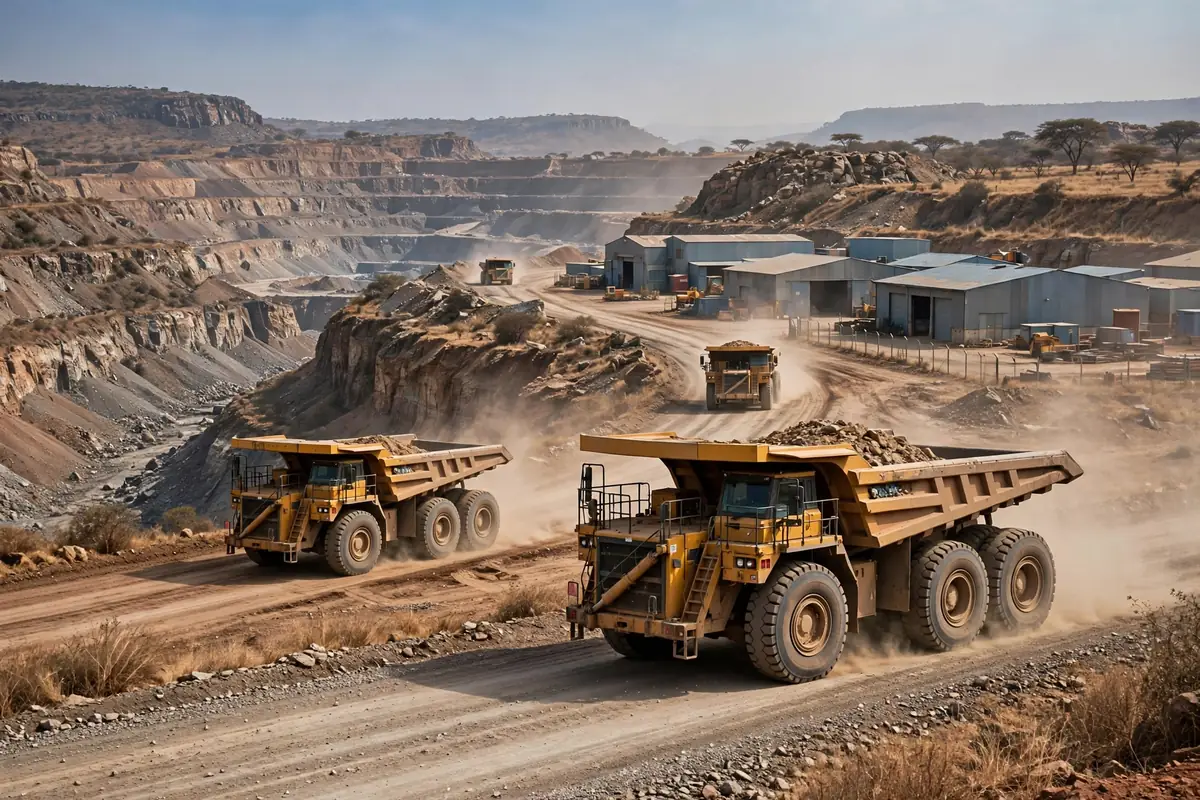
First, the truck. Trucks to the mines need payload, chassis and tyres specced for mining roads — the last stretch is dusty and stony, and highway tyres are finished in months. Mines have their own gate rules: register, inspection, speed limits, papers ready, or wait at the gate. My rule: three copies of the delivery note, document photocopies in the cab, water and a torch in the truck — gate waits run to hours.
Second, the people. A driver fears two things: the road, and arriving with nobody to receive the goods. On the road, it is traffic, toll queues, and the stretch after dark. Nobody to receive the goods is worse: the warehouse has closed, the receiver has gone underground, the forklift has no fuel, and the truck sits at the gate. So my advice to customers in south africa mining logistics is plain: schedule the delivery before ten in the morning, and confirm the receiver, the forklift and the bay the day before, by phone — what time the goods arrive, who takes them, which bay they go in. Half the delays in mining logistics are small stuff piling up.
And security, I have to be honest about it. Around the mining areas, and for high-value spares on the road, the risk is real. My way of working is: valuable spares travel in daylight, never at night; trucks travel in convoy, never alone; and the delivery note carries part numbers, never descriptions and values. The goods arriving safely matters more than anything — lose a whole truckload and you will cry too late.
| Risk | What it looks like on the road | What to do about it |
|---|---|---|
| Toll queues and traffic | N4 toll plaza queues, road closures after incidents | Plan 147 km as three hours; check road conditions before departure |
| Mine gate security | Missing papers, delivery note not matching | Three copies of the delivery note; photocopies of documents in the cab |
| Nobody to receive | Warehouse closed, forklift out of fuel, no bay reserved | Confirm receiver, forklift and bay the day before |
| Night driving | Poor visibility, higher risk | Valuable parts travel in daylight only; convoy, never alone |
| Missing spares | One part short, the whole mine stops | Forward store for fast movers; central store for big items |
| Dead spares piling up | Three-year-old motors for retired machines on the shelf | Annual count, match against the equipment register, clear retired parts |
Three pieces of advice for customers and warehouses
First: spend the spares money where it sits closest to the mine gate. A forward store costs a little more, but downtime costs far more. Second: do not just agree a delivery date. Agree an hour, a person and a bay. Half the delays in mining logistics come from a delivery that was never properly agreed. Third: listen to the drivers. The people who run this route know which toll plaza jams at what hour, which stretch you do not drive after dark, and what new rule the mine gate brought in today. That information is not in any system. It is in the drivers' mouths.
In south africa mining logistics, it is about whose spares are there when it matters, and whose truck turns up at the agreed hour. The books of the platinum belt add up to two lines: spares in place, the mine keeps turning; trucks on time, the warehouse stays in order. As the old saying goes, sharpening the axe does not delay the woodcutting. In mining country, that axe is the spares warehouse and the N4 highway.
By Shifu Zhao, Trucking Veteran (15 yrs)