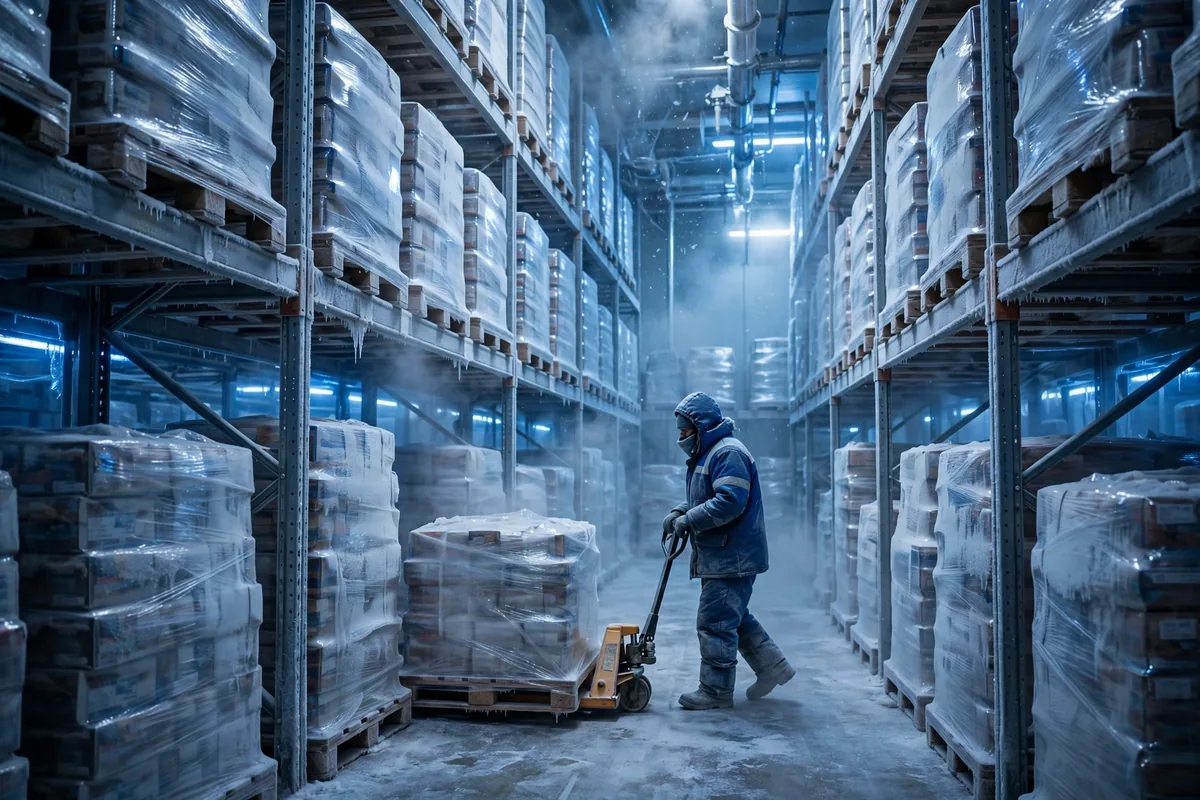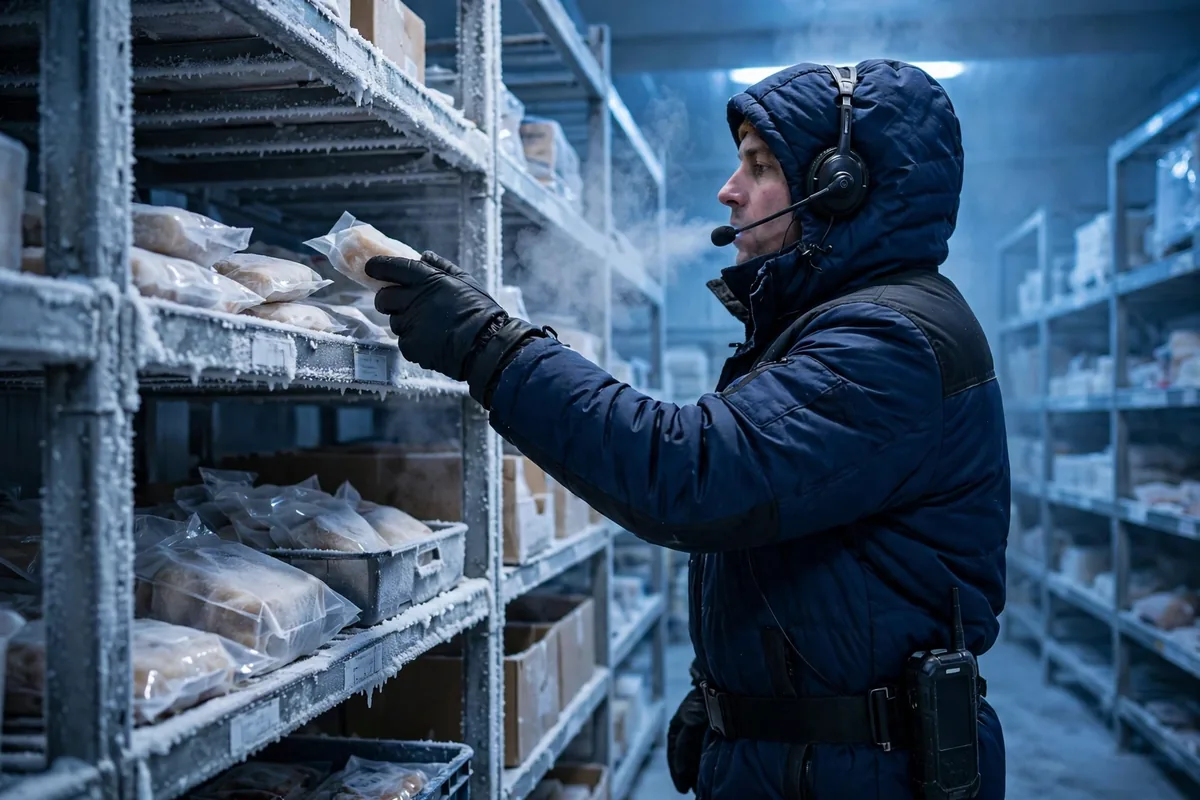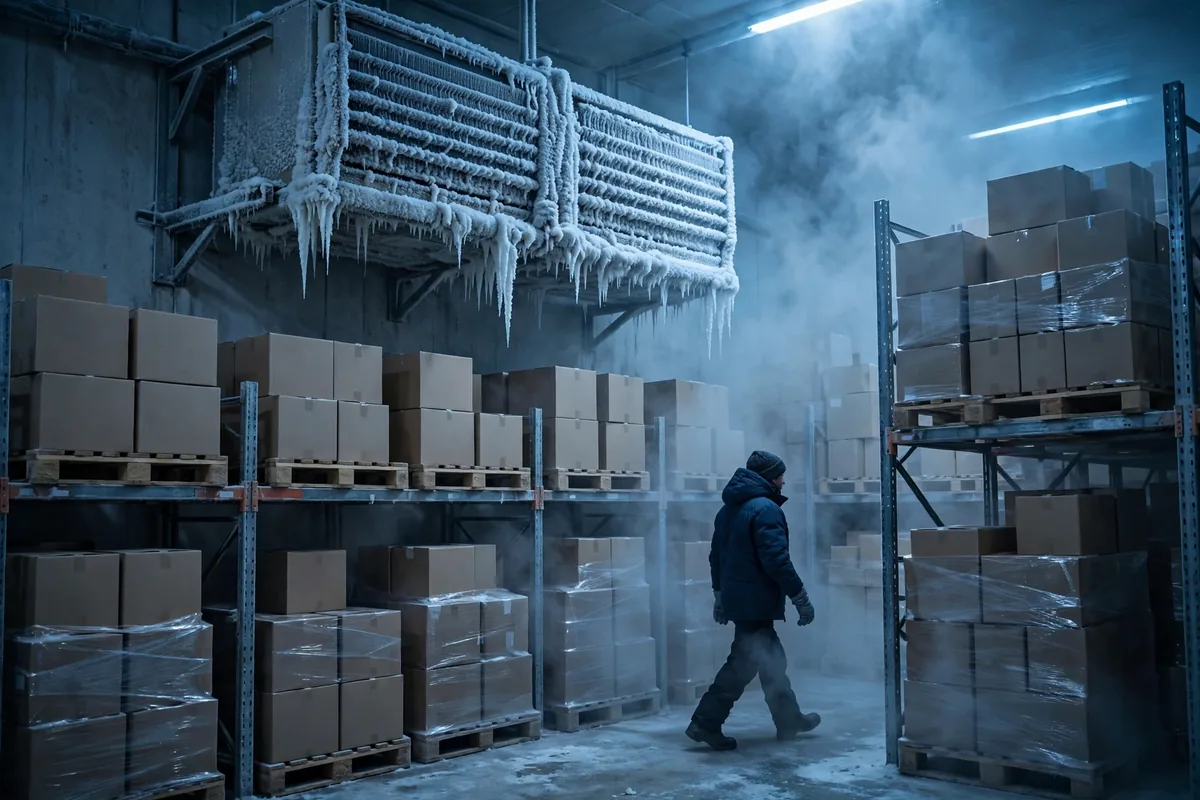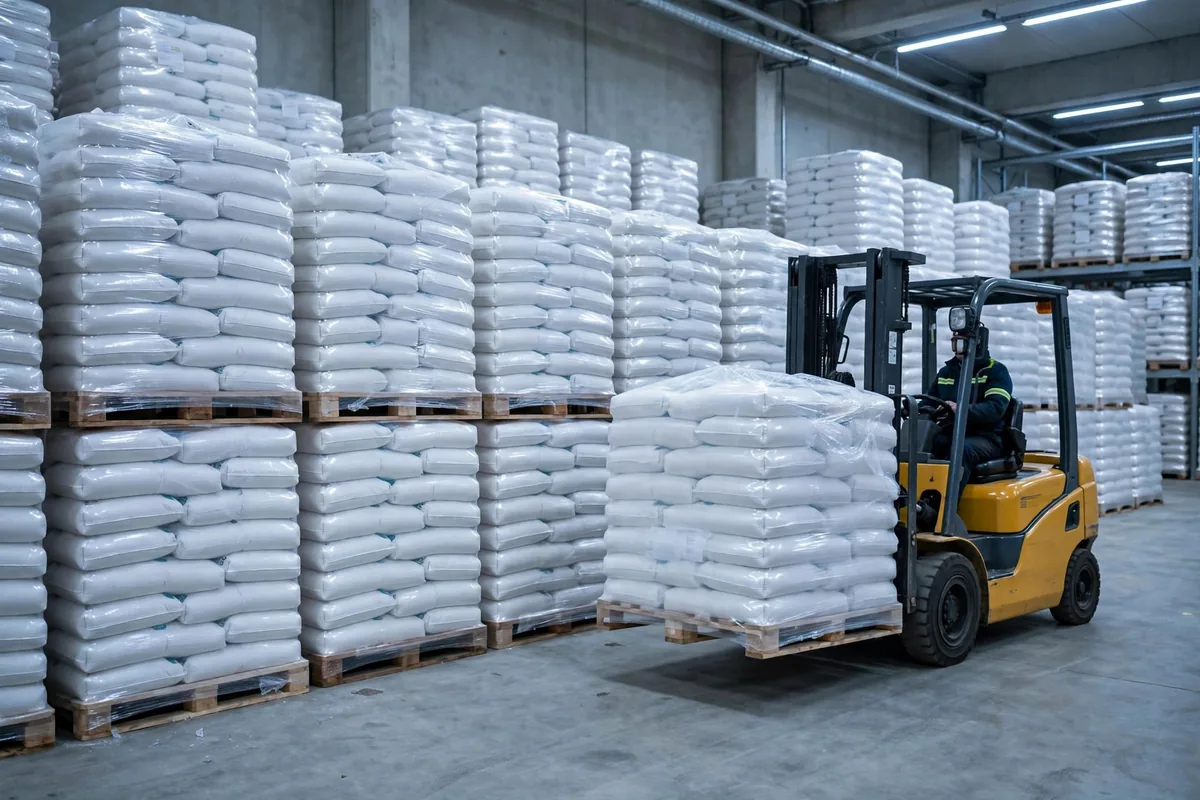
Here is the bottom line up front: the new zealand milk powder export cold chain warehouse is not a refrigerated chain. It is a temperature-stable, moisture-controlled chain. Milk powder does not need a freezer. What it needs is a warehouse that holds temperature below 27°C and relative humidity below 65%, from the day the bags arrive to the day the container seal goes on. I have worked on three go-lives that touched this cargo, and every failure I saw happened on land, in the gaps nobody was watching, not at sea.
The scale explains why the stakes are high. According to Rabobank's 2026 World Dairy Map, New Zealand accounts for about 22% of world dairy exports, making it the largest single-country dairy exporter, and it holds 56% of global whole milk powder exports. Fonterra collected 1.5708 billion kilograms of milk solids in the 2025-26 season, up 4.1% on the prior season and its highest in a decade. That volume leaves South Island farms as 25-kilogram bags, rides trucks to export warehouses, and sails to China, Southeast Asia, and the Middle East. Any leg where heat or moisture gets in is a loss measured by the container.
New Zealand Milk Powder: Heat Is the First Line You Cannot Cross
Rank the enemies of whole milk powder and heat comes first, moisture second, oxygen third. The U.S. Dairy Export Council's industry guidance puts whole milk powder shelf life at 6 to 9 months when stored below 27°C and below 65% relative humidity. Above that temperature, fat oxidation accelerates, and flavor changes can show up within three months. A Russian industry standard is stricter still, recommending 0 to 10°C. I have seen this exact failure three times, and it always dies the same way: a warehouse treats milk powder as ambient cargo and parks it anywhere.
In March 2025, an export warehouse near Christchurch took in a batch of whole milk powder during a rushed week. The pallets went on the row nearest the loading dock, against a west-facing wall. The autumn days were mild, but that wall baked in the afternoon sun and the air beside it pushed past 30°C. The goods sat there only 11 days. Inspection at stuffing looked fine. At the destination port, the buyer opened the outer bags and found caking and poor solubility. The container sold at a discount, and the loss would have paid for three months of climate-controlled storage. The figures in that story are an illustrative reconstruction of a real pattern, but the mechanism is exact: heat does not pick a day, it picks a position, and the pallets by the wall, the door, and the roof go first.
My rule is rigid because the failure is predictable. Milk powder gets three kinds of location only: at least half a meter from any wall, at least 15 centimeters off the floor, and never within 10 meters of a loading door. Each zone gets two temperature and humidity loggers, one at the hottest point and one at the dampest. The morning shift reads them first, before anything else. Above 25°C we get a warning, above 27°C we move stock inward. In the system, this becomes a hard rule: putaway for milk powder automatically excludes hot and damp zones, and any manual override needs a second approval.
Before You Consolidate New Zealand Milk Powder, Do the Moisture Math
Milk powder is hygroscopic. Once a bag takes on moisture, the powder cakes, solubility drops, and the buyer's production line jams. The moisture fight happens in three places: the warehouse, the stuffing, and the consolidation.
In the warehouse, hold relative humidity below 65% all year, and run dehumidifiers through the wet season. South Island winters are damp and Auckland summers are damp, and a warehouse that relies on the weather will get caught eventually. At stuffing, inspect every container before loading: rust streaks on the roof, a wet floor, a musty smell. Plenty of warehouses skip this step to save time, and one skipped inspection can cost a container. Consolidation is the underestimated one. Never consolidate milk powder with odorous cargo or high-moisture cargo. I saw one shipment where milk powder shared a container with tea. The tea picked up a milky note, the powder picked up moisture, and neither side could deliver.
Run the consolidation math honestly. Illustrative example: if a full 40-foot container costs one unit of freight, consolidation can cut one shipper's share to about 0.6 units, which looks like a 40% saving. Add back the real costs: split customs entries, break-bulk labor at the consolidation warehouse, storage days while waiting for the container to fill, and a risk reserve for taint and moisture. Put those back in and the true saving is usually closer to 10%. My call: if your volume fills half a container, ship it whole. Consolidate only below a third of a container, and only with dry, odorless partners. Tea, spices, and chemicals are off the list. That discipline is the whole point of the new zealand milk powder export cold chain: not cold, but control.
The Night-Before Checklist: Run It Before the Seal Goes On
A go-live night checklist is my occupational habit, and export cold chain work gets the same treatment. Five items, checked one by one, and the container does not get sealed until all five pass: the temperature and humidity curve for the past seven days, with no excursions; the container inspection record in the system; marks, batch numbers, and production dates matched against the customs declaration; the consolidation partner's cargo checked against the blacklist; and the seal number and container number photographed on file.
One more failure point deserves its own paragraph: batch control. Milk powder shelf life runs from the production date, not the receiving date. The system must pick by production date, first expired first out, and one container should carry one batch wherever possible. Mix batches in a container and the buyer samples the oldest one, and the whole container falls under suspicion. My setup writes production date into the putaway rule so the system pushes the earliest batch forward automatically, and any manual change leaves an audit trail.
Here is the counterintuitive part: in the new zealand milk powder export cold chain warehouse, cold is not the point, stability is. Putting milk powder into a 0°C freezer achieves nothing, and the temperature shock on unloading causes condensation on the bags, which is self-inflicted moisture damage. Stable temperature, dry air, no direct light, good ventilation. Get those four right and the powder travels safely from pasture to destination port. The mistake I see systems people make is reading "cold chain" as "colder is better." For this product, that reading is wrong.
A note on the numbers in this piece: export shares and milk collection figures come from Rabobank's 2026 World Dairy Map and Fonterra's published data, storage conditions and shelf life from the U.S. Dairy Export Council and dairy science journals, case figures are illustrative reconstructions, and the costing example is labeled as such. For freight rates and sailing schedules, check the carrier's latest published policy.
By Lin Xiao, WMS Implementation Consultant