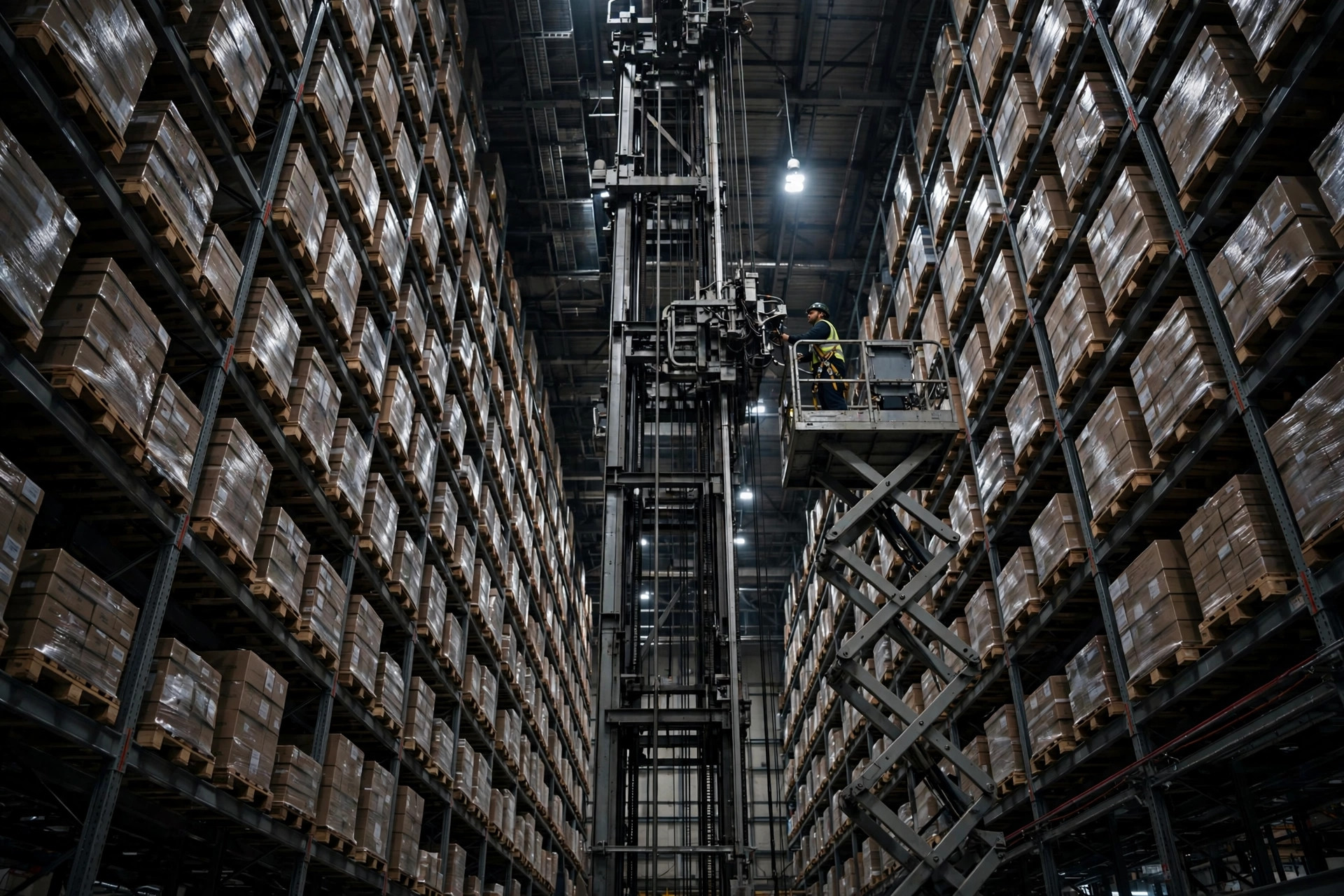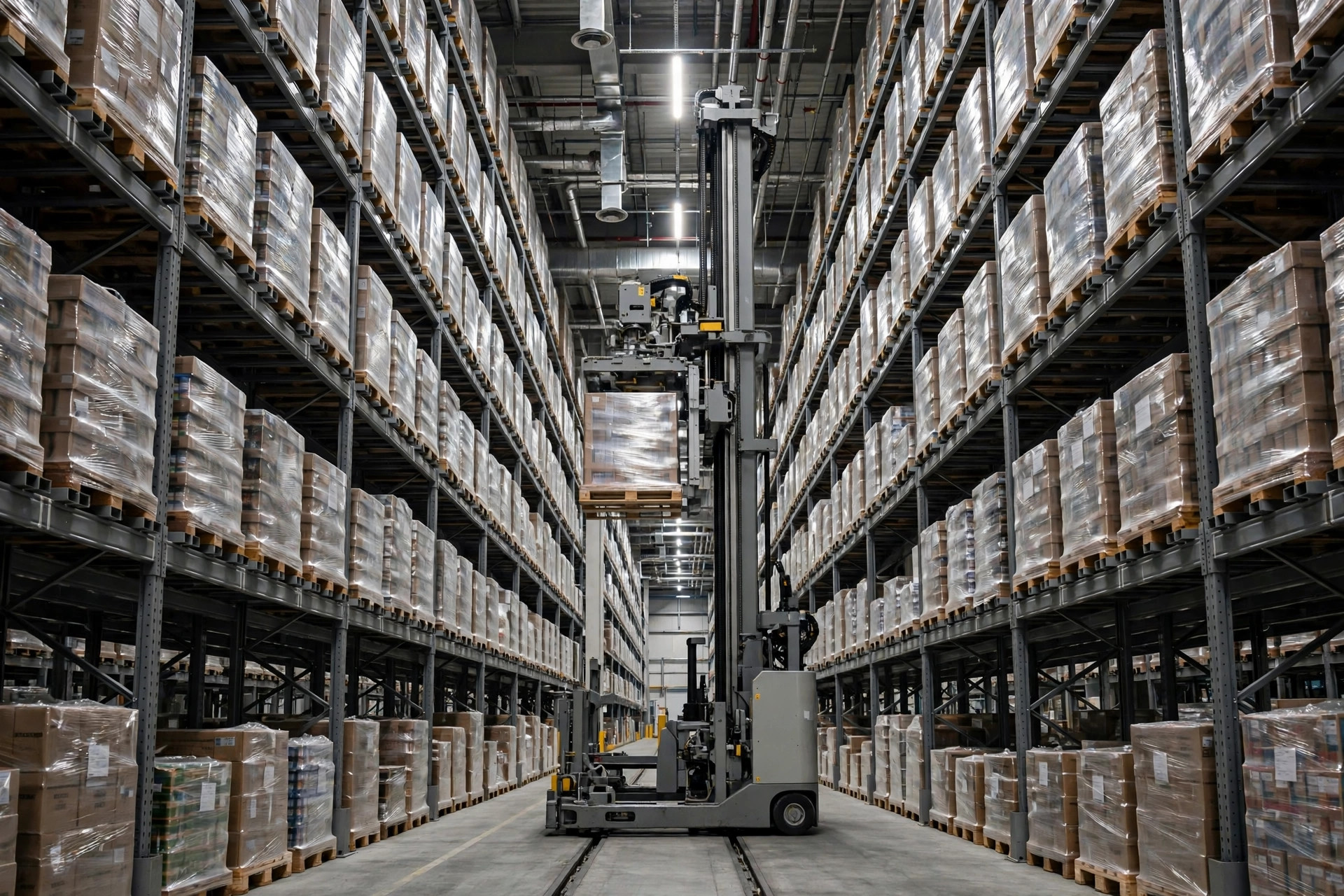
"Da Liu, shuttles or stacker cranes — which is more advanced?" Every time a client asks me this, I know their shuttle vs stacker crane ASRS project is about to go off the rails. More advanced has nothing to do with your warehouse. Think of it this way: a stacker crane is an elevator and a forklift fused into one machine — one crane per aisle, dedicated, no sharing. A shuttle system is a fleet of little carts running everywhere — one breaks down and a hundred others pick up the slack. Two philosophies, two destinies. Pick wrong and you've set a few million on fire.
Two Completely Different Animals Under the Hood
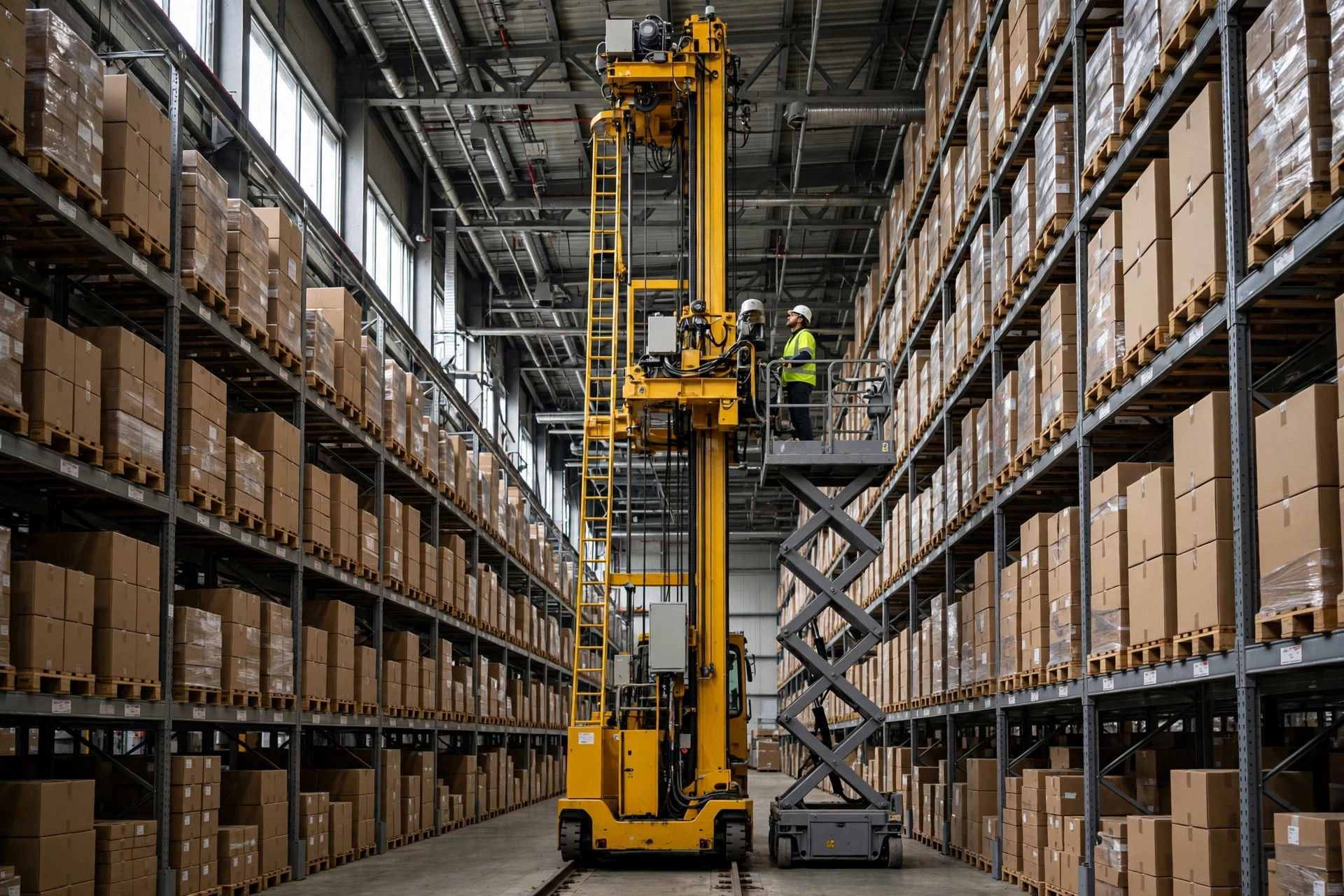
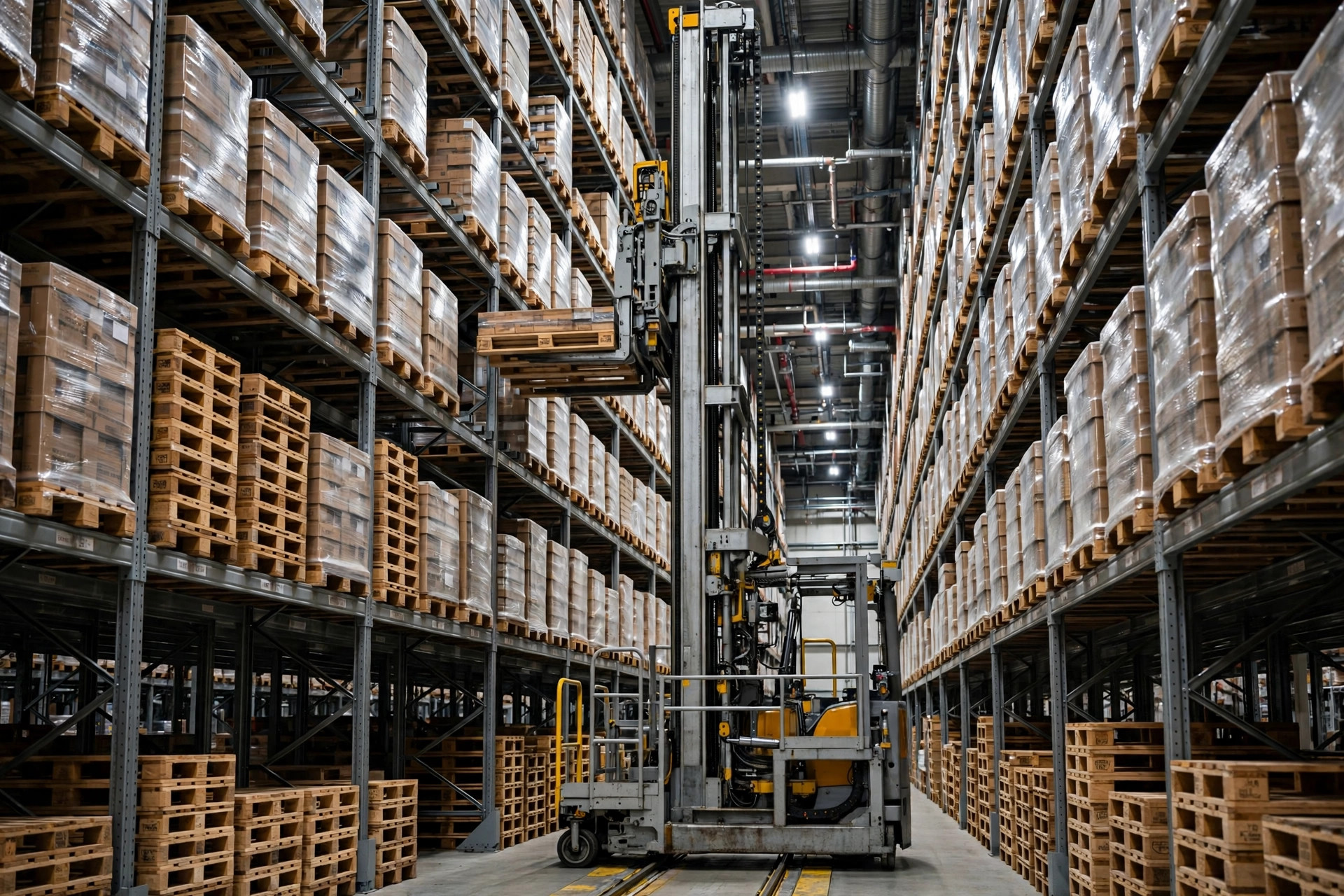
A stacker crane (aisle-based storage and retrieval machine) runs on rails at both ends of its aisle, combining horizontal travel, vertical lift, and fork extension in one smooth motion to move a pallet from the aisle entrance to its slot. One crane owns one aisle — "every pallet in this aisle answers to me." A unit-load stacker crane does a few dozen dual cycles per hour. That's physics, not engineering laziness — no machine outruns the length of its own aisle.
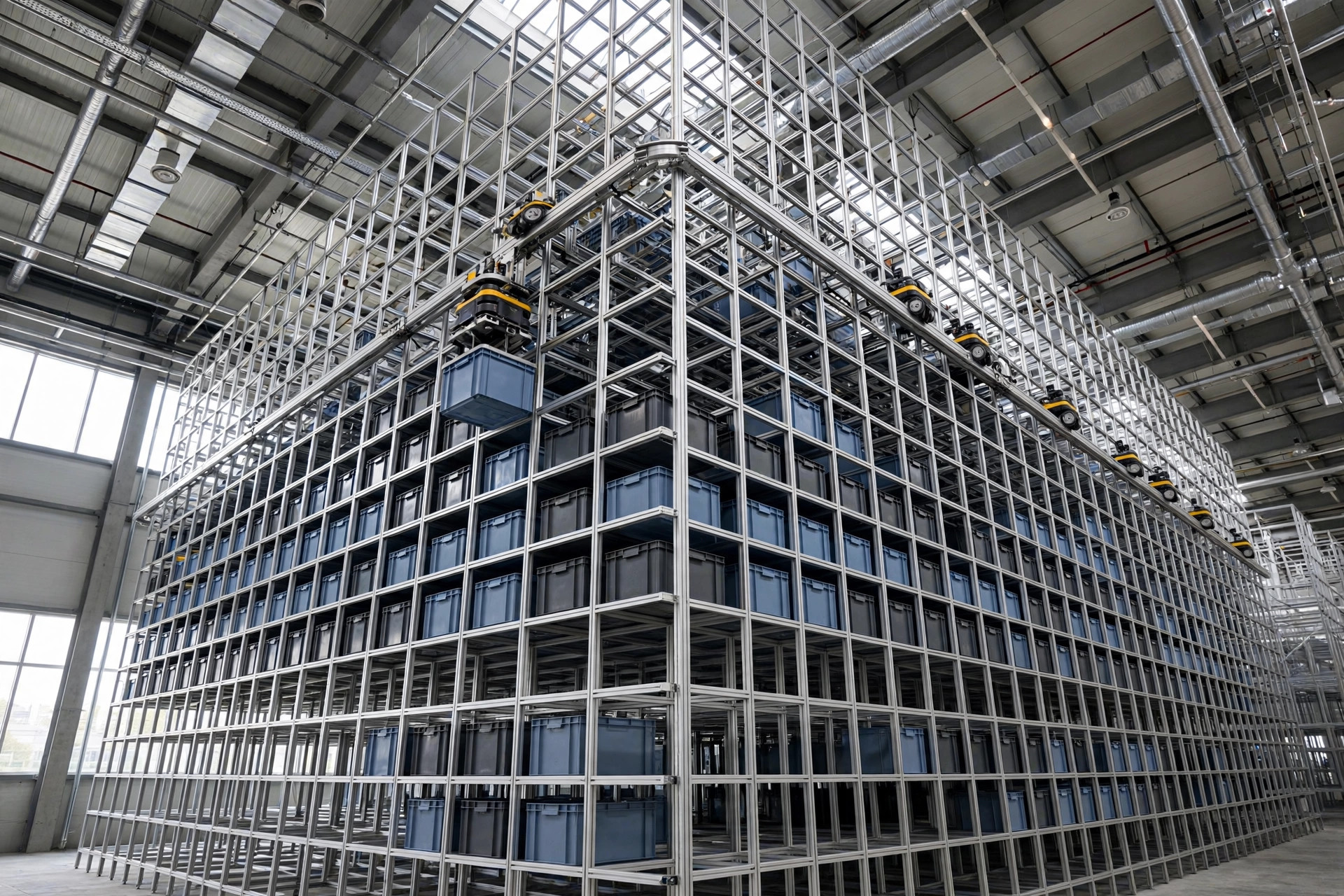
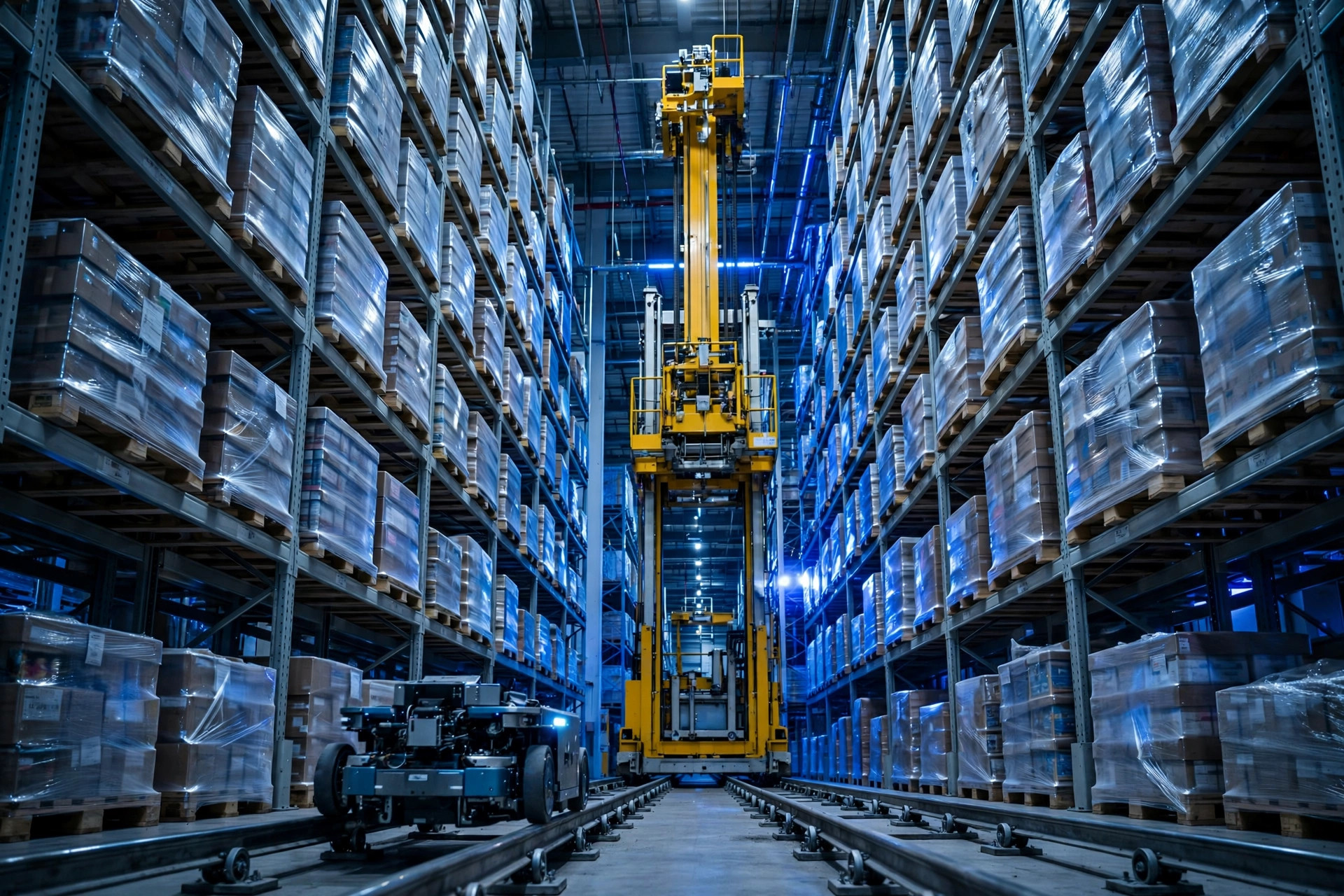
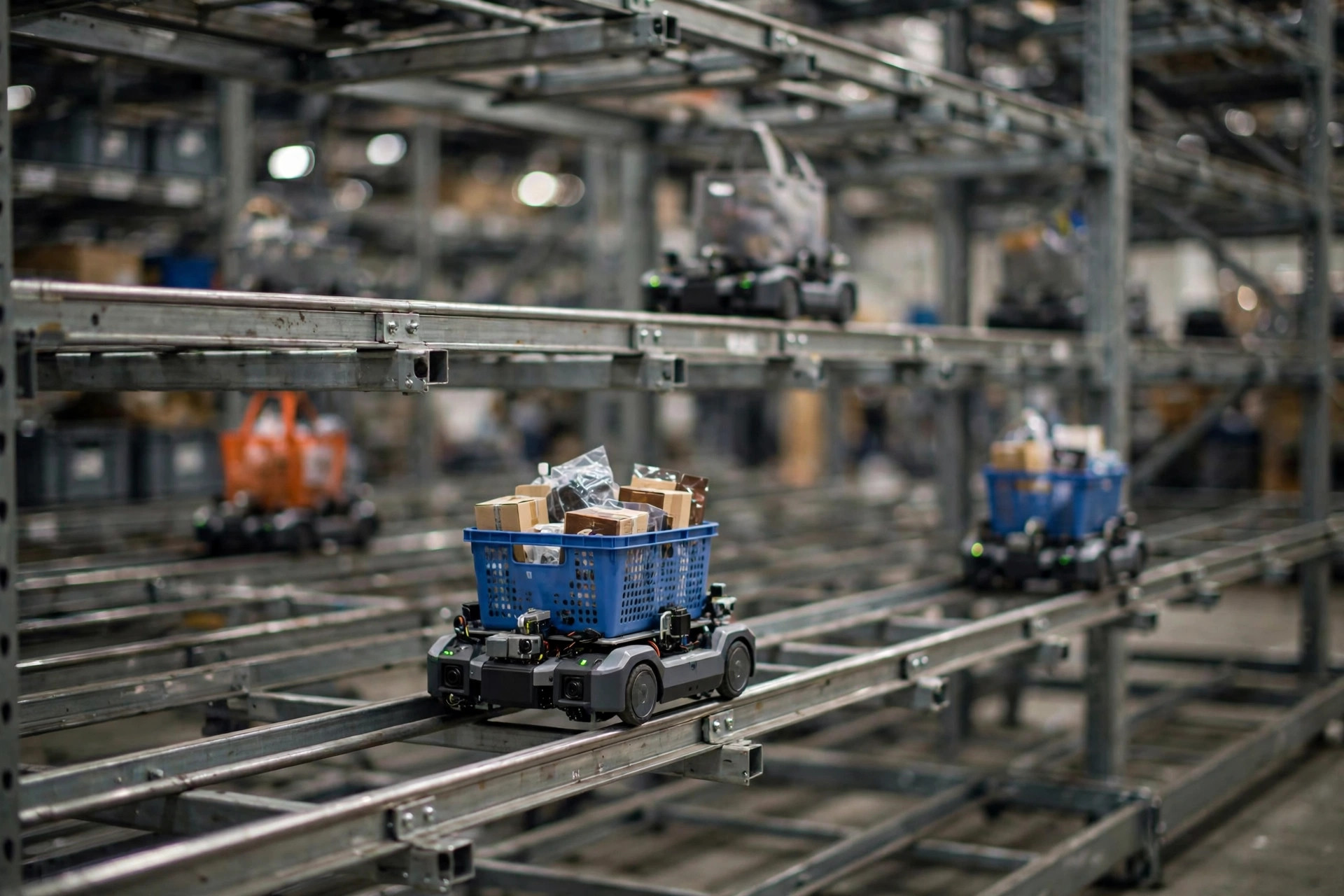
Four-way shuttles play a totally different game: the carts roam freely on each racking level, and lifts move carts or goods between levels (in mother-child setups, the mother cart carries the child cart). You can think of it as "a conveyor belt chopped up into hundreds of little vehicles." System throughput equals per-cart rate times number of carts — it stacks in parallel. A tote-level shuttle system doing several hundred to over a thousand totes per hour is completely routine.
The one-line version: the stacker crane is "one hero holding the pass," the shuttle is "victory by numbers."
Five Lines That Decide Your Shuttle vs Stacker Crane ASRS Choice
After a dozen years in integration, I've boiled it down to five dividing lines. Match them to your operation:
One: SKU count and order lines. Thousands of SKUs and thousands of order lines a day — go shuttle, no debate. A few hundred SKUs with full-pallet in and out — a stacker crane handles it in its sleep. Order lines are the shuttle's home turf; full pallets are the crane's.
Two: throughput. Tote-level picking at several hundred cases per hour — a stacker crane can't touch it. Pallet-level flow at a few dozen pallets per hour — the crane is in its comfort zone, and a shuttle is overkill.
Three: building height. For very tall warehouses (20 meters and up), the stacker crane is the standard answer — the technology has been proven for decades. Shuttle systems get expensive at extreme heights because lift travel and efficiency become the bottleneck.
Four: pallets or totes. Both designs work at pallet level; at tote level, shuttles dominate. Asking about stacker cranes for a tote application means the homework wasn't done.
Five: growth expectations. If throughput might double in three years, pick shuttles — just add carts, no civil work. If the slots are built once and you only need stability afterward, pick the crane.
| Dimension | Stacker crane | Four-way shuttle | Edge to |
|---|---|---|---|
| Concept | One dedicated machine per aisle | Parallel carts + lifts | — |
| SKU / order lines | Low SKU, bulk moves | High SKU, high order lines | Depends on business |
| Throughput ceiling | Cycles × aisles, clear cap | Add carts, high ceiling | Shuttle |
| Building height | 20 m+ is routine | Moderate heights more economical | Crane |
| Expansion cost | New aisle = civil work, expensive | Add carts, cheap | Shuttle |
| Maturity | Decades, very reliable | Newer, but proven at scale | Crane, slightly |
| Single-point failure | One crane down = one aisle down | Lifts are single points, design redundancy | Tie |
The Money: What 5,000 Pallet Positions Cost in Each Design
Take the most common scale — 5,000 pallet positions. A stacker crane setup usually means 4 to 6 aisles; racking, cranes, conveyors, and software together land in the "several million RMB" range for initial investment. The cranes themselves are the biggest line item, civil work and racking second. In operation, power consumption is relatively modest — maintenance is a precision game.
A pallet-level four-way shuttle system — dozens of carts plus lifts and a charging system — costs about the same, sometimes more. The big tickets are the vehicles, batteries, and lifts; in operation, batteries are a recurring cost, and charging strategy directly determines how many carts are actually available each day.
From projects I've delivered: at equal slot counts, the stacker crane's upfront investment typically runs 20–40% lower than a pallet shuttle system. That's an order-of-magnitude rule of thumb, not a quote — civil conditions and brands move it. But the shuttle's premium buys flexibility: when throughput runs short, you add carts. When a crane system runs short, you're building another aisle. Both sides usually contract for 98%+ system availability at acceptance — that's the industry norm, and neither vendor gets a pass.
A Real Project That Picked the Wrong Design
In 2023, a 3C accessories distributor in South China: 5,000 pallet positions, under 600 SKUs, with the top SKUs driving 80% of outbound volume, all concentrated in an 8-hour morning window. A textbook "low SKU, bulk moves, steady rhythm" case — the stacker crane answer, straight out of the manual.
Then the owner visited a trade show, watched a four-way shuttle demo, decided "this is what a smart warehouse looks like," and signed the shuttle design. The result: upfront investment roughly 40% higher; system complexity far greater, with unplanned downtime in year one several times that of a comparable crane project (their maintenance lead told me this himself); three years later, the cost per pallet shipped came in clearly above what the crane design had projected. The cruelest part: their throughput demand was something a stacker crane could have met with its eyes closed. The "advanced" premium never got used once.
The counter-example exists too. In 2024, a pharma distributor in East China: 8,000+ SKUs, tens of thousands of order lines a day, tote-level picking — shuttles plus lifts, several hundred totes an hour, something a stacker crane couldn't dream of. There, the shuttle was the right answer, and not expensive at all.
So stop asking which is more advanced. "Advanced" without a business case is a fake requirement. I've watched too many projects where one sloppy page of requirements analysis cost millions downstream.
Maintenance Traps: Rail Precision vs Batteries and Charging
Once the design is signed, the real traps live in maintenance.
A stacker crane lives or dies on rail installation precision. Slight errors in levelness or straightness, and address recognition drifts at high speed; after two or three years of floor settlement, the address plates misalign and the machine starts "losing" pallets. The fix is boring but non-negotiable: inspect the rails once a year, and budget for re-leveling in zones with heavy settlement. Don't wait until the machine goes blind — the downtime costs a hundred times the inspection.
Shuttles live or dies on batteries and charging. Lithium batteries losing 20–30% of range after a few years is normal — battery replacement belongs in the annual budget. Charging strategy determines your available fleet: opportunity charging ties up vehicles, battery swapping needs labor. Decide this at design stage, not after go-live. And remember the lifts are single points of failure: one lift down means a whole level of carts is stranded. Don't cheap out on redundancy.
Some integrators write "maintenance-free" into their proposals. When I see that, I call it out on the spot: there is no maintenance-free ASRS. There is only "did you make a maintenance plan or not." Anyone promising maintenance-free either doesn't understand the equipment or is lying.
One Number Tells You If the Money Was Worth It
Forget vendor storytelling. Use a calculator: cost per pallet (or tote) shipped = three-year total cost of ownership ÷ three-year total throughput. Fold in equipment, civil work, energy, maintenance, battery replacement, and downtime losses. Run it for both designs. The lower number wins.
Something you can do tomorrow: export last year's outbound data from your warehouse, and run this formula for the crane design and the shuttle design side by side. If the crane wins, ignore whose carts looked fancier at the trade show — the millions you save are your own bonus.
By Da Liu, Automation Engineer