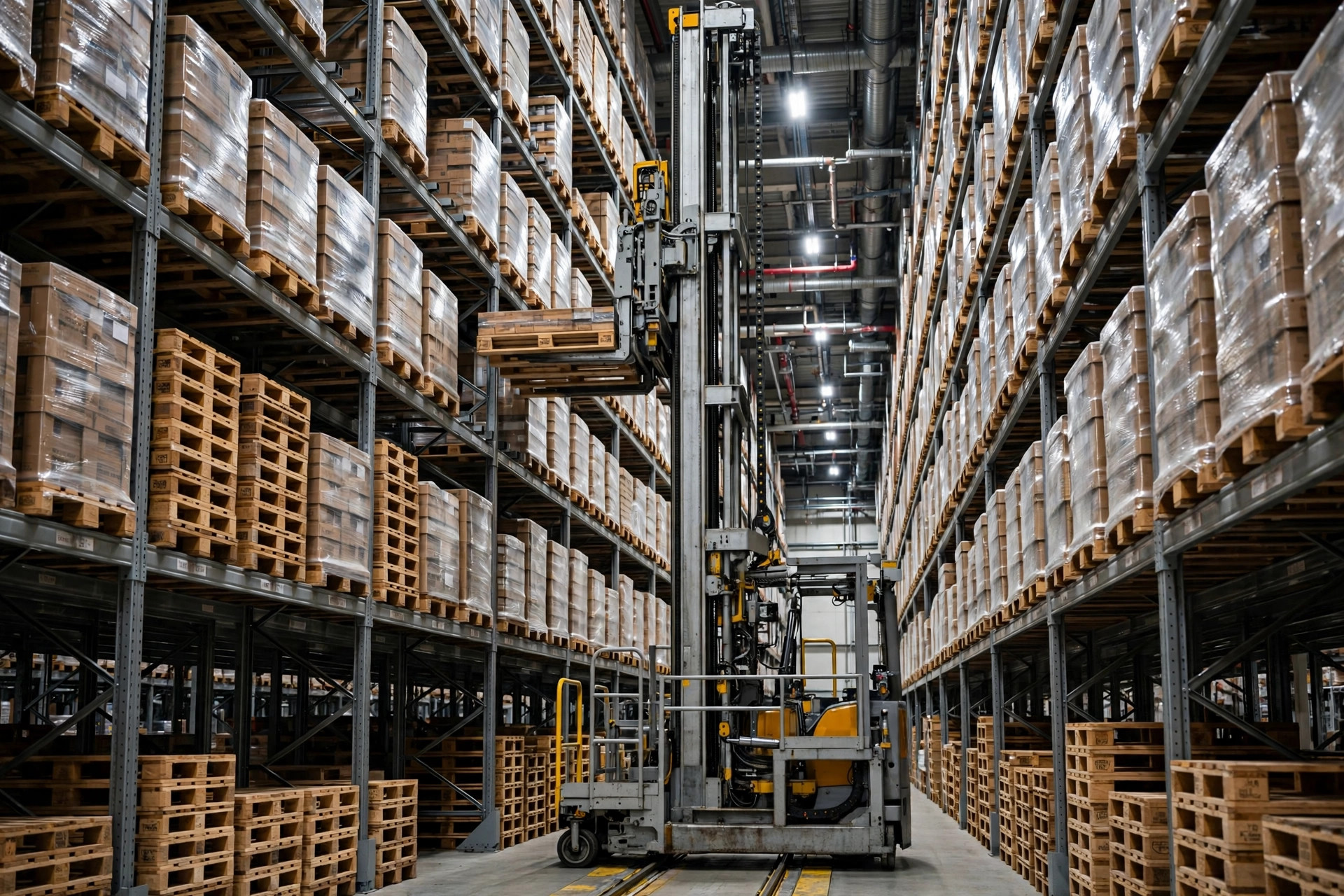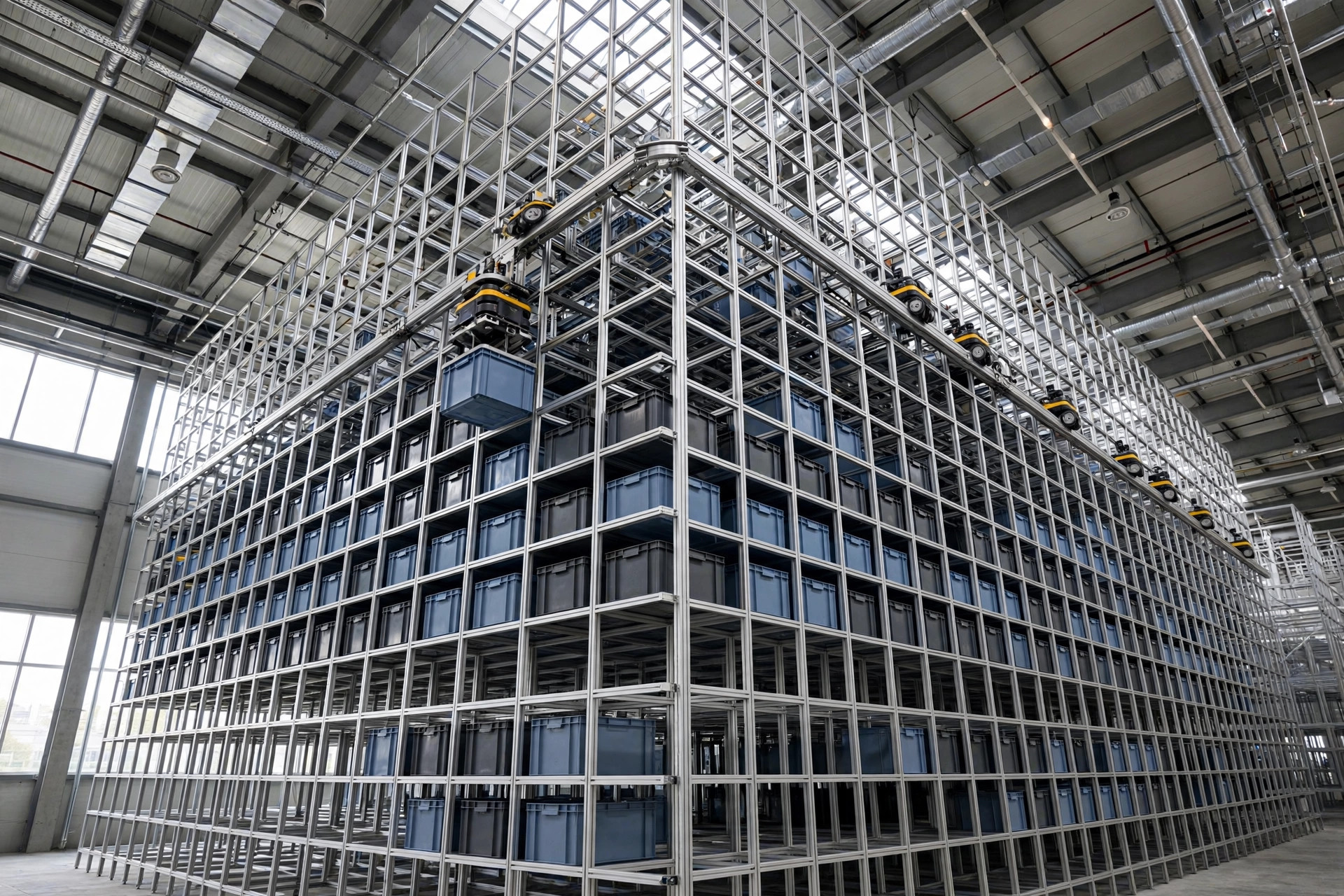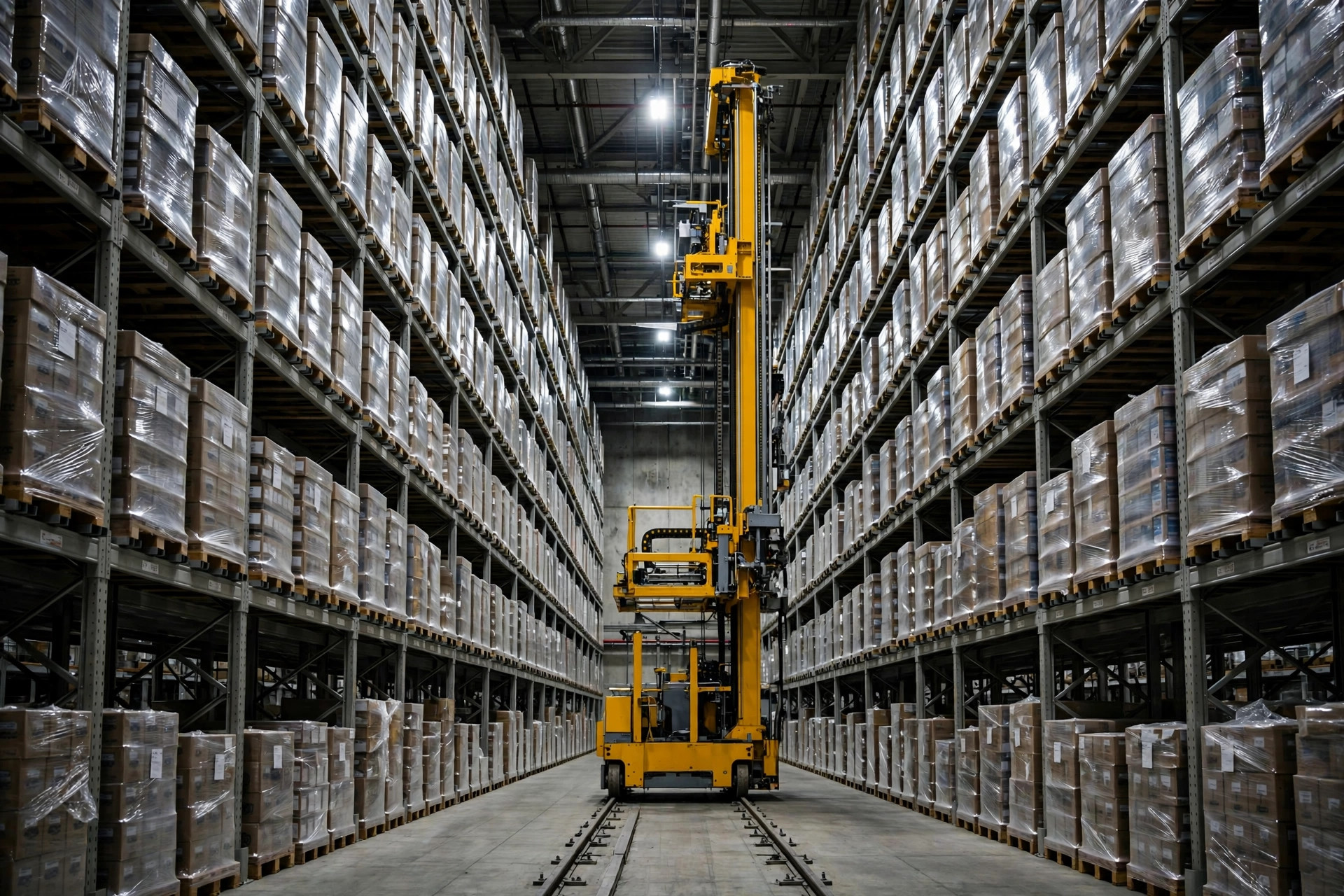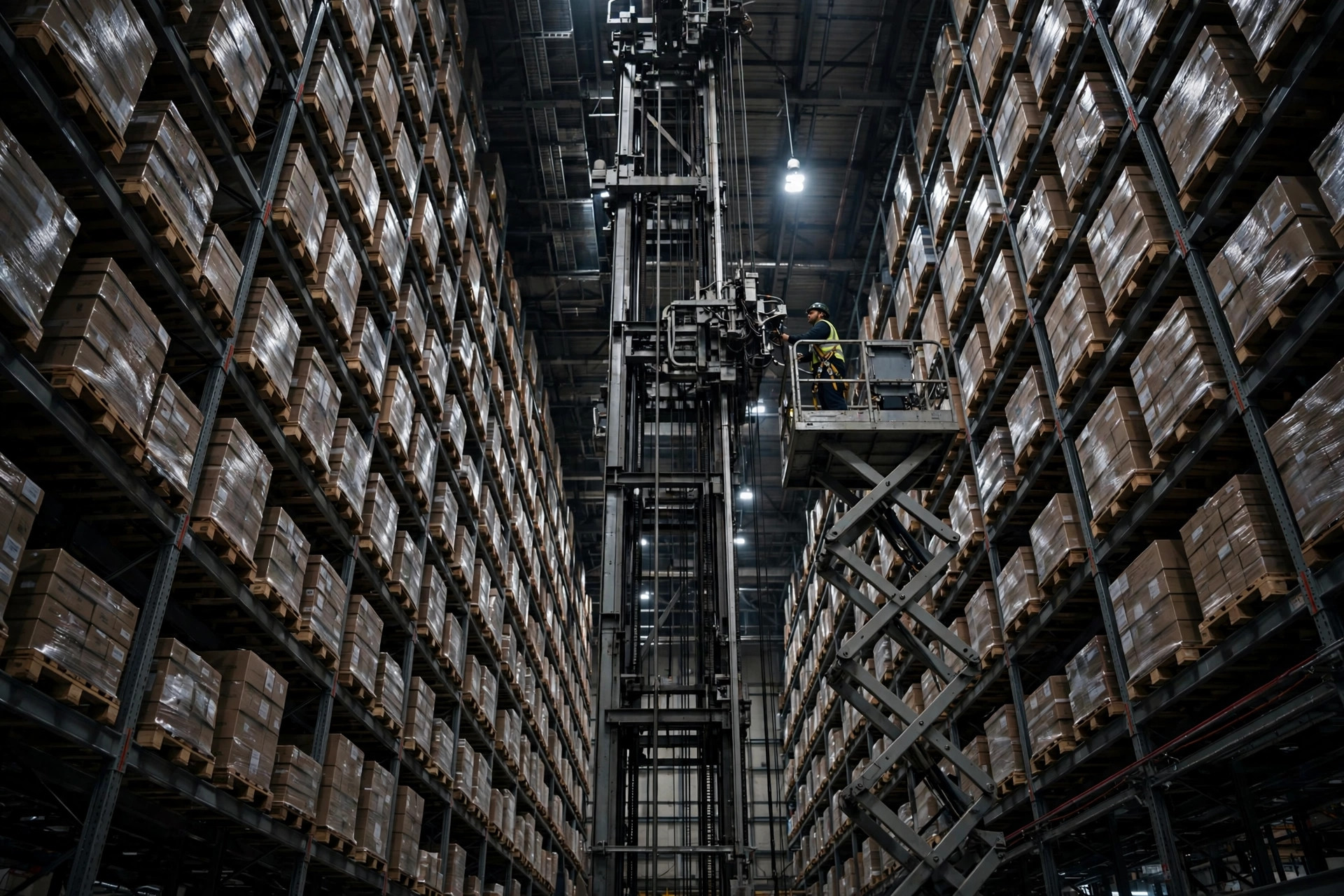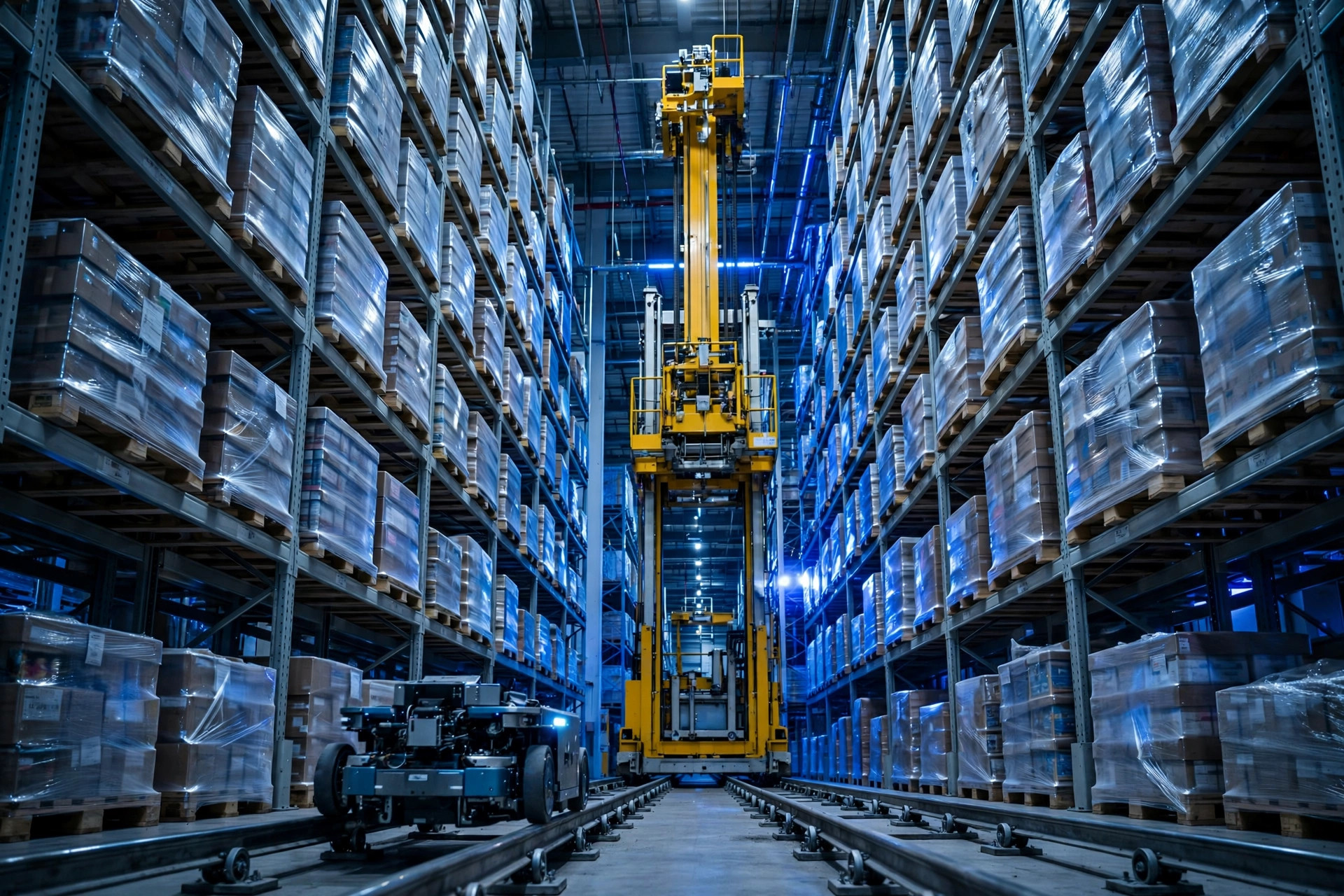
Straight to the answer: normalized to ASRS cost per pallet position, the market ranges look like this — stacker crane systems run roughly $300–$700 per pallet position, shuttle-based systems $200–$450, and four-way shuttle systems $250–$600. That's turnkey scope, based on recent North American projects; your vendor quote is the only number that counts for your project. Don't crown a winner yet. Within a single technology, quotes routinely differ by 2x, and the difference is almost never the hardware. It's the scope: whether software integration is included, whether commissioning labor is in the number, and whether the shuttle fleet was sized for peak or average throughput.
The headline numbers: ASRS cost per pallet position by technology
| Technology | Typical range per pallet position (USD) | Good fit at | Throughput profile | Build timeline |
|---|---|---|---|---|
| Stacker crane | $300–$700 | 5,000+ pallet positions | Stable per-aisle throughput, strong full-pallet moves | about 8–14 months |
| Shuttle (multi-level / satellite) | $200–$450 | 3,000–20,000 positions | Fleet can scale up or down, elastic throughput | about 6–10 months |
| Four-way shuttle | $250–$600 | 5,000+ positions | Cross-aisle, cross-level flexibility, suits wide SKU ranges | about 8–12 months |
Three caveats. First, these ranges reflect recent North American turnkey projects and include equipment, racking, WMS/WCS software, and installation and commissioning — not civil works or land. Second, use this as a scope-alignment tool, not a bargaining chip. Third, the spread inside a single row comes mostly from building height (the steel in a 24-meter rack is a different animal from a 12-meter one) and from how the fleet was sized.
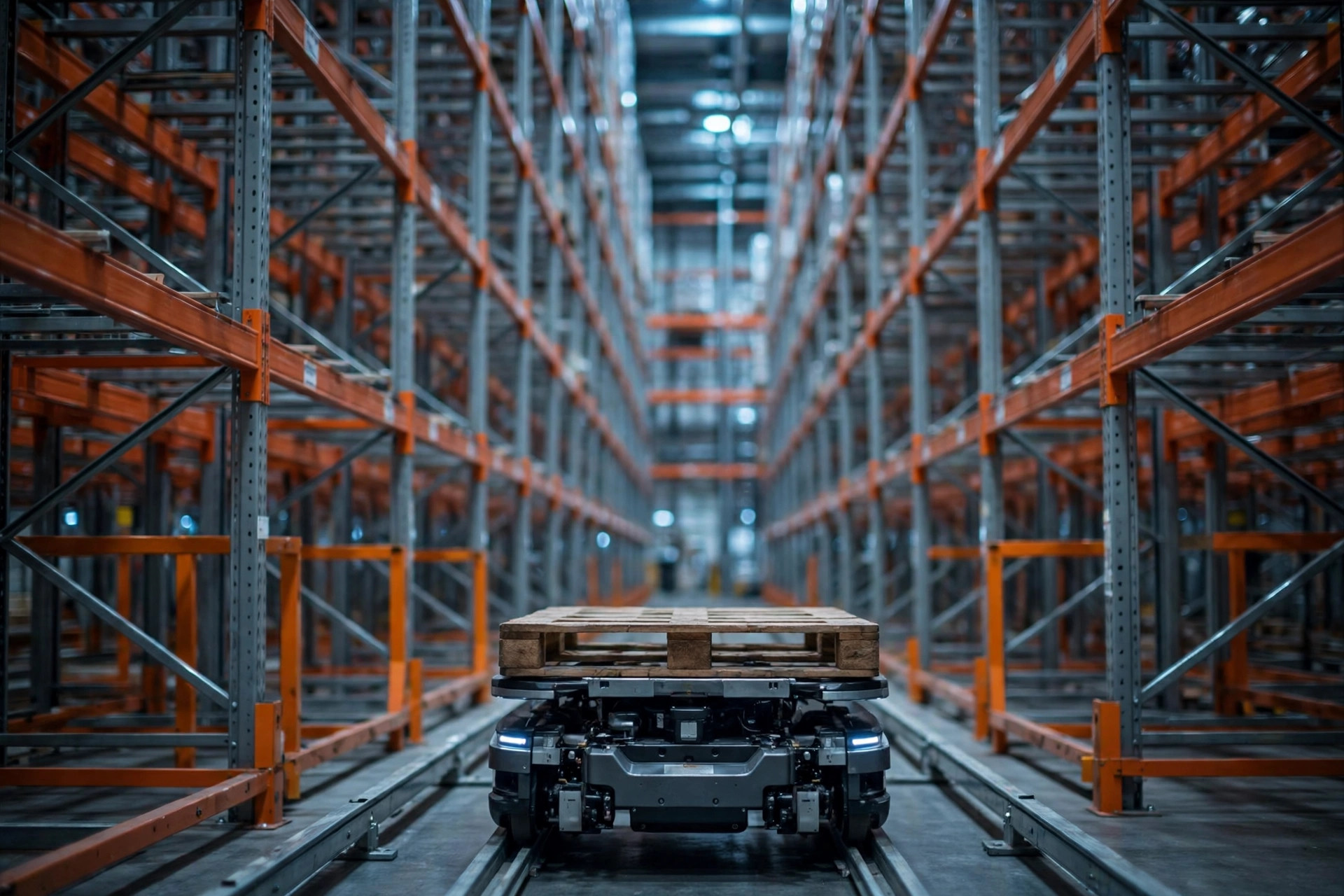
Zoom in one level: after 30+ WMS go-lives, I've learned every ASRS turnkey quote breaks into roughly four buckets:
- Equipment, roughly 40–55%. Stacker cranes are priced per aisle — several hundred thousand dollars per crane is normal. Shuttles are priced per vehicle — cheap per unit until you count how many you need. Four-way shuttles cost the most per vehicle, but one vehicle roams the whole building, so you need fewer of them.
- Racking and steel, roughly 20–30%. The most underestimated line. ASRS racking is precision steelwork installed to millimeter tolerances — not ordinary beam racking, and priced like precision.
- Software — WMS/WCS integration, roughly 8–15%. My home turf, and the fuzziest part of every quote. Case study below.
- Installation and commissioning, roughly 10–20%. Mechanical and electrical install, no-load testing, load testing, trial operation. Watch for "quoted separately as day rates" hiding in the contract appendix — dig it out before you sign.
Two real projects: how the per-position math actually works
Case one. Early 2024, Ontario, California. A 3PL client, 8,000 pallet positions, stacker-crane system, turnkey at about $4.2 million — roughly $525 per pallet position. The software line in the quote said "control system (incl. WCS)." The client read that as "WMS integration included." Two months before go-live we discovered the 30-plus interfaces between the WMS and the WCS had to be developed separately, with integration testing billed as extra day rates — several hundred thousand dollars of surprise. I've seen this exact mistake three times, and every time the culprit was those two words: "control system." Before you sign, make the vendor list, line by line: which commands the WCS owns, which strategies the WMS owns, who builds each interface, and whose day rates cover integration testing. Put it in a contract appendix. No hand-waving.
Case two. Late 2023, New Jersey. An e-commerce home-goods warehouse, 12,000 pallet positions on a shuttle system, turnkey at about $3.8 million — roughly $317 per position. Shuttles look cheap per unit, but the fleet was sized for peak throughput: the client added six extra shuttles for the holiday peak, and with chargers and spares each one cost enough to lease half a warehouse for a year. Shuttle flexibility cuts both ways — undersize the fleet and you choke at peak, oversize it and you burn cash idling eleven months a year. What I do now: size the fleet for normal throughput and cover peaks with manual labor plus a staging buffer. That cut the fleet by a third, and the savings covered two years of maintenance.
Here's the counterintuitive part: the lowest per-position quote rarely means the lowest total cost of ownership. Shuttles look good on day one, but they're consumables — batteries, wheels, and guidance components cycle every three to five years. A stacker crane routinely runs fifteen years or more. Re-run the math as eight-year TCO and the ranking often flips. Selecting on build cost alone is like buying a house on the down payment.
The three most underestimated line items in any quote
- Software integration. WMS–WCS interface development, testing, integration day rates. Ask the vendor for an interface list, not a system description — a list is verifiable line by line; a description is marketing.
- Commissioning and ramp-up labor. No-load tests, load tests, trial operation — budget at least two to three months. The old warehouse can't stop during that window, so you're running old and new systems in parallel at double the headcount. That money is almost never in the quote.
- Site works and change orders. Fire protection (high-bay ASRS sits under different fire codes than a conventional warehouse), floor loading (get a structural review of load per square meter), network (wireless dead zones inside the aisles — I've seen this exact mistake three times). And change requests: one process change before go-live can mean two weeks of WCS logic rewrites, billed by the day. Not cheap.
A five-step selection framework — don't skip steps
Step 1: Fix throughput before price. Write down peak pallets per hour for the next three years — peak, not average. Use your biggest promo as the baseline. Step 2: Then fix your SKU profile. Few SKUs with full-pallet moves favor stacker cranes; many SKUs with case picking favor shuttles and four-way shuttles. Get the SKU profile wrong and you pick the wrong technology. Step 3: Run eight-year TCO, not just build cost. Add equipment replacement, maintenance, annual software fees, and power — then compare per position. Step 4: Bid at least three vendors on a forced common scope. Attach a scope-confirmation sheet to the RFP with the four buckets as checkboxes. No "quoted separately" allowed. Step 5: Lock the interface list and integration day rates in the contract. List every WMS/WCS interface, cap the integration day rates, and make overruns the vendor's problem.
Then, the go-live-night checklist — run through these five one last time:
- Comparing equipment prices instead of turnkey scope — a 2x price gap is a scope gap eight times out of ten.
- Sizing throughput on averages instead of peaks — the first big promo breaks the system.
- Adding fire protection and floor loading late — three months of delay with rent still due.
- Tendering the WMS and the ASRS separately — two systems whose interfaces don't meet, still being integrated on go-live night.
- Skipping spare-parts terms — one failed crane stops a whole aisle, and the spare ships from overseas in weeks.
What I said at the top, once more: there is no standard answer for ASRS cost per pallet position — only comparable answers after the scope is aligned. Take the table and the checklists above into your vendor meetings, and at minimum you'll be comparing the same thing.
By Lin Xiao, WMS Implementation Consultant