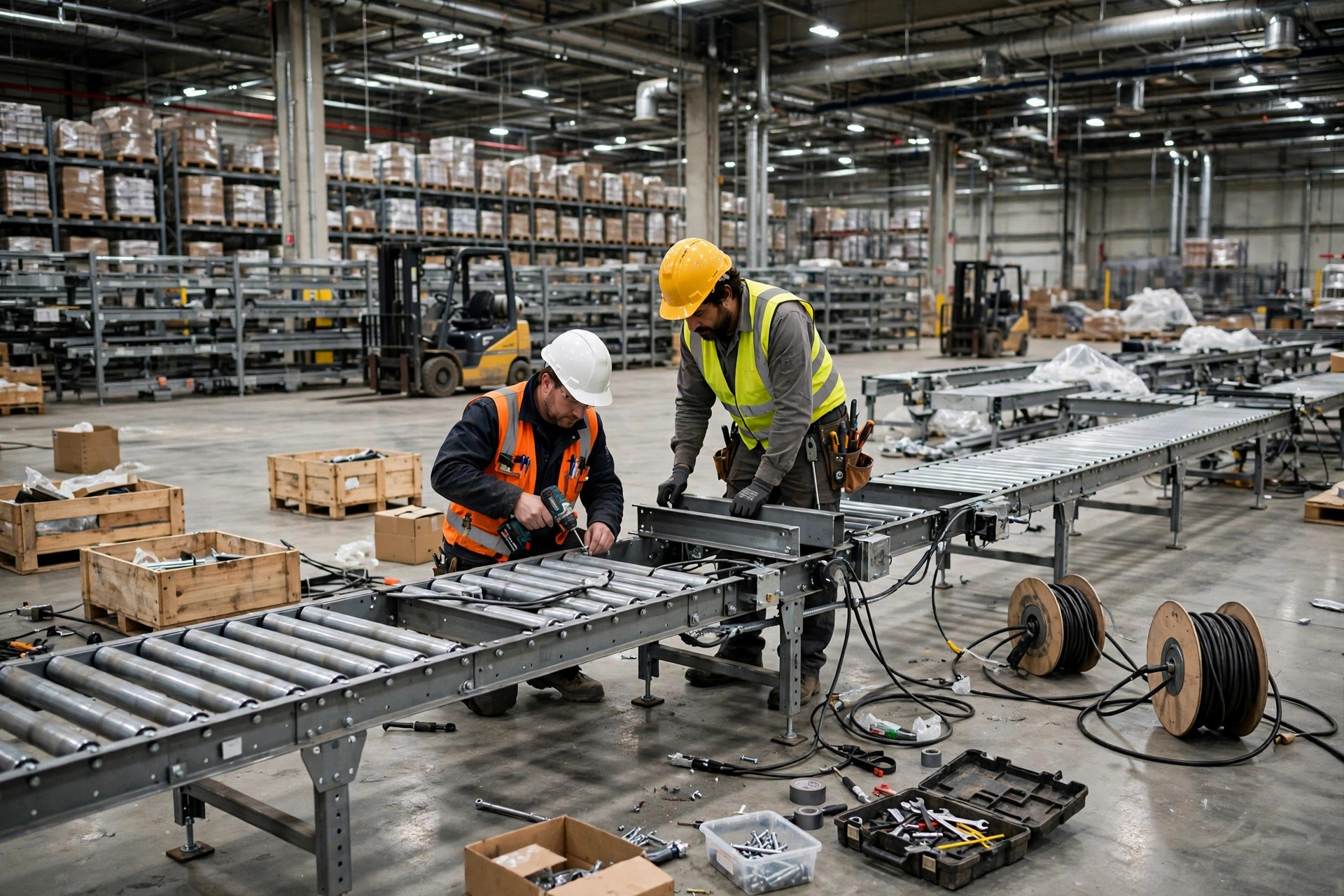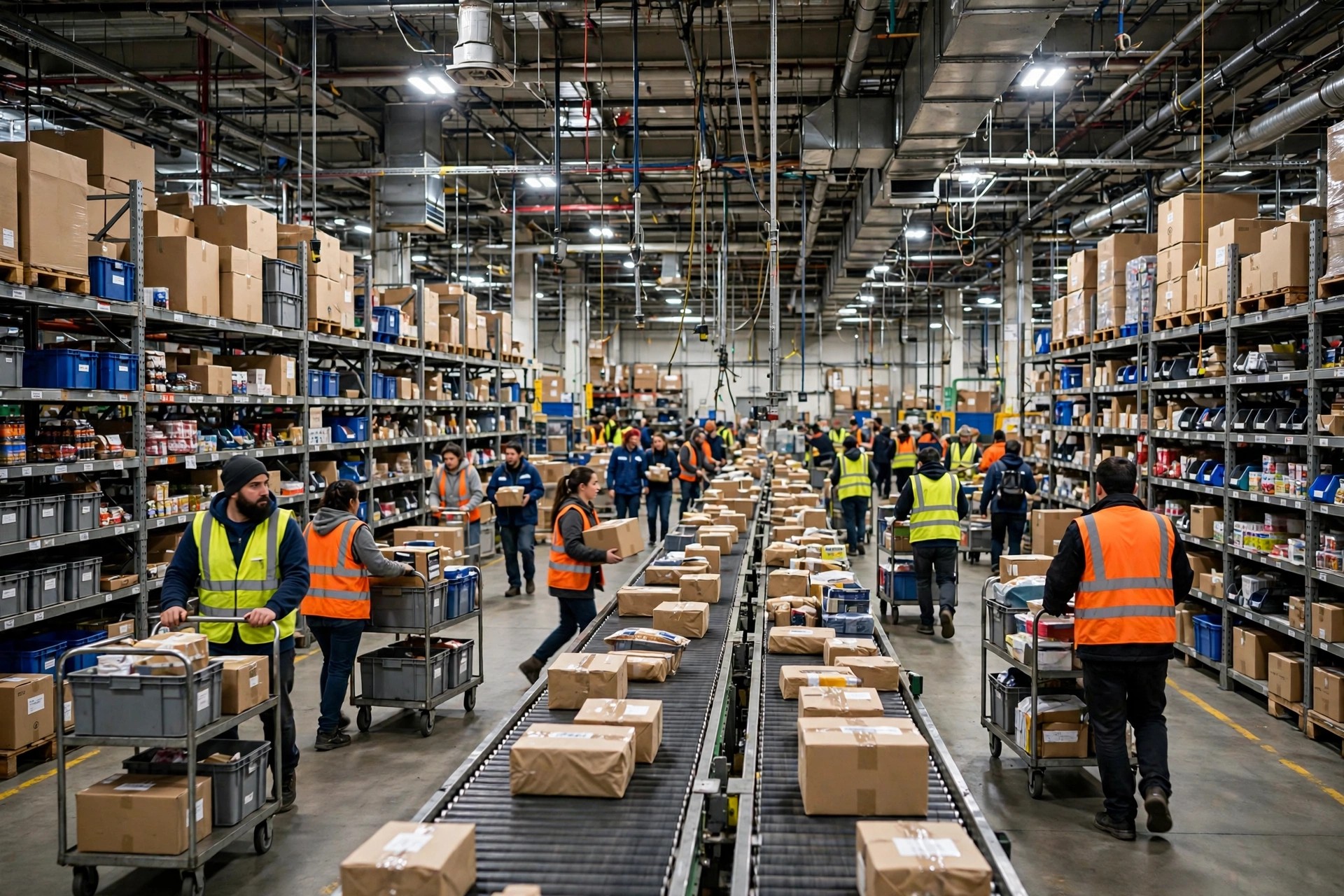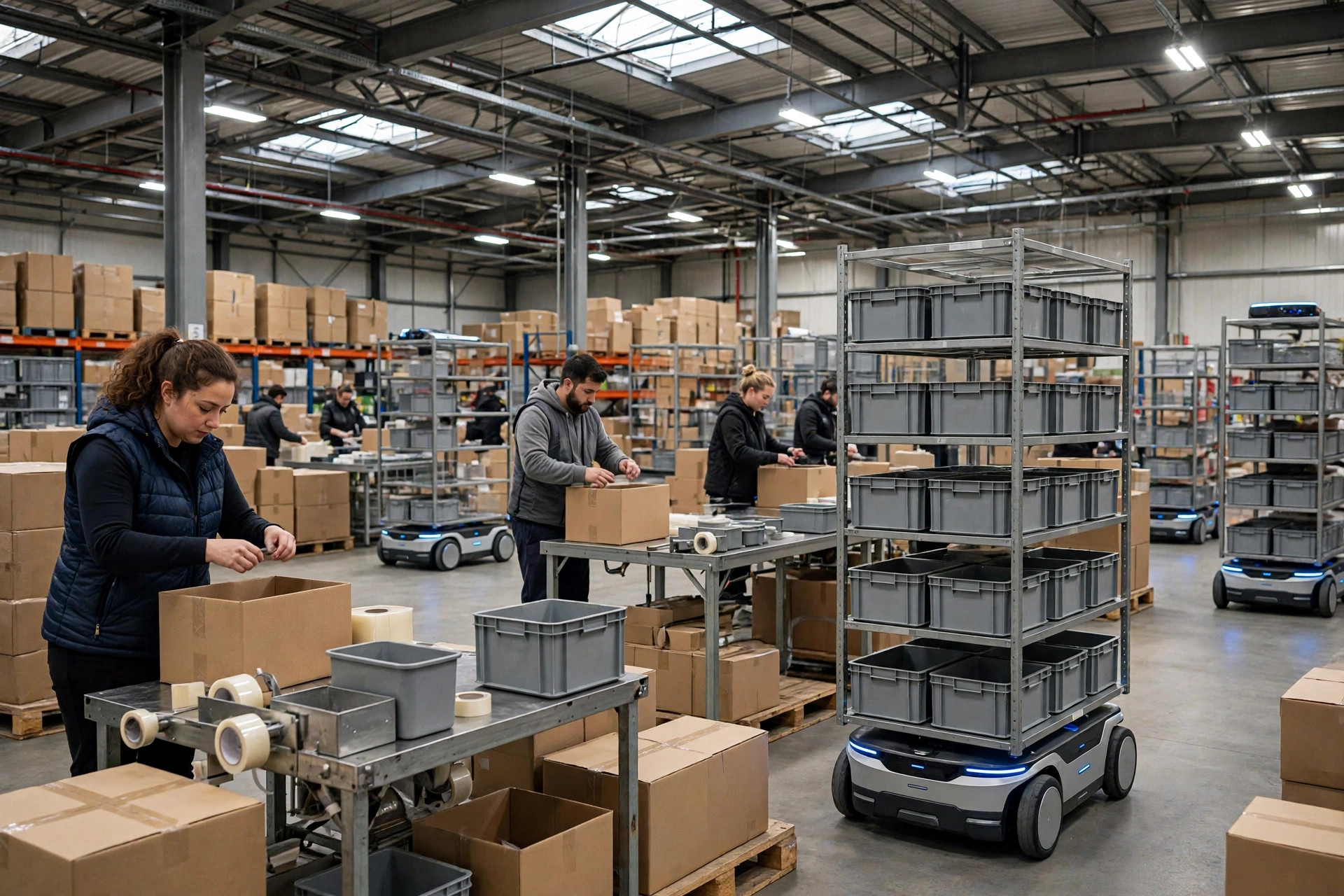
Last Black Friday, our New Jersey fulfillment center hired 50 temp workers to cover the peak. By the final week before Christmas, the staffing agency's bill rate had climbed well above October levels, night shifts were chronically short-handed, and the three-month labor bill broke seven figures. This October, I covered the same capacity gap with a different play: short-term robot rental — ten AMRs, three months, returned the day peak season ended. Put the two bills side by side and they aren't in the same league.
A disclosure before the numbers: everything below is modeled, not audited. The rental rate uses the midpoint of 2026 short-term market quotes ($500–$2,000 per robot per month). The purchase price uses the midpoint of the market range ($30,000–$80,000 per unit, before integration and software licensing). The temp-labor rate uses a typical staffing-agency bill rate. Plug in your own quotes and the direction of the conclusion won't change.
Buy vs. Rent vs. Hire: The Short-Term Robot Rental Math
Same target for all three options: cover a capacity gap equal to 40 extra pickers, for 3 months (October–December).
| Option | 3-month direct cost | How it's calculated | Hidden costs | Exit cost |
|---|---|---|---|---|
| Buy 10 AMRs | $500,000+ | 10 × $50,000/unit; integration and software extra | 9 idle months of depreciation, maintenance crew, software fees | Sunk. No way out |
| Short-term rental, 10 units | $45,000 | 10 × $1,500/month × 3 months | Near zero — maintenance is the vendor's problem | Return at term end, walk away |
| Hire 40 temps | $936,000 | 40 × $30/hr × 10 hrs/day × 26 days/mo × 3 months | Training churn, mispicks, short-staffing gaps | None — but you redo it every year |
Read that again: renting ten robots for three months ($45,000) costs about the same as hiring two temp workers for three months (2 × $23,400 = $46,800). Buying starts at half a million.
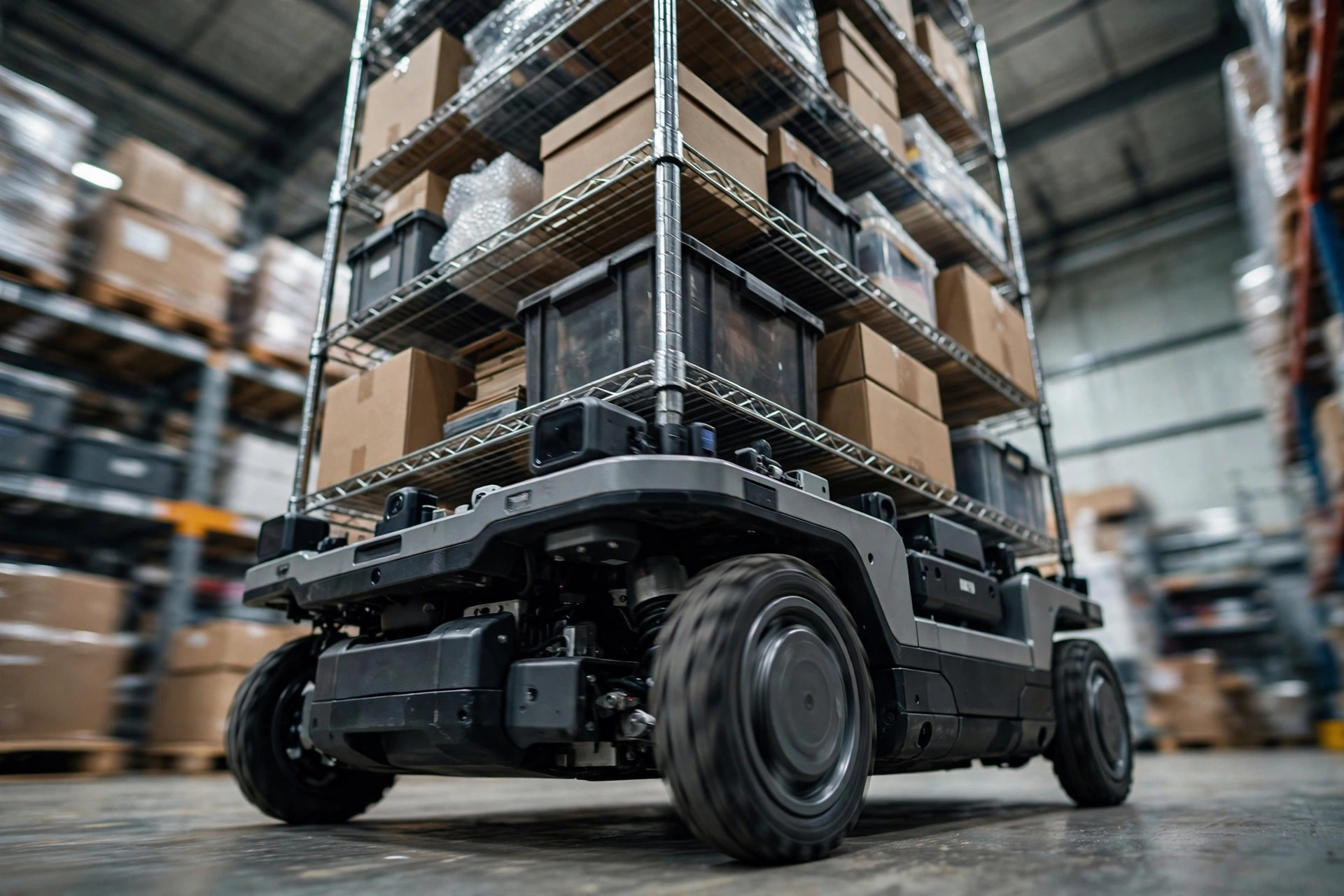
The load-bearing assumption: how do ten robots replace forty people? They don't outrun people — they eat the least valuable part of a picker's day: walking. Locus's published results show 2–3x piece-handling productivity gains, and 3PL Kenco's deployment took units per hour from 30–40 up to 120–150. Humans pick, robots run. Forty experienced pickers double their output and the gap is closed. That multiplier depends heavily on your SKU profile and layout — run a two-week POC before signing, and never take a vendor's slide deck as your number.
The Breakeven: Remember This Number, 33
Rent vs. buy is one division problem:
$50,000 (purchase midpoint) ÷ $1,500/month (rental midpoint) ≈ 33 months
The same robot has to run 33 straight months before buying beats renting. If your building only peaks for the three months around Black Friday and the robots sit depreciating for the other nine, buying is a loss. That's money spent for nothing.
Rent vs. hire is even shorter: $45,000 ÷ $23,400 ≈ 1.9. If your peak gap is bigger than two people — and whose isn't — renting beats temp labor.
Inside a Short-Term Robot Rental Quote
A short-term quote usually has five line items. Make the vendor itemize; never accept a bundled price:
- Monthly rent: $500–$2,000 per robot per month in 2026, depending on model and payload. Typically bundles hardware, fleet software, remote monitoring, and routine maintenance.
- One-time onboarding: freight in, site deployment, WMS integration, operator training. This is where the padding lives — negotiate line by line.
- Consumables: tires, sensor cleaning, floor QR codes or labels. Small money, but get in writing who pays.
- Exit terms: freight out, damage and wear standards. Read this before signing, not when the truck shows up to collect.
- What you supply: charging-area floor space and power, one on-site coordinator, reliable in-building Wi-Fi. Without these three, the robots are expensive statues.
Four Levers That Cut the Bill
First, sign the framework in the off-season. Peak-season fleets are scarce inventory. Shopping in October means the popular models are booked and what's left carries a premium. Lock price and units in August or September and the leverage is yours.
Second, mix the fleet. Rent heavy-payload haulers for bulk moves and lighter pick-assist bots for piece picking — don't rent ten of the most expensive model. Splitting by workflow usually drops you a price tier.
Third, reuse the integration. The WMS-to-fleet integration you build this year costs you zero marginal dollars when you re-rent next year. Year one's "tuition" becomes year two's pure margin.
Fourth, return in waves. When volume falls off in the first week of December, send half the fleet back — don't wait for the contract end date. Many vendors allow staged returns on a short-term robot rental if you negotiate it up front.
The Counterintuitive Part: Your Real Rival Isn't "Buy." It's "People."
Most rent-vs-buy analyses aim at the wrong target. For a building that peaks three months a year, buying was never really on the table. The real competitor is temp labor.
And the sticker price of temp labor ($30/hr) is deceptively cheap. The expensive parts never appear on the invoice: the agency's last-week-of-peak markup, the cost of short-staffed nights (missed SLAs cost far more than wages), and the sunk training cost of workers who quit on day three. Add those up and that's money spent for nothing.
One more: the biggest trap in buying robots isn't overpaying — it's nine idle months of depreciation. Robots don't fear being used. They fear sitting still. Without utilization, every ROI model is fiction.
For proof it works at scale, look at Radial: in January 2026, Radial and Locus announced 25 million picks at a single site — 87 robots in daily operation, plus 104 peak-season units added on RaaS. Scale the fleet with the order flow, return what you don't need, and carry zero idle capacity.
A Three-Question Decision Framework
- How many months a year do you actually peak? Four or fewer — rent. Nine or more — seriously model a purchase. In between, see question two.
- What share of your pickers' day is walking? The higher the walking share, the more dead time AMRs eliminate, and the stronger the case.
- Can your WMS talk to a robot fleet within two weeks? If not, rented robots are ornaments — fix the IT homework first.
The Close: Remember Two Numbers
33, and 2.
The same robot needs 33 straight months of use before buying beats renting; renting ten units for a three-month peak costs about the same as hiring two temp workers. If your building only gets busy for three months around Black Friday, short-term robot rental does this math for you.
By Lao Zhou, Logistics Cost Analyst