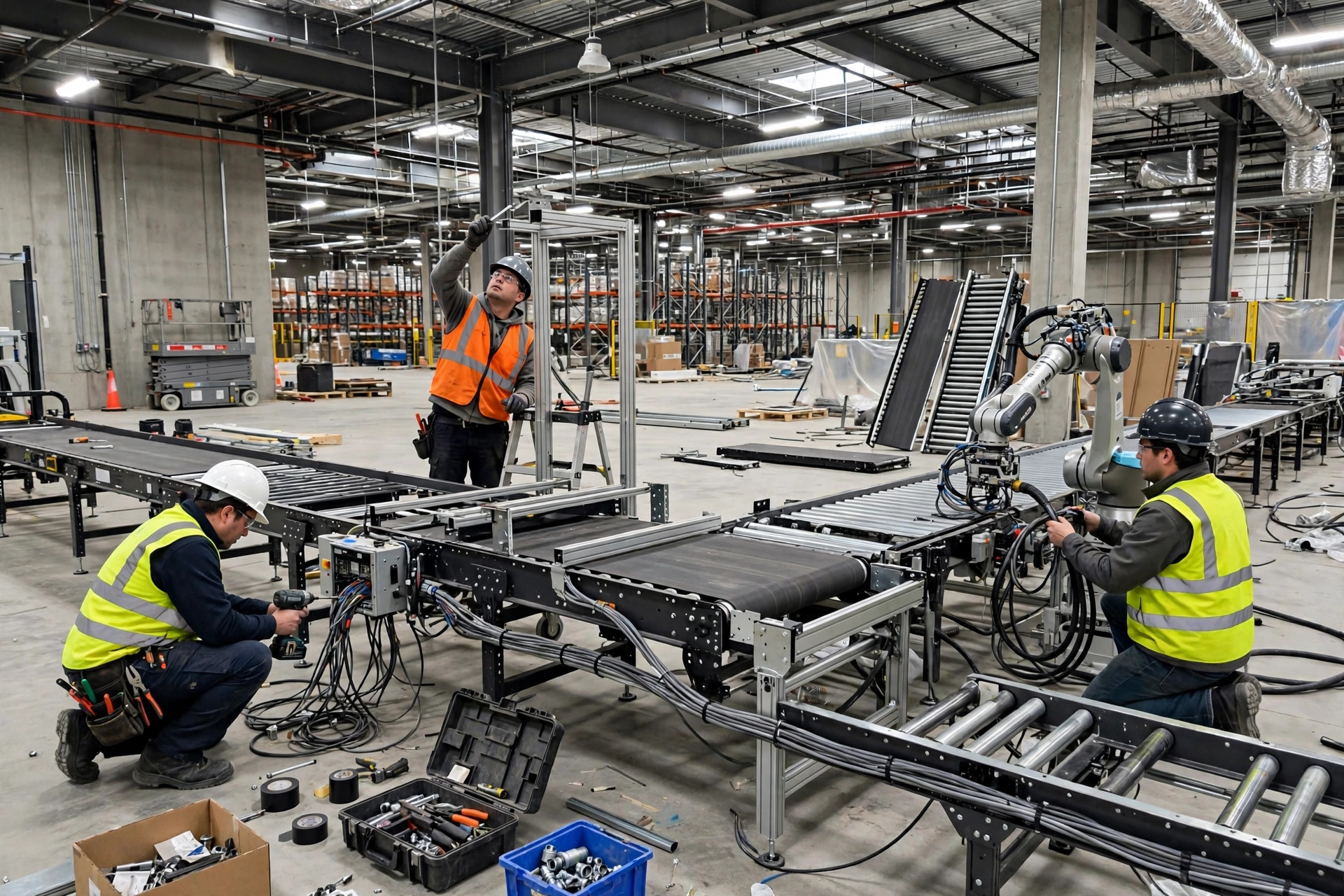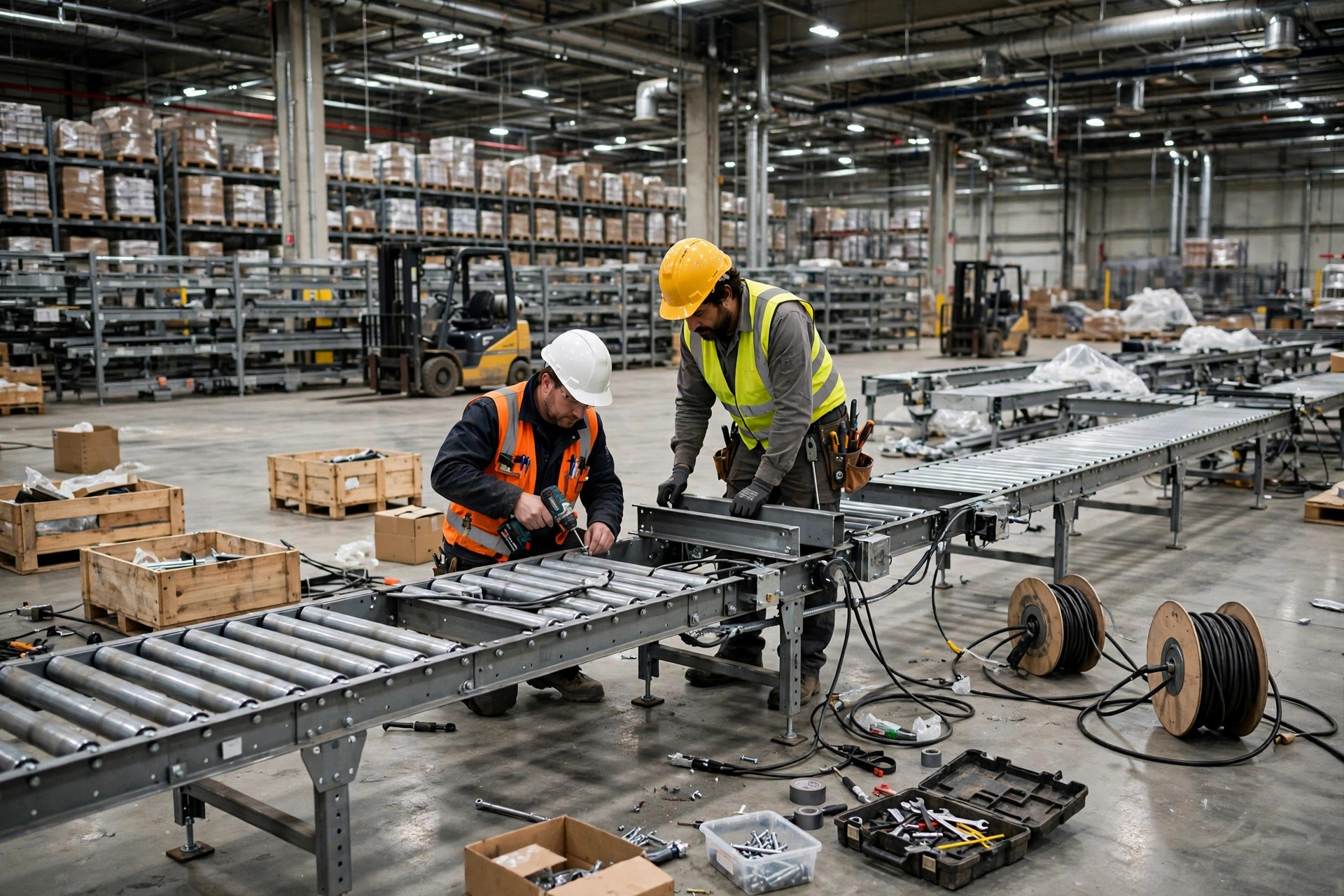
Here is the ledger first: approved budget $1M, final settlement $1.4M — a 40% overrun.
That is not a story I invented. Automation project budget overruns are the industry norm: the equipment contract looks clean, and every extra dollar ends up spent on anything but the equipment. The extra spend almost always lands on the things the budget assumed were free.
One clarification before the numbers: the $1M-to-$1.4M walk below is an illustrative ledger, reconstructed from the cost structure I see again and again — not any single company's audit report. The structure is real. Check it line by line against your own contract and the gaps will be in the same places.
First, the math: how a $1M budget overruns to $1.4M
One table tells the whole story:
| Cost item | Budget | Actual | Where the extra went |
|---|---|---|---|
| Equipment | 650k | 660k | Barely moved; the contract locked it |
| Civil works | 80k | 190k | Floor reinforcement, power upgrade, sprinkler moves |
| Software integration | 100k | 180k | WMS interface work, man-days piling up |
| Commissioning delays | 30k | 120k | Two months of idle rent and payroll |
| Spares & first-year service | 140k | 250k | Critical spares missing from the list |
| Total | 1,000k | 1,400k | 400k over — 360k of it "outside the contract" |
Read it again: the equipment itself overran by 10k. Of the 400k overrun, 360k sits in line items that were missing or understated at approval. A budget overrun is rarely about equipment getting more expensive. It is about a budget that left things out.
Case one: the floor — a 3PL parcel warehouse, Yangtze Delta, 2023
In 2023, a 3PL handling e-commerce parcels in the Yangtze Delta — tens of thousands of parcels a day at peak season — signed for a cross-belt sorter plus conveyor line. The equipment contract went smoothly, and the integrator's quote "included installation and commissioning."
The trap was in the floor. The old warehouse slab was rated for stacked pallets, not point loads; the moment the steel platform footings went in, the epoxy floor cracked. The fix: localized slab reinforcement, relocated sprinklers because the racking layout had changed, and a bigger electrical feed. The civil crew was on site for over a month.
The contract said "civil works by owner" — four words that translate to: you pay whatever it costs. The civil bill came to roughly 20–30% of the equipment price. Wasted money? Yes. But the contract was in black and white, so there was nowhere to argue.
Case two: integration man-days — a pharma cold-chain warehouse, northern China, 2024
In 2024, a pharmaceutical cold-chain warehouse in northern China deployed AMRs for pallet moves. The hardware went in fine; the software stalled it. The AMR fleet manager had to talk to a WMS customized five years earlier, with incomplete interface documentation.
The contract covered "standard interface integration, including 3 weeks of joint testing." Three weeks passed with the interface half working; the integrator's engineers stayed on at daily rates. From week four, every extra week was a new invoice. Testing stretched to nearly three months, and that single line item nearly doubled its budget.

The four budget-overrun black holes
Abstract the two stories and you get the same four black holes behind nearly every blown automation budget, ranked by damage:
Black hole 1: civil works. Floor loading, clear height, power capacity, fire-system linkage, network cabling — equipment arriving on site does not mean the building can take it. Retrofit projects suffer worst; greenfield sites still routinely under-budget power and networking. Sign an equipment contract without having civil and electrical engineers walk the site, and you are signing blind.
Black hole 2: software integration. WMS, ERP, and the equipment control system — the interfaces are always messier than planned. Whenever a contract says "standard interface," ask: whose standard? An undocumented legacy system, mismatched fields, a workflow that has to change — each one is man-days, and man-days are money. This line item has the widest range I have seen, from zero to nearly double.
Black hole 3: commissioning delays. The equipment arrives but the power is not ready; the power is ready but the network is not; the network is ready but the freight is not — something on site is always missing. Every month of delay burns three things: warehouse rent keeps running, the project team keeps getting paid, the integrator's site engineers keep billing. Two months of delay routinely burns more than 10% of the equipment price. In this business, time is not free. Time is billed monthly.
Black hole 4: spares and service. The spares list at signing usually covers a "standard spares kit"; the parts that actually fail — sensors, belts, scanners — are either missing or priced punitively. Year one of service is "free"; year two's quote can be several times higher — and year two was never in the approval budget, but the bill arrives anyway. In a five-year TCO, service often reaches 30–40% of the equipment price. Approving a project on equipment price alone is looking at the tip of the iceberg.
Here is the counterintuitive part: three and a half of these four black holes are decided on the day the contract is signed. No site survey, no integration boundary, no delay penalties, no locked service pricing — this is not an execution failure, it is an approval-stage contract failure. The execution team is just paying for the approval team's sloppiness.
Three levers that lock the budget at approval
Budget blowouts cannot be wished away, but they can be locked down. Three levers, ranked by impact:
Lever 1: fixed total price in the contract, change rates locked in an appendix.
Sign lump-sum wherever you can. A lump sum looks a few points more expensive than "cost-plus management fee," but cost-plus is an open pit. The appendix matters more than the headline: lock the daily rates for change work, unit prices for equipment, and the pricing method for civil coordination — all in writing before signing. Changes will happen; the difference is whether they settle at "the price we agreed" or "the price he names." I have seen a project where a locked daily rate kept a major change under 10% of budget; the same scale of change, unlocked, billed double.
Lock the payment schedule too: I recommend 30-30-30-10 — 30% on signing, 30% on delivery, 30% on acceptance, 10% retention. A retention below 10% is handing away your leverage. Acceptance criteria must be measurable: how many consecutive stable operating days, what throughput attainment — in the contract, never "operating normally."
Lever 2: freeze requirements on signing day.
The deadliest phrase in automation is "we'll adjust as we go." Set the rule at approval: after signing, every change goes through a formal process — impact assessment, quote, both signatures, no shortcuts. Batch the small changes; spin the big ones into separate work orders. A project with no change-control process is guaranteed to blow past its budget; only the amount is uncertain.
Lever 3: move acceptance gates forward.
Do not bet everything on one final acceptance day. Split it into hard gates: civil works acceptance, single-machine commissioning, integrated testing, trial operation. A gate not passed means the next payment does not move. Early gates do two things: problems surface when fixes are cheap — changing a drawing during civil works costs thousands; after the equipment is installed it costs tens of thousands — and payments track progress, which gives the integrator a reason to deliver on time.
What the three levers share: they are all cheap at approval and expensive later. A few extra weeks of site survey and a contract review by someone who has done this before cost a few points of the budget; they save the 20–30% that would otherwise walk out the door. Anyone can do this math — yet every year, plenty of people skip it.
A conclusion you can calculate
No slogans at the end, just a formula. When you build the budget at approval, do not use the integrator's quote as the budget. Work backward from this:
True total budget = equipment contract price ÷ 0.75
Translation: the equipment itself is typically 70–80% of the true total. A project quoted at $1M should be approved at $1.3M–$1.4M, with the gap labeled civil works, integration, and delay contingency. If your company only approves the contract price, write a 25–30% contingency into the approval memo anyway. Better to have the budget cut once at approval than to be asked mid-year, "how did you calculate this in the first place" — that question costs more than the $400k.
Remember one thing: in automation projects, the most expensive part is whatever was never written into the contract.
By Lao Zhou, Logistics Cost Analyst