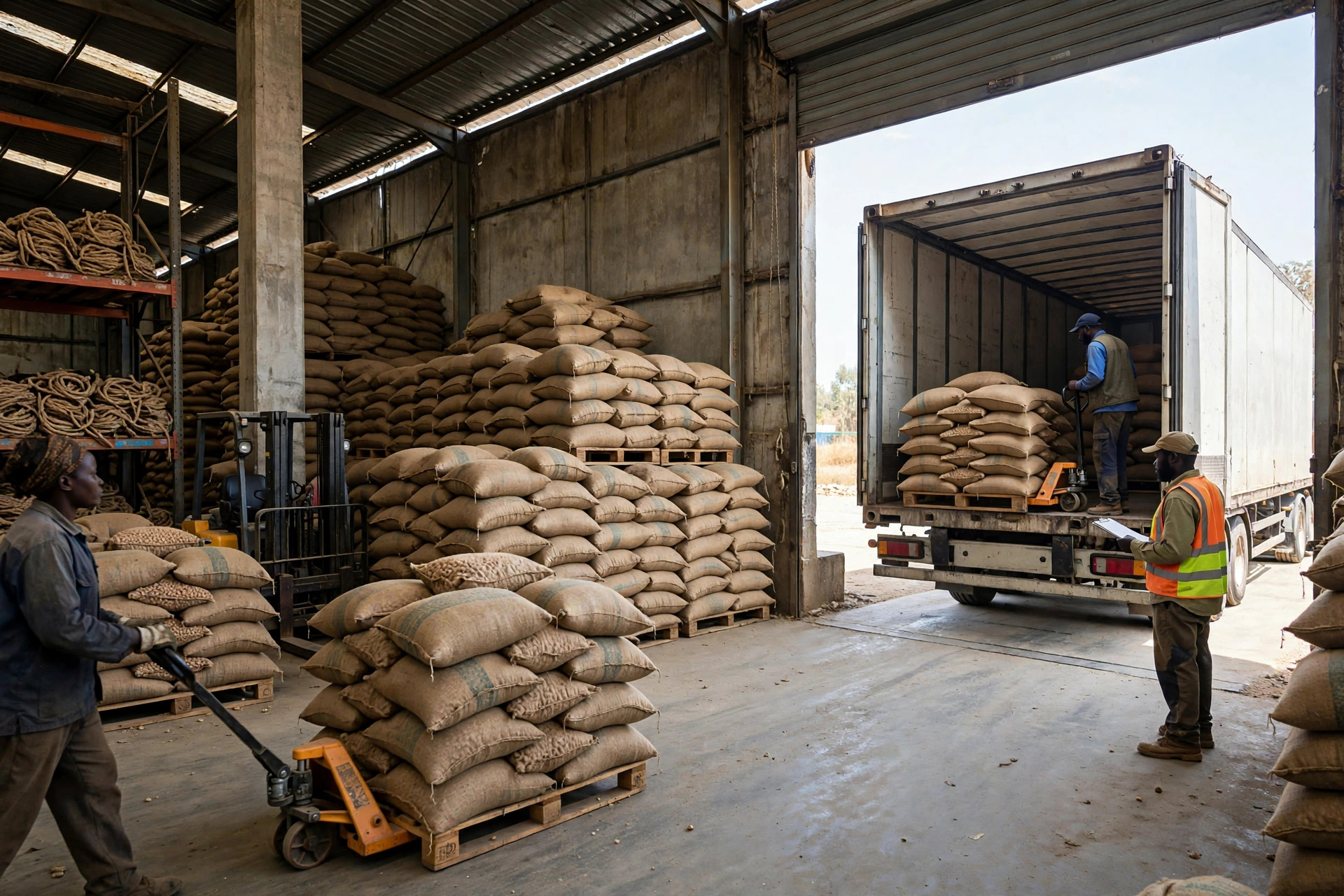
In Senegal peanut export warehouse logistics, output has never been the problem. Senegal has never lacked peanut output. What it has lacked is the capacity to turn output into export value. According to Food and Agriculture Organization data, Senegal produced about 1.68 million tonnes of in-shell peanuts in 2024, ranking seventh in the world with 2.9 percent of global output, while the 2023/24 campaign had grown 12 percent year on year to about 1.67 million tonnes, on more than 1.2 million hectares. Yet shelled peanut exports in the same year were only about 122,000 tonnes, worth roughly 107 million US dollars, of which China alone bought about 102,000 tonnes. The gap between production and exports is the clearest measure of what Senegal peanut export warehouse logistics actually decides: how much of the crop leaves the country, and at what price.
The Baseline: Output Is Large, Exports Are Unstable
Stretch the timeline and the first fact facing Senegal peanut export warehouse logistics is volatility. Peanut exports peaked at about 336,000 tonnes in 2021, then fell to about 122,000 tonnes by 2024, a decline of more than 60 percent over four years, while export revenue dropped from about 154.7 billion CFA francs to about 65.3 billion. Over the same period, the United States Department of Agriculture forecast that 2024/25 output would fall 54 percent to about 731,000 tonnes, driven by poor rainfall and a harvested area cut of roughly 35 percent. In a good year the warehouse must guard against overstock; in a bad year it must guard against supply breaks. Both situations test the same storage capability, and neither allows planning on a fixed rhythm.
Policy is moving at the same time. The Senegalese government has removed the 4 percent tax on peanut exports for the 2025/26 season, aiming to place 300,000 to 450,000 tonnes on the international market, with production above 900,000 tonnes. Removing the tax lowers export costs, but it also means more cargo must move through Dakar in a short window, concentrating pressure on port-side storage and consolidation. From a warehousing perspective, a policy tailwind never brings only orders. It brings a peak, and peaks are when warehouses fail most often.
Moisture and Pest Control in Senegal Peanut Export Warehouse Logistics: The Real Battle
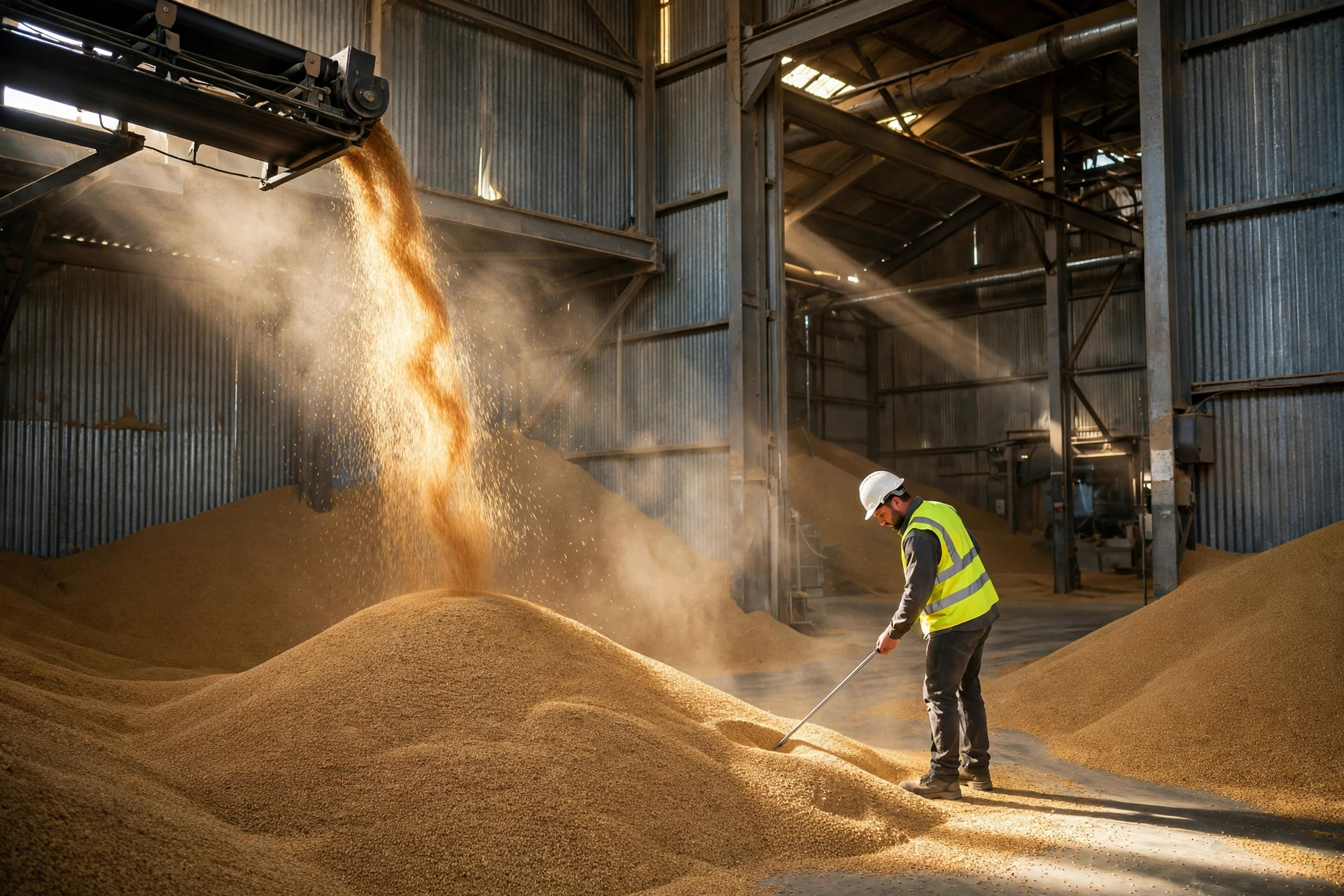
The central tension in peanut export warehousing is that peanuts are both an agricultural commodity and a food ingredient. Moisture is the first line of defence: the widely used industry standard requires export kernels dried to no more than 7 percent moisture and in-shell peanuts to no more than 9 percent, the basic condition for preventing mould and aflatoxin growth. Aflatoxin cannot be seen or smelled; it can only be found by testing. The European Union limits aflatoxin B1 in peanuts for direct consumption to 2 micrograms per kilogram, with a total limit of 4 micrograms per kilogram. A lot that exceeds the limit can be rejected or destroyed on arrival, and the loss is not only the cargo value but the supplier's standing with the buyer.
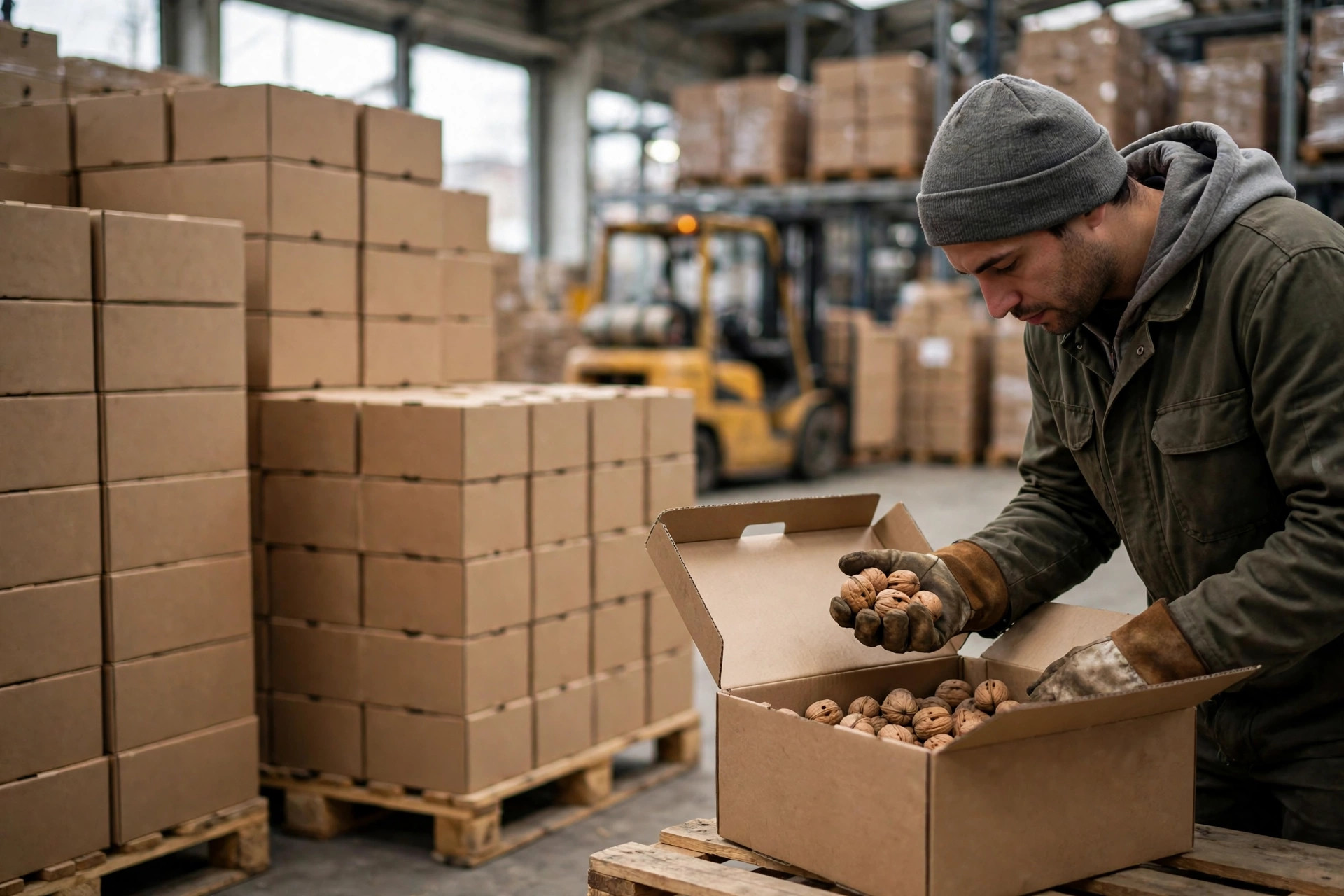
Inbound inspection in Senegal peanut export warehouse logistics therefore has to cover three tests: moisture, foreign matter, and aflatoxin sampling. Moisture must be tested truck by truck, because peanuts from different growing areas in the same season can differ by several percentage points, and rain-harvested lots mixed into dry stock will pull the whole warehouse's moisture upward. Foreign matter determines grading and price, so soil, stones and broken kernels should be screened out at intake, not left until loading. Aflatoxin samples must be retained by lot, with the test report travelling with the cargo, available whenever the buyer asks for it.
Pest control is the second line of defence. Stored peanuts face warehouse insects and rodents, and hot, humid conditions accelerate infestation. Warehouse practice rests on three basic routines: disinfecting and inspecting empty stores before intake, keeping the store ventilated and dry with inspection aisles between stacks, and patrolling regularly with written pest records. Fumigation is effective, but it must be carried out by qualified personnel under proper procedures, and residue levels and safety intervals must meet the destination country's import requirements, or the problem will surface at the destination port's inspection. Prevention costs are visible. Infestation losses are not, until the buyer opens the container and finds live insects, at which point claims and re-shipment cost several times what prevention would have cost.
Consolidation and Dakar Port in Senegal Peanut Export Warehouse Logistics
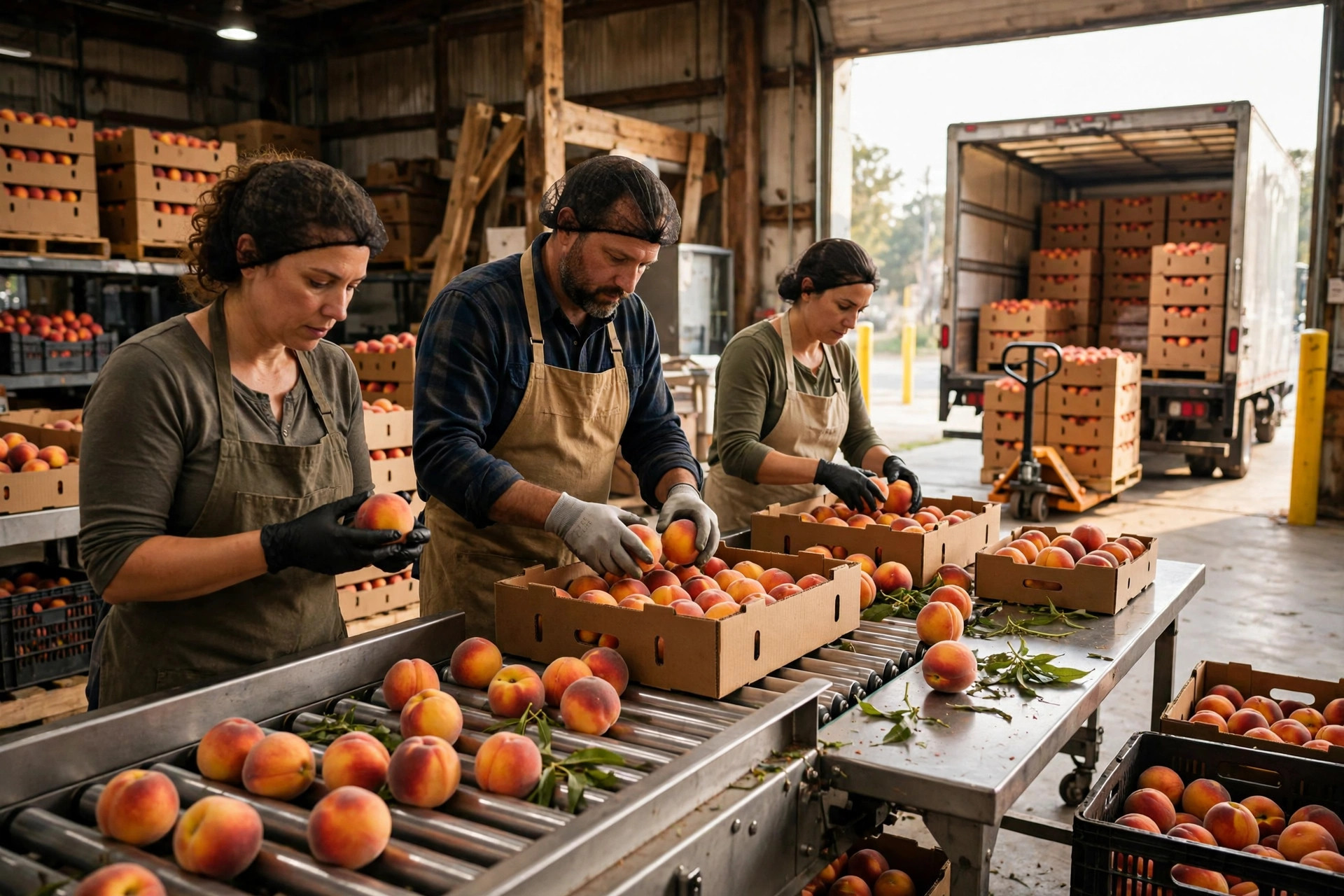
Senegal's peanut exports move mainly in bulk and in bags, and consolidation is the standard shipping method for small and medium exporters. The logic of consolidation differs from a full container load: a full container holds one buyer's cargo, while a consolidated container holds several buyers and several grades in one box, so loading order, separation and marking decide both customs clearance speed and damage liability on arrival. Shelled kernels are crush-sensitive, moisture-sensitive and odour-sensitive. Bagged kernels should sit on pallets, raised off the floor, with air gaps between stacks, dividers between grades and buyers, marks facing outward, and the loading list recording the position and piece count of every consignment, with photographs kept on file.
Consider a worked example, labelled as hypothetical: one 20-foot container loaded with 22 tonnes of shelled kernels (hypothetical example), at 1,000 US dollars per tonne (hypothetical example), carries about 22,000 dollars of cargo. If one consignment fails on aflatoxin because moisture control was inadequate, the cost of return, destruction and re-shipment can easily exceed half the container's value. By comparison, moisture barriers, desiccants and sampling cost only tens to a little over a hundred dollars per container. The freight saved by consolidation is certain. The cost of cargo damage is not. The purpose of warehouse management is to keep that uncertain cost inside a range the business can absorb.
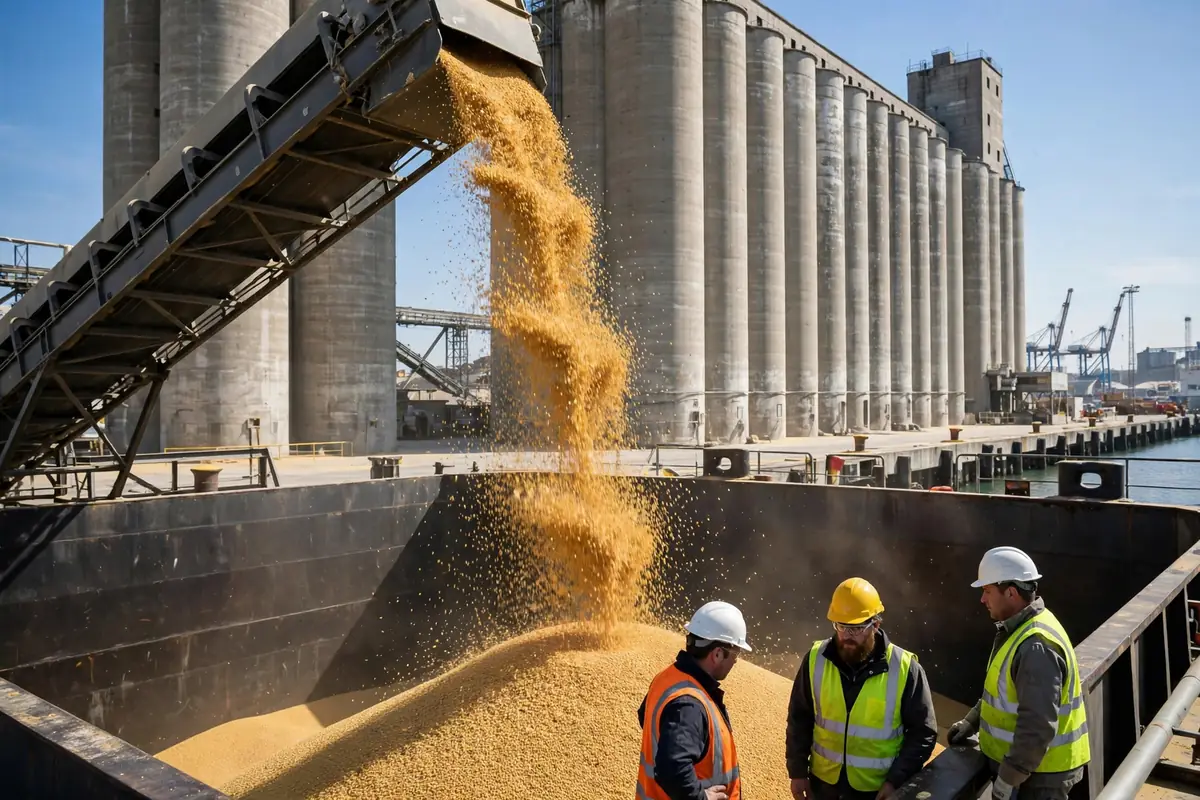
Dakar, Senegal's largest port, is the necessary gateway for peanut exports, and the port-side storage stage deserves equal attention. Peanuts travelling from the inland groundnut basin to Dakar already gain moisture and breakage from road vibration and rain on the way, so the final inspection at the port warehouse is effectively the last chance to intercept problems created during inland transport before loading. Consolidation warehouses should sit near the port but away from low-lying, flood-prone ground, with tarpaulins and emergency drainage ready in the rainy season, and one more moisture re-test before loading. A lot that fails should wait rather than board the vessel with a known problem.
Over a longer horizon, whether Senegal's peanut warehousing capacity becomes a bottleneck or a springboard depends on three things advancing together: better drying and primary processing capacity at origin, so moisture is brought down at the source; wider testing capacity inside warehouses, so aflatoxin and moisture stop being discovered only after shipment; and standardised port consolidation procedures, so small exporters can ship at a controllable cost. Output has already proved that Senegal can grow peanuts. The open question is whether the country can reliably deliver them at food-grade quality to buyers. The clearer the accounts inside the warehouse, the more certain the answer becomes.
By Dr. Chen, Supply Chain Researcher