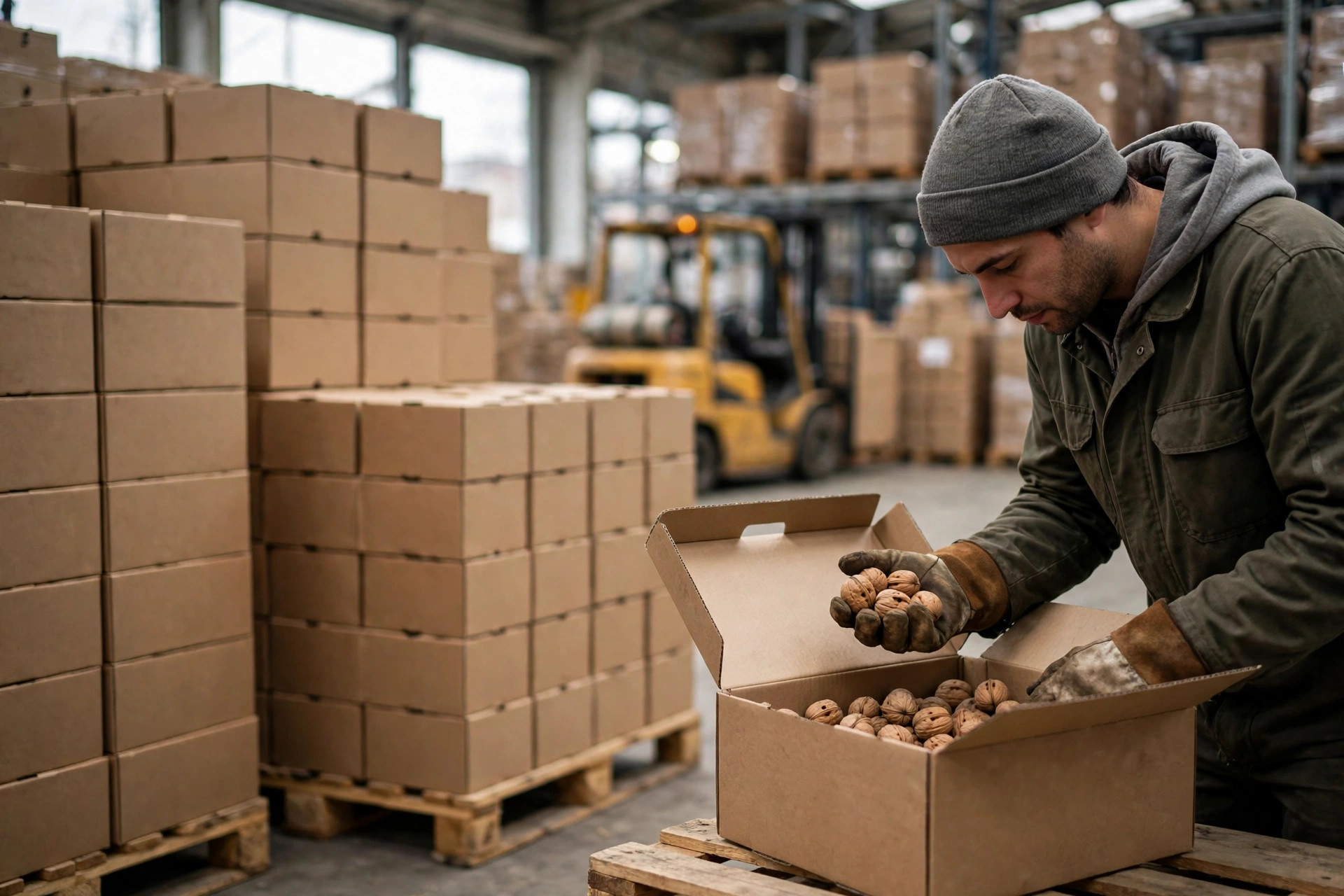
Start with the money, because that is where California walnut export warehouse storage is won or lost. A load of in-shell walnuts leaves a Central Valley orchard carrying field moisture, and every decision after harvest is a trade between speed and shelf life. Dry the nuts properly, hold them under steady temperature and humidity, grade and pack them carefully, and they arrive at the destination port at the grade the buyer agreed to pay for. Rush any of those steps to catch a sailing, and the discount imposed at destination can swallow the margin on the whole container, while freight and handling charges stay exactly where they were. In this business, the cheapest warehouse is rarely the one with the lowest storage rate. It is the one whose cargo still grades well when the container doors open.
The First Ledger: What Under-Drying Really Costs
One harvest season not long ago, a mid-sized Central Valley processor faced a tight shipping window. The orchard crop had come in with moisture still on the high side, the drying line was backed up, and the vessel schedule would not wait. Someone in the room argued for loading anyway, on the theory that several weeks at sea would finish the job. The buyer thought otherwise. At destination, inspectors opened sample cartons, caught the stale, oxidized note of rancid oil, and found kernel color darker than the agreed grade. The buyer did not reject the container outright. Instead, the whole load was downgraded and repriced, and the shipper absorbed the extra inspection and negotiation costs on top of freight already paid. Nothing about the ocean voyage had been free, and the discount came straight out of the shipper's pocket.
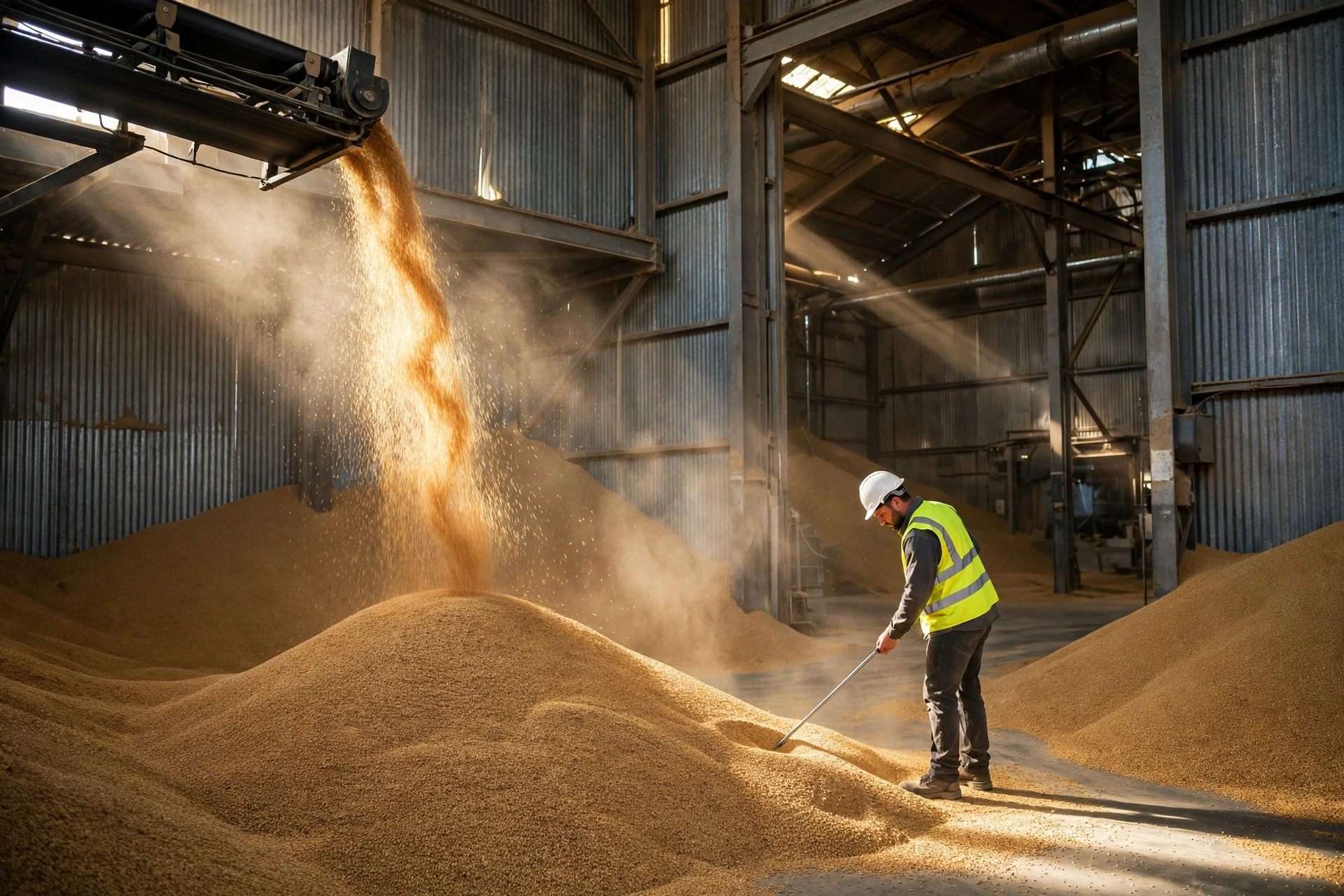
That episode rewrote the plant's rulebook: no load ships until moisture is down to the shipping standard, however tight the sailing looks. The lesson generalizes. Drying is a curve, not a switch. Moisture leaves quickly at first, then more slowly, and the final stretch demands patience. Cranking up the heat to buy back days looks efficient on a production schedule, but walnut oil is unforgiving. Heat-damaged kernels may feel dry on the outside while their oil has already started down the path to rancidity, and a shorter drying cycle can mean a shorter selling window at the other end. Time saved in the dryer is paid for in grade risk, and those two currencies do not exchange evenly.
| Cost line | Where the money goes | What happens when you cut it |
|---|---|---|
| Drying | Dryer time, energy, turning, and moisture checks | Residual moisture keeps oxidizing in the container and invites a downgrade at destination |
| Warehouse climate | Cool, dry storage, sealed packaging, and routine inspection | Rancidity accelerates and the whole lot loses flavor and grade |
| Grading and packing | Removing cracked shells, inner-bag sealing, and pallet stacking | Damaged nuts mixed with sound ones sour the buyer's impression of the lot |
| Consolidation and loading | In-container moisture control, odor separation, and load order | Odor pickup and damp cartons surface only at destination, when options are gone |
Drying Curves and the Temperature-Humidity Line
Rancidity, the oxidation of walnut oil, is the main enemy of export storage, ahead of pests and handling damage. Oil meets oxygen, light, and heat, and oxidation begins. Moisture speeds it up, warmth speeds it up, and time compounds it. Warehouse climate control is therefore best understood as a brake pedal: keep temperature down, humidity down, light out, and oxygen as far from the kernel as packaging allows. That discipline is what California walnut export warehouse storage is really buying: time for moisture to leave before oxidation takes hold. None of these measures is expensive on its own. Together they form a line of defense, and a gap in any one of them is a gap in the whole line.
A third-party warehouse near the Port of Oakland runs its receiving discipline in a way other operators should copy. Every inbound lot is documented at intake: which orchard district it came from, which harvest, how far drying had progressed, and what moisture condition it arrived in. Floor staff pull sample cartons from pallets on a routine cycle, checking aroma, kernel color, and how dry the shells feel. On one pass, a pallet stored near a frequently opened dock door showed softened carton corners where humid air had crept in. The pallet was isolated, repacked, and regraded on its own, while the rest of the lot stayed untouched. The cost was a few labor hours and a few sample cartons. The alternative, discovering the problem at destination, would have put the entire shipment's grade into negotiation.
Day-to-day warehouse practice is a matter of stable details. Pallets need airflow channels rather than tight packing against walls, where condensation collects first. Cracked shells should be screened out, not tolerated, because damaged nuts oxidize first and drag down sample results. Stock rotation discipline matters too: when new receipts bury older lots in a corner, those older lots accumulate months of oxidation risk in silence. Light and odor control belong on the same checklist, since walnuts pick up neighboring smells readily, and a load that arrives smelling of another cargo will not command its grade no matter how sound the kernels are.
Grading, Packing, and Loading Out
Grading is the most undervalued step in walnut export warehousing. Sorting by size, color, and shell condition gives the buyer a consistent lot, and consistency is what keeps sample inspections boring, in the best sense. A mixed lot turns inspection into a lottery: whichever carton the inspector opens sets the tone for the negotiation. Packing works in layers, and each layer matters. The inner bag is the first barrier against oxygen, the carton is the second, and the pallet and stretch wrap are the third. A breach anywhere leaves the kernels more exposed than the shipper intended.
Consolidated loads demand the same care. Walnuts should never share a container with strongly scented cargo, and moisture protection inside the container must be planned before the doors close, not improvised at the dock. Leave some airflow in the load rather than stuffing every cubic inch; the dead air pockets in an overstuffed container are where temperature and humidity drift out of control. A final pre-load inspection, opening a few cartons to check aroma and condition, is the cheapest correction point in the entire chain. Once the vessel sails, correction costs multiply, and by destination the only remaining lever is price.
Here is the counterintuitive part. The most expensive habit in walnut export warehousing is often the urge to ship early. Vessel schedules, order pressure, and cash flow all push toward loading, while drying and inspection both argue for waiting. Waiting looks like cost; in fact it is insurance. Rushing looks like efficiency; in fact it transfers risk to the destination port, where the shipper has the least leverage. A second counterintuitive point cuts the other way: the more thoroughly walnuts are dried, the cheaper the warehouse phase becomes. Dry kernels put less strain on climate control, pass inspections more reliably, and generate fewer exceptions, so time invested upstream returns as fewer problems downstream.
A Conclusion You Can Calculate
Close with a formula any operator can apply without inventing a single precise figure. Write down the potential downgrade loss on a container: the value discount, the extra inspection and negotiation costs, and the damage to buyer confidence. Write down the prevention spend: dryer time, climate-controlled storage, inspection labor, and grading and packing. If prevention spend is lower than the downgrade loss weighted by the chance of a problem, the money is well spent. The probability needs no false precision; rank it from your own shipping history. Operators who have suffered rancidity claims before should rank it high. Operators with a clean record should still not rank it at zero, because container conditions and destination inspection standards keep changing.
Run the opening case through that formula and the answer is plain. A few extra days of drying and one more round of inspection cost a small fraction of a container's value. A downgrade costs a large fraction of it, plus freight paid on cargo that no longer earns its grade. Warehouse climate management and routine inspection follow the same arithmetic: small, steady prevention spending against a large, sudden loss. California walnut export warehouse storage, done properly, is not a cost center to be squeezed. It is the mechanism that protects the grade, and the grade is what the buyer is actually paying for. Protect the grade to the port of Oakland and beyond, and the margin has something to stand on. Lose the grade, and even the cheapest freight is money wasted.
By Lao Zhou, Logistics Cost Analyst