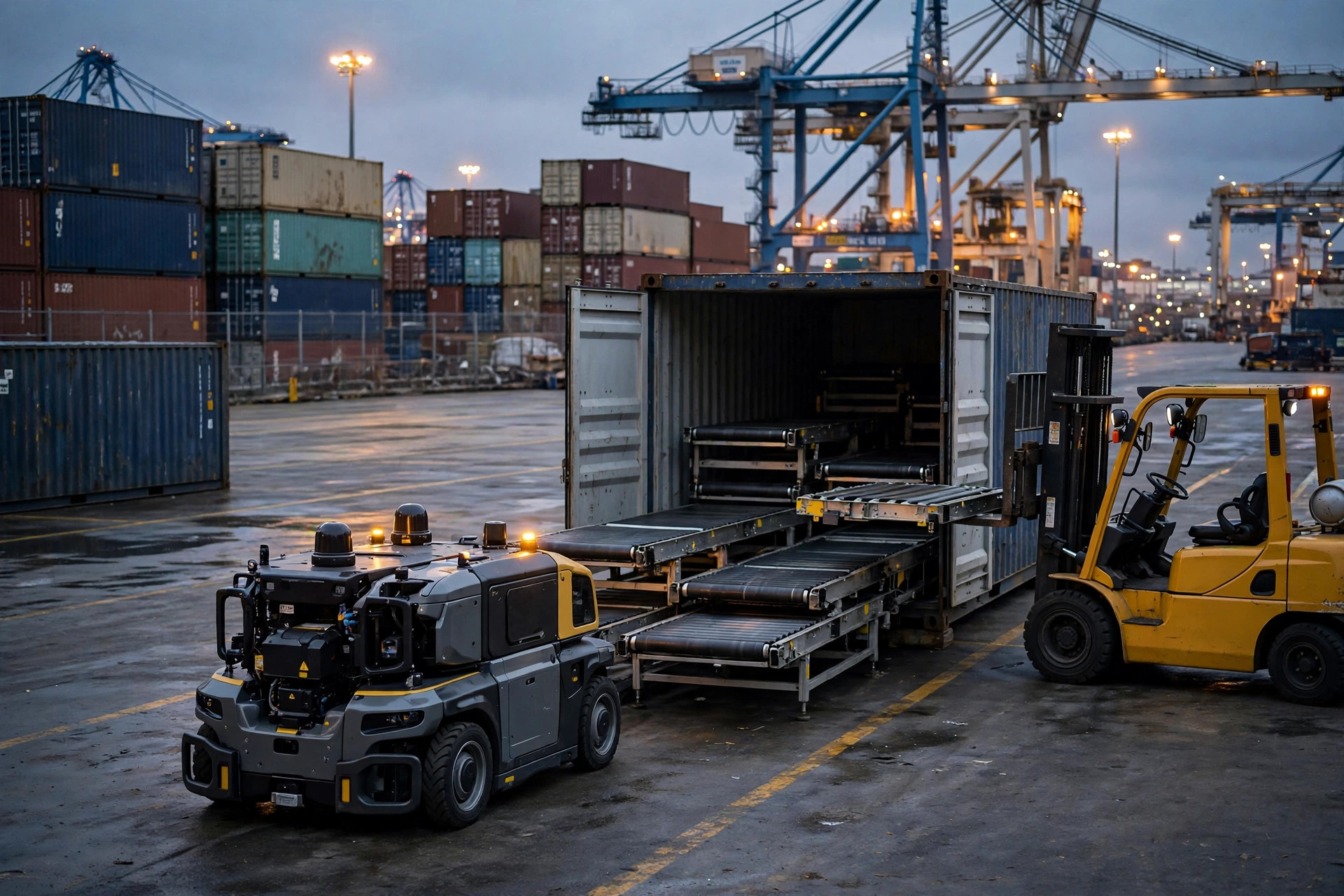
We have a client — a warehouse automation integrator out of Shenzhen, mid-sized, maybe four or five projects a year. In September 2025 they landed their first big Middle East deal: a small sortation line plus a dozen AMRs for a 3PL customer in Riyadh, contract value just under 8 million RMB. The equipment shipped out of Yantian without a hitch. Then it hit Jeddah port — and stopped dead.
Customs had one line for them: no Shipment Certificate of Conformity (SCoC), no release.
The founder was stunned. "But we did the certification!" And he had — he'd paid a testing house tens of thousands of RMB for a test report. The problem: Saudi Arabia doesn't run on "a piece of paper." The SABER platform requires two certificates: the Product Certificate of Conformity (PCoC), which says "this model complies," and the Shipment Certificate of Conformity (SCoC), which says "this specific shipment matches the certified model." He had a test report. He had neither certificate. The equipment sat at Jeddah for over three weeks, racking up storage and demurrage charges worth a mid-range sedan, until the Saudi importer pulled strings to rush the SCoC through.
Over drinks afterward, the founder told me something I've never forgotten: "If I'd known the process worked like this, I'd have priced it into the quote."
So this piece isn't about technology. It's about the three things every vendor really cares about: what exactly needs to be done, what it costs, and how to write the contract so you don't get burned.
It's Not One Certificate — It's Two Certificates Plus a Platform
Get the vocabulary right first, so you don't embarrass yourself in front of the client.
SASO — the Saudi Standards, Metrology and Quality Organization — writes the rules. SABER (saber.sa) is the online platform where everything happens; the paper era is long over. FASAH is Saudi Arabia's national trade single window, and it's linked to SABER — customs can see in the system whether your certificates exist. There is no bluffing your way through.
The process has two steps, in this order. Get the order wrong and everything is wasted.
Step one: the Product Certificate of Conformity (PCoC). The Saudi importer — note, the importer, not you the Chinese shipper — registers the product on SABER, picks a SASO-accredited conformity assessment body (the big names like SGS are all on the list), and submits technical files plus test reports. Reports must come from accredited labs; for equipment this usually means type testing for safety and EMC. Once approved, the PCoC is issued per model, generally valid for one year.
Step two: the Shipment Certificate of Conformity (SCoC). With the PCoC in hand, you apply for an SCoC before every shipment — invoice, packing list, bill of lading — and the assessment body verifies that this consignment matches the certified model. No SCoC, no release at the port. That is exactly where our Shenzhen client got stuck.
The key point: the PCoC applicant is the Saudi importer. Which means certification inherently requires the other side's cooperation. This is where vendors get burned most often — the contract is signed, and only then do you discover the importer doesn't understand the process or won't cooperate on documentation, and the clock just bleeds.
Whole-System vs. Component Certification: Do the Math First
A warehouse automation system can easily involve dozens of models — conveyors, sorters, AMRs, charging docks, control cabinets. Do you certify the whole system as one, or certify key components one by one? Every equipment vendor heading to the Middle East faces this question. Here is the trade-off, laid out the way I'd put it in a proposal:
| Whole-system certification | Key-component certification | |
|---|---|---|
| Upfront cost | High, one big outlay | Low, component by component |
| Time to certificate | Long, more test items | Short, single-component tests are quick |
| SCoC for later shipments | Smooth, simple model list | Tedious, every shipment needs list-matching |
| Inspection risk | Low, certificate-to-goods match is easy to explain | High, one missing model stalls everything |
| Best for | Long-term Saudi market play, stable product line | Trial orders, small batches, consolidated shipments |
Do the math properly: don't just look at the certification fee — anywhere from tens of thousands to well over a hundred thousand RMB depending on model count and test scope (get a quote from the assessment body, and treat official figures as subject to the latest published policy). Look at the cost of getting stuck once. Jeddah port demurrage plus storage runs to several hundred US dollars a day; twenty days lands near 100,000 RMB — enough to pay for the PCoC twice over. And that's before project delay penalties, which are the real killer.
My blunt advice: if Saudi is a strategic market and you're in for the long haul, bite the bullet and certify the whole system — pave the road once. If it's a trial order, start with key components, but write into the contract who pays and who waits when additional models need certifying later.
Here is some vendor-side insider knowledge: assessment bodies have real flexibility in how they define a "system." The same sortation line filed as "one system" versus "a dozen components" can differ several-fold in cost and timeline. When getting quotes, talk to at least two bodies — and don't just compare prices. Ask: "How many models are you planning to file this as?" That one question can save you a small fortune.
The Contrarian Take: Slow Certification Is Actually Your Moat
Here is the contrarian judgment: most equipment vendors treat certification as a cost, a burden, forever complaining that the SASO process is slow. But through a vendor-sales lens, a supplier holding a valid PCoC walks into Saudi tenders with an unfair advantage.
Why? What does the client fear most? Schedule uncertainty. A Chinese vendor with a PCoC in hand and two shipments of SCoC experience, versus one whose "certification hasn't started yet" — with a 10% price gap, who do you think the client picks? In my experience: the first one, almost every time. Because the second vendor's "certification uncertainty" gets priced in as a risk premium.
So don't book certification as mere compliance cost. Book it as a market-entry ticket. Get through it once on the first order, and every order after that is routine — the SCoC takes three to five days when things go smoothly (a week or two of dragging when documents are incomplete, which happens). You can even put a line in your proposal: "Saudi SASO Product Certificate of Conformity already obtained." In a tender room, that line is worth more than a 5% discount.
One more real comparison. That same Shenzhen client: their second shipment to Saudi Arabia, with the PCoC already in hand, got its SCoC approved in four days — cleared customs the day it arrived, zero demurrage. Same company, two shipments, a sedan's worth of cost difference. The difference was one certificate.
Next Time You Negotiate, Ask These Three Questions
Everything comes down to the contract. When negotiating with a Saudi client, on certification, ask these three questions — and write the answers into the clauses.
Question one: Who handles the PCoC, who pays, and by what date must it be in hand? Name the responsible party. Never write wishy-washy "both parties shall cooperate." My recommendation: you supply test reports and technical files; the importer handles SABER registration and the assessment body; agree the cost split up front and lock the deadline.
Question two: Who applies for the SCoC for each shipment, who provides the document package, and how many days to issuance? The SCoC is per shipment. Three shipments means three applications. Build that workload and lead time into the project plan; don't discover it when the goods are already at the port.
Question three: If certification issues cause port detention or re-export, whose liability is it, and what's the cost cap? This is the vendor's survival clause. Awkward conversations up front beat blame games later, a hundred times over. The client may frown — then tell them the story of 20-plus days at Jeddah port, and they usually sign.
Selling into the Middle East: solid equipment only gets you through the door. Getting certification, contracts, and delivery schedules right is what gets the deal across the finish line. Certificates feel like dead weight — until the day they become the wall between you and your competitors.
By Susan, 3PL Sales Director