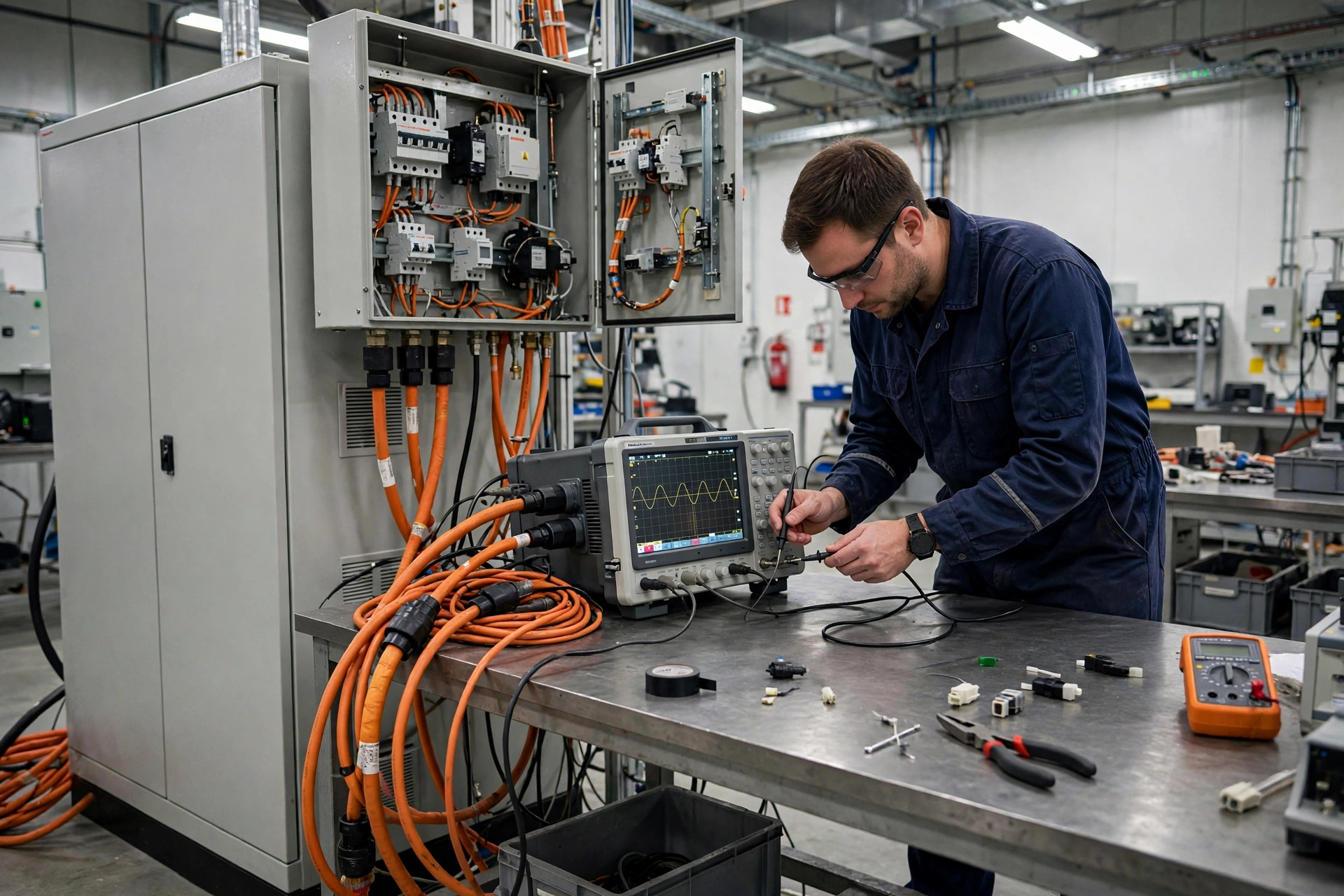
In the fall of 2024, an AGV charging-module maker in Shenzhen shipped 120 charging piles to a customer in Osaka. The container sat at the Port of Yokohama for 47 days — not because of shipping schedules or paperwork, but because the Japanese importer asked one question: "Where is the diamond PSE certificate?" The factory had only done a circle-mark self-declaration. Retesting, redesigning, and getting certified took them more than four months. If you're shipping warehouse electrical equipment to Japan, PSE certification Japan is the gate you have to pass — and it's not one mark, it's two completely different games. Here's the full breakdown.
What PSE Certification Japan Actually Regulates
Japan's Electrical Appliance and Material Safety Law — everyone in the industry calls it the DENAN Law — is basically Japan's entrance exam for electrical equipment. It covers electrical appliances rated AC 100–300V. That voltage band is the boundary: pure low-voltage DC gear (say, a 24V sensor that never touches mains power) is generally out of scope. But your charging pile takes AC 100V at the input, and so does your control cabinet. You're in.
The law thinks like an engineer. Instead of regulating everything, it picks out the high-risk categories: 116 "Specified Electrical Appliances" listed in the official catalog must carry the diamond PSE mark. Everything else — the non-specified categories — goes through the circle PSE self-declaration route.
Think of it this way: the diamond mark is like a driver's license, the circle mark like an ID card. A license requires an exam and periodic renewal — a high bar. An ID card you apply for if you qualify — a lower bar. But nobody thinks an ID card can be faked without consequences. Same mindset here.
Diamond or Circle: Where Your Warehouse Equipment Lands
This is the question every warehouse equipment maker asks. Here's a quick reference table (final classification is up to the certification body — don't guess on your own):
| Common warehouse electrical equipment | Typical route | Why |
|---|---|---|
| AGV/AMR charging piles and charging modules | Diamond | Fundamentally DC power supplies; the power-conversion stage carries the highest risk |
| Breakers and contactors inside control cabinets | Diamond | Wiring devices are specified appliances |
| Motors and servo drives | Diamond | Motor-operated appliances are specified appliances |
| LED high-bay warehouse lighting | Circle | Lighting fixtures are mostly non-specified; self-declaration |
| Complete control cabinets | Usually diamond | Certified as a system together with its critical components; classification per the certification body |
See the pattern? Anything that "takes AC and converts power" — the core power-handling parts — lands on the diamond side. That's the DENAN design logic: the higher the fire and electric-shock risk, the tighter the control.
Here's the counterintuitive part that has burned more than a few factories: the circle mark does NOT mean "no testing, just stick it on." Circle is self-declaration, true — but you still have to run the full safety test suite and keep the test reports on file. Japan's Ministry of Economy, Trade and Industry (METI) does market surveillance, and if you can't produce the reports when checked, your products get pulled all the same. I've seen factories treat "circle" as "exempt." That is a misreading of the law, and the price is an entire shipment taken off the shelves. The more casually you slap the mark on, the faster you die.
Inside Diamond PSE: Testing, Factory Inspection, and the Bill
Why is the diamond route slow and expensive? Three gates, and you have to clear all of them.
Gate one is type testing. A registered certification body tests your samples against the Japanese standards — the J standards — covering insulation resistance, dielectric strength, temperature rise, safety under abnormal conditions (locked rotor, overload), and construction checks. You can think of it as a full physical exam for your equipment; every failed metric means rework and retest. Each rework round pushes the schedule back by about a month, which is why veterans always recommend a pre-test before the official submission.
Gate two is the factory inspection. Before the certificate is issued, the certification body audits your factory to verify that every unit you build afterward will match the tested sample. The core of it is the critical-component list — breakers, power modules, cables, every key part's brand and model goes on record. Change a supplier or a model later, and in principle you need a re-evaluation.
Gate three is the bill: time and money. A diamond PSE certification Japan project typically runs 3–6 months end to end, and costs vary a lot between certification bodies — testing plus inspection generally lands in the tens of thousands of RMB, up into the low hundreds of thousands. Get a current quote from the certification body; don't budget off someone else's number. The circle route is much faster and cheaper, but the test report still can't be skipped. Don't try to cut that line item.
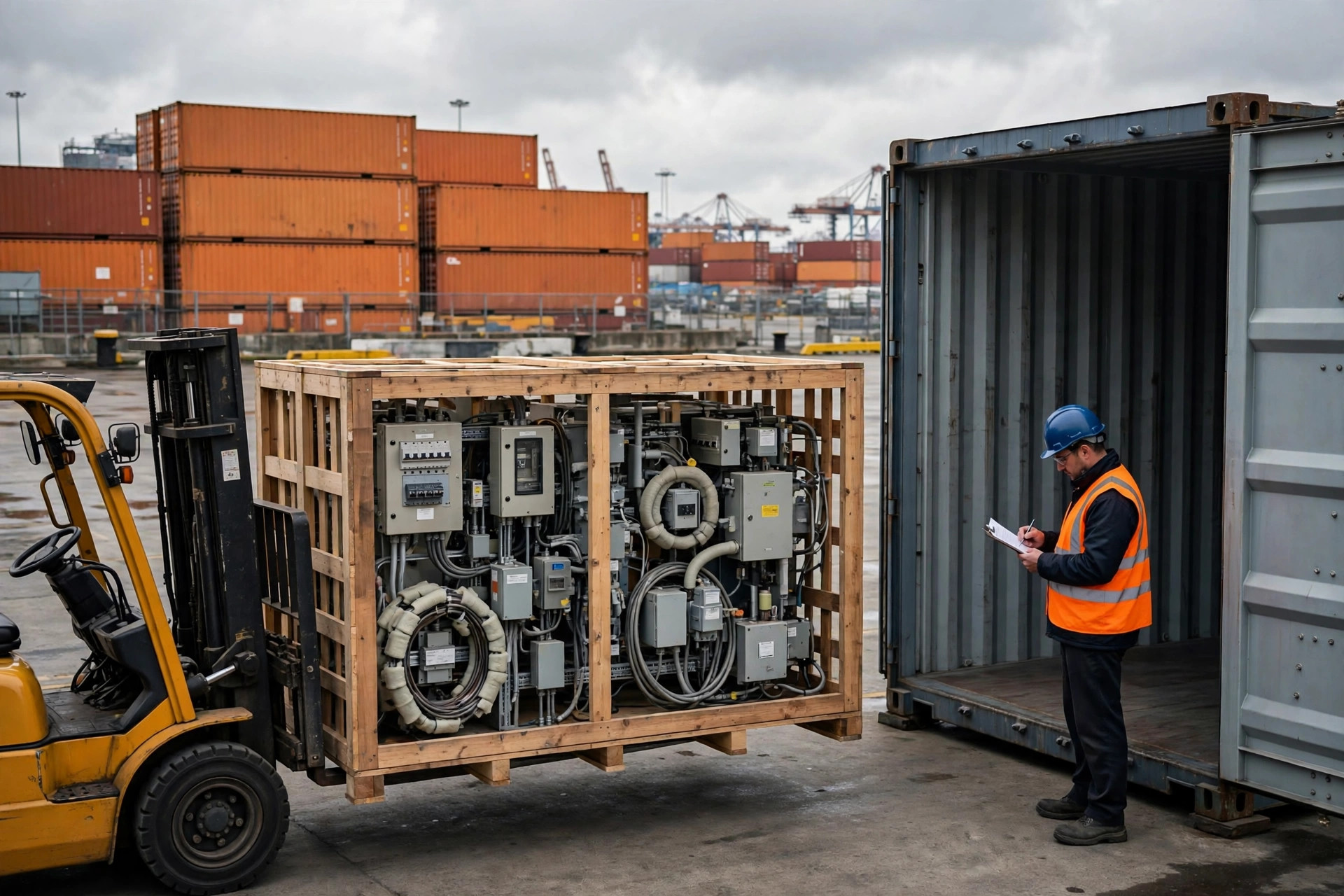
And here's the second misconception, with a side-by-side comparison:
| PSE (Japan) | CE (EU) | FCC (US) | |
|---|---|---|---|
| Legal basis | DENAN Law | LVD/EMC directives | FCC Part 15 |
| Core scope | Electrical safety (AC 100–300V) | Electrical safety + EMC + environmental | EMC emissions |
| Access model | Diamond: third-party certification + factory inspection; Circle: self-declaration | Mostly self-declaration (DoC) | SDoC / Certification |
| Factory inspection | Yes, for diamond | Generally no | No |
| Mutual recognition | Neither CE nor FCC works in Japan | — | — |
Read that last row carefully. A question I get a lot: "My control cabinet already has full CE and FCC — do I still need to redo it for Japan?" Yes. Japan doesn't recognize CE self-declarations, and FCC only covers EMC, not electrical safety. PSE is a standalone gate; your existing test data can shorten the process, but certificates don't transfer. In 2023, a racking-system control-cabinet maker in Dongguan walked into a Japanese customer meeting waving CE certificates and got sent home with "we only accept PSE." The retest cost them an extra quarter, and the order nearly died.
Three Traps After You Get the Certificate
The certificate is in hand. Most people think they're done. Wrong — the traps start here.
First, certificates expire, and factory inspections repeat on a cycle — a PSE certification Japan certificate is not a lifetime pass. Lock the certificate in a drawer and forget about it? If a follow-up inspection finds your production no longer matches the certified sample, the certificate gets suspended. A license needs renewal; nobody drives on one exam for life.
Second, critical-component changes are the sneakiest trap. You swap a breaker brand or a power-module model because "the specs are close enough" and ship — then a market check finds the hardware doesn't match the filed list, and the whole batch is treated as non-compliant. Rule of thumb: before changing any critical component, ask the certification body whether a re-evaluation is needed. Don't decide on your own.
Third, marking and manuals. The PSE mark has specified artwork — diamond and circle must never be mixed — and the manual must carry the prescribed Japanese warnings. Don't dismiss this one: labeling issues are among the most common reasons Japanese customs and market surveillance hold shipments, and every fix costs you weeks.
Back to that Shenzhen factory: more than four months to complete the diamond certification, nearly two extra months of the container sitting at the port. Demurrage plus certification fees wiped out the profit of two more shipments. The boss told me later: if he'd built the certification timeline and cost into the first quote, none of it would have happened.
Whether the money is worth it comes down to one number: can the margin on your Japanese orders cover the total cost of one certification project? If a single order pays it back, everything after is pure gain. If three orders can't cover it, stay out of this market for now and double down on the markets you already own.
By Da Liu, Automation Engineer