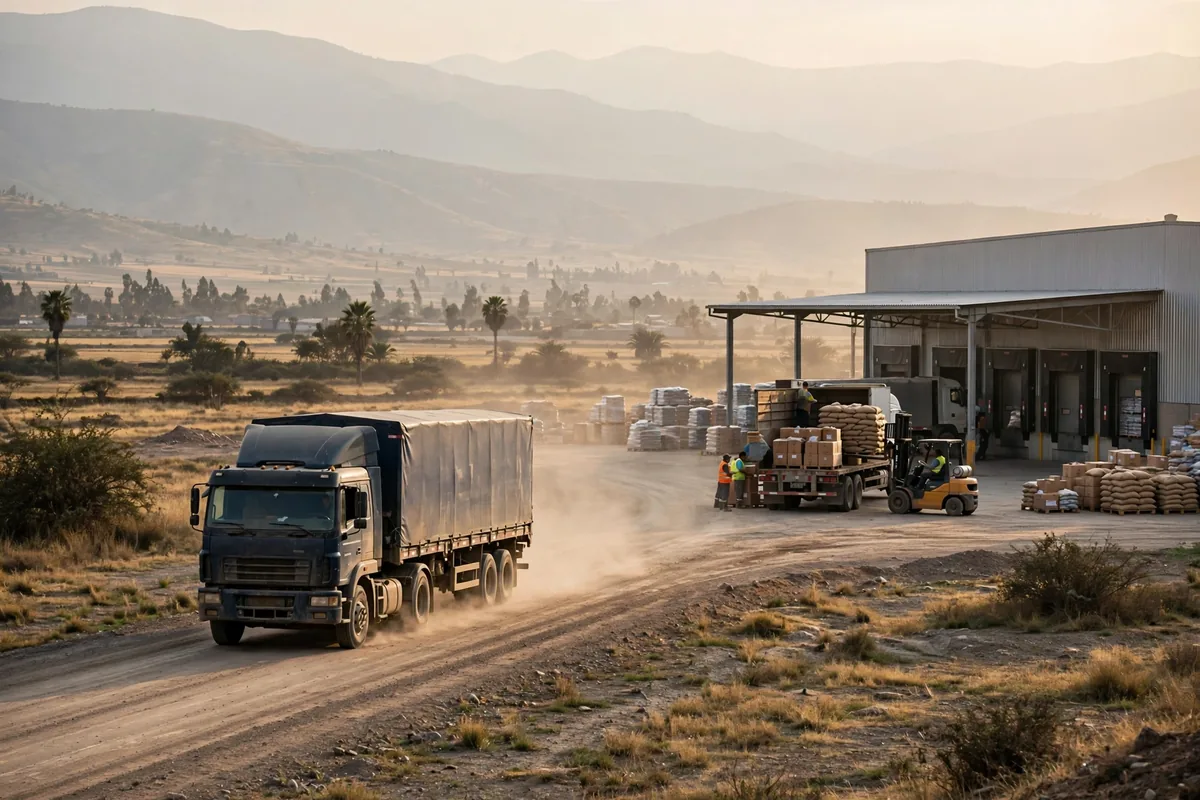
Here's my verdict up front: in Santa Cruz, Bolivia, inland distribution is not won on warehouse rent. It is won on the port decision. Santa Cruz is Bolivia's economic engine — soybeans, soybean oil, meat, timber all flow out of here — and the country has no coastline at all. Every shipment has to borrow somebody else's port: west over the Andes to Arica in Chile, east down the river to the Atlantic, or north into Brazil. Pick the wrong route and freight and transit time both double.
I have seen too many people get this backwards. They lease the cheapest warehouse in Santa Cruz, fill it to the rafters, and call it a strategy. Then the sailing date arrives, the truck is still crawling over an Andean pass, the container is stuck in a queue at a Chilean port, and the customer starts talking penalties. Put plainly, the first lesson of inland distribution here is not how to run a warehouse. It is accepting what your warehouse actually is: a junction where four routes to the sea split apart.
There are two sides to this. Having no coastline is a hard disadvantage, but it forced Santa Cruz to become something rare in South America: a hub that can go in all four directions. West is the Pacific, east is the Atlantic waterway, north is the Brazilian market, south is Argentina. Most cities live or die on one road. Santa Cruz holds four cards — but you cannot play all four at once. You have to match the route to the cargo.
The Port Out of Santa Cruz Is Chosen by Arithmetic, Not by Habit
Take the western route first. Arica in Chile is the main Pacific gateway for Bolivian cargo; by the Bolivian port authority's account, it handled roughly seven in ten of Bolivia's port cargo movements in 2025. Matarani in Peru is the second option, under two-tenths in 2024, but growing. Both routes climb from a few hundred meters to over 4,000 meters, and in the rainy season neither is reliable.
A World Customs Organization case study on Bolivia carries a telling set of driver-reported figures: the overland trip from La Paz to Arica fell from 48 hours to 36 hours, and the cost from 100 dollars to 80 dollars, after customs and road improvements. Santa Cruz to Arica is farther still — public trip planners put the road distance at roughly 1,400 kilometers, taking 16 to 28 hours overland.
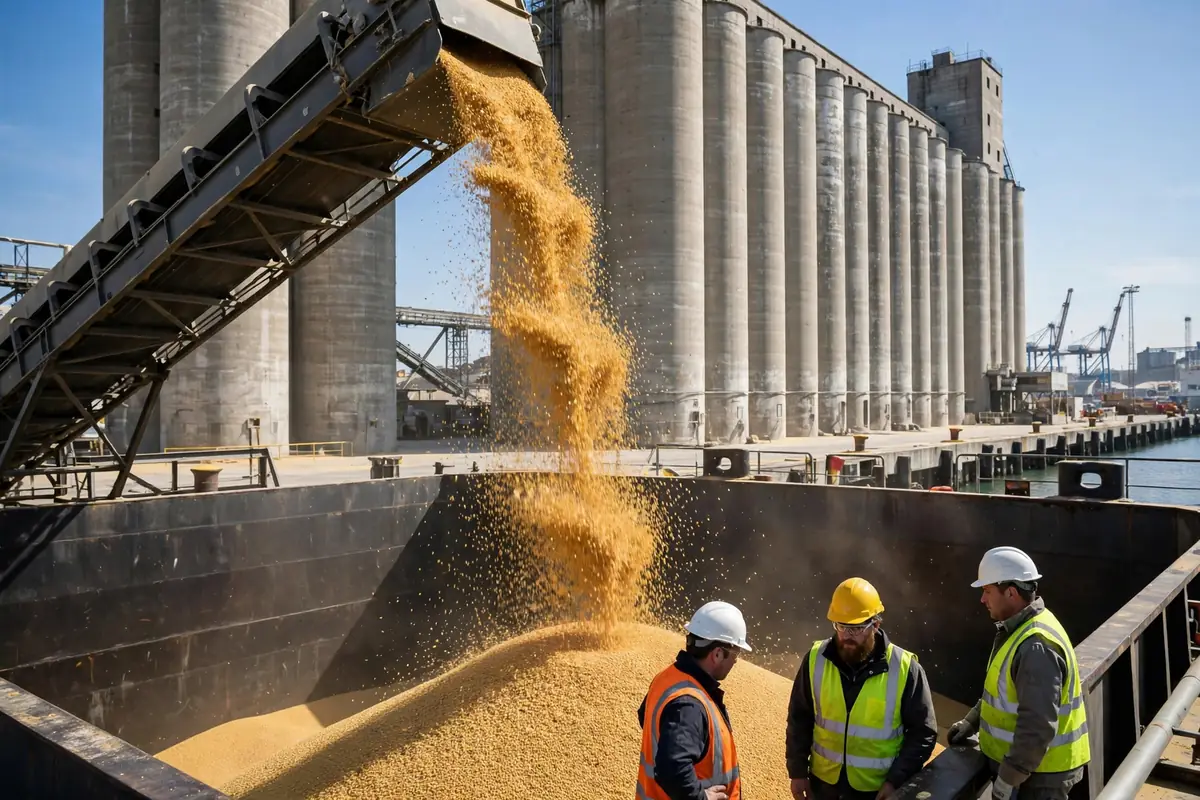
Now the eastern route, which most people underestimate. East of Santa Cruz, river ports like Puerto Aguirre and Puerto Jennefer connect to the Paraguay-Paraná Waterway, and soybeans and soybean oil ride barges all the way down to the Atlantic. When three of those river ports received international classification back in 2018, their managers estimated the waterway could cut freight costs by around 20 percent and transit time by up to 30 percent versus the Pacific overland route.
One more number belongs in your head before you price anything. UNCTAD estimated in August 2025 that landlocked developing countries face average trade costs about 1.4 times those of coastal countries. That extra 0.4 is what every shipment out of Santa Cruz is absorbing.
Here is the decision table I use:
| Cargo temperament | First choice | The price you pay | When not to use it |
|---|---|---|---|
| Bulk farm goods: soy, meal, oil | East by waterway via Puerto Aguirre / Jennefer | Slow, cheapest per ton in full barge loads | When you cannot fill a barge |
| Urgent industrial goods | West by road to Arica, or air from Viru Viru | Fast, but mountain roads and air capacity are unreliable | Rainy season or border queues — check time before quoting |
| Regional cargo for Brazil / Argentina | Rail and road to Corumbá or Yacuiba | No ocean detour, fast regional flow | When cargo is bound for Asia or Europe |
| High value, small volume | Air freight via Viru Viru | Expensive, most reliable transit time | When cargo value cannot carry the air freight |
There is no right answer in that table, only trade-offs. The waterway saves money and costs time. Air freight buys time and costs money.
Soybeans Go by Water, Rush Orders Go by Air, Trucks Get the Rest
Two real stories make the point. The first is from May 2021. After more than a decade and a half out of service, the Arica–La Paz railway ran a freight test: a train carrying 480 tonnes of steel out of Arica, two days just for the 206-kilometer Chilean section, climbing to 3,742 meters, and coming back with 480 tonnes of soybeans. Plenty of people assumed the railway was back. I told a friend not to redraw his network around it. That line opened in 1913 and has stopped and started ever since. Trucks did the real work all those years.
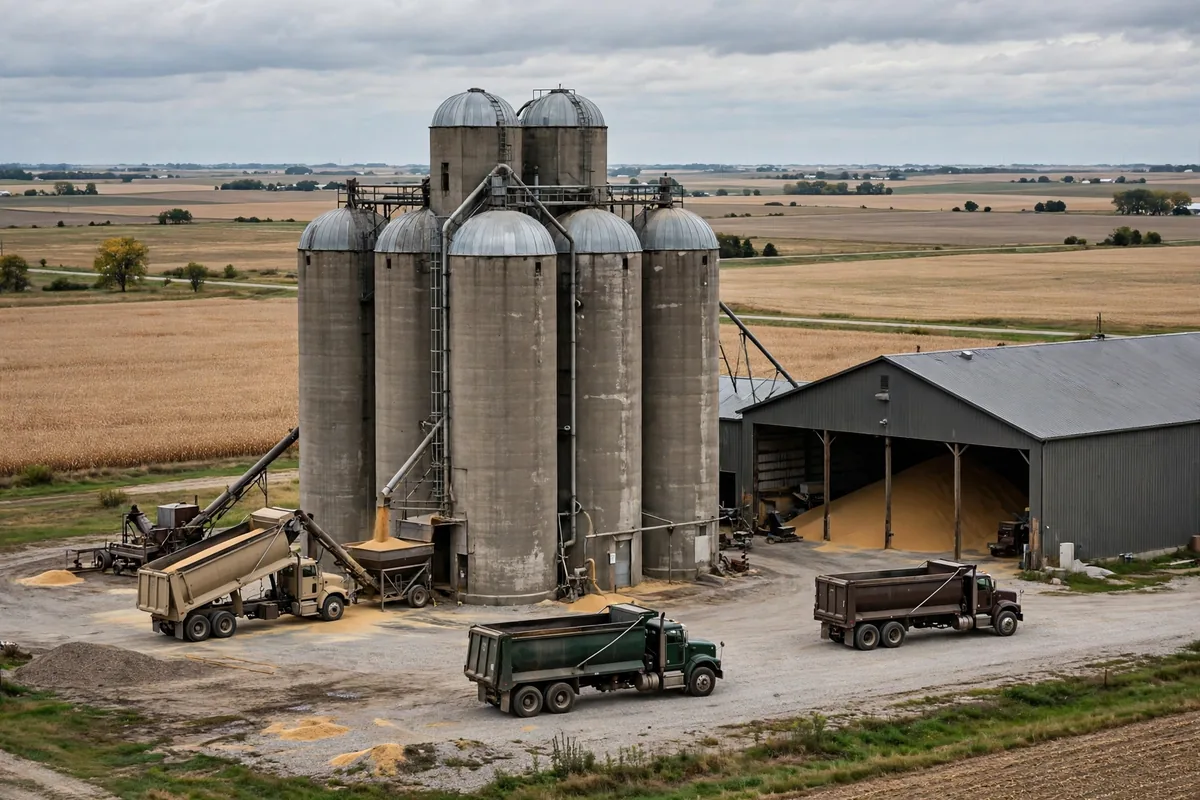
Second, Puerto Jennefer, on the Tamengo Canal. It moves about 500,000 tonnes a year, mostly soybean flour and oil, and its managers expected that figure to double quickly. Bulk farm cargo was never about "as fast as possible." It is about gathering enough volume, grading it, and sending it downriver on schedule. A Santa Cruz warehouse serving soybeans is judged on whether it can receive bulk, grade it, consolidate a full barge load, and hit the river port on time. Fall short on volume and the waterway's cheap rate does you no good at all.
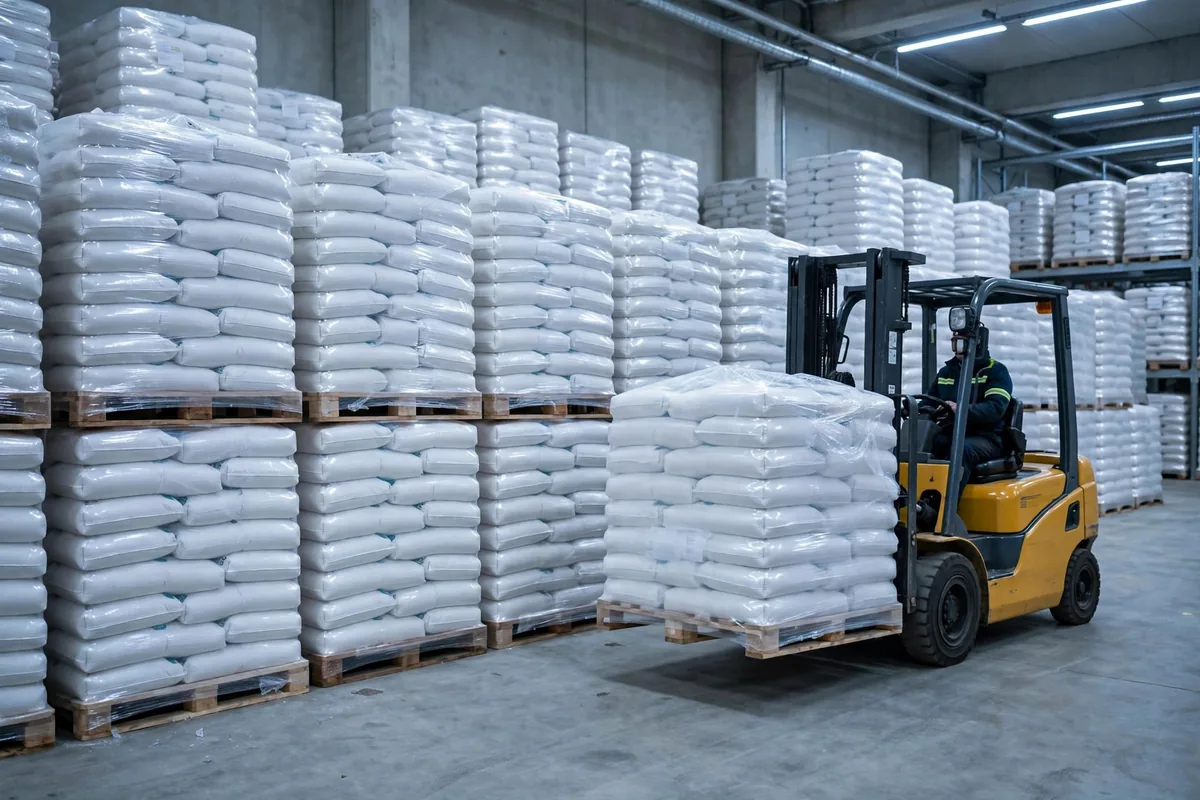
Define the warehouse job before the building. A bulk agricultural warehouse competes on receiving and consolidation — take cargo in during the slow season, ship in the peak, keep spare capacity. An industrial warehouse competes on turn speed — cargo in and out within days, because stock sitting still is cash sitting still. A small urgent-lot operation competes on the handoff to the airport and the border, where one wrong document sinks the whole shipment. Three different warehouses. Do not build them to one standard.
Here is the counterintuitive call: in Santa Cruz, the farthest place from the sea, the warehouse cannot be small. Every uncertainty — a queue at the border, a road closed by rain, a barge waiting on water levels — ends up being absorbed by inventory. A coastal warehouse can run lean because ships sail every day. An inland warehouse has to carry buffer, because one break in the chain costs a whole sailing. The rent you save on a smaller building does not cover one missed shipment.
Build in Santa Cruz on the Fork in the Road, Not in the City Center
Where do you put the warehouse? One rule: build on the fork, not downtown. Santa Cruz sits on the East-West Corridor, a 2,585-kilometer highway of 35 sections linking Bolivia's main cities, with Brazil on one end and Chile's ports on the other. The closer your warehouse is to that corridor, the more options every shipment has. The area around Viru Viru Airport suits urgent cargo and distribution. The river-port direction to the east suits bulk farm consolidation. The city center only suits last-mile distribution. Cheap land is usually the farthest from the fork — run that math first.
Two more things, and do not skip them. First, get the paperwork and the certificate of origin ready early. Bolivia belongs to both the Andean Community and MERCOSUR, and digital certificates of origin have been rolling out — but treat the details as "check the official source for the latest rules" and never quote them from memory. Second, never bet on a single border crossing. If Arica is queuing, switch to Matarani. If the water level is wrong, switch to road. Always keep a backup route. It looks like a cost on a quiet day. On a bad day it is the only thing that saves the shipment.
One last piece of advice: do not shop for a warehouse in Santa Cruz by rent alone. Put the four routes to the sea on one sheet — transit time, cost, and the odds of a break on each — and only then decide where the warehouse goes and how much stock it holds. The question is whether you are betting on the warehouse — or on the port.
By Lao Mi, Supply Chain Veteran (20 yrs)