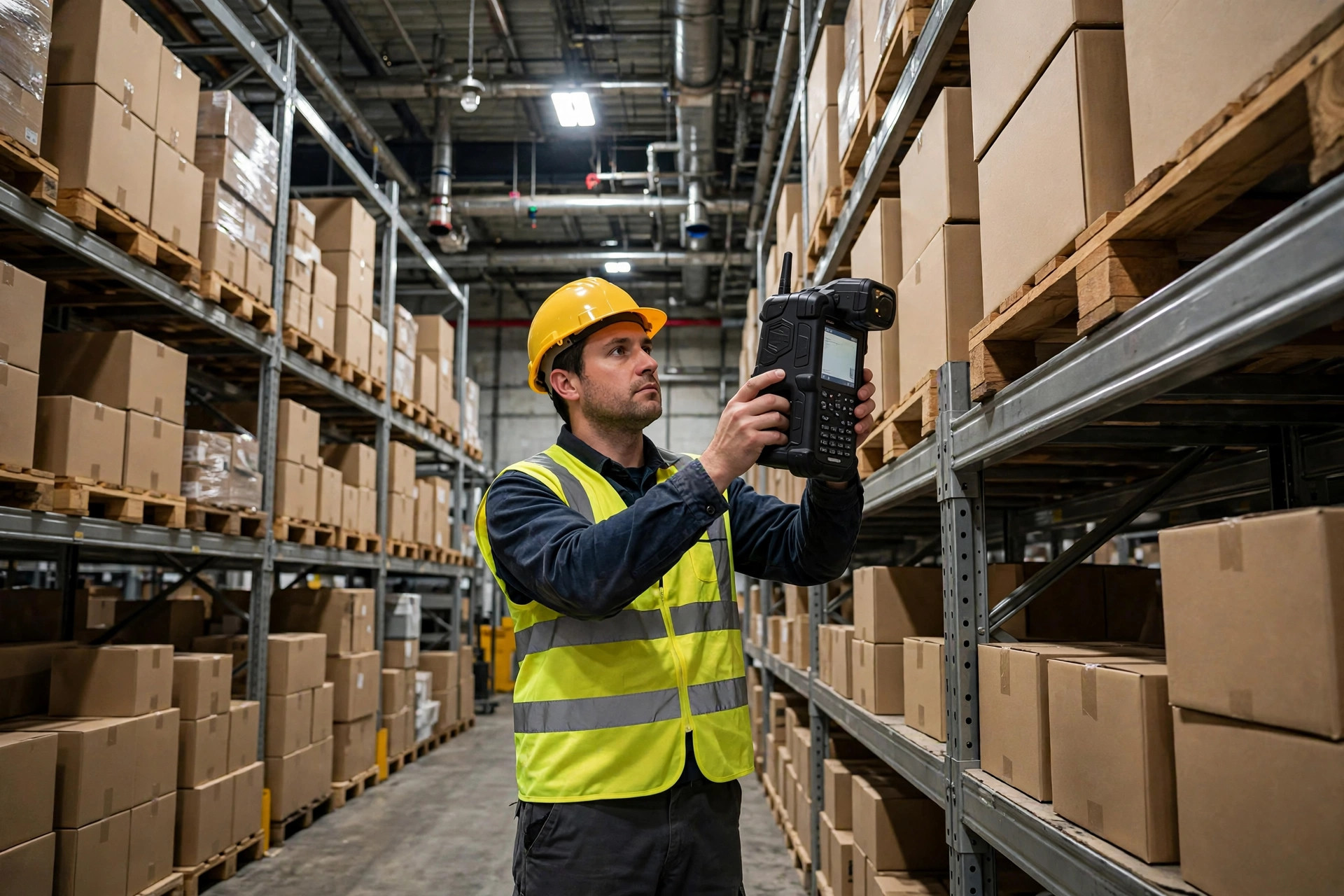
Here's my verdict up front: if your pickers scan more than 1,000 barcodes a day, stop reading and buy the rugged device. If they scan fewer than 500, a smartphone with a Bluetooth ring scanner is fine, and you'd be wasting money otherwise. Everything in between — that's what this article is for.
The question of rugged mobile computer vs smartphone for warehouse scanning comes up in nearly every site visit I did as a systems integrator. And most people ask it wrong. They ask "which is better," as if the answer doesn't depend on what you're scanning, how often, and where. That's like asking whether a truck is better than a sedan without saying what you're hauling.
Why a Rugged Mobile Computer Scans Differently
Scanning is a two-step job: first you "see" the barcode, then you "read" it.
A smartphone scans with its camera. Think of it this way: the phone is taking a photograph and then running an algorithm to find the barcode inside the photo. It's like photographing the moon with your phone — you can get the shot, but try doing it a thousand times in a row and your arm gives out first. And warehouse barcodes are not the pretty ones on retail packaging. They're crooked, wrinkled, dusty, reflective, or half scraped off by a forklift. A phone camera hunts for focus on those, beeps after a second or two, or just gives up. On a clean label in good light, a phone takes about a second. On a rough one, two to three seconds — or multiple attempts.
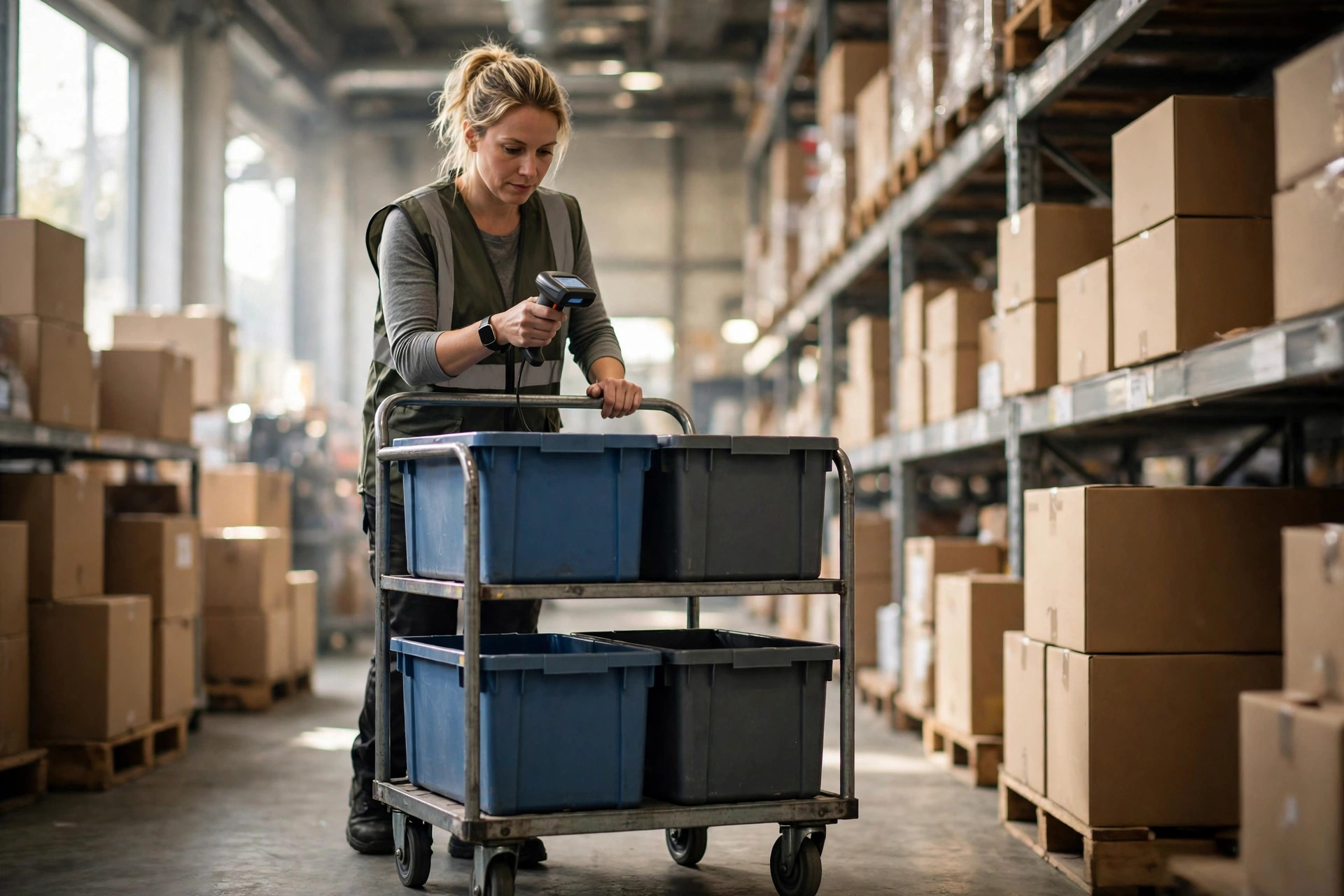
A rugged mobile computer carries a dedicated 2D imaging scan engine. You can think of it as an eye that evolved for exactly one job: reading codes. It decodes dozens of times per second, and damaged, reflective, or wrinkled labels go through with a trigger pull — "beep," done. A single scan takes 0.2 to 0.5 seconds, and it barely cares about label quality. One second sounds trivial. Multiply it by 2,000 scans a day and it's half an hour of labor, per person.
Then there's the "rugged" part. IP67 means what, exactly? Think of it as: dust can't get in at all, and you can drop the thing in a meter of water for half an hour, fish it out, and keep working. Warehouse dust, rain splashing across a loading dock, condensation in a cooler — a phone's charging port dies first in those conditions. Drops? Rugged units are built to MIL-STD-810: 1.8 meters onto concrete, dozens of times, pick it up and keep going. That's roughly falling off the second level of a pallet rack. A bare smartphone dropped from one meter? You already know the odds for that screen.
Three more specs only engineers care about, and they matter more than people think. First, the battery is hot-swappable. Dead battery? Ten seconds, fresh pack, back to work. A phone's battery is sealed in; after eighteen months the runtime is halved and the whole unit is effectively done. Second, operating temperature. Mainstream rugged units work from -20°C to 50°C — a -18°C freezer is a normal Tuesday. A phone shuts itself off after twenty minutes in a freezer. That's lithium chemistry, not a software bug; nobody codes around physics. Third, the screen works with gloves and stays readable in sunlight. In a warehouse those aren't nice-to-haves, they're the job.
In September 2024, a 3PL warehouse in Dongguan — 8,000 square meters, about 6,000 orders a day — tried to save money by handing 30 pickers secondhand Android phones with a scanning app. Three months later, 11 cracked screens. Each repair ran 280 to 350 yuan, and that doesn't count the days people spent handwriting order numbers while waiting for repairs — two mis-shipped orders cost more in penalties than a screen. When peak season hit, the owner overnighted an order for 30 rugged units. The math was always the math. The tuition was paid in cash.
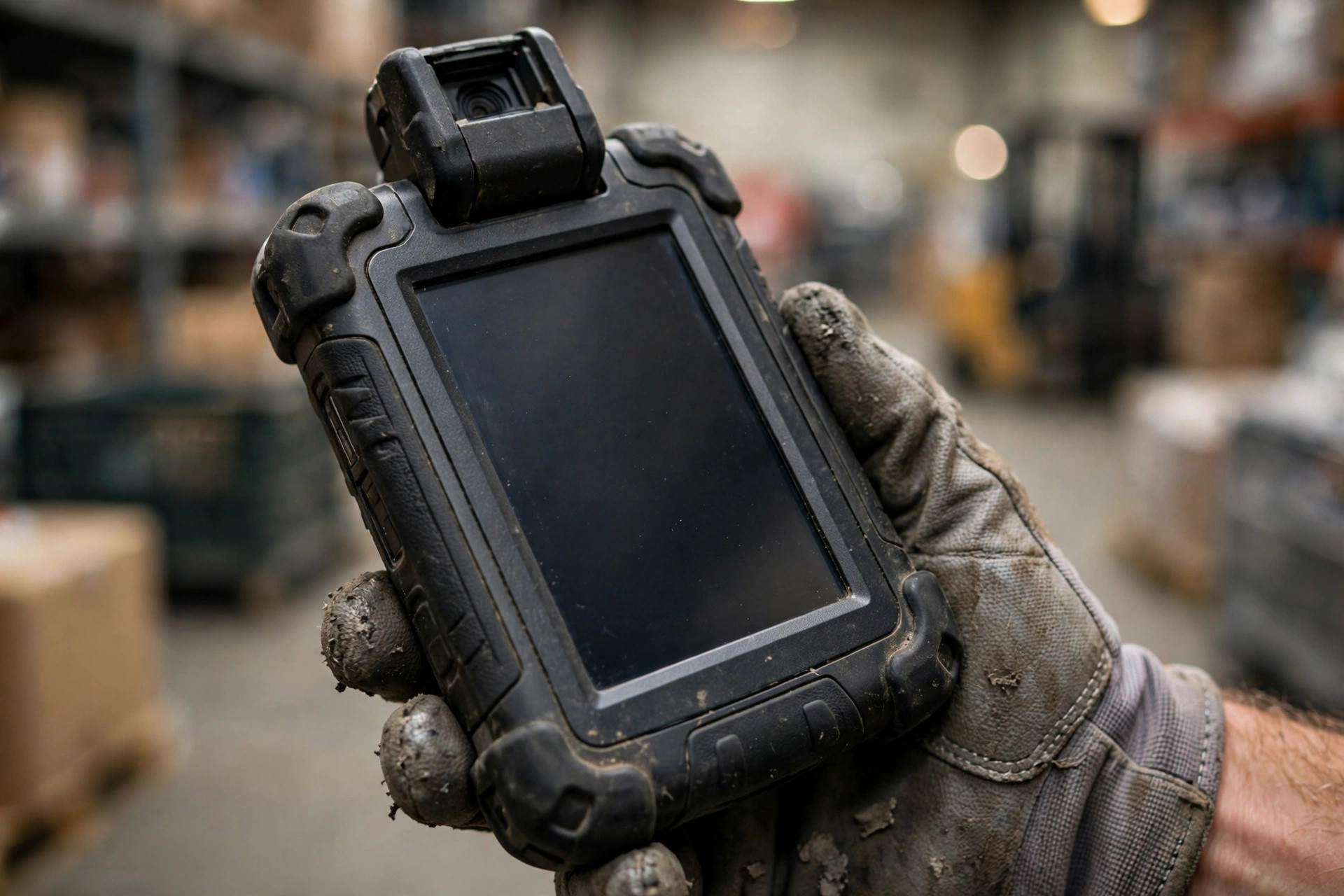
The Line in the Sand: Rugged vs Smartphone, Where Does Your Warehouse Stand
Principles covered. Now the selection line. My method uses three numbers:
First, daily scans per person. Under 500 a day, a phone plus a Bluetooth ring scanner is plenty — don't spend money you don't need to. Over 1,000, get the rugged unit and don't overthink it. Between 500 and 1,000, look at the next two numbers.
Second, annual damage rate. In a warehouse, phones get dropped, soaked, and shaken apart at 20-plus percent a year. Past that line, stop fighting it and switch.
Third, the environment. Freezer? Dust? An outdoor dock? Any single yes disqualifies the phone.
Let me take a shot at a fake requirement while I'm here: a small room-temperature stockroom scanning 200 codes a day does not need a rugged PDA. That's using a sledgehammer on a thumbtack — the extra money is a gadget-enthusiast tax. The reverse is dumber: a high-volume warehouse doing 2,000 scans a day on phones is paying the tax in picker patience and error rates.
In January 2025, a cold-chain warehouse in Langfang called me. Inside their -18°C freezer, pickers' phones shut off after twenty minutes, rebooted seven or eight times a day, and the scanning app kept crashing. They switched to low-temperature rugged units and the problem disappeared the same day. In that case the dividing line wasn't money at all — it was physics. At -18°C a lithium battery delivers a fraction of its room-temperature output, and no firmware update changes that.
The Real Math: 3-Year TCO
Feelings aside, here are hard numbers. Thirty units, three years. Device prices are order-of-magnitude figures from public manufacturer and reseller listings; labor at $18 an hour:
| Item | Rugged mobile computer | Smartphone |
|---|---|---|
| Unit price | $1,000–$1,800 | $250–$450 |
| Year-one cost (30 units) | $30k–$54k | $7.5k–$13.5k |
| Annual damage rate (warehouse) | 5–10% | 30–50% |
| 3-yr replacement/repair | ~$7k–$12k | ~$18k–$30k |
| Time per scan | 0.2–0.5 s | 1–2 s |
| 3-yr hardware total | ~$40k–$65k | ~$28k–$45k |
| Efficiency loss (3 yrs) | — | ~$15k–$30k |
Where does the efficiency loss come from? Take the conservative case — each scan just half a second slower, 2,000 scans per person per day, 30 people, 300 days a year: 0.5 × 2,000 × 30 × 300 = 9 million seconds = 2,500 hours a year. At $18 an hour that's $45,000 a year, roughly $130,000 over three years at the aggressive end; the table uses the conservative band. See it now? The tens of thousands the phone saves on hardware get eaten by efficiency — and then some.
Here's the counterintuitive part: most people think rugged units are expensive because they're "tough." Wrong. They're expensive for two things: the scan engine and the enterprise-grade OS support. Toughness is a side effect. And the real cost of phone scanning isn't the phone — it's the 3% of scans that fail. A damaged or reflective label that won't read means the picker leans in, waits for focus, retries — ten extra seconds. A few hundred of those a day is hours. That loss never appears on any quote, but it happens every single day.
Maintenance: The Part Nobody Prices In
Last section, and it's the one buyers skip: the maintenance traps. Buying rugged doesn't mean you're done.
First, batteries are consumables. Swappable is an advantage, but plan on replacing packs around year two — a couple hundred yuan/dollars each. Budget for it, and don't blame the manufacturer when a pack swells.
Second, OS updates. Enterprise rugged devices typically get Android security updates for five years or more. A consumer phone stops at two or three, and then your WMS app update bricks all 30 phones at once. Don't say I didn't warn you.
Third, accessories. Charging cradles, wrist straps, protective boots — consumables all. Add 10% to the first-year budget. I've seen too many warehouses buy the devices and cheap out on cradles, then watch 30 units queue up for charging every evening. Hilarious, until it's your shift.
Fourth, don't buy the rugged unit with 5G, a 120Hz screen, and a flagship chip. Warehouse scanning needs stability, not benchmark scores. Those specs sit idle 90% of the time in a warehouse — pure vanity tax. Put the money into the scan engine and the battery.
So back to the original question of rugged mobile computer vs smartphone for warehouse scanning. Whether the money is worth it comes down to one number: scans per person per day. Over 1,000 — rugged PDA, no hesitation. Under 500 — phone plus a Bluetooth ring scanner, spend the savings elsewhere. Stuck in the middle? Rent five rugged units for a month and let the data decide. Don't guess.
By Da Liu, Automation Engineer