Let me tell you something about roller conveyors — I only really understood them standing on a warehouse dock. After all these years behind the wheel, I know exactly how freight bounces around on the road. How it moves once it gets inside the warehouse? That, I never gave much thought to, until it cost me an afternoon. In the summer of 2023, I hauled a full load of cartons to a distribution center outside Dallas, Texas. Three trucks were already queued at the dock. When my turn came, the warehouse crew told me to wait — the conveyor line had jammed. One carton had gone crooked on the roller conveyor, and the whole line sat dead for ten minutes or so, with every truck behind me stuck at the dock. That day I learned the lesson plain: pick the wrong conveyor, and it is not just the warehouse that pays for it. The driver stuck at the dock pays too.
Roller conveyors for cartons; belts for odd shapes
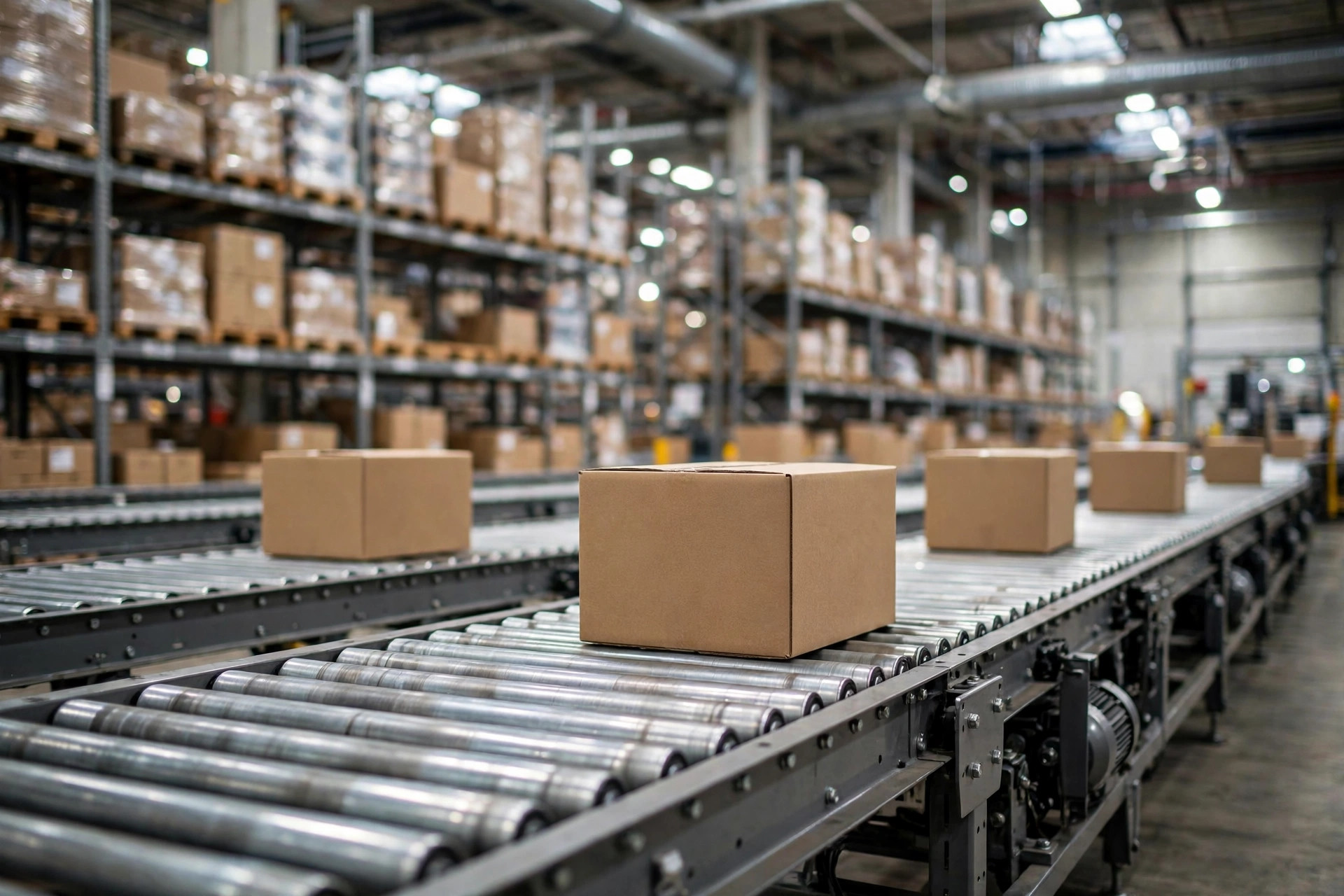
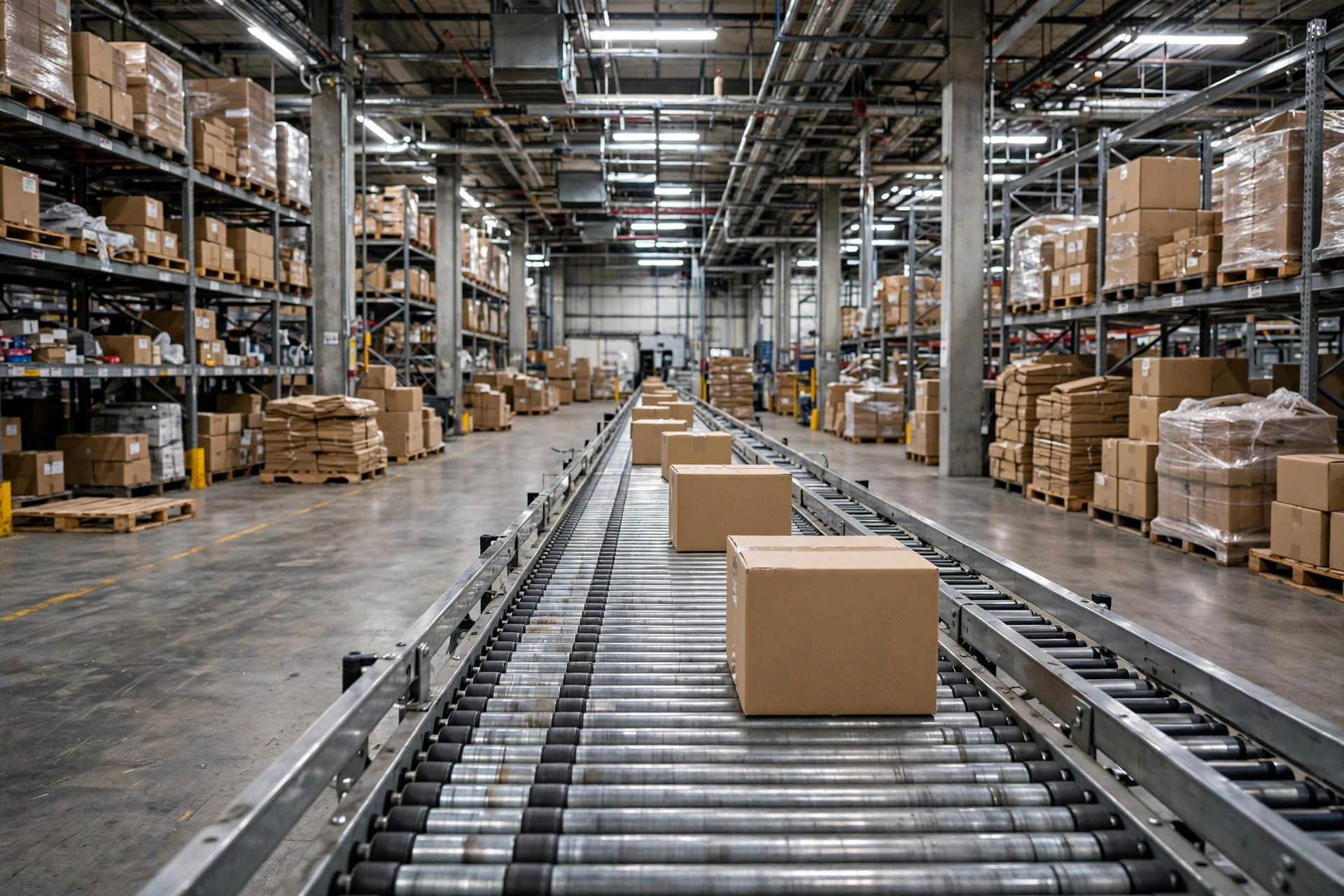
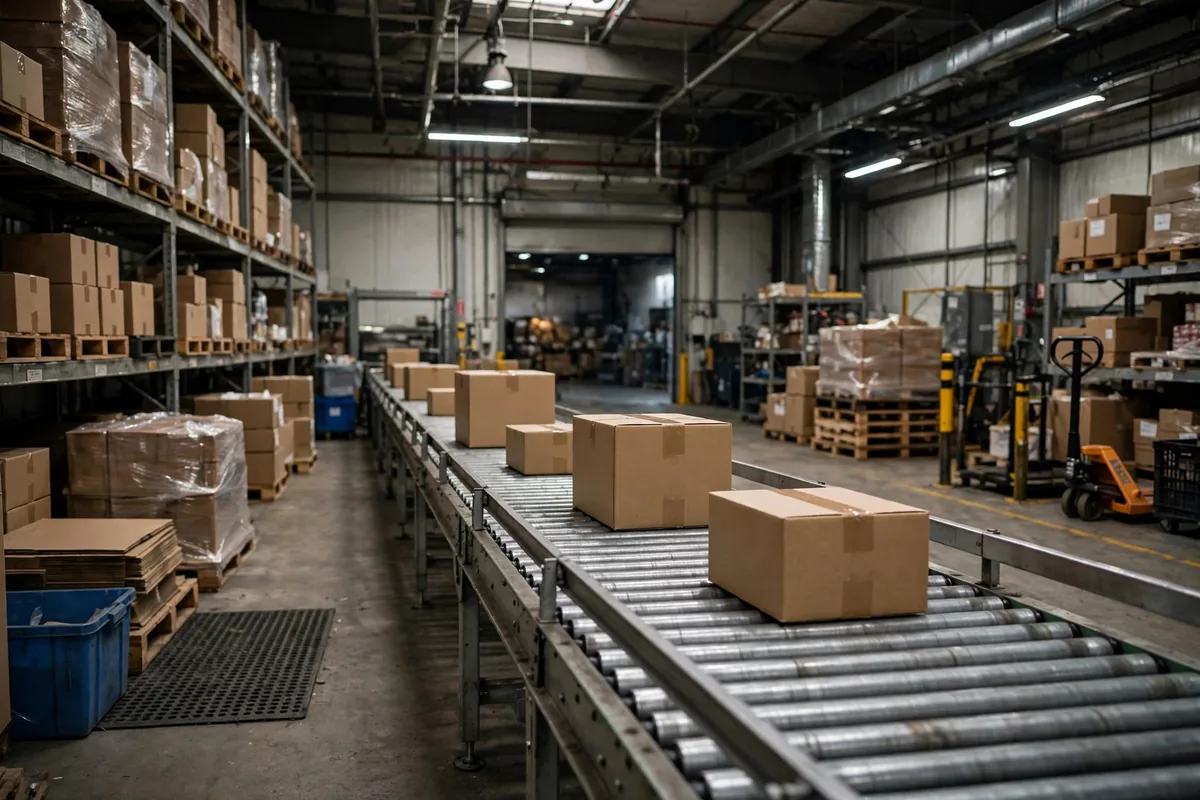
A roller conveyor is, at heart, a row of small steel wheels carrying freight forward. A carton with a flat bottom and even weight rides it fast and steady — thousands of cartons a day, no drama. Totes are the same story: flat bottom, and the roller line handles them fine. In the fall of 2021, I delivered to an e-commerce warehouse in Columbus, Ohio, and watched a roller line push through more than a thousand cartons in an hour. Pickers stood on both sides, grabbing cartons as they came, the rhythm quick as running water.
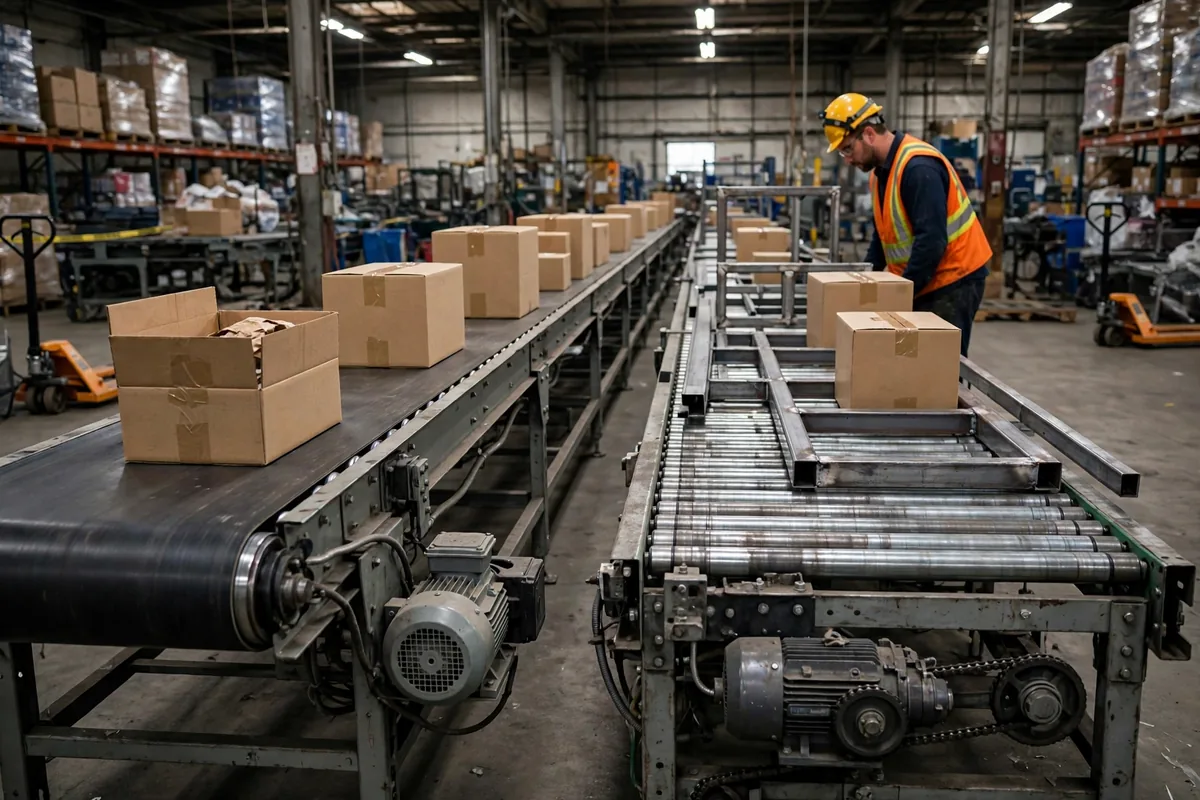
A belt conveyor is a different animal. One flat belt carries the load, so it does not care whether the bottom is flat. Bagged goods, odd-shaped items, loose small parts scattered on the belt — it carries them all. In that same Columbus warehouse, a second line, a belt line, handled bagged apparel and soft packages, everything the roller line could not take. The warehouse supervisor told me that a soft bag on a roller line sags into the gaps between rollers, and two or three out of every ten jam up.
Heavy freight is another question altogether. A pallet weighing several hundred kilos needs thick rollers packed close together on a roller line, and the price climbs fast. On a belt line, heavy loads wear the belt out sooner, and a stretched belt starts tracking off to one side. My call is straightforward: standard cartons and totes belong on rollers; bagged, odd-shaped, and loose small items belong on a belt; and for anything overweight, ask the manufacturer for the load chart first — never order on gut feel, and check the latest manufacturer specifications.
Roller conveyor speed vs belt conveyor steadiness
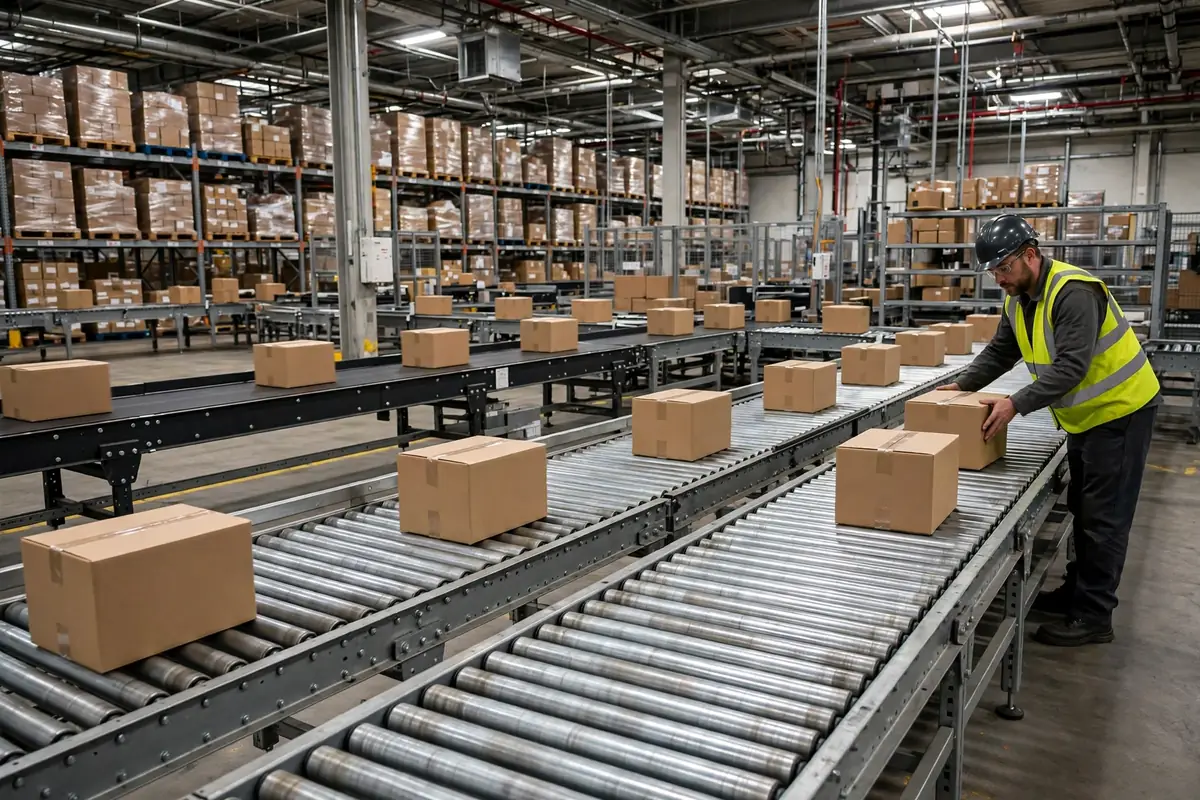
Speed is something a driver understands in his bones. A roller conveyor moves fast — cartons can cover twenty or thirty meters a minute, and the pace keeps up with peak season. A belt line usually runs a little slower, but it wins on steadiness: freight does not slip or tip over. The catch is that a roller line jams as fast as it runs. One carton goes sideways, and the cartons behind it pile up bumper to bumper until the whole line stops dead. A belt line runs slower, so when the front jams, the freight behind mostly just slips in place on the belt instead of crashing into a pile.
In the winter of 2022, I waited nearly two hours to unload at a 3PL warehouse in Ontario, California. After asking around, I found out their roller line had jammed four times that day during peak-season rush, and each time someone had to climb up and straighten cartons by hand. The supervisor vented to me afterward: they had bought the line for its top speed, yet the busier it got, the more often it jammed. What does that tell you? When you pick a conveyor, do not stare at the top speed on the brochure. Ask how long it takes to get going again after a jam, and how many people and how many minutes that takes.
Noise belongs in the calculation too. A roller line rattles along, and the heavier the carton, the louder the rattle — a worker standing beside it all day goes home with ringing ears. A belt line is far quieter, and night shifts do not turn into a racket. If a warehouse runs around the clock, that matters as much as the power bill.
Doing the Math: What One Line Really Costs in a Year
The table below is what I pieced together talking with several warehouse supervisors. The figures are a hypothetical example — check the latest manufacturer specifications for real numbers:
| What to compare | Roller conveyor | Belt conveyor | | Best freight | Standard cartons, totes | Bagged goods, odd shapes, loose small items | | Speed | Fast, high throughput | Slower, steadier | | After a jam | Cartons pile up in a chain | Freight slips on the belt, less impact | | Noise | Louder | Quieter | | Day-to-day upkeep | Swap rollers, clear dust from gaps | Swap belts, fix tracking, clean idlers | | Best fit | Peak-season e-commerce, cross-dock | Apparel warehouses, odd shapes, mixed lines |
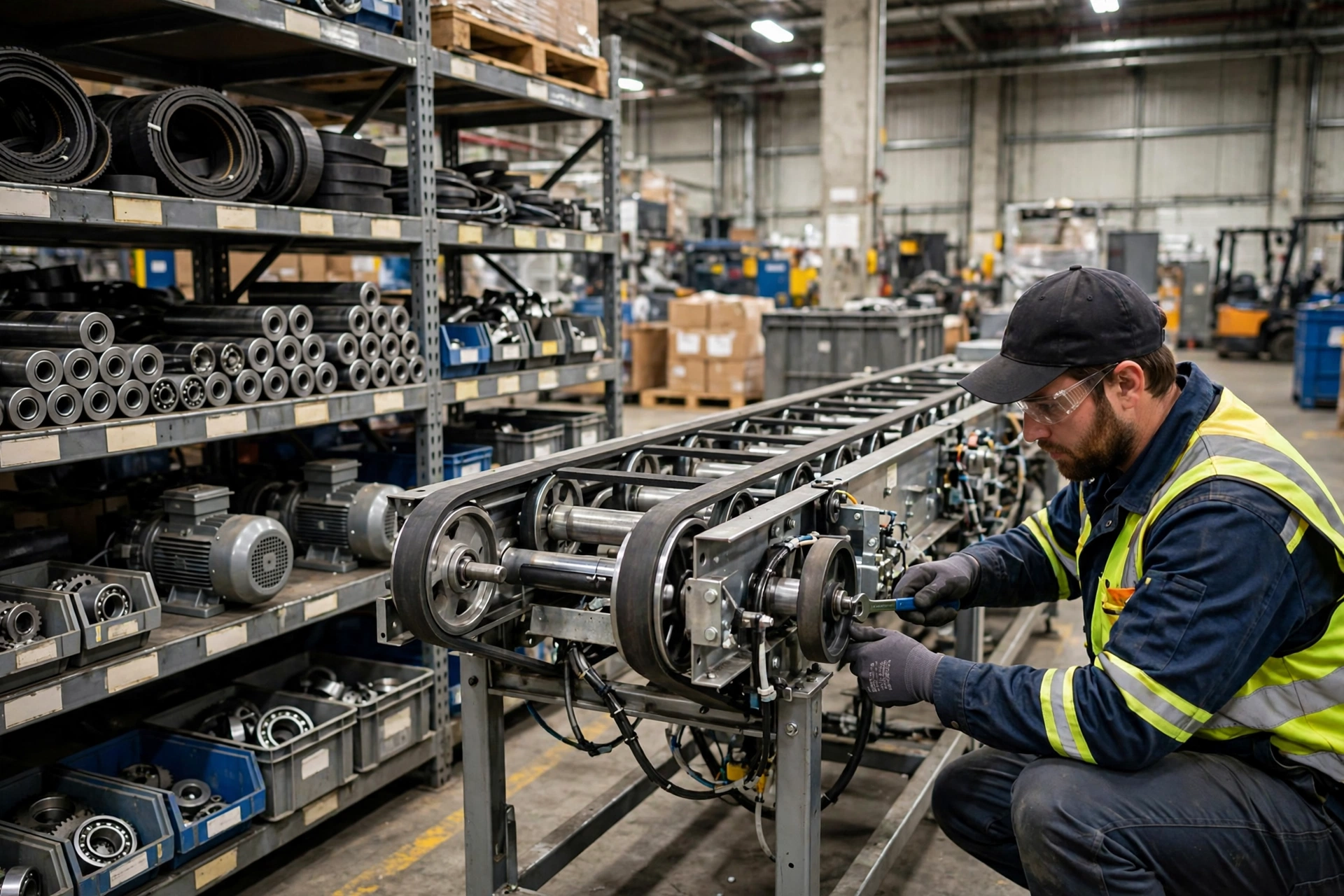
Now a hypothetical costing example. Take a 30-meter line. A roller setup might run roughly $12,000 to $18,000 up front, while a belt setup might run roughly $9,000 to $15,000 — treat those ranges as a scenario sketch, not a quote. The roller line looks like the bargain in year one. By year three, worn rollers and bearing swaps run about $1,500 to $2,000 a year in upkeep. The belt line starts cheaper, and a belt usually lasts two to three years; each swap, parts and labor together, runs about $2,000 to $3,000. Spread over five years, the two lines cost about the same in total. What differs is the rhythm of spending: rollers mean small bills that keep coming, belts mean a big bill every couple of years.
Here is the counterintuitive part: most people assume the cheaper belt line saves money, but the most expensive part of a belt line is not the belt — it is the downtime. Once a belt tracks off or snaps, the whole line stops for repair, and half a day is gone. A roller line with one dead roller just needs that one roller swapped, and the line is moving again. So when you add up the total cost, put a number on what one hour of downtime costs in lost orders. That figure belongs in the math.
My advice comes down to three things. First, look at the freight before you look at the line. List the three highest-volume items in the warehouse — flat bottom or not, how heavy — and pick the line to match the freight, not the catalog. Second, mix them instead of picking one side: run rollers on the main line for cartons, and give odd-shaped freight its own belt line beside it, so when one line jams, the other keeps moving. Third, before you sign anything, ask the manufacturer for three things: the load chart, the noise data, and the wear-parts price list. If they cannot hand you those three, do not rush to sign, no matter how low the quote looks.
After all these years on the road, I hold to one saying: whether freight bounces on the highway is the driver's business; whether it moves smoothly inside the warehouse is a matter of picking the right line. Get the line right, and the dock stays clear, drivers stop waiting, and nobody in the warehouse has to climb up and straighten cartons all day.
By Shifu Zhao, Trucking Veteran (15 yrs)