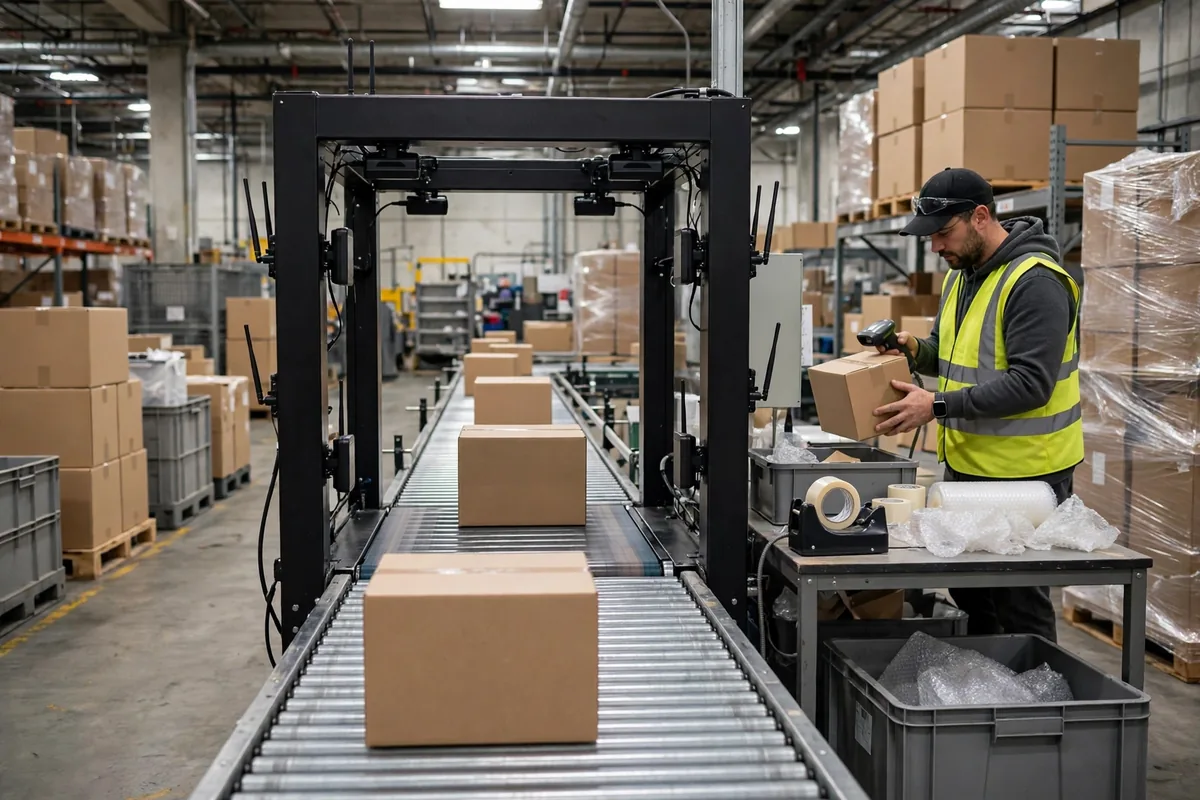
Let me be blunt: rfid tunnel carton verification warehouse gear can work, but never the way the sales demo says it will. I sell products for a living, not machines. Every marketplace ding for a wrong shipment costs me score and cash, while my packers go cross-eyed scanning barcodes one by one. That pain is why I tried a tunnel reader. The surprise was not the price. It was how many dumb, fixable details decide whether it helps or just blocks your line.
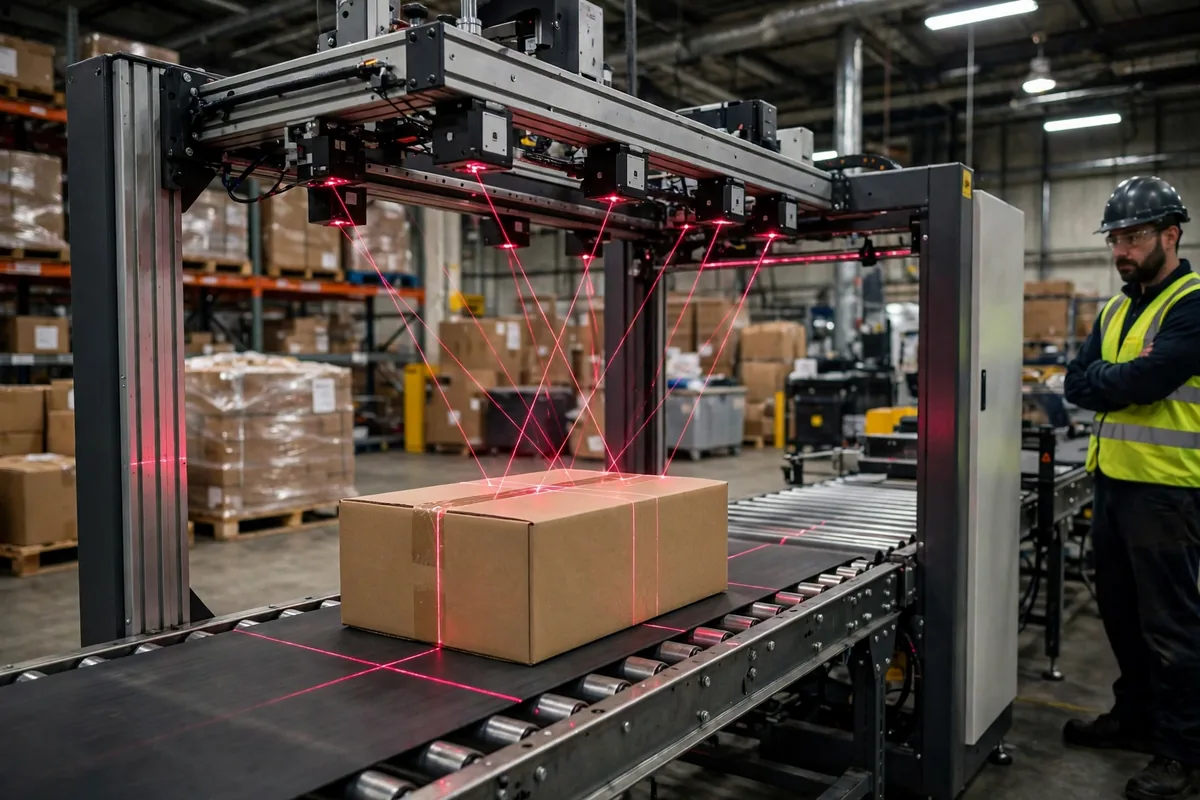
My warehouse is small, and peak season runs on temporary labor. Once a carton is sealed, nobody can honestly say whether one unit is missing inside. Reopening is slow. Skipping the check is gambling. A tunnel promises a neat answer: push the carton through, read every tagged unit inside, compare it with the order, and alarm on any shortage or extra. In my first week, I wanted to send it back.
The tunnel is not expensive trouble, it is unread trouble
Warehouses fall for a clean demo. Demo cartons hold T-shirts and paper boxes, the friendliest freight on earth. Your real freight includes metal shells, liquids, and foil pouches, which behave differently around radio waves.
Take a scene from a seller I know, kept as an illustrative example so you can map it to your own operation. Illustrative example: in November 2024, a small accessories warehouse east of Los Angeles shipped several hundred cartons a day in peak season, many with metal housings. In the first days after install, cartons kept missing one or two reads. Packers opened cartons and rescanned by hand, slower than the old process. The owner called the machine a waste of money.
The root cause was tag placement, not the reader. Tags sat on inner box sides, on shrink film, and directly on metal. Radio signals bounce off metal and get absorbed by liquid, so a tag on a metal shell fights physics. Antenna polarization matters too: if tag orientation fights antenna polarization, reads drop fast.
Then there is the sneakier problem: stray reads. One carton has not fully left while the next enters, and the reader picks up tags from the neighboring carton. The system sees extra units, raises a false alarm, and stops the line. False alarms make packers hate you. A bigger reader fixes neither problem.
I changed tag placement three times before I touched the machine
My fix started with the cheapest part of the system: where the tag goes.
For metal housings, I moved tags onto the paper side of the outer box or a cardboard divider, away from metal. For liquids, I moved tags to the dry paper label area above the liquid line. Then I froze one standard placement per product, with a photo sample at the bench, so temporary workers copy instead of improvising. Those three boring changes lifted reads more than any machine setting.
Next I calmed the tunnel down. More antenna power is not better. Crank it up and the reader hears cartons it should ignore, so stray reads get worse. We turned power down, added shielding and absorber material at both ends, narrowed the read zone to the carton inside, matched belt speed to read time, and spaced cartons out. A tunnel rewards order, not brute force.
Here is the counterintuitive judgment nobody likes: never judge the machine by its overall average read rate. Break it down by product category. An average can look great because apparel reads beautifully, while the high-value small items you fear shipping wrong are still failing. The average is for the boss. The breakdown keeps you alive. I pull it weekly, and when one category dips, the cause is usually a silent packaging change by a supplier, not the machine.
A second scene, again as an illustrative example. Illustrative example: in March 2025, a Bluetooth earbud seller in Shenzhen shipped many small, high-value boxes per carton, each with a metal charging shell. Early reads kept missing a few units. The team standardized tags on the top paper face of each box and kept orientation consistent during packing. Missed reads fell sharply with no new hardware. I will not quote a read-rate percentage here, because it varies too much by warehouse to mean anything. Test with your own freight.
When rfid tunnel reads stall, check in this order
Check placement, then orientation. If boxes sit at random angles, tag antennas point every which way and reads swing. Where orientation can be standardized, fix the packing motion.
Then check the neighbors. If false alarms involve units from the next carton, look at spacing, shielding, and power before blaming tags. Quick test: if the extra serials belong to the following carton, you have a stray read, so stop opening cartons and fix the zone.
Then check the tags. Cheap batches vary in sensitivity, and money saved on tags gets repaid in line stoppages. For high-value goods I buy from one consistent source and sample-test every batch.
On cost, I trust a method, not a headline number. The following is an illustrative example, with figures as a scenario illustration rather than market data. Illustrative example: count the full installed cost as one fixed sum, add maintenance and extra tag cost, then count three benefits: labor saved, avoided refunds and reshipment postage, and dispute time saved when you can prove what was inside a carton. Judge peak and off-peak months separately. A machine that only pays back in peak season is a seasonal toy. Check current pricing against the latest official and market listings before signing.
Do not let carton verification work alone, pair it with weight
Whole-carton checking should never rely on the tunnel by itself. I run it as a team with weight checking and a camera.
Weight is the cheapest second gate. Tags can all read correctly while the weight is plainly wrong, and that carton still gets pulled. Weight catches the case radio cannot: the tag belongs to product A, but product B is inside the box. The camera covers the outside: correct label, correct carton marks, intact sealing. Each tool guards a different failure.
This table is my own selection framework, with no prices or throughput figures, since those should be checked against the latest official and market information.
| Freight type | Tunnel check | Weight check | Camera check | My call |
|---|---|---|---|---|
| High-value small items, many per carton | Primary | Required | Label only | Worth it, one error hurts |
| Apparel and footwear, mixed cartons | Primary | Optional | Optional | Friendly reads, good pilot |
| Mostly metal or liquid goods | Cautious | Primary | Optional | Test placement first, walk away if it fails |
| Low-value single items, bulky goods | Skip | Primary | Primary | Tunnel is burning money |
| Return-sensitive, strict marketplace scoring | Primary | Required | Required | Read logs double as dispute evidence |
The decision rule is one sentence: weigh the cost of a wrong shipment against how readable the freight is. High cost and readable freight, buy it. High cost and difficult freight, test placement and packaging before you commit. Low cost freight, refuse politely, because scanning plus a scale is already the right answer.
One more honest point about rfid tunnel carton verification warehouse setups: they solve exactly one step, checking a sealed carton without opening it. They do not fix sloppy labeling at receiving or wrong picks upstream. If alarms fire all day, workers will work around the machine and the tunnel becomes furniture. Clean up the earlier steps first.
Which freight earns a tunnel, and which just burns cash
Never install right before peak season. Tuning and training need calm weeks. I have seen a machine installed a week before peak and ripped out on day one. Install in the slow season.
Never trust the demo room. Before signing, send your ten hardest-to-read products for a live test and get the result in writing.
Keep every read log. When a marketplace investigates a wrong shipment or a buyer claims a missing item, the complete read record ends most arguments quickly. Sometimes that evidence is worth more than the labor saved.
So, does it pay? My answer splits by freight. High-value, multi-unit, return-sensitive goods: yes. Low-value, single-unit, hard-to-read goods: it burns cash. The machine is never the mistake. Skipping the math, skipping the live test, and copying another setup is the mistake. Control placement, kill stray reads, pair the tunnel with a scale, and it earns its floor space. Plainly, the way I tell my own team: this approach worked across more than one peak season, and I still use it today.
By Ah K, E-commerce Seller (5 yrs)