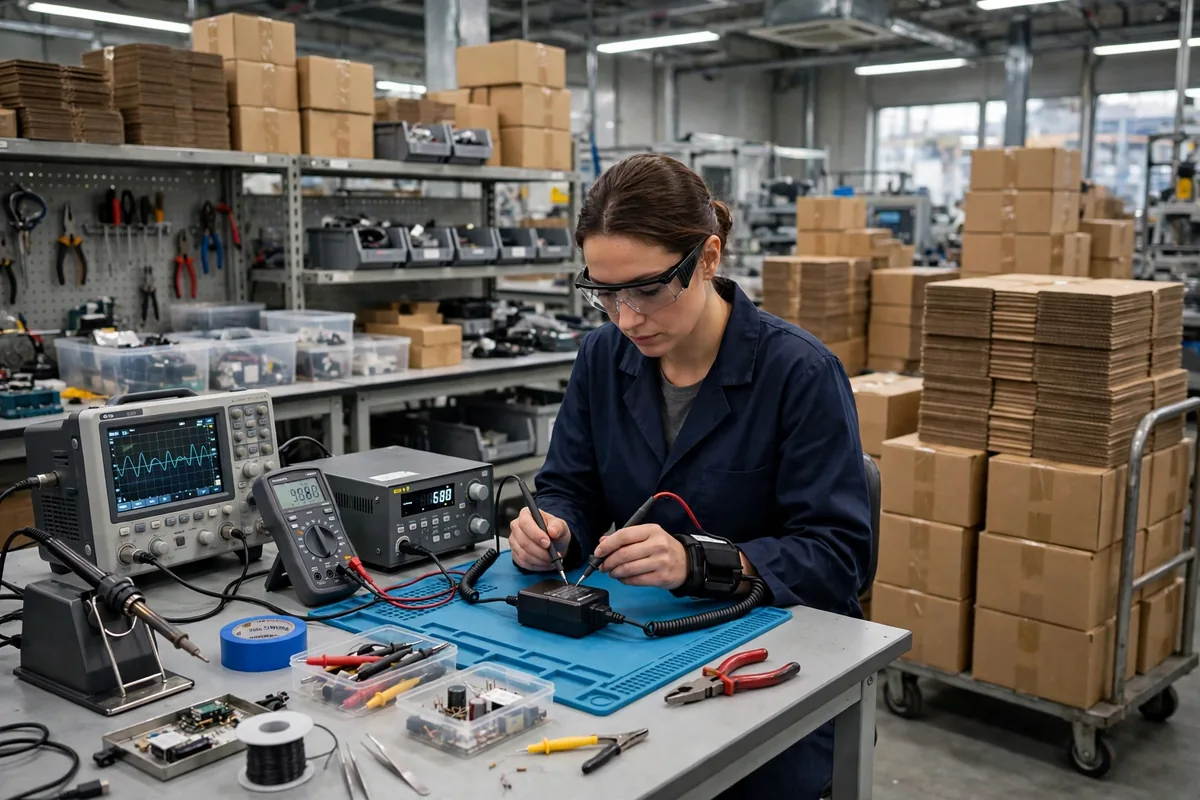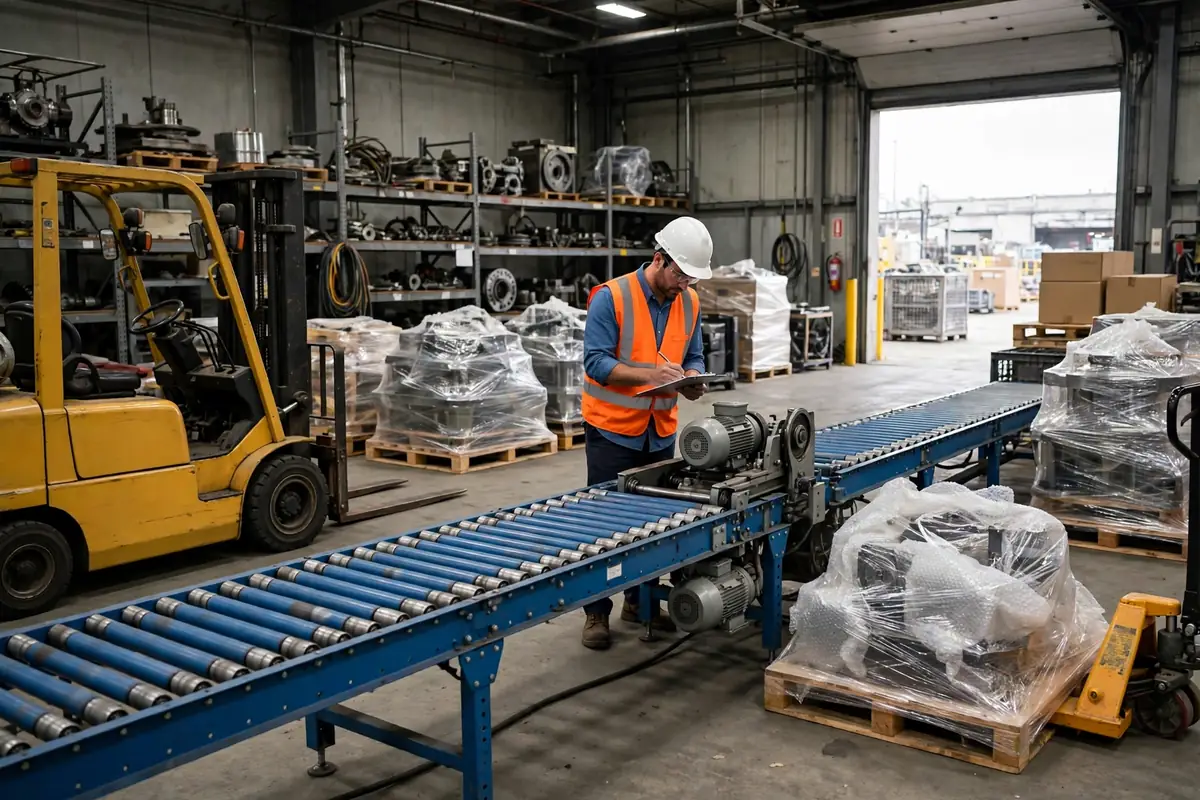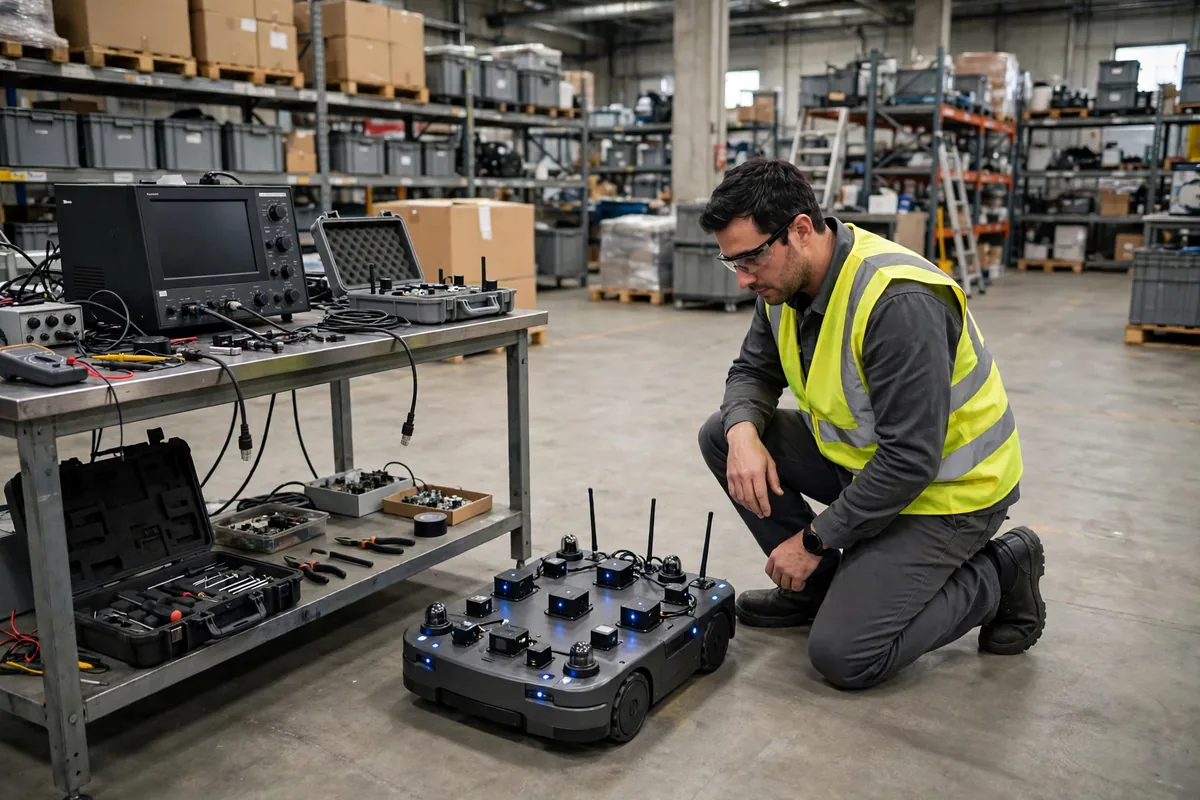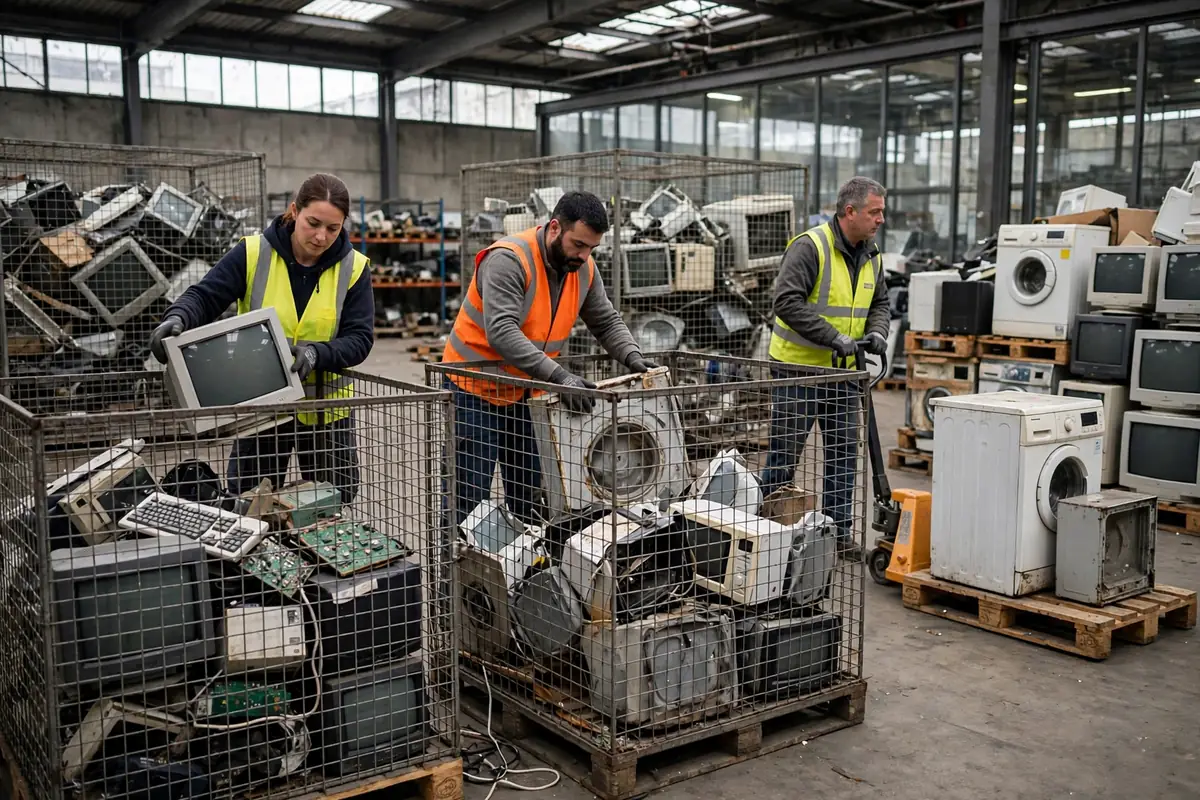
It is worth stating plainly at the outset: weee compliance warehouse electronics eu questions look like environmental paperwork, but in practice they decide whether a stock of electronics can be lawfully stored, sold, returned, and eventually discarded inside the European Union. Under the EU framework for waste electrical and electronic equipment, responsibility does not end at the point of sale. It follows the product through its life, and the warehouse sits in the middle of that chain: goods are consolidated there, returns accumulate there, and products that have reached the end of their useful life are very often separated from saleable stock there for the first time. Operators who treat registration, take-back, and segregation as somebody else's problem tend to discover the boundary of their own responsibility only when a shipment is blocked or a returns area has quietly become an unlicensed waste store.
One structural point has to come first, because it explains most of the confusion. The EU directive sets the common framework, but registration systems, collection schemes, reporting formats, and enforcement practice are implemented member state by member state. The same product can therefore face different procedures in Germany, France, and Poland, and fees, deadlines, and penalties differ accordingly. This article deliberately stays at the level of framework and warehouse practice; for any specific figure or deadline, the current rules of the member state where the goods are sold, and of the compliance scheme involved, are the only safe reference.
How the chain of responsibility works under weee compliance warehouse electronics eu rules
The first link in the chain is the producer, and the term is broader than many sellers expect. Depending on the sales model, the producer can be the manufacturer, the importer who first places the product on an EU market, or a distance seller selling directly into a member state. Producers generally have to register in each member state where they sell, join or contract with a collection and recycling scheme, report the quantities they place on the market, and finance the take-back and treatment that follow. The second link is the sales channel, which carries duties around customer information and, in defined situations, taking back old equipment when a replacement is sold. The third link is the warehouse. The warehouse does not decide whether a product is compliant, yet it physically holds the product, the returns, and the waste. When registration is missing upstream or classification is sloppy downstream, the symptoms surface on warehouse shelves and in warehouse returns cages, which is why the operator's checking role matters out of proportion to its formal position in the chain.
Two illustrative examples, both hypothetical and with figures used only to show the mechanism, make the boundary concrete. In the first, set in 2023, a seller of small home appliances from Asia ships stock into a third-party warehouse in the Netherlands for onward sale into several EU countries. Inbound receiving records the usual commercial data and nothing else; nobody asks for producer registration evidence for the destination markets. After the peak season, a compliance scheme audit in one destination country finds the seller unregistered there. Sales from that stock are suspended pending regularisation, several thousand units sit in the warehouse unable to move, and seller, platform, and warehouse spend close to two months arguing over storage charges and remediation costs that no contract had clearly assigned. In the second example, set in 2024, a consumer electronics warehouse in Poland requires registration evidence and a product category list as part of client onboarding, and runs its returns area in three zones: resaleable, awaiting testing, and end-of-life. When a returned device with a swollen lithium battery is spotted during testing, staff move it under a standing isolation procedure into a dedicated fire-resistant container and notify the client to arrange compliant disposal. A potential thermal incident is contained as a routine event, and at year end the warehouse's end-of-life records reconcile batch by batch with its scheme handover documents, so its audit closes without findings. The difference between the two warehouses is not size or budget. It is whether compliance checks were placed at the receiving door or left until after something went wrong.
Inside the building: segregation, batteries, and records under weee compliance warehouse electronics eu practice
The operational core is segregation, and the logic is straightforward. Once a product has been judged end-of-life, it must not drift back into saleable stock, either physically or in the inventory system. Mixed storage corrupts both: the stock count stops being trustworthy, and the handover to a collection scheme loses its documentary basis. End-of-life units and non-resaleable returns therefore need their own marked areas, their own movement records, and a one-way flow out of the building. Products containing batteries add a second layer, because batteries are commonly accounted for and treated separately from the devices that contain them. A warehouse should be able to distinguish, in storage and in handover paperwork, between complete devices, devices with integrated batteries, and loose batteries, following the categorisation its national scheme currently requires.
Battery segregation is also a safety question, not only an accounting one. A damaged, swollen, or overheating lithium battery is a recognised warehouse fire risk. The defensible practice is to remove such items from general storage promptly, place them in a designated isolation container or area, limit quantities held together, and record the movement. The decisive factor is not expensive equipment; it is whether the procedure exists before the incident. Automation earns its place here in unglamorous ways: inbound photo records, status codes that prevent end-of-life stock from being reallocated to an order, and condition flags captured at the returns testing bench all convert segregation from a memory exercise into a system-enforced one. That is why, in any serious treatment of this subject, automation and compliance belong in the same sentence rather than in separate departments.
| Check at receiving | What to confirm | Risk if missing |
|---|---|---|
| Client registration | Producer registration evidence, or authorised representative, for each sales market | Sales suspended and stock frozen pending regularisation |
| Product categories | Which equipment categories the goods fall into, and whether they contain batteries | Misreporting and handovers that do not reconcile |
| Marking and information | Recycling marking on product and packaging, take-back information for buyers | Failed channel inspections and broken take-back information |
| Returns and waste route | Who collects returns and end-of-life stock, and on what documents | Waste accumulating on site with unclear liability |
| Record retention | Receiving, grading, and handover records complete and retrievable | Inability to evidence flows at audit |
What the warehouse operator should check for clients
Translated into routine, four practices cover most of the operator's exposure. First, make compliance documents part of onboarding: registration evidence, product categories, and battery information should be collected when the client account and the inventory master data are created, with a defined deadline for gaps, not after the first container arrives. Second, write the boundary into the contract: registration and reporting remain the client's duties, while the warehouse undertakes segregation, record keeping, and handover as agreed, with the cost of long-term storage and disposal of abandoned end-of-life stock assigned in advance. Third, standardise the returns bench: testing, grading, isolation, and handover as fixed steps with fixed documents, and no path by which a graded waste unit can re-enter saleable locations. Fourth, re-verify periodically: clients change sales countries and product lines, so registration evidence should be refreshed at least annually, with an extra check triggered whenever a client adds battery-containing products.
The direction of travel is reasonably clear even where details are not. Across the EU, lifecycle responsibility for electronics is being documented more granularly and checked more systematically, which raises the warehouse's visibility inside the chain rather than lowering it. Open questions remain: whether receiving checks become a formal market-entry condition in more member states, and how multi-country registration costs will be distributed among smaller sellers, platforms, and logistics providers. For the operator deciding what to do this quarter, though, weee compliance warehouse electronics eu is best understood not as a rulebook to memorise but as a receiving habit to build: ask for the registration, separate the waste stream, isolate the damaged battery, and keep the record. The cost is incurred on ordinary days. The value is realised on the one day when it is needed.
By Dr. Chen, Supply Chain Researcher