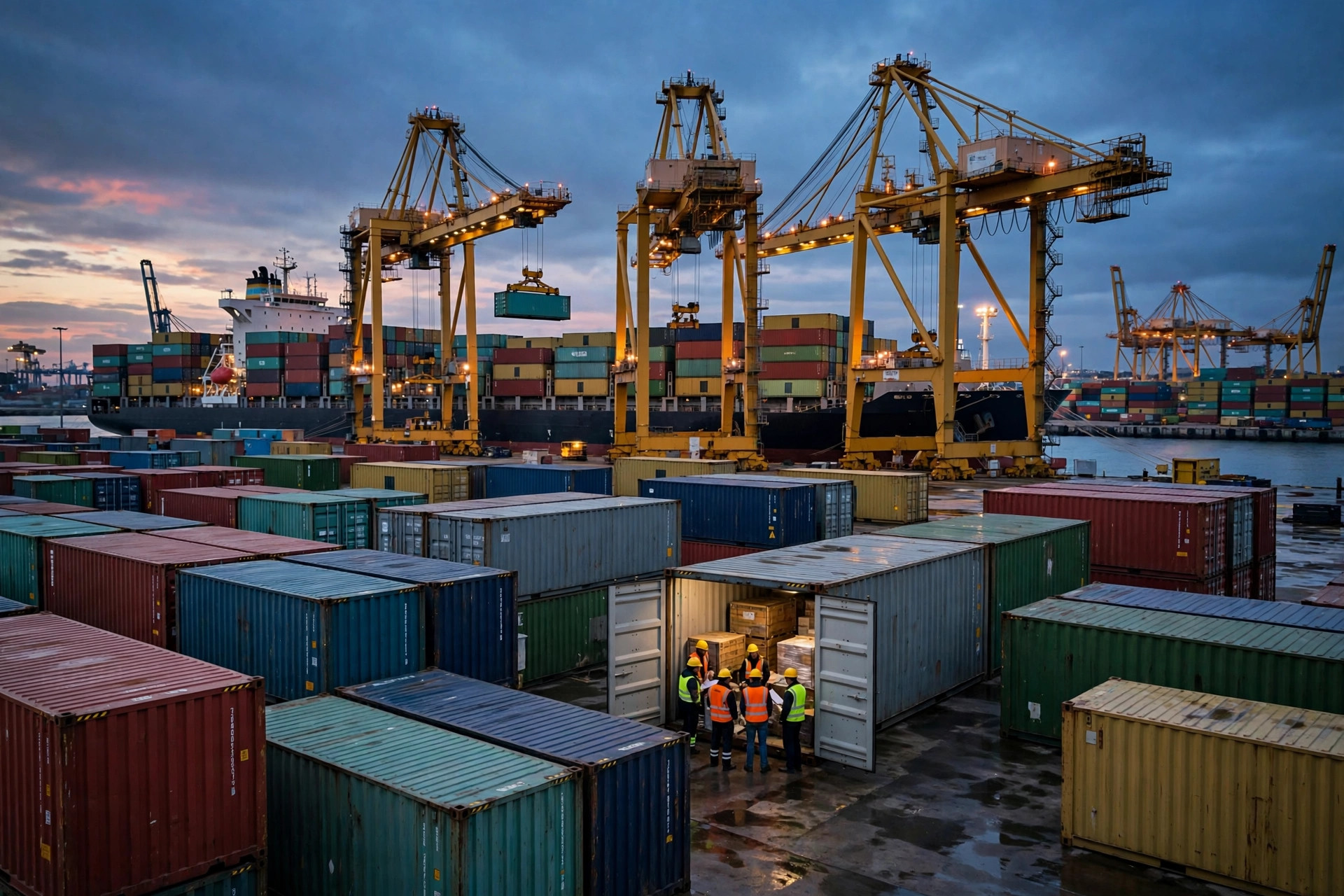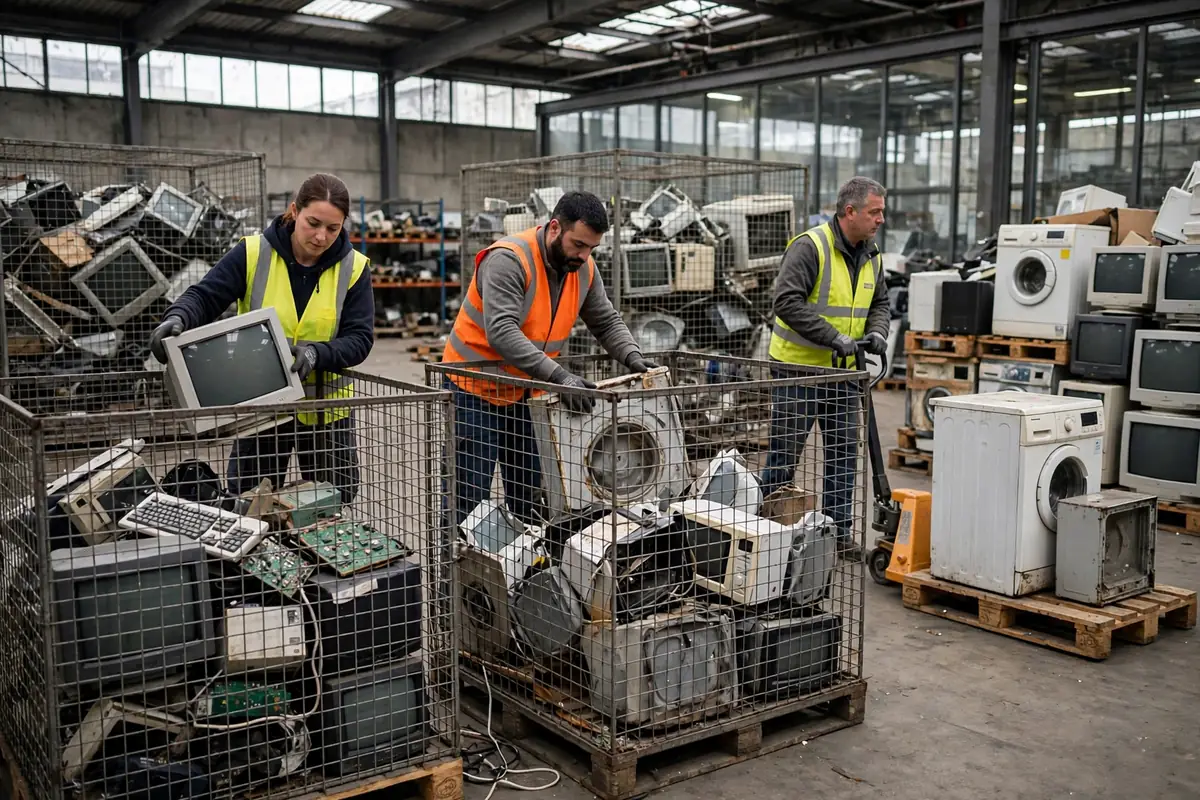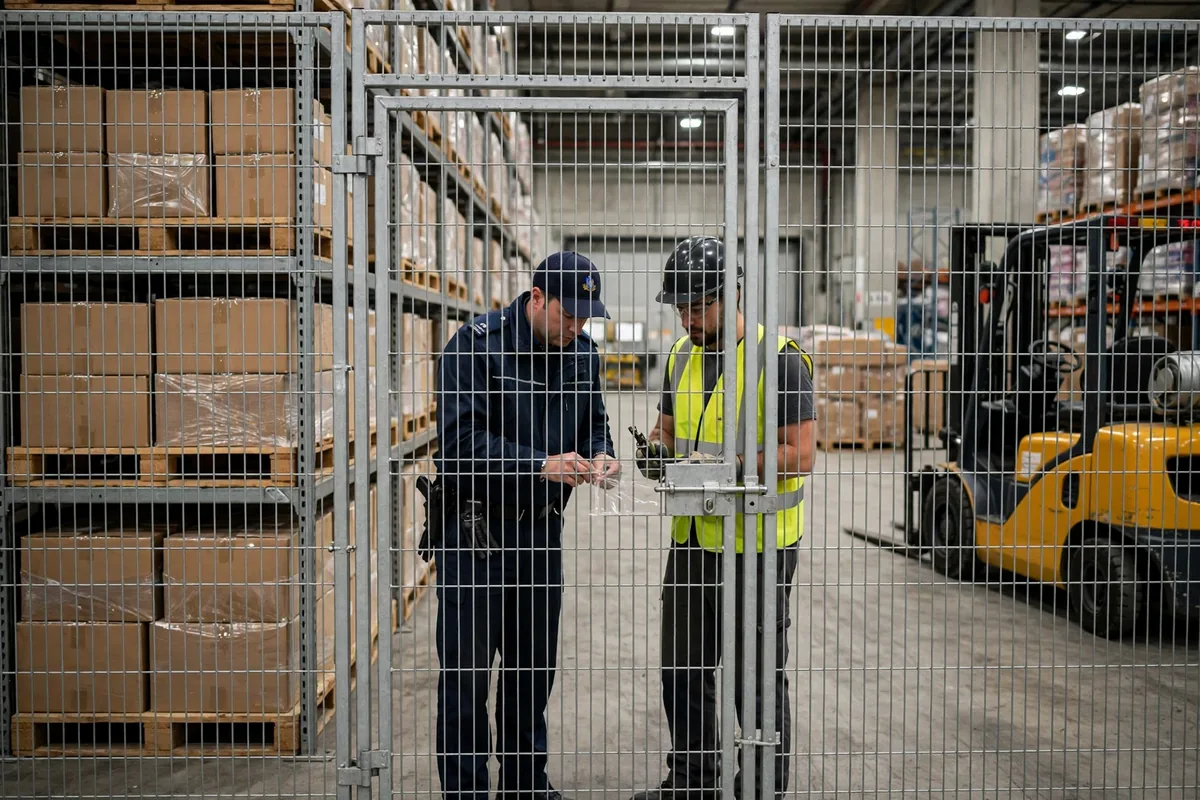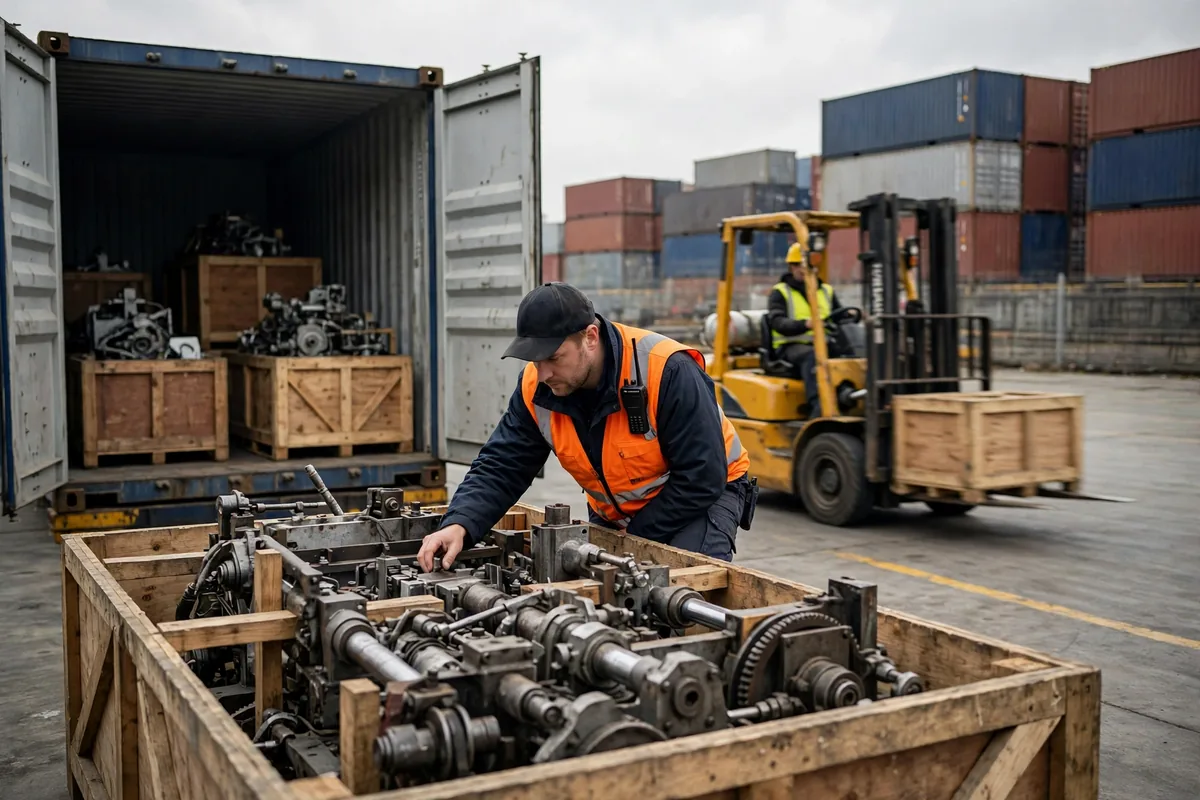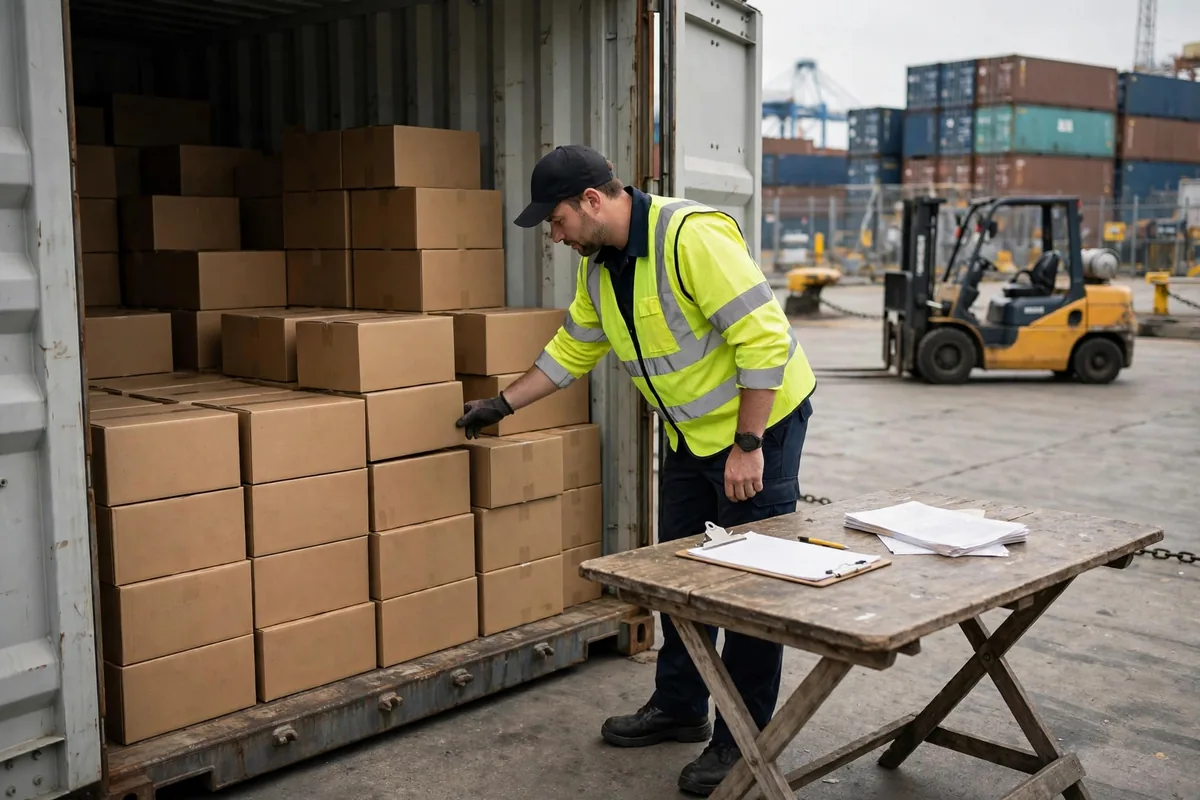
For many warehouses in Europe, chemical products used to arrive as a labelling issue and nothing more. That framing no longer holds. Discussions of reach compliance warehouse chemicals eu now reach beyond manufacturers and importers, down to the receiving dock and the storage rack, because the regulatory logic of the European Union does not treat a warehouse as a place where responsibility pauses. According to the structure of the REACH framework, duties follow the substance and the product along the supply chain, and the warehouse sits on the part of that chain concerned with information, segregation, and safe storage.
The phenomenon is easy to observe. Cross-border e-commerce and third-party logistics now handle a growing mix of chemical-related goods: cleaning products, coating auxiliaries, pool treatment products, and some industrial additives that look like ordinary consumer goods. According to operators across the sector, these shipments tend to be small, varied, and frequently changing, which is why they are so often processed with ordinary-goods procedures. The problems rarely begin with a dramatic incident. They begin with a missing document.
Two Different Roles in Reach Compliance
According to the design of REACH, the primary obligations rest with manufacturers and importers. When a substance is placed on the EU market under the relevant conditions, registration duties arise, together with hazard assessment and the communication of safe-use information. Check the latest official terms and the current guidance published by the European Chemicals Agency, ECHA, for the precise scope, because thresholds, timelines, and formats are updated over time.
A warehouse, and in particular a third-party logistics provider, usually occupies a different position. It does not manufacture the substance, and in many arrangements it does not import it either. Its role is closer to that of a downstream user or distributor in functional terms: it stores, handles, and passes the product onward. The duty that follows from that position is narrower but real. Safety information that arrived with the goods must not stop at the warehouse door. Storage conditions stated by the supplier must be respected in practice, not only recorded in a system. And when a customer or a downstream recipient asks a legitimate question about the product, the warehouse should be able to route that question and the available information accurately.
Confusing these two roles produces errors in both directions. One error is overreaction: assuming that accepting a chemical shipment means assuming registration-level responsibility, and refusing an entire category of business as a result. The other error is underreaction: assuming that because the warehouse "only stores" the goods, it need not read a safety data sheet at all. Neither conclusion follows from the framework, and both lead to poor operational decisions.
An illustrative example clarifies the boundary. Imagine a third-party warehouse that receives a cleaning product from a new customer who provides only a product name and a carton count, with no safety data sheet and no clear statement about the contents. In this hypothetical case, if the goods are shelved as ordinary household products and a leak or a downstream enquiry follows, the warehouse holds no document with which to respond. The product may not have been especially hazardous. The failure was informational, and it occurred at receiving, which is the one point where the warehouse fully controls what enters its own system.
Warehouse Chemicals Start With the Safety Data Sheet
According to established practice under the framework, the central document at receiving is the safety data sheet, or SDS. It sets out composition, hazard classification, storage conditions, and measures for accidental release, and it is the primary basis for deciding what a product may be stored next to. The required format and content are periodically revised, so operators should check the latest official terms and ECHA guidance rather than relying on an old template kept in a drawer.
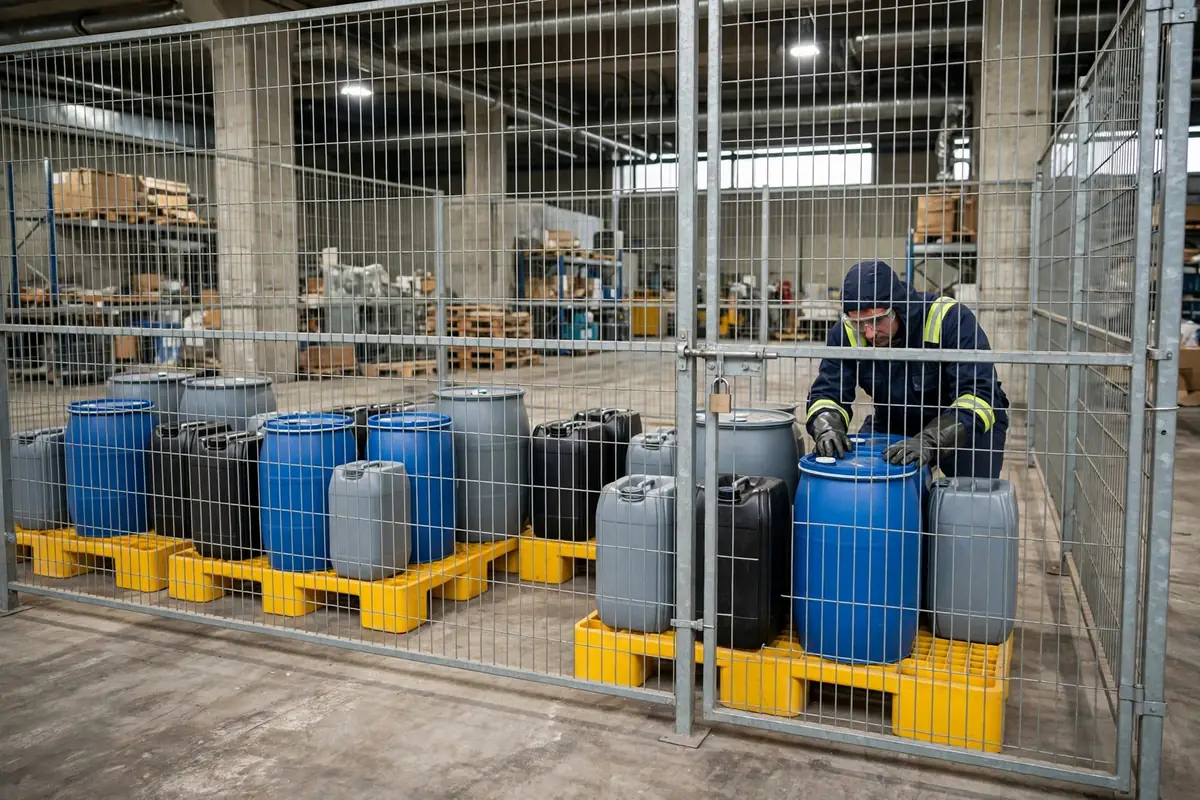
For a warehouse, the value of the SDS lies in three practical actions. First, at receiving, confirm that a current SDS is available for the product; if it is not, hold the goods in a quarantine area instead of releasing them into general storage. Second, translate the storage conditions in the SDS into physical decisions about temperature, ventilation, and separation from incompatible substances, expressed as actual zones and labels on the floor. Third, preserve hazard and batch information through to dispatch, so that the next handler sees the same information the warehouse received.
A second illustrative example shows why segregation must rest on documents. Imagine two similar-looking drums stored in the same pallet area, where the SDS for one states that it should be kept apart from acidic substances, and the other is in fact an acidic cleaning product. In this hypothetical case, the point is not to speculate about consequences, but to note that appearance, smell, and staff memory are not a defensible basis for a segregation decision. Experience can prompt someone to check the document. It cannot replace the document.
A related point concerns substances of very high concern, usually shortened to SVHC. According to the current framework, supply-chain communication duties can arise for certain products containing such substances when the relevant conditions are met, and a recipient's enquiry may need a response within a defined process. Check the latest official terms and the current candidate list published by ECHA, since that list is updated regularly. The warehouse's position in this exchange is normally that of a conduit: it should know whether its customer has flagged relevant information for the goods it stores, and it should be able to pass enquiries and answers along accurately, rather than deciding on its own whether a substance appears on a list it printed out two years ago.
Taken together, reach compliance warehouse chemicals eu asks something quite specific of a warehouse: do not assume the registrant's duties, but do not allow information or segregation to break down inside your own building either.
What a 3PL Should Ask Before Accepting Chemical Freight
Attribution matters here. Most chemical compliance problems found inside warehouses were not created by warehouse work itself. They were imported at the gate, as information gaps in the original agreement, and then amplified through storage, picking, and returns. That is why the cheapest control point is the conversation before the first pallet arrives.
A workable pre-acceptance checklist, framed as an illustrative decision framework rather than a legal standard, would include at least the following questions. Is a current SDS available, and what is its revision date? Are the hazard classification and labelling complete, and is there any history of damaged or leaking packaging? What storage conditions apply, including temperature, ventilation, moisture, and separation, and are those conditions compatible with goods already in the building? Has the customer flagged any information relating to substances of very high concern, and can that be provided in writing? If a leak or breakage occurs, who carries the response duty, the cost, and the notification steps? And how will returns and unsold stock ultimately be handled, including whether a regulated waste route may be required, which should be confirmed against the latest local authority guidance?
A third illustrative example shows the commercial side of the same logic. Imagine a warehouse that declines, or reprices, a shipment after applying such a checklist and finding the information incomplete. In this hypothetical case, the site gives up some storage revenue in the short term, but avoids the unpriced work of creating a separate zone, retraining staff, and handling returns for a product it never properly assessed. The conclusion is not that chemical freight should be refused. It is that chemical freight with incomplete information should not be accepted at ordinary-goods prices and on ordinary-goods procedures. Once the checking cost is priced in and the segregation duties are written into the contract annex, the same freight can become stable, predictable business, provided both sides describe the boundary of responsibility in the same words.
On trend, two developments in reach compliance warehouse chemicals eu deserve preparation. First, the handling of safety information is becoming more digital, and SDS retrieval, version updates, and review reminders fit more naturally into warehouse receiving checks than into an email inbox; when a customer issues a revised SDS, the system should prompt a review of the batches already on site. Second, customer due diligence is moving upstream, and brand owners and platforms selecting European warehousing partners are more likely to ask how chemical product information is managed, which turns a defensive capability into one that can be described and demonstrated. Neither development will complete overnight, and any timeline should be treated as directional rather than precise.
How far a warehouse should build its chemical business depends on its customer mix and local requirements; no single answer fits every site. The question that remains open is a practical one: when the next ordinary-looking shipment with incomplete information reaches your dock, will your receiving process stop it there, or will it slide quietly into the racks, carrying its unanswered questions with it?
By Dr. Chen, Supply Chain Researcher