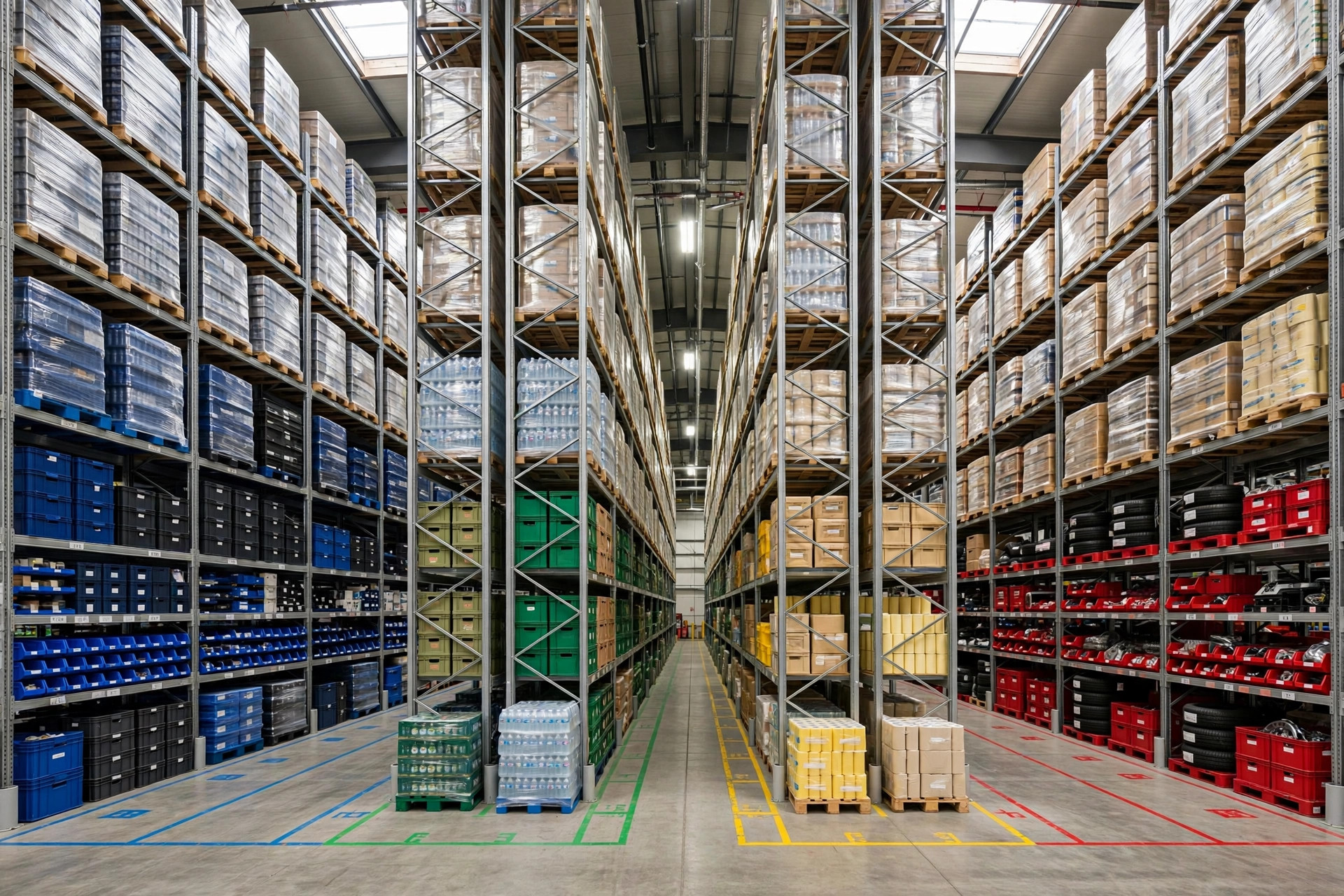
Bottom line first: if you're asking how to set cycle count tolerance in your warehouse, the answer is not one number for the whole building. It is a three-dimensional, dual-threshold system: ABC class × quantity variance × dollar variance. Here are starting values: Class A — ±1% or ±$30, whichever trips first; Class B — ±3% or ±$100; Class C — ±5% or ±$200; blind counts; any variance over threshold gets a reason code and closes within 24 hours. Run it for two weeks, look at your variance reasons, then tighten. The rest of this article is how you actually do it.
Why "Dual Threshold" Instead of One Percentage
Let me tell you how a client did it to themselves. In 2024, a Texas 3PL — roughly 80,000 pallet positions, e-commerce fulfillment — let the owner call this one: full-building tolerance ±2%. I pushed back. He said, "Keep it simple."
Three months after go-live it blew up. Their anchor SKU was baby diapers for a DTC brand: $14 a pack, 12 packs a case, $168 a case. Book says 1,000 cases, count comes back 980. Variance of 20 cases, $3,360 — inside tolerance, system auto-clears, no reason code required. Three months in a row, 15–20 cases short each month. The quarterly wall-to-wall finally exposed it: not a counting problem. Outbound scan guns were angled wrong, so full cases scanned as 11-pack eaches — the system deducted 11 packs while a whole case physically left the dock. Nearly a hundred grand gone, all buried under "±2%, within tolerance."
I've seen this exact hole three times. The flip side, same building: Class C packing tape, book 5,000 rolls, count 4,850. Variance 3% — over the line, triggers recount. A supervisor and two techs spent two hours re-counting before finding a miscounted stack of 150 rolls. Tape costs $2.50 a roll. Dollar exposure: $375. Two people, two hours, to re-verify $375 of tape.
The root cause is one sentence: a percentage-only tolerance lets real money leak on high-value SKUs while burning labor on pocket change for low-value ones. That's why the dual threshold is non-negotiable: quantity variance rate and dollar variance, whichever trips first wins. This is rule one of setting warehouse cycle count tolerance.
The Four Steps to Get It Live
Step 1: Get the ABC Classification Right
Most warehouses do ABC by gut feel — annual pick volume, or whatever finance sketched once and never updated. Only one classification works: annual dollar usage (unit cost × annual usage), ranked descending. Top 80% of dollars is A, 80–95% is B, the rest is C. Three executable actions:
- Export 12 months of SKU-level usage and unit cost from your ERP or WMS. No cost? Use unit price. No price? Use selling price at 70%. Do not let this step block you — seen it three times: a client waiting four months for "accurate" cost accounting before running the ABC.
- Rank by dollar usage descending, compute cumulative percentage, draw the 80/95 lines.
- Recompute quarterly. New SKUs default to Class B for their first 90 days.
A Class B is 15–25%, C is the remaining 60–75%. If your A class came out at 40%, you drew the line wrong.
Step 2: Set Dual Thresholds per Class
The starting values below come from common industry practice ranges — each company tightens or loosens based on its own product values. Start loose, run two weeks, look at the variance reasons, then tighten. Loose first, tight later. Never start tight.
| Class | Quantity variance threshold | Dollar variance threshold | Suggested count frequency |
|---|---|---|---|
| A | ±1% (common practice 0.5–2%) | ±$30 (whichever trips first) | Weekly or biweekly |
| B | ±3% (common practice 1–3%) | ±$100 | Monthly |
| C | ±5% (common practice 2–5%) | ±$200 | Quarterly |
How to read it: an A SKU books 100 cases at $25/case, count comes back 98. Quantity variance 2% trips the ±1% line — recount, regardless of dollars ($50 also trips $30). Another A SKU books 10,000 parts at $0.50, count comes back 9,850 — 1.5% trips the line, recount. If it came back 9,920, the 0.8% quantity variance is fine, but the $40 dollar variance trips ±$30 — recount anyway. The two thresholds are joined by OR, not AND. That is the entire meaning of "dual threshold."
For a warehouse just getting started, I usually recommend an even more conservative starting gate: one blanket "±5% or ±$50" across all classes. Get the process running first — reasons get entered, recounts get done — then tighten toward the table above. Seen it three times: tolerance set too tight, recount work orders pile up, the warehouse gives up on counting entirely. Worse than no tolerance at all.
Step 3: Flip the Four Switches in Your WMS
A spreadsheet of thresholds means nothing until the system enforces it. Go-live-night checklist — miss one, and the tolerance is theater:
- Blind counts: count tasks go out without showing the book quantity. Counters enter actuals; the system compares. Skip this and every threshold above is decorative — counters will "agree" with the book number and variances stay at zero forever.
- Tolerance engine: your WMS cycle-count module needs per-class "quantity variance % + dollar variance" rules (vendors call them tolerance profiles or variance rules). Over-threshold variances auto-lock the stock and spawn recount tasks.
- Variance reason codes: preset 8–12, never allow "other." COUNT_ERROR, DAMAGED (unreported), WRONG_LOCATION, RECEIPT_NOT_POSTED, SHIPPED_NOT_POSTED, UNIT_MISMATCH, THEFT_SUSPECTED, SYSTEM_TIMING (in-transit / cutoff lag), VENDOR_SHORTAGE, ADJUSTMENT_ERROR.
- Escalation clock: every over-threshold variance closes within 24 hours — root cause found, adjusted, or escalated. Unclosed past 24 hours auto-escalates to the warehouse manager. Write it into the SOP; unwritten means nonexistent.
Step 4: Use the Reason-Code Distribution to Tighten
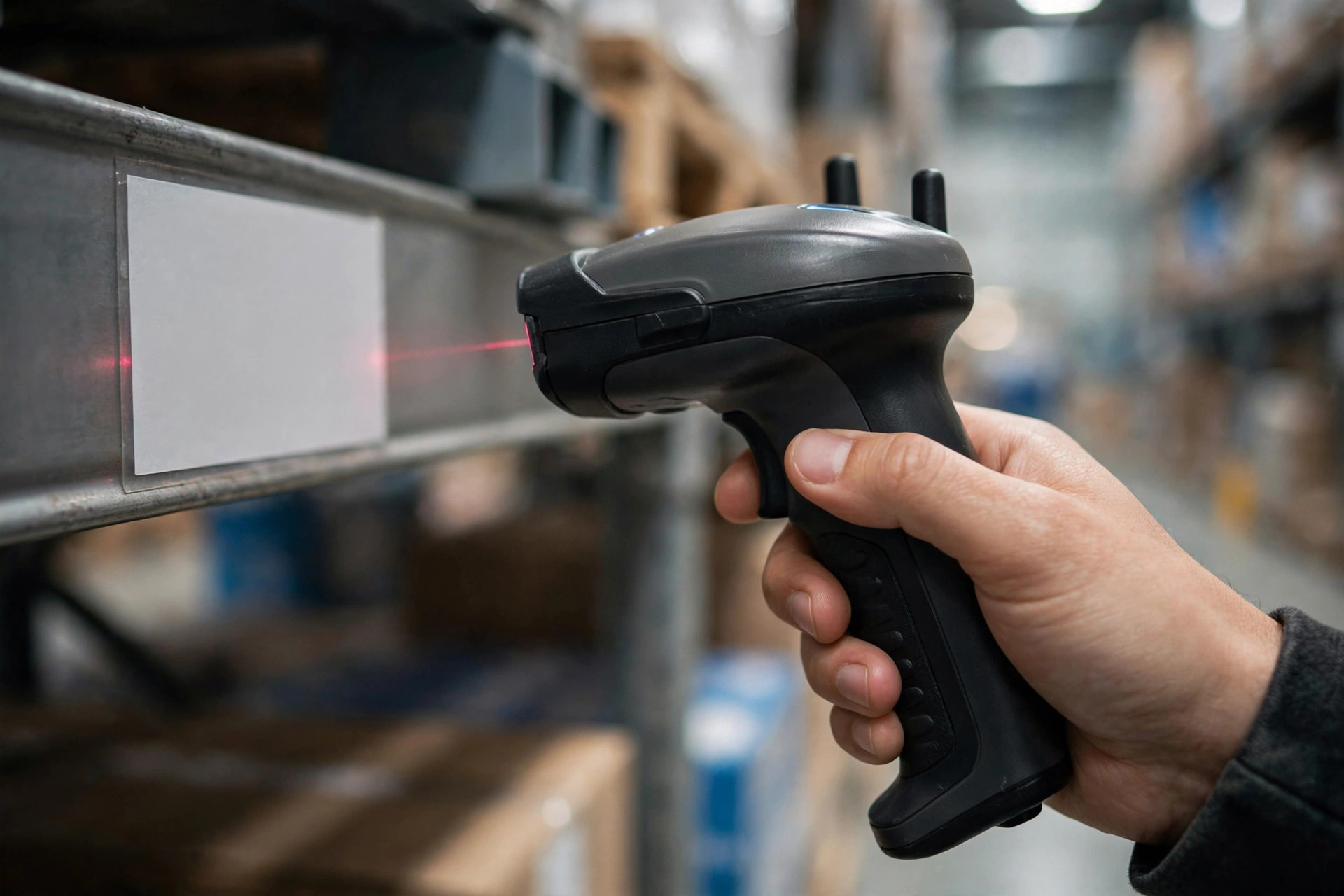
After two weeks, pivot your variance tickets by reason code. Here's the decision framework:
- If 70%+ of over-threshold variances are COUNT_ERROR / WRONG_LOCATION (people problems), the tolerance is fine — your issue is count execution discipline and slotting hygiene. Don't touch the thresholds.
- If 30%+ are SYSTEM_TIMING (cutoff lag), your tolerance is tighter than the system's noise floor — loosen it, or move the count cutoff to an off-peak window.
- If THEFT_SUSPECTED or VENDOR_SHORTAGE keeps appearing — the tolerance is doing its job. Tighten those SKUs one notch (say ±1% → ±0.5%) and watch them.
- If a SKU has six straight counts with zero variance — loosen its threshold one notch and reallocate the recount labor to SKUs that actually move.
Tolerance is not a set-once parameter. It is a dial you turn quarterly, driven by variance data. I write that sentence into every go-live summary.
Four Counterintuitive Traps
One: tolerance set too tight is worse than none. Too tight → recount work orders explode → the warehouse clears them by picking COUNT_ERROR at random → variance data becomes fiction → you can't see the real problems. Tolerance's first job is to surface real variances, not to drive tickets to zero. A warehouse with a 100% recount pass rate has decorative tolerances.
Two: Class C isn't "ignore" — it's "control by dollars." Second project story: a California auto-parts 3PL, 2023. An obscure Class C SKU — brake pad clips, $0.80 each, book 200,000 units. The quarterly wall-to-wall found 30,000 missing: $24,000. Root cause: the vendor had been short-shipping whole pallets for four months, and receivers eyeballed instead of counting. Class C quantity tolerance can stay loose (±5%), but the dollar threshold is mandatory — ±$200 would have caught a $24,000 hole. The dollar threshold is Class C's last line of defense.
Three: frequency and tolerance are a pair. Split them and you'll crash. A-class weekly counts with ±1%; C-class quarterly with ±5%. I've seen it backwards: A-class counted twice a year with ±0.5% — it drifted 4% between counts and no tolerance could save it. Rule of thumb: tolerance width ≈ the SKU's normal business swing between two counts.
Four: new SKUs and promo periods get a temporary one-notch tightening. Promo weeks run 5–8× normal outbound, and pick error rates scale with volume. My practice: promo SKUs auto-bump from B thresholds to A thresholds for the event, then drop back after. Most WMS setups support a "temporary ABC override" — two minutes of config, not manual SKU edits.
The One-Sentence Version
There is no universal answer for how to set cycle count tolerance — only a standard playbook: classify ABC by dollar usage → dual thresholds (quantity % OR dollars, whichever trips first) → blind counts + reason codes + 24-hour closure → retune quarterly from variance data. Start loose, then tighten. The ultimate KPI isn't zero variance — it's that every over-threshold variance can name its cause.
By Lin Xiao, WMS Implementation Consultant