WMS RFID reader integration tag placement, in plain English: how a warehouse system hooks up to RFID — where the tags go, where the readers go, how the data gets counted right. Fifteen years behind the wheel. Most of the hours I've burned at warehouse docks weren't driving. They were waiting on counts.
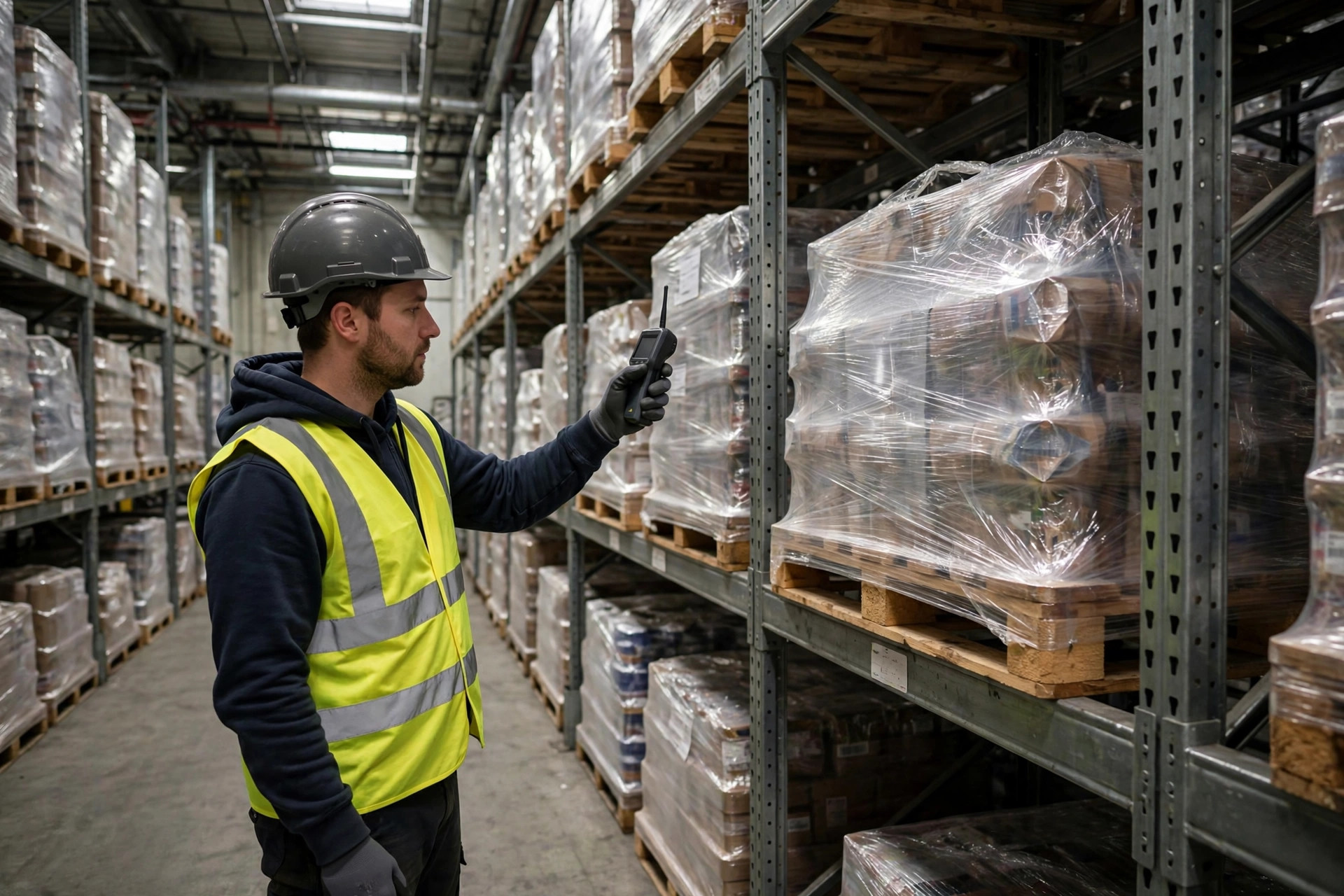
Summer of 2023. I'm hauling beverages from the Port of Long Beach to a big 3PL in Fontana. Twenty-six pallets. The warehouse guy walks the pallets with a handheld scanner. I stand there two hours. Then: "Driver, system shows 26, I scanned 25."
One pallet short. Whose problem is that?
The warehouse says maybe it fell off the truck. I say it left the plant at 26. Cameras, the BOL, three hours of digging. We find it tucked at the nose of the trailer, hidden behind the front pallets, never unloaded. I nearly lost my backhaul that day. Ask any driver: it's not the miles that kill you. It's standing around for no good reason.
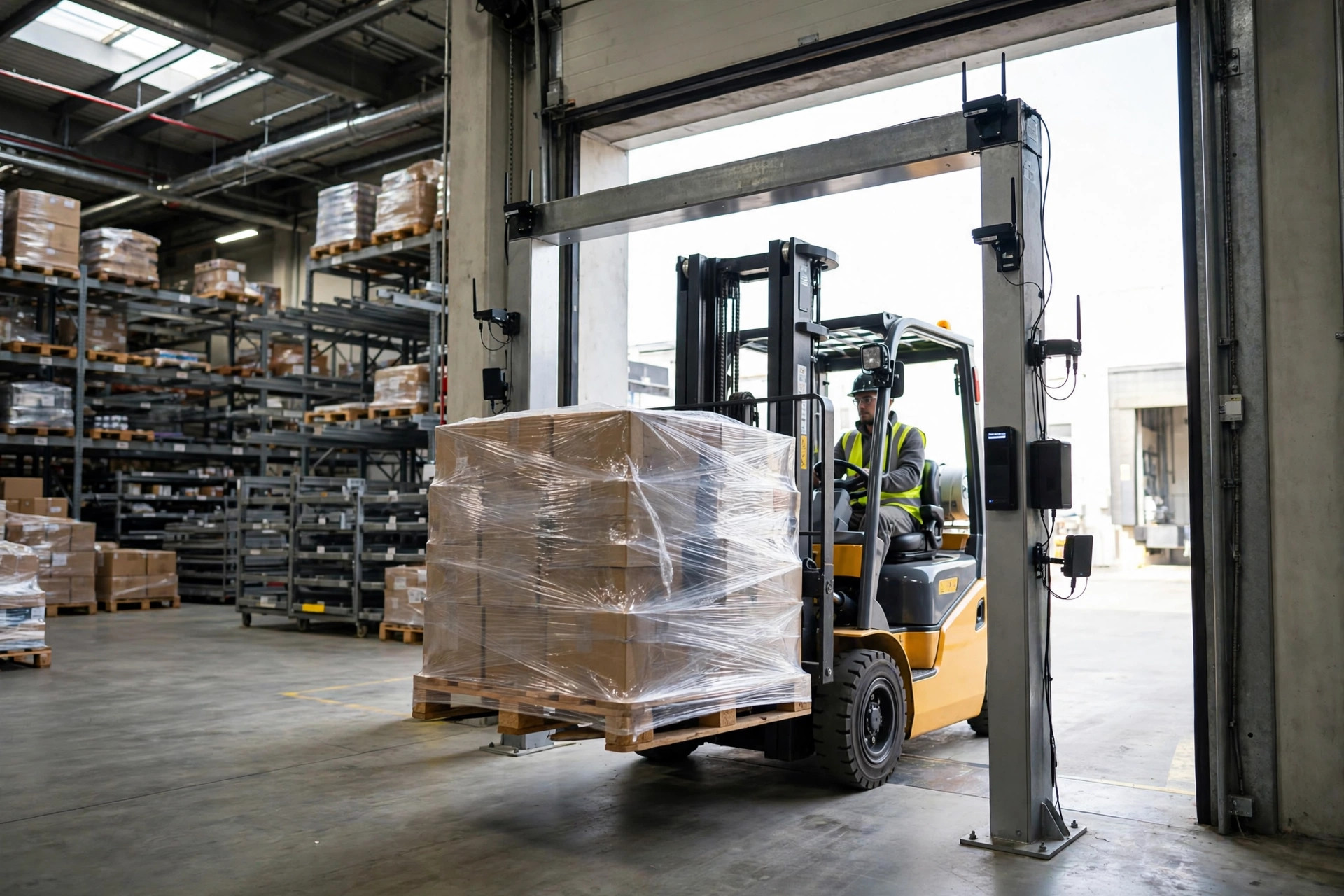
Early 2025, I deliver to another warehouse in Ontario — different world. Two posts at each side of the dock door with flat panels — an RFID portal, I learned later. The forklift pulls pallets off my trailer and drives straight through. The WMS screen dings — twenty-six pallets, recognized, done. I never left the cab. Five minutes, signed, gone.
Between a warehouse and its WMS, what's missing was never "the system." It was eyes. RFID is the warehouse's eyes. But where you put those eyes — that's where it gets interesting. Tag selection, reader placement, data de-duplication in plain talk — everything I've picked up around dock doors the past two years.
Tag Placement: Where You Stick It Matters More Than You Think
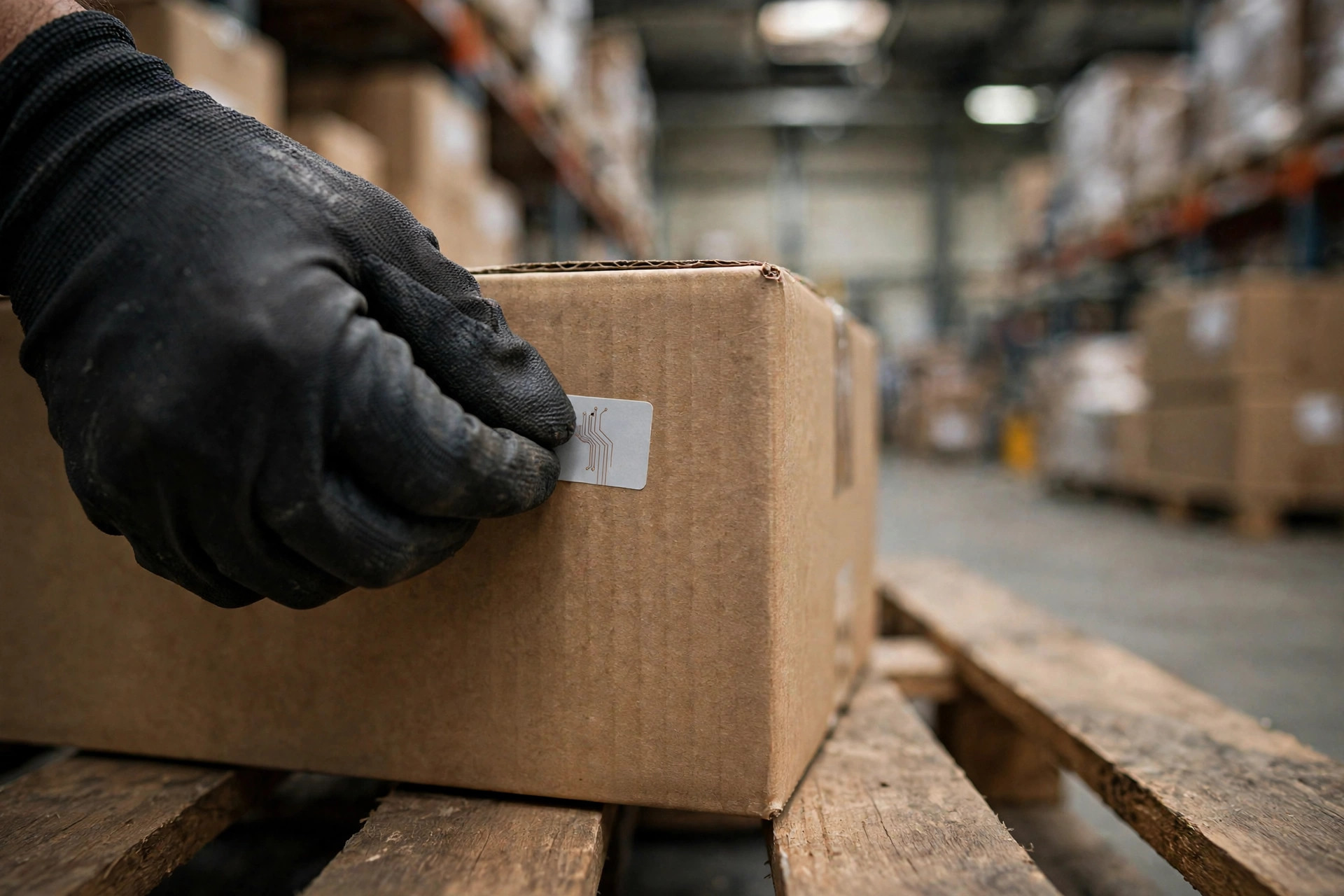
A tag looks like a little paper sticker. Wrong spot and it's worthless. RFID waves hate two things: metal and water. Metal bounces the signal back; water soaks up half of it. So which tag you use, and where it goes, depends on your freight.
Three kinds I see everywhere — here's the cheat sheet:
| Tag type | Where it goes | Cost per tag | Good for | The gotcha |
|---|---|---|---|---|
| Standard paper label | Upper side of the carton, off the ground | Pennies (about $0.06–0.15 in volume) | Cartons, plastic totes, ordinary goods on wood pallets | Useless on metal — signal gets eaten |
| On-metal tag | Metal racks, steel pallets, metal drums, canned goods | A few dollars ($0.50–$2.00+) | Metal products, auto parts, beverage cans | Pricey, and only works pressed tight against the metal |
| Pallet tag / hard tag | Inside edge of the pallet where forks can't reach, or hung as a flag tag on the pallet side | More than paper, priced per unit | Full-pallet moves — one tag per pallet | Buried between two pallets, it can't be read |
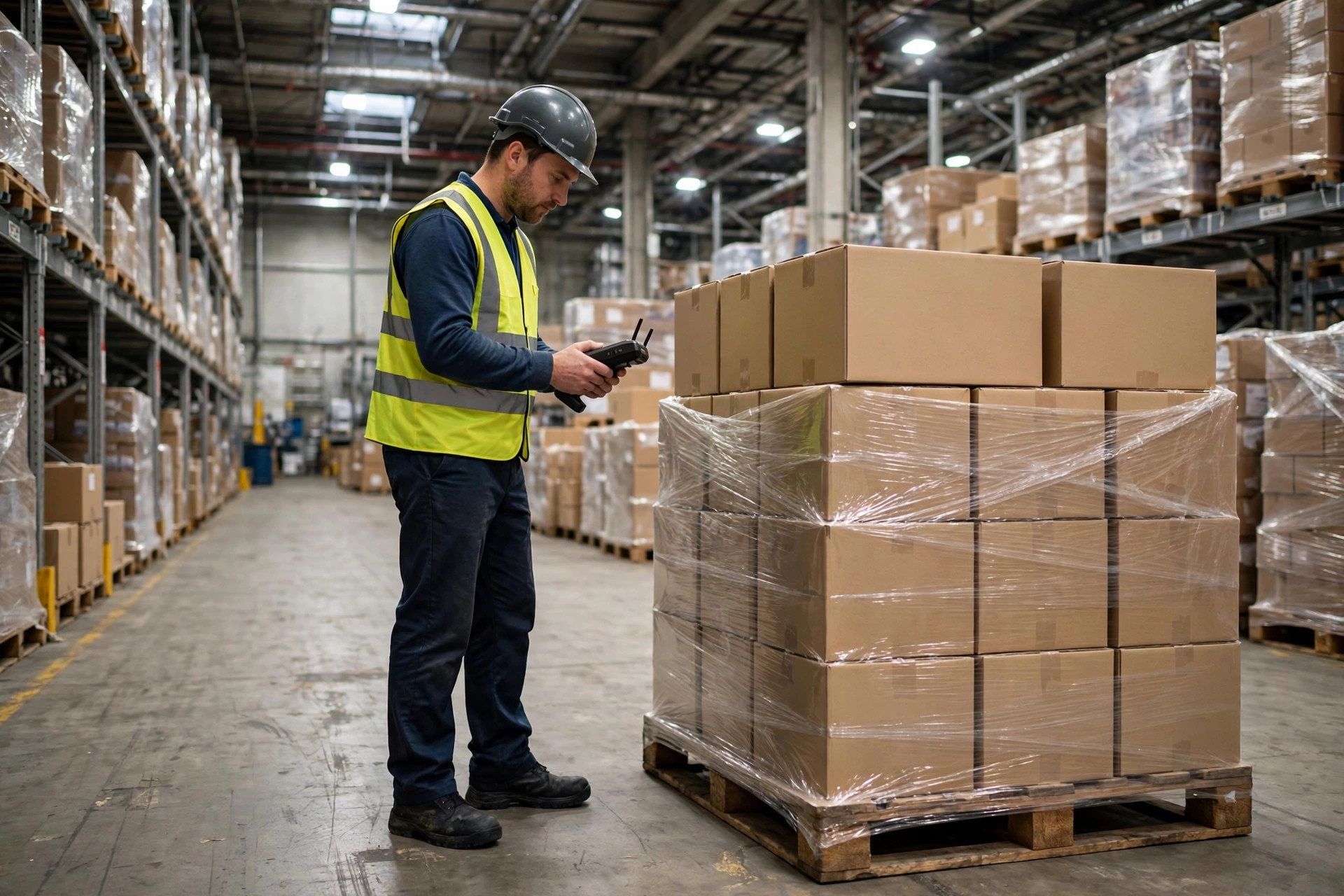
Traps I've watched people walk into: First, never the bottom of a carton — the forklift forks slide right over the tag, the portal can't see it, and your system is short a case. Second, never the face where two pallets press together — the signal gets sandwiched and you get cross-reads. Third, liquid freight — bottled water, beverages — tag the outer face of the pallet, as far from the liquid as possible. Water drinks signal for breakfast.
And don't cheap out on tags. Smallest line item in the whole RFID budget, dumbest place to save. Bad adhesive, tags falling off in three days, high dud rates — whatever you saved gets spent ten times over in arguments at the dock.
Reader Placement Decides Whether You Read Right
The reader is those flat panels — antennas. They send the waves and listen for tags answering back. One rule: put the reader wherever the freight has to pass anyway.
Spot number one: the dock door. The setup I saw — two antennas each side facing each other, one on top pointing down. Forklift drives through with the pallet, three to five seconds, every tag read. A fixed reader with directional antennas reliably covers 6 to 12 meters; for a dock portal, one antenna handling 6 to 10 meters is plenty.
But here's the trade-off that burns people: don't crank the power too high. More power reads farther — and reads the pallets at the next door over. Suddenly your WMS shows a dozen pallets that don't exist. Stray reading. I watched one warehouse run max power; Door A's freight showed up at Door B, both counts went sideways, and they hand-counted everything. At which point, why buy RFID at all? Enough power is enough. When in doubt, turn it down.
Spot two: above the sort line or conveyor, antennas aimed down at the belt. The trick is speed — faster belt, less time under the antenna, more misses. So mount an extra pair, staggered front and back, so every case gets "seen" at least twice.
Spot three: storage locations and racks. Nothing fixed — use a handheld. A worker walks the aisle and the whole bay reads back. Handhelds reach 3 to 8 meters, plenty for racking. Racks get re-slotted constantly; fixed hardware there is money down the drain.
One lesson: never aim an antenna at a metal roll-up door. Door comes down and it's a wall of metal — signal bounces back into soup. Keep neighboring portals spaced apart too, or they jam each other.
Making the Reads Count: Data De-Duplication
Get the first two right and there's still a hole waiting. Here's the counterintuitive part: RFID's biggest problem isn't missing reads. It's too many reads.
In the seconds a forklift passes the portal, one tag gets read dozens of times. Pallets queued next door get skimmed dozens of times too. If the WMS swallows that raw, one pallet shows up as "received 40 times" — worse than a hand count. I've seen warehouses with beautiful hardware lose the whole game on dirty data. De-duplication is where RFID lives or dies.
Three moves:
Move one: the time window. One tag, one count per ten seconds. Read 40 times through the gate? Same pallet within ten seconds counts once. This one rule filters most of the duplicate noise.
Move two: signal strength. Each read comes with a signal strength — closer to the antenna, stronger the signal. Same tag picked up by two doors? Stronger signal wins; the weak stray read gets tossed. The cure for stray reads.
Move three: parent-child. The pallet tag is the parent, case tags are the children. Passing the dock door, count only the parents — one pallet, one code, in and out, books clean. Case tags stay quiet until cycle counts or finding freight. Build that one-pallet-one-code link in the WMS first, or the tags are decoration. This step gets skipped most: tags on the freight, no relationship in the system — might as well not bother.
Do all three — forty reads count as one, strays dropped, parent-child lined up — and the number in the WMS is one you can trust.
Straight Talk for Shippers and Warehouses
A few things you can actually use.
First, don't roll it out building-wide on day one. Pick your busiest dock door, pilot it a month, expand once the counts reconcile. The pilot isn't expensive: the reader runs about fifteen hundred dollars at list price, plus antennas, cabling, and install — a few thousand per door, all in. Get one door humming before spending real money.
Second, test tag samples on your own freight before buying in bulk. Cartons, metal, liquids — stick a few on, run them through the gate, see what reads. Don't take the vendor's word for it. One afternoon of testing beats a year of regrets.
Third, tag pallets first, not every case. One pallet, one code — get the pallet count right and most dock arguments disappear. Case-level tagging is phase two, after the pallet layer is solid. Big steps trip you up.
Run the math: 200 pallets a day, one tag per pallet at pennies each — a few thousand dollars a year in tags, maybe half a headcount. What it buys: ten minutes of counting per pallet, the half-days lost to arguments, the fuel and hours drivers burn standing at the dock. That math works every time.
We drivers have an old saying: slow is fine, standing still is what kills you. A truck rolling, even slow, is earning. A truck parked at the dock earns nothing and burns diesel. RFID is about keeping trucks rolling and freight moving. Tags in the right spot, readers in the right place, counts you can believe — get those three right and a lot fewer people stand around at the dock.
By Shifu Zhao, Trucking Veteran (15 yrs)