If you run an overseas warehouse in the US, you'll face this question sooner or later: what do we do with all the stuff that comes back? This post walks through our entire overseas warehouse reverse logistics process — local returns address, A/B/C grading and refurbishment, and the relist-vs-destroy-vs-ship-back math. We can't afford big-3PL systems, so we do it the scrappy way. It works.
Our mess: 600 returns in one week buried our receiving dock
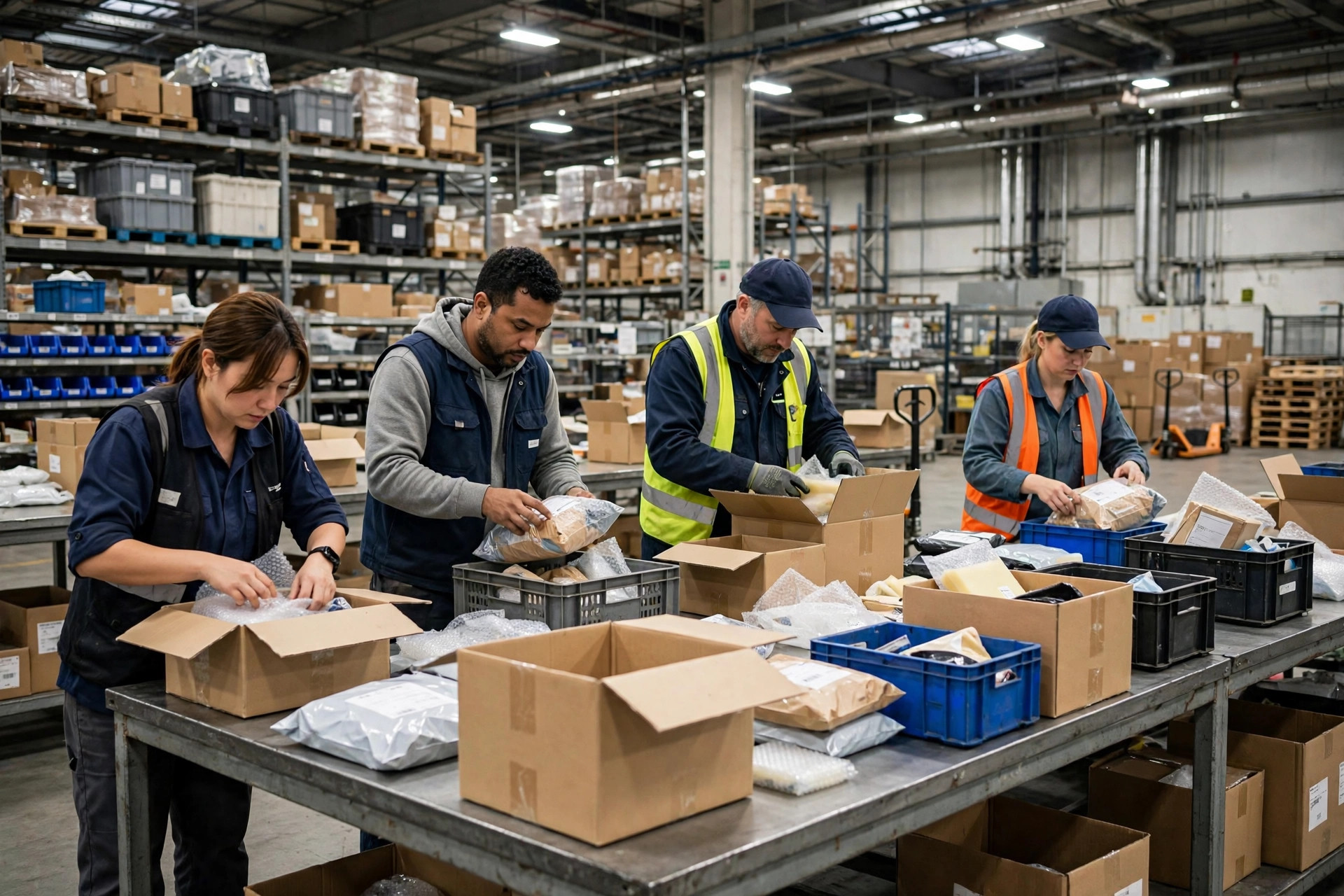
Monday morning after Black Friday 2024, I walked into our Chino, California warehouse and just stood there. Returns had swallowed the receiving area — more than 600 pieces in a single week, boxes stacked so tight the forklift couldn't turn around, inbound trucks honking at the gate.
Our normal return rate is around 8%; that week it hit nearly 19%. Our client, a Shenzhen seller of small desktop appliances, called me sounding like he was about to cry: "Ma, how much would it cost to ship all this back to China?"
I did the math for him: small appliances, consolidated ocean freight plus customs clearance, roughly $18 a unit (late-2024 rates — check with your forwarder for current pricing). Six hundred units is over ten grand, before domestic warehousing back in China. After three seconds of silence: "What about just destroying it there?" At $2–3 a unit, 600 units is about fifteen hundred — but at least half of that stuff was perfectly fine! Destroying it would've hurt.
That night I sat next to the returns pile and figured something out: you can't dodge returns. You can only turn them into a process. Big companies have reverse-logistics departments. We small warehouses don't — but we have small-warehouse tricks.
Getting our overseas warehouse reverse logistics process running: step one, give returns a home
Step one sounds trivial: give buyers a local US returns address. But the details matter.
At first we just used the warehouse's main gate address for returns. Big mistake — UPS and FedEx return parcels mixed in with normal inbound freight, and our receivers spent every day digging returns out of hundreds of boxes. Mis-sorts were routine. Then we made three changes that cost basically nothing:
First, a dedicated returns address — same warehouse, but with "Returns Dept" on the second address line. Drivers sort by it at a glance, and return parcels go straight to the returns zone, never touching the normal receiving lane.
Second, a fixed returns zone. Out of our 32,000 sq ft, we carved out about 2,000 sq ft: three rows of racking, A/B/C grading zones, plus a "pending" area. Peak season overflow? During Black Friday 2024 we rented a 1,000-sq-ft unit next door month-to-month and gave it back in January. That's the small-warehouse advantage — no ego, no long leases. The big 3PLs sign multi-year contracts; we rent by the month.
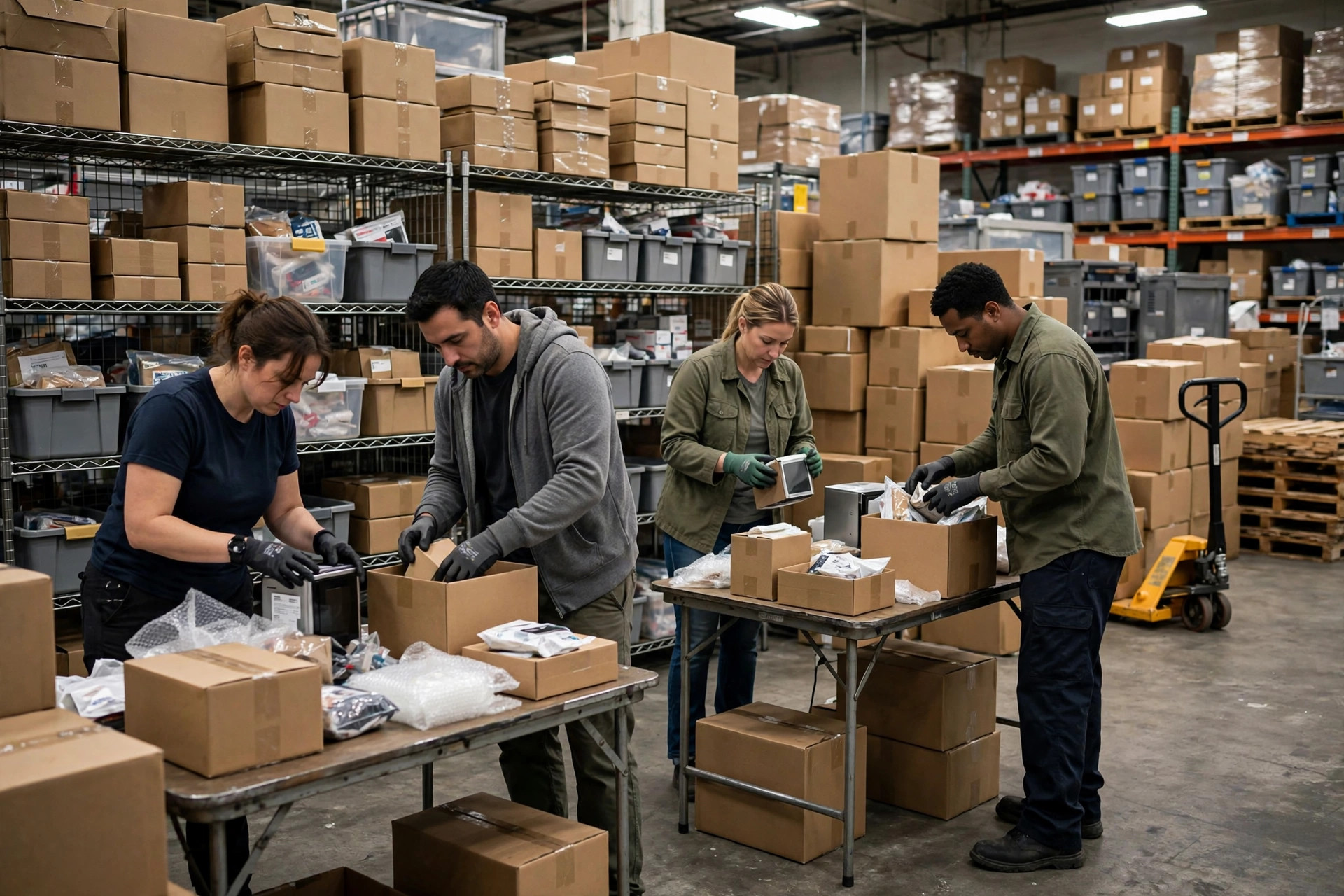
Third, every return gets logged within 24 hours. We built a dead-simple Excel sheet: RMA number, SKU, quantity, client, return reason (copied from the buyer's note), date received. Six columns, don't overcomplicate it. A big-league returns management system costs tens of thousands — we small warehouses can't burn money like that, and Excel has run fine for two years.
The most valuable step in the reverse logistics flow: A/B/C grading
Grading is the highest-value step in the whole flow, and also our scrappiest.
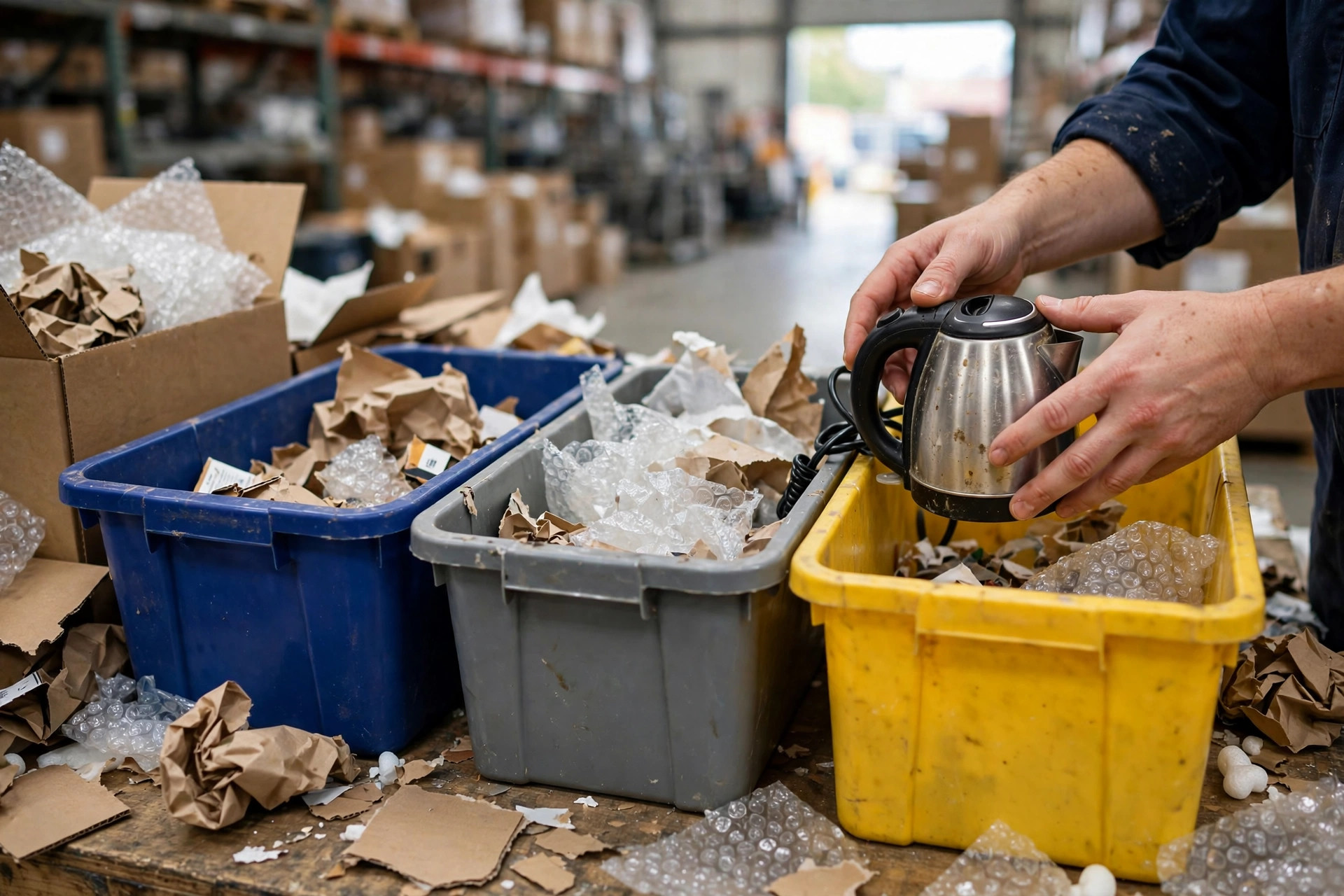
When we open and inspect returns, we use three big plastic bins — bought on sale, three for $9.99, labeled A, B, C. The inspector opens one item, glances at it, tosses it in the matching bin:
Grade A: packaging intact, all accessories, works perfectly. The classic "buyer's remorse" return — wrong size, wrong model, impulse buy. Swap the outer box and it sells as new.
Grade B: damaged packaging, missing accessories, light signs of use — but fully functional. These get refurbished: new packaging, replacement accessories, a wipe-down.
Grade C: broken, clearly used, unfixable. Don't fight it — destroy locally or donate.
Plus a "pending" zone for high-value items (over $50 a unit) or brands that contractually require returns back to China — park them there until the client decides.
The decision table: where every return goes
We turned grading into a wall chart; new hires learn it in three reads:
| Grade | Criteria | Disposition | Cost reference | | Grade A | Intact packaging, complete accessories, fully functional | Rebox, relist as new | About $1/unit labor + materials | | Grade B | Damaged packaging or missing accessories, works fine | Refurbish (repack, replace accessories, clean), relist or sell via discount channels | About $3–5/unit | | Grade C | Broken, unrepairable | Destroy locally or donate to charity (tax deduction) | About $2–3/unit to destroy | | Special | High value, brand requires return | Photo-document, follow client instructions (ship back or repair) | About $15–25/unit to ship back (market rate — confirm current forwarder pricing) |
This chart is the central nervous system of our overseas warehouse reverse logistics process: "destroy or keep" stops being a gut call. We used to wing it — "this could still sell," "nah, toss it" — and the returns zone kept growing. Now A/B flow out the same day and C gets processed by the pallet.
The math: relist vs. destroy vs. ship back
In March 2025, a Bluetooth earbud client got 400+ units back. Grading split them: 170 Grade A, 150 Grade B, 80-odd Grade C.
Grade A got reboxed at $1 a unit and most of it resold within the month. Grade B got refurbished — new packaging, replacement ear tips — about $4 a unit, sold at 30% off on eBay, cleared in a month. Grade C was destroyed locally at $2–3 a unit.
The client ran his own numbers: shipping everything back would've cost seven or eight thousand dollars in freight and clearance alone. Total processing came in under $2,000 — and the relisted units brought back several thousand in revenue. His words: "If I'd known returns could work like this, I wouldn't have destroyed last Black Friday's batch."
One note on destroying: don't just toss Grade C in the dumpster. California has e-waste rules — use a licensed recycler at $2–3 a unit and stay compliant. Donations to charities sometimes beat the destruction fee on taxes; ask your accountant, that's beyond my pay grade.
The contrarian take: returns aren't a cost center — they're a second profit center
Here's the contrarian part: stop treating returns as a burden. They might be your highest-margin "inventory source."
Refurbishing Grade B costs $3–5 a unit; selling at 30% off, the margin can beat brand-new units — the procurement cost was amortized long ago, so refurb is the only incremental cost. One client sells refurbished Grade B exclusively through discount channels and made tens of thousands extra last year. The catch: your grading has to be solid. Sell Grade C as Grade B and you'll torch your reputation.
Second: the faster you process returns, the less you lose. Most people do it backwards — forward orders first, returns rotting in the corner. Grade A left for three months becomes Grade B when packaging gets damp; Grade B left for six months becomes Grade C when accessories go missing. Our rule: grade within 48 hours, Grade A back on the shelf within 72.
That's why I say a well-run overseas warehouse reverse logistics process turns returns from a cost center into a profit center: the process itself doesn't make money — the time and information advantage it creates does.
Advice for fellow small warehouses
First, don't buy a system on day one. Excel plus three plastic bins carries you to 2,000 returns a month; when you outgrow it, you'll know exactly what you need — no salesperson can upsell you.
Second, keep the returns address separate. Mix returns with normal inbound and nobody can untangle it. Zero cost, do it today.
Third, negotiate the returns policy with clients upfront. Some default to "ship everything back to China" because they don't know better — show them the math: $18 a unit to ship back vs. $1–5 to process locally, and nine out of ten will pick local. Your value-added fee comes from right there.
Fourth, stay compliant on destruction. California regulates e-waste and batteries — one fine wipes out a year of destruction fees. Use a licensed recycler and keep the paperwork.
Our warehouse is 32,000 sq ft. We can't out-scale or out-system the big 3PLs. But returns are exactly where "small boat turns fast" wins: faster grading, faster decisions, flexible refurb — while the big guys are still waiting on approvals, our Grade A is already relisted and selling.
Small warehouses have their own way of surviving.
By Xiao Ma, Small Warehouse Owner