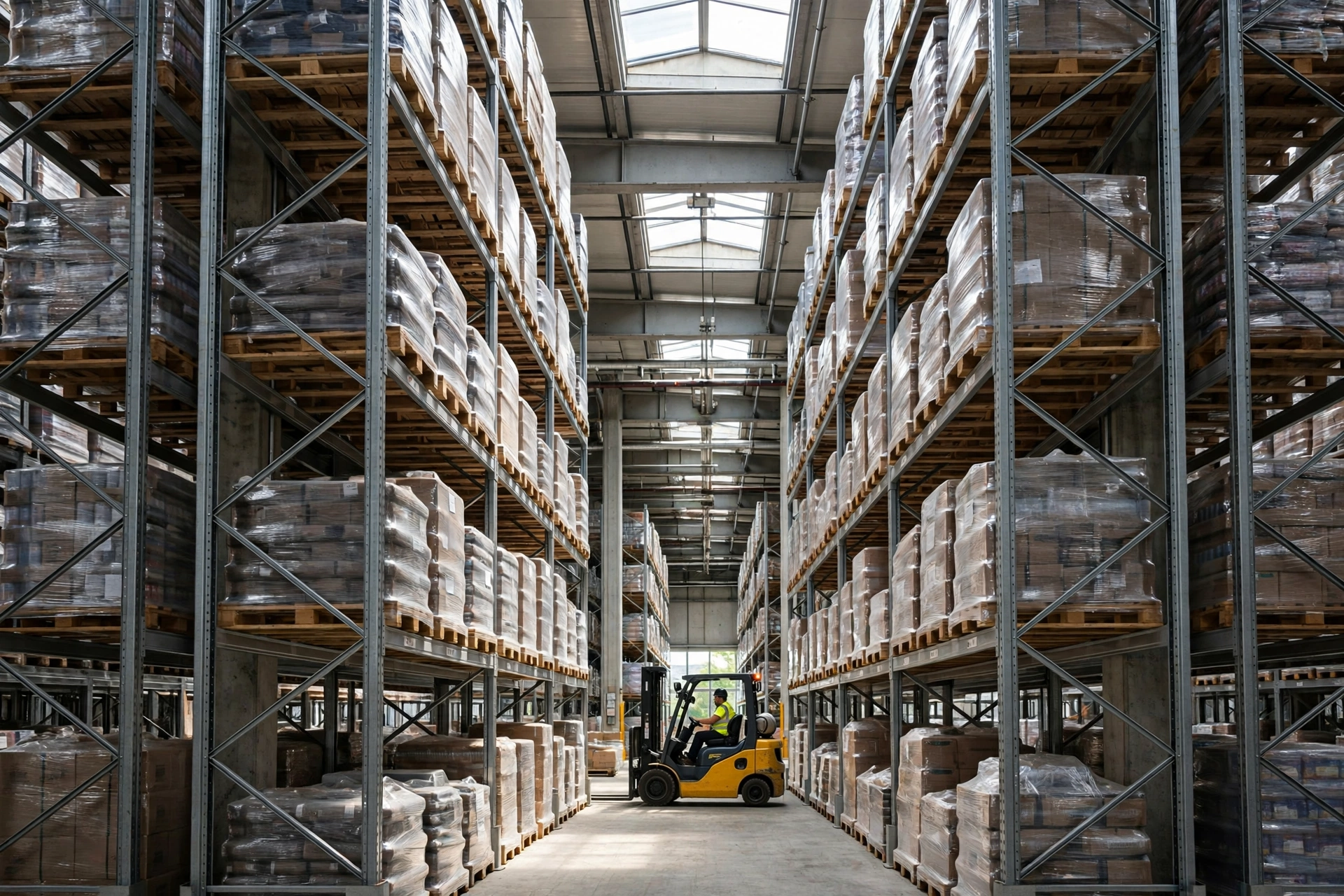
If you type "warehouse rack export seismic California" into Google, most of what comes back is ads from American engineering firms. Almost nothing in plain language explains what it actually takes to get a rack system into a California warehouse and past the inspector. A friend of mine runs a small 3,000-square-meter warehouse back home, and a few months ago he tried to broker a deal: a rack manufacturer from his hometown wanted to sell a batch of high-bay racking to a buyer in California. "If this lands," he told me on the phone, "it'll feed our little warehouse for half a year." I told him the truth: our little warehouse can't afford this kind of money — not the cost of the steel, but the cost of compliance.
Let me be blunt. Exporting racking to California is rarely hard because the steel isn't strong enough. It's hard because three different parties have to say yes at the same time: the inspector, the insurer, and the warehouse owner. Your welds can be beautiful, but without the paperwork, your racks will sit in a yard at the Port of Los Angeles baking in the sun while demurrage ticks up by the day. This article walks through the real bill, so you don't sign a contract and discover the true cost only after the fact.
California's Seismic Bar: What It Actually Asks For
California is one of the most seismically active states in the US, and a tall rack loaded with pallets is not, in the eyes of a local official, "a steel shelf." It's something that could come down on people during an earthquake. So the requirements for warehouse racking in California are on a different level from most other states. The general product standards a manufacturer already knows are one thing; California's building code and seismic requirements are another. The gap between the two is where exporters fall over.
Take the manufacturer my friend was working with, a factory in Zhejiang that sells well domestically and has exported to Southeast Asia before. The California buyer asked for three things right away: product design that meets the applicable American rack industry standard, seismic calculations specific to the project site, and test reports or certification from a third-party body. The factory's technical lead was lost at the second item. Seismic calculations? Nobody had ever asked them for that before. And the painful part: the buyer didn't want a generic calculation. It had to be done per project — the site's seismic parameters, the rack height, the beam loads, the ground conditions, one calculation per job. You can't copy and paste your way through it.
Another case is even more telling. A small warehouse in California bought a batch of imported racks at about 30 percent below the local supplier's price. Three days after installation, the owner's insurer sent someone to inspect the site. One look around, and the verdict was: no compliance documentation, so the premium goes up, and a claim might not even be paid if something happens. The owner was stunned. The 30 percent he saved on the racks didn't cover a single year of the premium difference. With racking, you judge the purchase by the unit price, but you live with the paperwork — and insurers read paperwork, not steel.
Here's the counterintuitive part, and it's the heart of this whole story: when you export racking to California, the steel is the smaller part of the big bill. The paperwork decides whether you make money. Plenty of factories quote a job counting only steel and freight, thinking a California order is high-margin, and then the invoices for calculations, testing, certification, and insurance arrive one by one — and the job ends up done for free. Big companies have staff who handle this full-time. Small ones don't. That's exactly where small players lose.
Exporting Racking to California: The Paperwork Weighs More Than the Steel
For a warehouse rack export to California, the earlier you start on documentation, the cheaper it gets. My rule: before you quote, list every document, and for each one ask who provides it, what it costs, and how long it takes. The list roughly falls into four buckets: product standard compliance documents, seismic calculations, test reports or certificates, and installation and user instructions. The exact requirements for each bucket should be checked against the latest official policies — California's codes get revised, and enforcement varies by city, so last year's experience is a bad guide for this year's order.
There are three scrappy shortcuts that work for small players like us. First, don't try to do the calculations yourself. Hire a US-based structural engineer who has actually done rack seismic work. It costs more up front, but one pass beats three rounds of rework. Second, don't over-order testing. Find out first which test reports your buyer and the local authority actually recognize — some reports cost a fortune and the other side won't accept them at all. Third, write document responsibility into the contract: who supplies the calculations, who pays for certification, who covers demurrage if the paperwork fails. Ugly words up front beat a fight later.
There's another trap most people never see coming: installation. Some California cities require approval before installation and inspection afterward, and you can't load the racks until they pass. I heard of a job where the racks were fully installed and the inspector found the anchor bolt fixing didn't match the calculation package — a whole run had to come down and go back up, the install crew stayed an extra week, and the labor bill doubled. The steel was fine. A detail in the installation sank the job. So check your installation drawings against the calculation package before the goods ship, not after they land on site.
Counting the Real Cost of California Seismic Compliance
I can't do the finance-guy spreadsheet the way Lao Zhou does, but I have my own rough method: split the quote into two columns — the money you can see and the money you can't. The visible column is steel, fabrication, freight, and duties. The invisible column is calculations, testing and certification, insurance uplift, demurrage risk, and a rework reserve. Add both columns together and that's the real cost of the order.
| Cost item | Rough magnitude | Who pays |
|---|---|---|
| Steel and fabrication | The bulk of the quote | Buyer, in the contract price |
| Ocean freight and duties | Per container, per weight | Per contract; check the latest official policy |
| Seismic calculations | Thousands of dollars per order | Agree up front; don't carry it all yourself |
| Testing and certification | Thousands to tens of thousands, depending on report type | Confirm which report is recognized first |
| Insurance uplift | Noticeably higher with incomplete files | Owner pays, but it squeezes your price |
| Demurrage and rework risk | Hundreds to over a thousand dollars a day | Whoever the contract says is responsible |
How do you use this table? Before accepting an order, fill in the numbers for the invisible rows. If you can't fill one in, go ask. If nobody can answer, estimate the worst case. Then look at what profit is left and decide whether to take the job. My friend did exactly this — and walked away. After the compliance costs, the margin was worse than two domestic orders. Walking away cost him nothing. Taking a money-losing order would have cost him plenty.
One last honest word. The California market isn't untouchable. It's big, and it pays well, but its bar is real, and compliance costs don't get a small-business discount. For a small factory to win there, the edge isn't the lowest price — it's complete paperwork, a clear cost picture, and a tight contract. With the files in order, the insurer nods, the buyer relaxes, and your racks actually get installed. Without them, even the cheapest quote is a hole you're digging for yourself.
Small warehouses have their own way of surviving: we don't take orders we don't understand, and we don't chase money we can't count. The California racking business belongs to whoever shows up prepared. Get your documents, your engineer, and your contract ready first — then go.
By Xiao Ma, Small Warehouse Owner