Here is my conclusion up front: in Qingdao China port warehouse logistics, the faster the quay gets, the more slowly you should do the math on the warehouse side. In 2024 Qingdao Port handled 30.87 million TEU of containers and 710 million tonnes of cargo, ranking fifth in the world for containers. No other port in northern China comes close to that volume. But big volume does not mean shipping your cargo through Qingdao is automatically the cheap option. I have seen too many shippers rent a warehouse right next to the port area because of the "largest port in northern China" label, only to watch a schedule change eat every dollar they saved on trucking — in demurrage, in rebooking fees, in rush trucking. Put simply, the Qingdao port warehousing business is a business of timing gaps between port, warehouse, and cargo. It is not a business of rent per square meter.
There are two sides to this. One side is that the port itself is genuinely strong. The other side is that every trap in port warehousing hides behind that strength.
Where Qingdao China Port Warehouse Logistics Gets Its 30.87 Million TEU
Qingdao's volume does not come from nowhere. Home appliances, tires, chemicals, and farm products from Shandong, plus cargo from Henan, Shanxi, and Shaanxi in the hinterland, all flow east to Qianwan. The port runs more than 220 container shipping routes — the most in northern China — so carriers want to call here, and shippers get real choices on sailings. That is the first foundation of Qingdao China port warehouse logistics: dense routes and real schedule choices, so your cargo is not hostage to a single service.
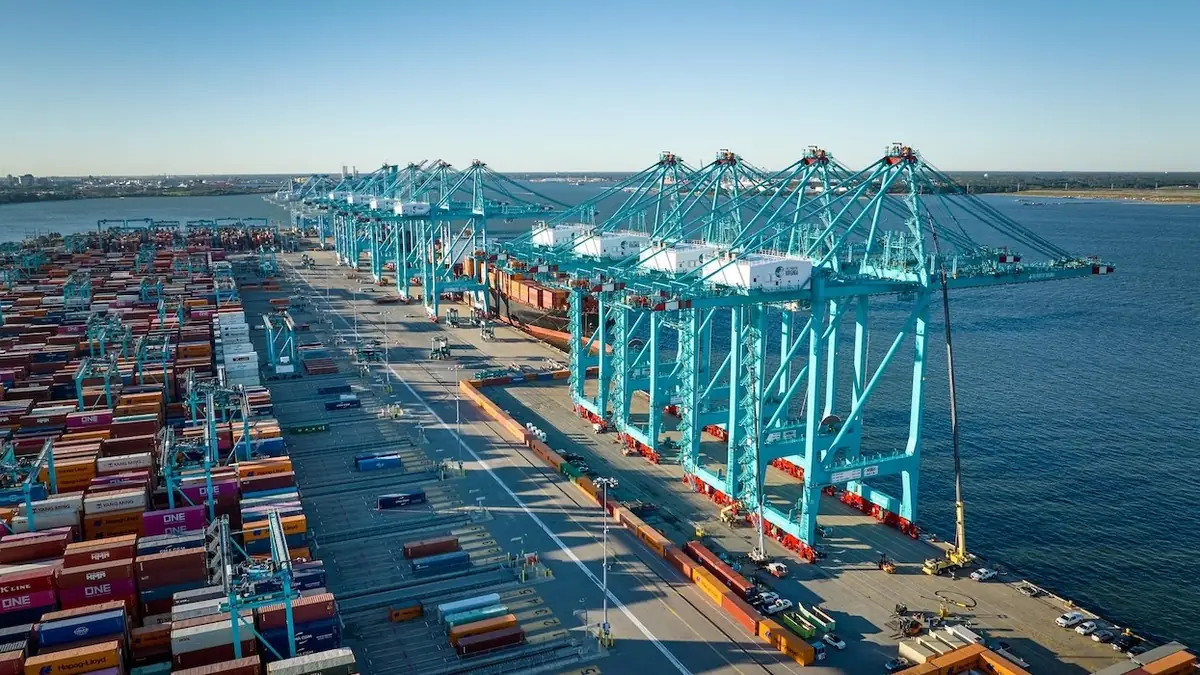
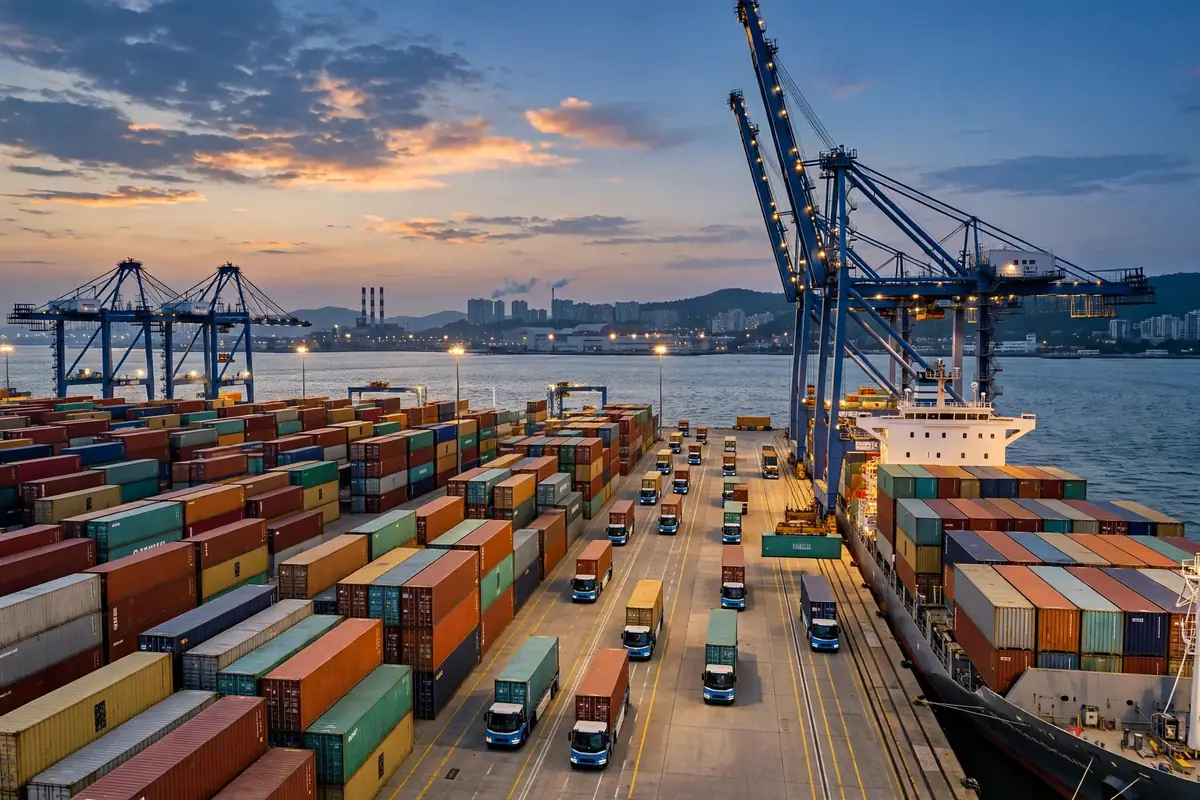
The second foundation is the automated terminal. The Qingdao New Qianwan Container Terminal went into commercial operation in May 2017 as Asia's first fully automated container terminal — automated quay cranes, AGVs, rail-mounted gantry cranes, and container-lock robots, with a designed annual capacity of 4.2 million TEU. In December 2024 it hit 60.6 TEU per crane per hour, its 11th world record for automated terminal efficiency; in May 2025 it reached 62.62 TEU per hour, the 13th record. Those numbers are real, and the quay really is fast.
Here is the counterintuitive part, and the thing I most want you to take away: the faster the automated terminal gets, the less your landside warehousing can afford to compete on speed alone. Time saved on the vessel does not automatically become your profit. Big ships arrive and leave in tighter bunches, which means the yard and the warehouses behind the port have to absorb more boxes in a shorter window. Every extra dozen TEU per hour at the quay is a dozen more trucks queuing outside the gate. Fast at the front, slow at the back — and the bill lands on the cargo owner. So my advice on Qingdao China port warehouse logistics is this: do not just look at the terminal's records. Look at whether your warehouse can absorb that rhythm.
A Pit I Walked Into at Qingdao Port: The Warehouse Next to the Port, the Cargo Stuck in Free Time
Around 2019, I helped an appliance exporter with a factory in Weifang look at warehouse space. Their cargo moved through Qingdao, and to keep things simple they leased a bonded warehouse right beside the Qianwan port area, a few kilometers from the quay. The idea was "front port, back warehouse" — put the stock behind the port and every problem disappears. The rent was not cheap, but the client had done the math: being close to the port saved a trucking leg, and over a year those savings would cover the rent premium.
Then peak season hit and the carrier changed a sailing. The vessel left two days late. Eight 40-foot containers were already inside the port yard, and once free time ran out, demurrage started ticking by the day. Worse, two more containers were still being loaded back at the factory — the boxes at the port were waiting, the cargo at the factory was waiting, and nothing could move. The client paid rebooking fees, demurrage, and emergency trucking to shuffle cargo at the factory. Every dollar saved on trucking that year went out the door on that one shipment, and then some.
I have seen this same mistake too many times, and the root cause is never distance. It is timing. In port warehousing, the most expensive thing is not rent — it is a mismatch of schedules. Free time, cut-off times, sailing schedules, and the factory's loading rhythm have to line up. If any one of them slips, the other three fall apart. That client had calculated distance and never calculated time. My second piece of advice: front port, back warehouse is not about being closest to the quay. It is about being closest to your own schedule.
Doing the Math on Front Port, Back Warehouse
In Qingdao port warehousing there are three common plays, and each one has a different bill. The figures below are a scenario illustration / hypothetical example, not quotes — check the latest published rates from each warehouse and carrier.
| Play | Where the warehouse sits | Who it fits | The cost | The payoff |
|---|---|---|---|---|
| Bonded warehouse inside the port | Inside the port area or bonded zone | Frequent import/export cargo that needs bonded treatment | Highest rent, most paperwork | Closest to the vessel, full bonded benefits |
| Front port, back warehouse | 5–10 km outside the port area | Shippers with steady volume who consolidate and stuff containers | One extra short-haul leg; a schedule change leaves you exposed | Lower rent, flexible consolidation |
| Hinterland distribution warehouse | Around Jinan, Weifang, or Zibo | Cargo distributed across the Shandong hinterland | Farthest from the port, higher line-haul cost | Close to supply and customers, fast response |
How do you use this table? Look at your cargo's rhythm. High-frequency, small-batch cargo that genuinely needs bonded treatment — the bonded warehouse earns its premium. Steady volume you can prepare a week ahead — the rent gap in front port, back warehouse is real money saved. And if most of your customers sit in the Shandong hinterland, a warehouse in Weifang beats one at the port gate: one extra line-haul leg, ten fewer last-mile trips. No play wins for everyone. Pick the wrong one and everything you saved on rent comes back as time and rebooking fees.
There is one more trade-off people skip: the word "bonded" in Qingdao China port warehouse logistics does not help every cargo. Bonded warehouses carry supervision, bonded ledgers, and compliance headcount. For a shipper moving only a few dozen shipments a year, the duty saved can be smaller than the cost of managing the books. I have watched a small shipper insist on a bonded warehouse and end the year spending more on ledger and compliance labor than the tax it saved. That money was wasted.
Where Qingdao Port Warehousing Goes After the Automated Terminal
The automated terminal has pushed Qingdao's quay efficiency onto the world-record board. But the warehousing business behind it is really decided by certainty, not speed: whether the sailing is on time, whether trucks get through the gate smoothly, whether the warehouse has the cargo ready. Those three certainties are worth more than how fast the quay runs. Automation solved efficiency inside the terminal. It cannot solve your factory shipping two days late.
So before I place cargo through Qingdao, I ask four questions. First, is your volume steady — only steady volume justifies front port, back warehouse. Second, how much slack does your sailing schedule have — if there is none, do not bet your free time on a warehouse pressed against the port gate. Third, do you actually use the bonded benefits — if not, stop paying extra for the word "bonded." Fourth, where are your hinterland customers — a warehouse near your customers beats a warehouse near the quay. Answer those four, and the warehousing play mostly picks itself.
Qingdao's volume will keep growing, and the automated terminal will keep breaking records. But for anyone in the warehousing business, the real business is not in the records. It is in your own schedule. Whether your cargo gets into the warehouse on time and onto the vessel on time matters more than how many million TEU the port handles in a year.
Before your next shipment goes through Qingdao, answer those four questions first.
By Lao Mi, Supply Chain Veteran (20 yrs)