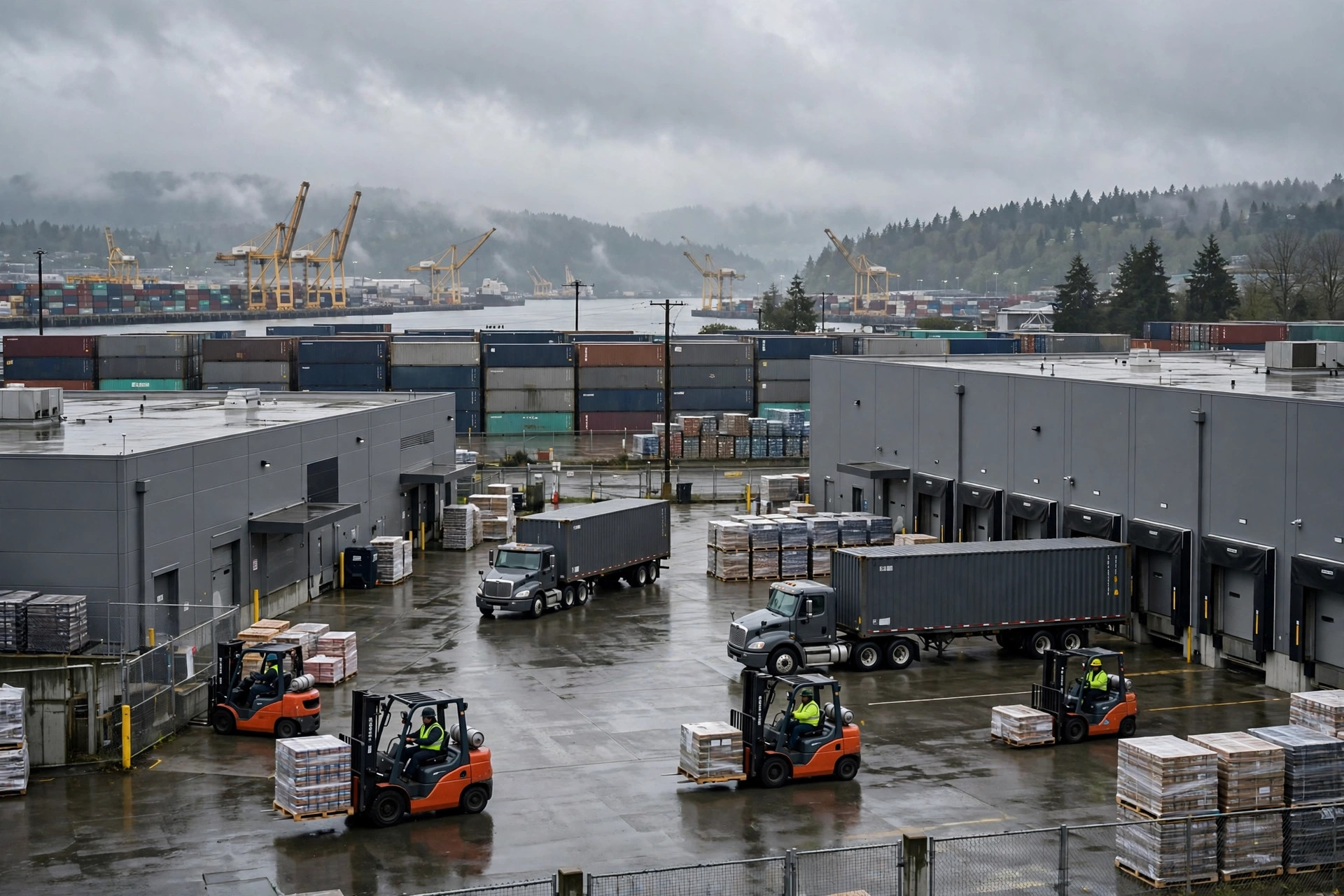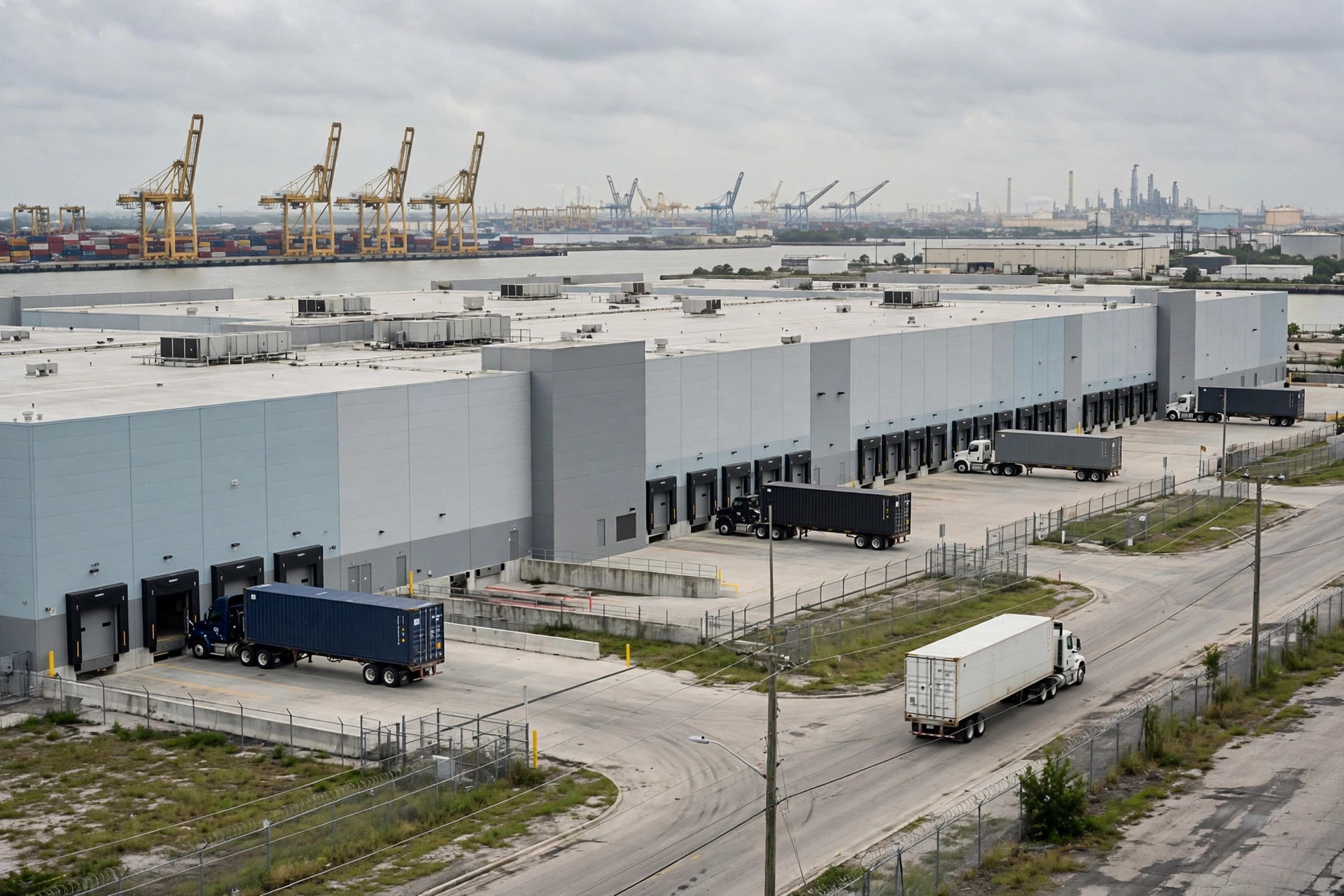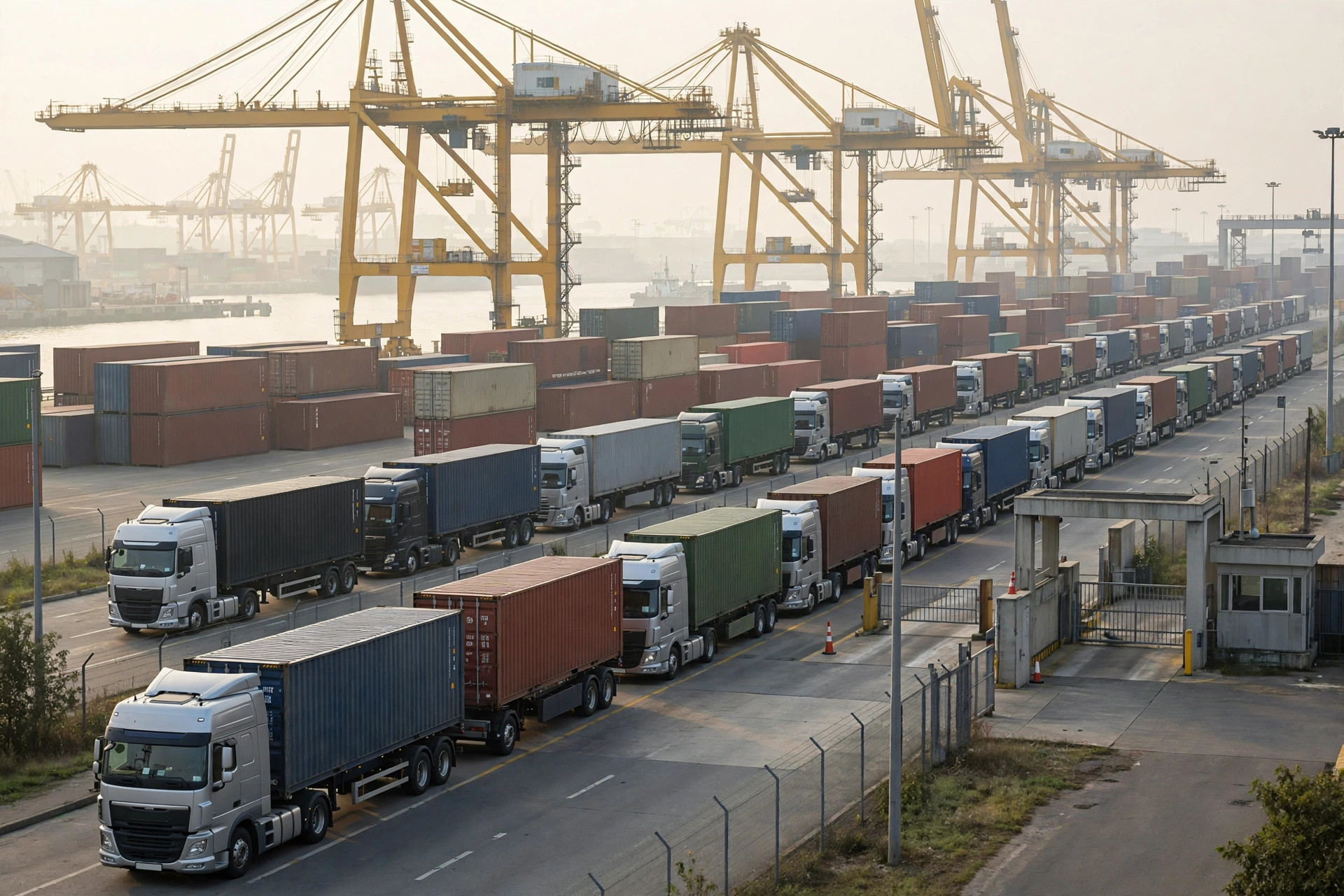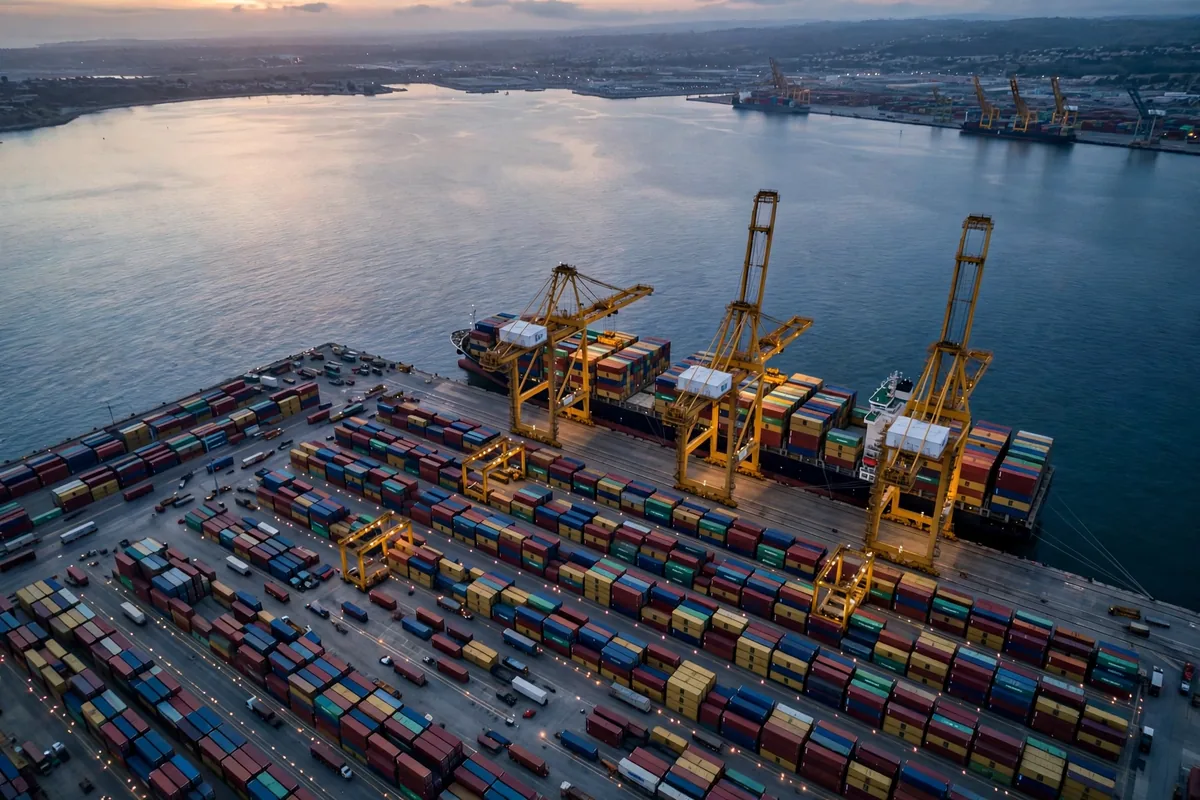
Baltimore port warehouse logistics is not back to normal two years after the bridge collapse. It is playing a different hand, and here is the bottom line up front. On March 26, 2024, the container ship Dali struck the Francis Scott Key Bridge and brought it down. The main shipping channel stayed closed for about 11 weeks, and Baltimore's container volume fell to 741,200 TEU that year, down 41 percent. Then 2025 came in at 1.11 million TEU, above the 2023 record, with 2,223 cargo vessel calls, also a record. The bridge fell. The cargo did not. The reason sits behind the bridge, in the hinterland and in the cargo mix.
Baltimore Port Warehouse Logistics During the 11-Week Shutdown
The Dali hit the bridge in the early hours of March 26, 2024. Six workers were killed. For about 11 weeks, container ships could not get in and roll-on/roll-off vessels could not berth. Cargo found three ways out: divert to the Port of New York and New Jersey or Norfolk and truck back to Maryland; wait in place for the channel to reopen; or, for roll-on/roll-off cargo, pay the painful price of rerouting, since cars and farm machinery need specific terminal gear.
The full-year numbers do not look like a collapse: 45.9 million tons of total cargo in 2024, worth 62.2 billion dollars. The channel reopened in June 2024, and the second half of the year brought the cargo back. I have seen this mistake three times now. A port has an incident, a shipper's first instinct is to switch ports, and then the trucking bill eats the savings. Every extra mile on the road is margin gone.
The 2025 recovery ran faster than most people expected. Seagirt Marine Terminal handled 1,113,309 TEU, beating the 2023 record by more than 5,000 boxes. Weekly container services rose from 12 in 2024 to 15 in 2025. The 366-meter Ever Model called at the port, the second-largest ship ever to visit Baltimore. Total cargo for 2025 came to roughly 50 million tons worth 65.6 billion dollars, the third-highest value in the port's history.
Roll-on/roll-off is the real foundation here. Farm and construction machinery moved 848,600 tons in 2024, number one in the United States, and rose to 887,500 tons in 2025, up 6 percent and still number one. Autos hit 749,800 units in 2024, second in the country. Containers can be rerouted. Roll-on/roll-off cannot, not cheaply. That is why, during those 11 weeks, Baltimore's roll-on/roll-off customers left the least and came back the fastest.
The Three-Way Math on Baltimore Port Warehouse Logistics Costs
The first calculation is distance. Baltimore sits about 60 kilometers from Washington, 160 from Philadelphia, and 300 from New York. Inside a single day's truck round trip lives some of the densest population on the US East Coast. A box discharged in Baltimore and trucked to a nearby warehouse saves a couple hundred kilometers against a box discharged in New York and trucked south. During those 11 weeks, shippers were forced onto the long road. The invoices spoke for themselves.
The second calculation is cargo type. For pure container business, 1.11 million TEU in 2025 is a mid-size book. For roll-on/roll-off, this is the number one farm and construction machinery port in America and the number two auto port. Warehouse site selection starts with one question: what do you move? Roll-on/roll-off, autos, farm machinery, Baltimore is home turf. Straight container e-commerce freight, bigger ports exist.
The third calculation is the future. The CSX Howard Street Tunnel project cost 518 million dollars and finishes in 2026, letting double-stack container trains run through the city. Officials expect it to add roughly 160,000 containers a year and nearly 14,000 jobs. The replacement bridge is priced at 4.3 to 5.2 billion dollars, with completion expected in late 2030. Here is the counterintuitive part: the collapse made the Port of Baltimore more valuable, not less. The disaster did not drive the cargo away. It drove the investment in. The whole country saw how much this port mattered, and the tunnel and bridge money moved faster.
The table below is a hypothetical worked example to show the method. Actual rates are subject to the latest published tariffs:
| Option | Discharge port | Truck leg into the warehouse | Best for |
|---|---|---|---|
| A Direct via Baltimore | Seagirt Terminal | Within a 30-minute drive of the terminal | Roll-on/roll-off, autos, farm machinery, East Coast distribution |
| B Discharge New York-New Jersey, truck south | Port of New York and New Jersey | About 300 km by road | Backup when Baltimore sailings are full |
| C Discharge Norfolk, truck north | Port of Norfolk | About 300 km by road | Risk spreading, not a primary route |
A Go-Live Checklist for Shippers
Confirm the sailing before you book. Weekly services are back up from 12 to 15, but check whether your specific service is among them. Ask the carrier for the current schedule and do not plan off a 2024 timetable. Draw a circle around the warehouse site: pick space within a 30-minute drive of Seagirt, and put roll-on/roll-off cargo even closer, because every extra kilometer of trucking is cost. Negotiate roll-on/roll-off and containers separately. Autos and farm machinery carry real scale advantage through Baltimore, and that advantage is worth its own conversation. Mixing them into one rate discussion leaves money on the table. Hold two weeks of safety stock on critical goods. The 2024 lesson is that a channel closure can last 11 weeks, so do not plan inventory for calm weather. And treat tariffs and policy as live variables: the 2025 recovery happened amid tariff volatility, so check the latest official policy rather than budgeting off last year's rates.
One last line: the Baltimore port warehouse logistics bet is not on the bridge. It is on the hinterland behind it and the number one roll-on/roll-off base in the country. The new bridge does not open until late 2030. Until then, your contingency plan is the real bridge.
By Lin Xiao, WMS Implementation Consultant