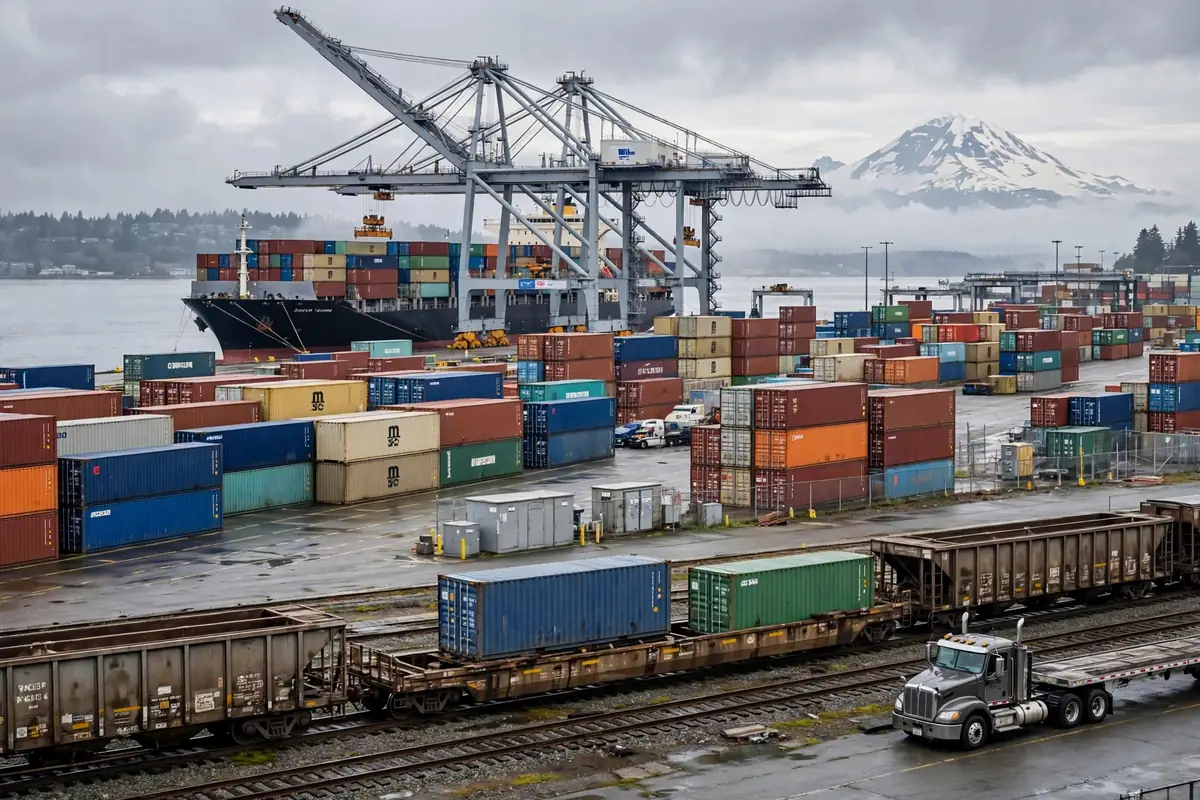
Start with the ledger. The Northwest Seaport Alliance handled 3,340,733 TEU of containers in 2024, up 12.3% year on year, with loaded imports up 19.6% and loaded exports up 8.1%. When a gateway adds that much import volume in a single year, the Seattle-Tacoma port warehouse numbers have to be reworked from scratch. More cargo means tighter space, and a warehouse in the wrong place turns every dollar saved on rent into dollars lost on drayage and double handling.
The Northwest Seaport Alliance is the Port of Seattle plus the Port of Tacoma, together the third-largest container gateway in North America. The rebound is real, but its shape decides warehouse placement. The largest trading partner is China at 677,071 TEU, followed by Vietnam at 184,457 TEU and Japan at 86,184 TEU. The largest import commodity is furniture at 212,907 TEU, 16.1% of imports. Furniture means large volume, light weight, crush-sensitive, moisture-sensitive, and it has to be broken down and distributed after the container is opened. A furniture warehouse and an auto-parts warehouse are two different businesses, and pricing them the same way is how money gets lost.
Seattle Tacoma Port Warehouse Placement Starts With the Two-Port Split
Seattle sits to the north, Tacoma to the south, and the division of labor between them keeps getting clearer. Seattle is close to the city, which suits fast, high-turnover cargo that has to reach stores and distribution centers quickly. Tacoma has the land and the rail connections, which suits large volumes that need to get on a train to the interior. Phase 2 of the Terminal 5 modernization is complete, so Tacoma's ability to take big ships is stronger than ever.
The first rule of placement: ask where the cargo goes next. If the next stop is a store or distribution center near Seattle, put the warehouse toward north Seattle, pay the higher rent, and save on last-mile trips and time. If the next stop is a train to Chicago or Dallas, put the warehouse toward south Tacoma, close to the rail yard; every drayage trip avoided is a trip's money saved. The worst placement is the reverse: cargo bound for a train, stored next to downtown Seattle, with trucks running through peak traffic every day. Fuel and driver hours eat the rent saving whole.
Here is an illustrative example. Take a furniture shipper moving 200 TEU a month:
| Placement | Monthly drayage (illustrative) | Monthly rent (illustrative) | Monthly double handling (illustrative) | Net feel |
|---|---|---|---|---|
| Warehouse beside Tacoma port, cargo railed east | Short dray, low cost | Big site, relatively low unit price | Mostly one touch | Lowest total of the three lines |
| Warehouse beside downtown Seattle, cargo still railed south | Cross-city dray every day, high cost | City-edge unit price is high | An extra devan and reload | High on both rent and transport |
The numbers here are an illustrative example, not a quote. Their job is to remind you to add drayage and double handling before you compare rent. Nine out of ten people who compare rent alone discover at year end that the total account lost money.
Seattle Tacoma Port Warehouse Math: Furniture and Autos Are Two Different Accounts
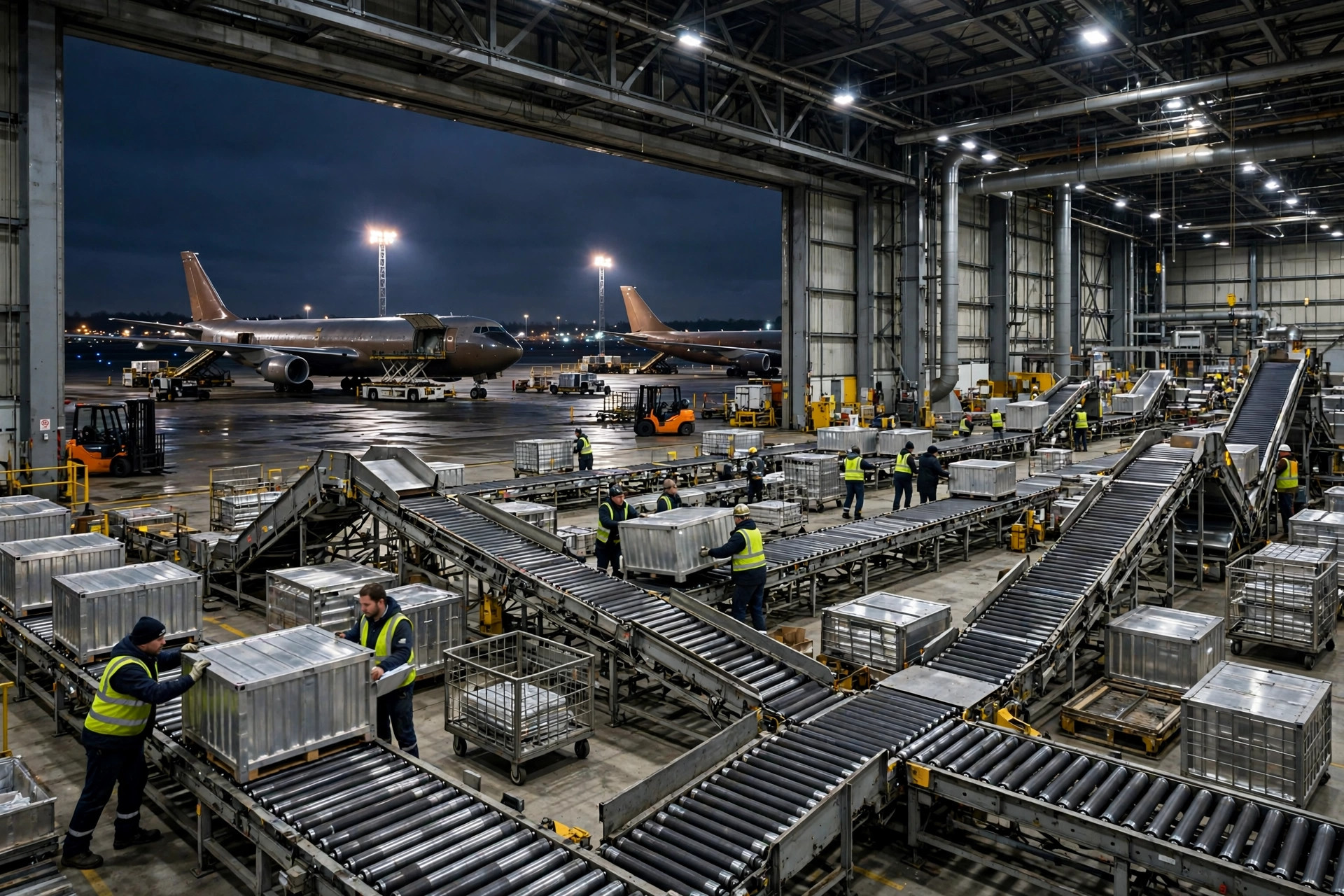
Furniture is 16.1% of imports, the gateway's largest import category. The big cost in a furniture warehouse is not rent. It is devanning and distribution. Open a container and the bed frames, headboards, and chairs each go to their own location; misplace one piece and a store is short one piece. Furniture cannot be stacked high, so a tall warehouse is wasted on it, and rent has to be judged on floor area, not rack positions. Beginners take a standard warehouse quote, apply it to furniture, and discover after signing that utilization is half of what they assumed.
Autos are a different account: 337,749 vehicles moved through this gateway in 2024. Cars do not go into an ordinary warehouse but into a processing yard with parking, and the cost structure is completely different. The auto account turns on dwell days, processing labor, and outbound load factor. A car that sits one extra day is charged twice, once for the capital tied up and once for the space occupied. In the auto business, profit comes from turns, not from rent.
Here is the counterintuitive judgment: when a gateway is rebounding, the worst move is to rush into a long lease to lock in space. In a year when volume is up 12.3%, everyone assumes space will run out and rents will only rise, so they sign three-year leases. Then volume softens and the long lease becomes a rope around the neck. Sign a year for the core space, take flexible space by the quarter, and find short-term space when the peak season needs it. Flexibility is itself a cost advantage; locking in space means selling your options to the landlord.
The Domestic Cargo Nobody Looks At: 21.9%
There is another block of cargo most people ignore. Domestic cargo is 21.9% of the total, and within it, Alaska and Hawaii cargo is 730,488 TEU. Alaska cargo runs to its own rhythm, shaped by fishing seasons, oilfield maintenance, and winter sailing closures, with peak and off-peak seasons sharply divided. A warehouse serving this cargo will sit partly empty in the off-season as a matter of routine, so the contract has to leave room to give space back or sublet. Sign it on an international-cargo template and the empty-space rent in the off-season can eat half the year's profit.
Domestic cargo paperwork and routines differ from international cargo. Mix them in one warehouse and operators will confuse the two. Separate them, either into different warehouses or into different zones and shifts, so the accounts and responsibilities stay clean. A mixed warehouse looks like it saves the cost of one building, but the losses and mis-ships hide in the dark.
Intermodal Rail Is Where the Account Is Won or Lost
The real advantage of this gateway is rail. Cargo comes off the ship and straight onto a train to the interior, saving long-haul trucking cost and the risk of driver shortages and fuel swings. The account, taken to the rail layer, turns on two things. First, how far the warehouse is from the rail yard: every extra kilometre of drayage adds a slice to the annual bill. Second, how dense the train schedule is: can cargo leave the day it arrives, or does it wait two days at the yard? Two days of waiting is two days of yard occupancy and two days of tied-up capital.
The framework below is the simplified version I give clients. Three questions, and if all three answers are yes, put the warehouse toward south Tacoma:
| Question | If the answer is yes | If the answer is no |
|---|---|---|
| More than 70% of cargo goes east by rail | Put the warehouse next to the rail yard | Put the warehouse toward city distribution |
| Cargo is crush- and moisture-sensitive and needs devanning | Reserve devan floor space and distribution labor | Do not pay extra rent for devan capability |
| Off-season volume swings by more than 30% | Keep a flexible exit or sublet clause in the contract | A long lease locking the price can be considered |
On rent, I will give you no number. Seattle-Tacoma port warehouse rents should be taken from the latest local quotes; any unit price anyone gives you now may be wrong in two months. Take the table above to three or more warehouse operators and negotiate drayage, devanning, distribution, and exit terms together. A quote that only talks about rent per square foot goes straight in the bin.
Phase 2 of the Terminal 5 modernization is complete, and big ships now call more smoothly, but a big ship concentrates the shock: a whole vessel's cargo arrives in one week, and devanning, distribution, and drayage all peak at once. Staffing and floor space have to be planned for the peak, not the average. A labor contract signed on average volumes means premium rates for temporary staff when the peak hits, and that money is due at settlement whether the contract mentions it or not.
Here is the computable conclusion. Take your last twelve months of volume, project it forward with loaded imports growing 19.6%, split it into furniture, autos, and domestic cargo, and run the total cost for each: rent plus drayage plus devanning plus capital tied up. Whichever category carries the highest total cost is where the warehouse moves first. A rebounding gateway is good news, but the benefit goes only to those who have done the total-cost math.
By Lao Zhou, Logistics Cost Analyst