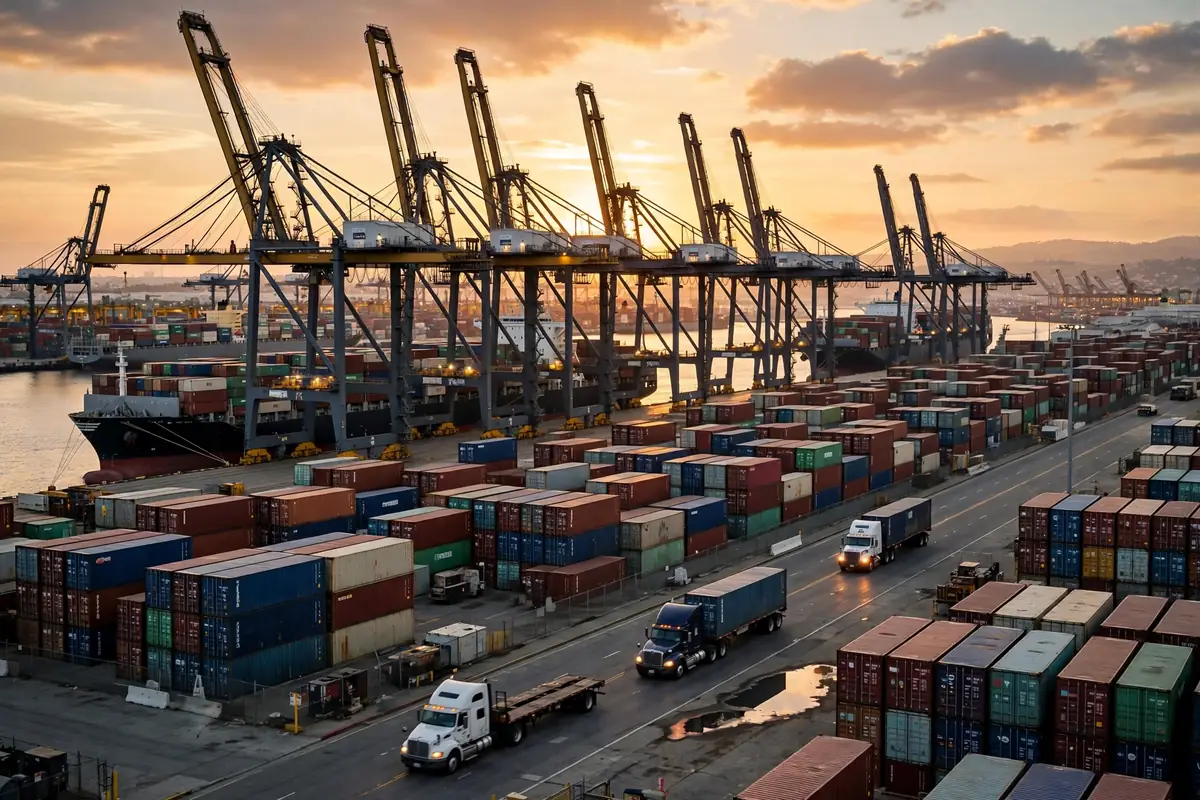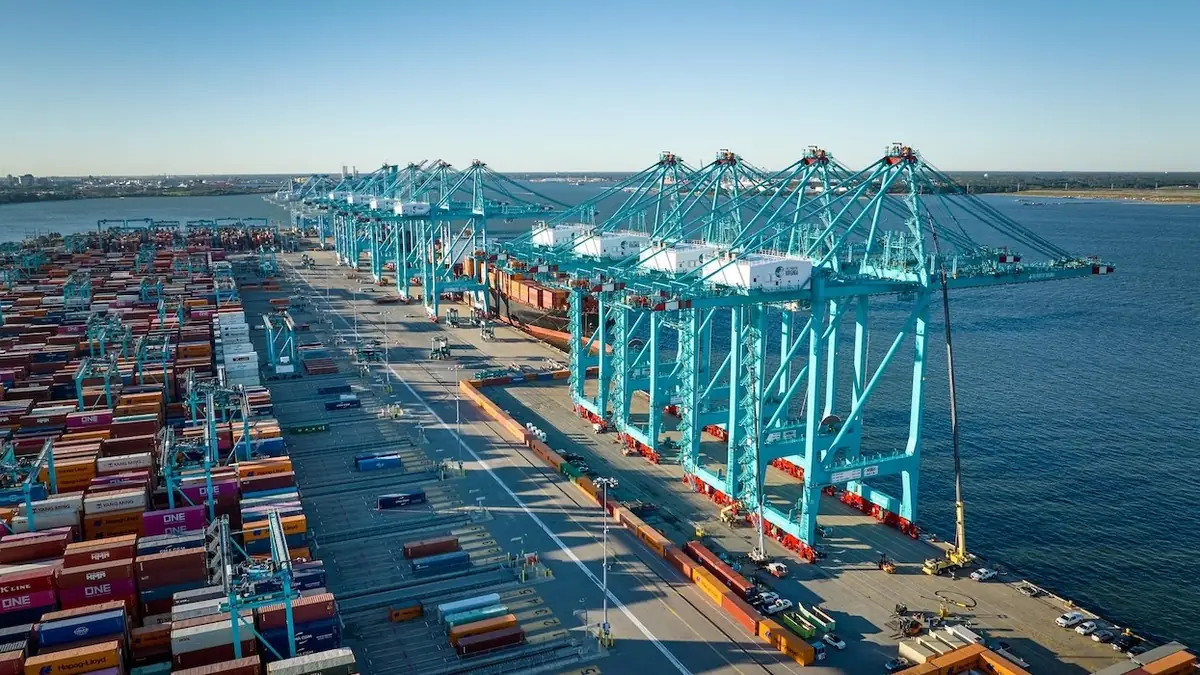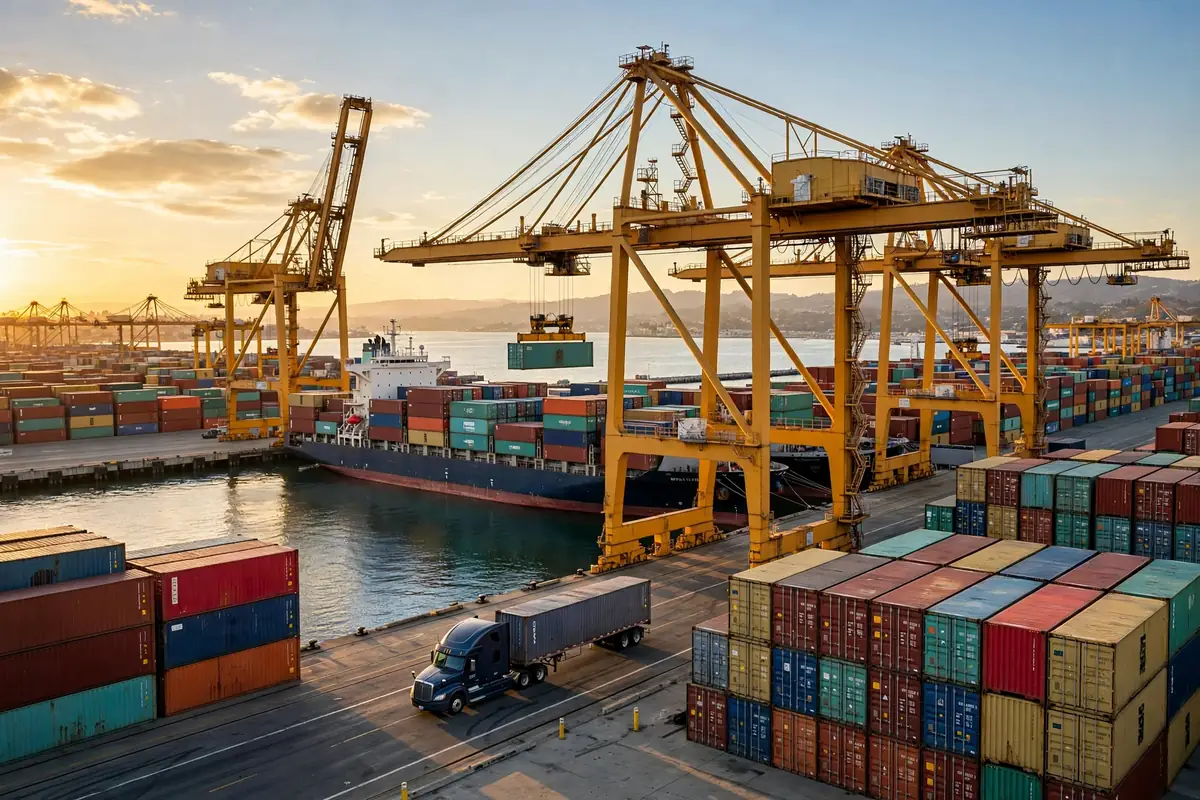
Let's be blunt about Los Angeles port warehouse logistics: the port is the busiest container port in America, and the warehouses are not at the port. The Port of Los Angeles handled 10,297,352 TEU in 2024, up 19.32% year over year, the second-highest annual total in its history. In 2025 it handled 10,239,318 TEU and kept its place as the number one container port in the United States, a position it has held for more than 25 straight years. Trade moving through the port was worth roughly $333 billion in 2024. Those are impressive numbers. They will not pay your warehouse rent, and they will not pull your container out of the terminal for you.
I have lost count of how many people have asked me the same question: "Lao Mi, if I rent a warehouse right next to the Port of Los Angeles, isn't that the cheapest option?" My answer is always the same: before you look at the map, ask what your cargo is afraid of. If it is afraid of demurrage, of waiting in line for a pickup, of having no truck available in peak season, then yes, you want to be close to the port. If it is afraid of rent, of labor costs, of a long lease that locks you in, then head east, into the Inland Empire. There are two sides to this, and neither side is right for everyone.
A few peak seasons ago I walked the San Pedro Bay terminals with a home-goods importer. His cargo had come in from Asia, more than forty containers on one vessel. The ship had berthed, but the boxes would not come out. All 7 major container terminals were running flat out, trucks were queuing outside the gates, and he spent the day making a dozen phone calls to chase his cargo. He got two containers out; the third was held for inspection. Standing outside the terminal that afternoon, he said, "Lao Mi, I finally get it. The port can be as big as it wants — my cargo is stuck in the last mile." Crude words, but he was right. A big port means more sailings and denser routes, and it also means that when peak season clogs up, the clog lands on you.
Los Angeles Port: Big Does Not Mean Your Box Moves Fast
The Ports of Los Angeles and Long Beach sit side by side, together forming the San Pedro Bay twin-port complex. Combined, the two ports handled 19.94M TEU in 2024, a volume no other U.S. gateway comes close to. That twin-port pattern cuts both ways for shippers. On one side, you get more route choices and tighter sailing schedules; cargo from Asia can almost always sail direct. On the other, the two ports' terminals, yards, and trucking resources operate separately, and the pickup experience can be completely different depending on which terminal your box lands in.
I give clients a simple habit: before you book, ask which terminal and which yard the cargo will land in. It sounds like a small detail. It is not. Terminals differ in pickup windows, free storage time, and how long trucks queue at the gate. Some shippers chase the earliest sailing, only to land at the most congested terminal, and the two days they saved on the water get eaten up waiting for a pickup. Others accept a sailing two days later, land at a smoother terminal, and have the box out the same day. That is the first lesson of Los Angeles port warehouse logistics: fast on the sailing schedule is not fast at your warehouse door.
Then there is inspection. With this volume of cargo, inspection is routine, not the exception. Once your box is pulled, it goes from the yard to an exam site, gets opened, checked, and reloaded — a round trip that costs days. Your sales plan and your replenishment rhythm have to move with it. So whenever I build a plan for a client, I leave room for inspection in the schedule. A plan with no slack for inspection will break in peak season.
Los Angeles Port Near-Port Versus Inland: Distance Is Priced by the Minute
Warehousing near the port is expensive for a reason. The reason is proximity: pickups are quick, a truck can turn around fast, and in peak season you are half a step ahead of everyone else chasing the same boxes. The cost is rent, small footprints, and almost no room to expand. Land near the port is finite, and the warehouses there were taken long ago by large 3PLs and big shippers. A smaller seller who wants in either pays a premium or takes an awkward spot.
My advice is always the same: run the numbers before you sign anything. Take a scenario — figures are illustrative, a hypothetical example: you move 200 containers a month. A near-port warehouse charges noticeably more per month than one in the Inland Empire, but each box saves a round of truck waiting time and some demurrage risk. The Inland Empire warehouse is cheaper and bigger, but each box travels dozens of extra miles, costs more in drayage, and needs an extra day of safety stock. Put the rent gap, the drayage gap, and the inventory carrying cost in one table, add and subtract, and the answer writes itself. Many clients discover that the time a near-port warehouse saves does not cover the extra rent, while the extra drayage inland, spread across each container, is smaller than they feared. Skip this math and rent on instinct, and you will regret it nine times out of ten. Split it by cargo: fast movers near the port, slow bulky stock inland — mixing them drags both down.
The Inland Empire Is Cheap for a Reason
The Inland Empire is the Port of Los Angeles' hinterland and one of the largest warehouse clusters in the country. Drive east for about an hour and you are looking at row after row of big-box warehouses. Cheap rent, high clear heights, plenty of dock doors — those are the benefits. The price is distance: every container travels farther from the terminal, and the road time, the drayage bill, and the traffic risk all go on your tab. There is another cost people forget: hiring. When every warehouse in the Inland Empire is recruiting at the same time in peak season, a site with a bad location or bad shifts can have a harder time hiring than a site near the port.
Last year I toured an Inland Empire warehouse with a client. Location, price, and size were all perfect. The only problem was the road outside: gridlocked at rush hour. Trucks could not get in in the morning and could not get out in the evening. The client ran the numbers and found that the time lost in traffic each day, spread across each container, cost more than the rent he was saving. He walked away. In site selection, close on the map does not count. Smooth on the wheels counts.
When to Play the Intermodal Card
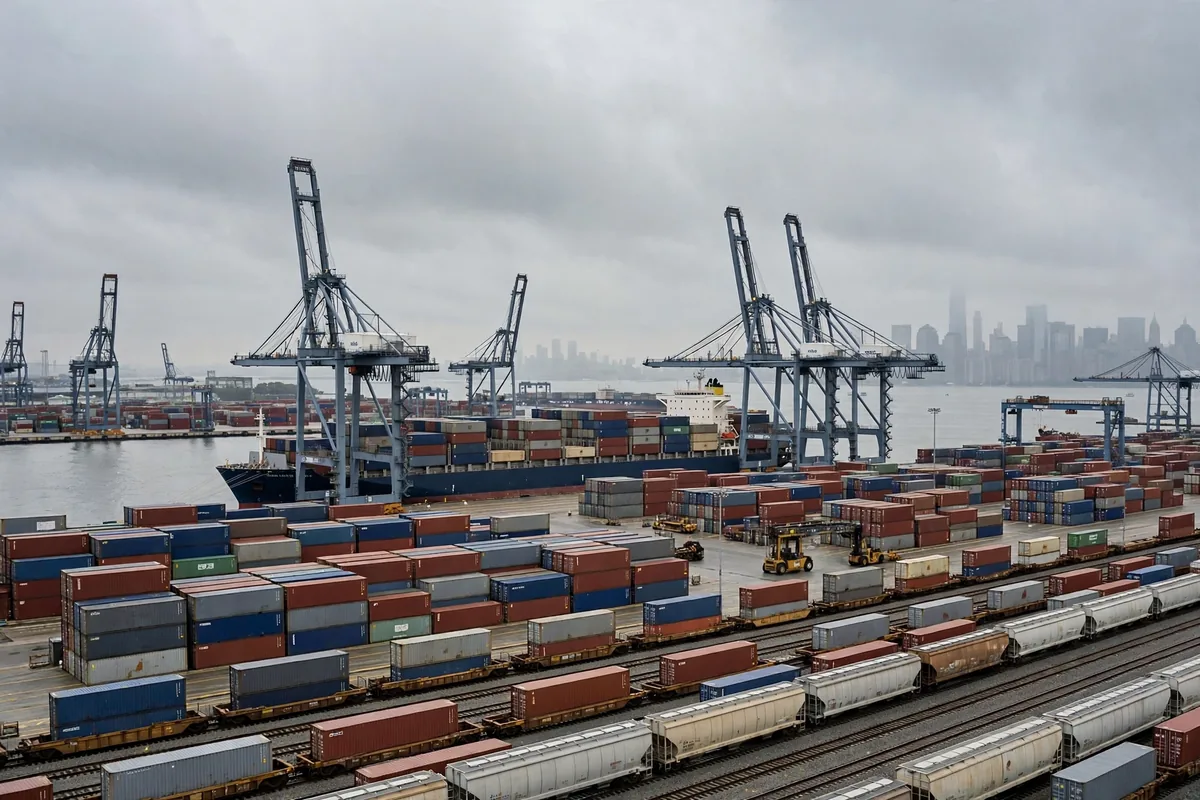
A large share of the cargo through Los Angeles is not consumed locally; it is headed for the middle of the country and the East Coast. That is where intermodal rail comes in. Containers come off the ship and onto the train right at the port, riding east for less money and with more reliability than an all-truck move. The catch is that rail runs on its own rhythm: fixed schedules, hard cutoffs, and another drayage leg at the far end. If your cargo is time-sensitive, the money rail saves may not cover the cost of arriving late. If it is not time-sensitive, rail is real, bankable savings.
My test for clients is a single question: is your cargo afraid of waiting? Not afraid, and moving in volume — take the train. Afraid, and moving in small lots — stay on the truck. The worst place to be is in between: too little volume for the railroad to care about, too tight a deadline for trucking to feel cheap. Shippers stuck in the middle get the worst of both. Better to change the approach: consolidate with other shippers, or adjust your replenishment rhythm so scattered freight becomes full batches before it moves.
In the end, Los Angeles port warehouse logistics is not a contest over who rents closest to the dock. It is about syncing three rhythms: the port gives you sailings and volume, the warehouse gives you buffer and sorting, and the rail gives you cheap long-haul. If any one of them slips, the math has to be redone. So ask yourself one question today: is my cargo afraid of waiting, afraid of cost, or afraid of stocking out? The answer is different for each, and the warehouse location — and the way you use the rail — changes with it.
By Lao Mi, Supply Chain Veteran (20 yrs)