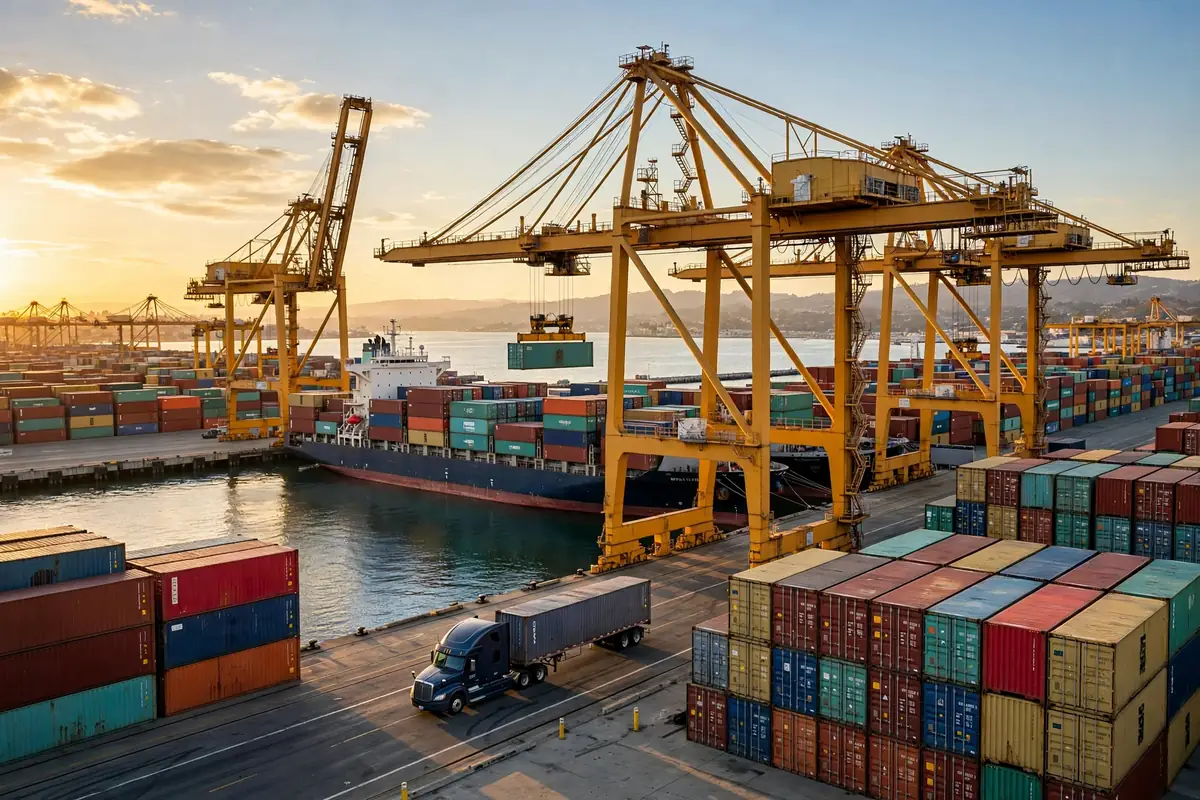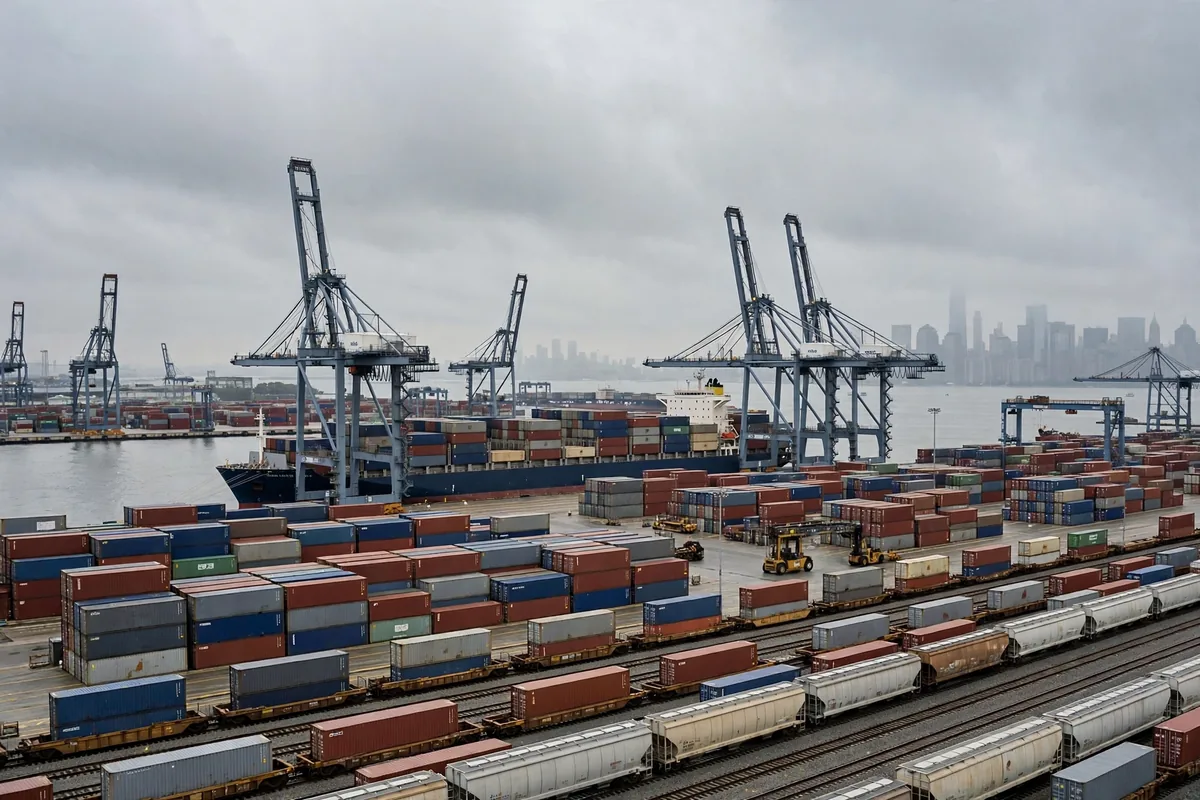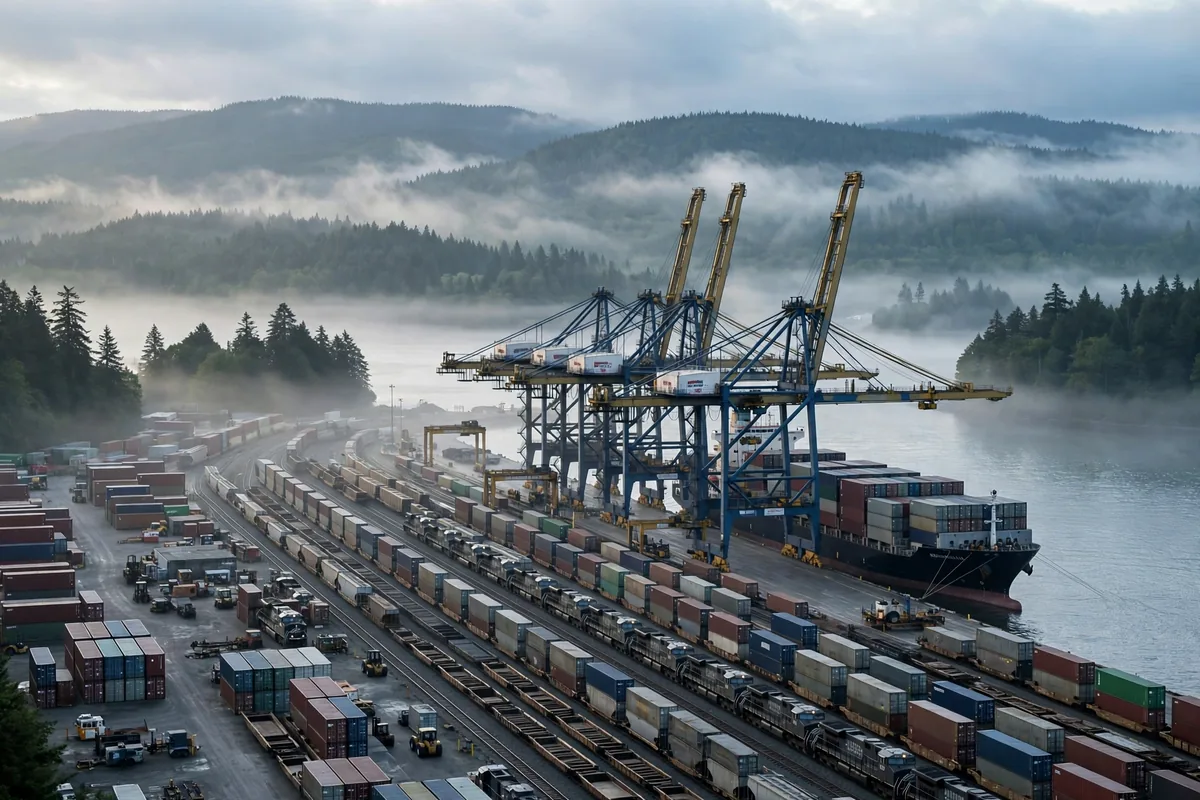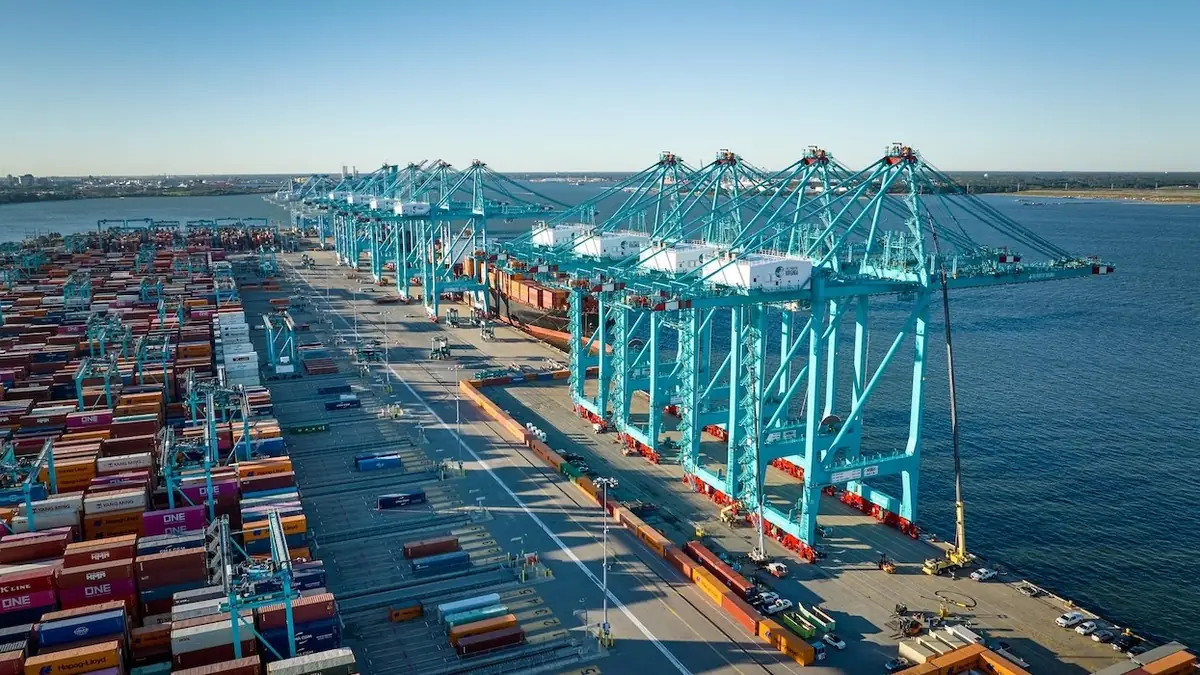
Norfolk port warehouse logistics starts at 5:40 on a Tuesday morning last October, at the gate of a partner warehouse in Virginia, watching the drayage trucks back up around the corner. One driver rolled his window down and told me his box had been sitting in the terminal since the ship docked the afternoon before. No chassis available. He had already burned six hours waiting. Here is the honest truth about Norfolk port warehouse logistics: the ships are not the problem. The problem is the three or four steps after the box comes off the ship. Shippers obsess over ocean freight and then discover that the real money gets eaten on land, by the warehouse and the railroad.
Let me say something that might ruffle feathers. Most people pick a port by reputation. New York is the biggest, so they go to New York. Savannah is cheap, so they go to Savannah. Norfolk sits in the middle with a quieter name, but its hand is stronger than people think. The Port of Virginia handled 3.4996 million TEU in fiscal 2024, up 2 percent, the second-best year in its history. Loaded exports came to 1.1399 million TEU, up 4.2 percent. Loaded imports were 1.6253 million TEU, up 3.6 percent. The number worth staring at is rail: 784,600 rail containers, up 13 percent. When a port's rail volume jumps 13 percent, that is not luck. That is shippers moving freight onto trains on purpose.
Norfolk Port Warehouse Logistics Starts Here: Deep Water, Two Railroads, and New Berths
Norfolk's real assets come down to three things. First, water depth. The channel is being deepened to 55 feet, so big ships come in without juggling tide windows. That is rarer on the East Coast than people assume. Second, rail. Norfolk International Terminals is served by both Norfolk Southern and CSX, with double-stack trains running straight into the port. No dray to an off-dock ramp first. Third, the terminal itself is growing. The North Berth optimization at NIT broke ground in September 2023, and the whole terminal's annual capacity is set to rise from 2.2 million TEU to 3.6 million TEU.
The Central Rail Yard expansion finished last year. Eighty-three million dollars, and it added 455,000 TEU of annual rail capacity, taking the port's total on-dock rail capacity to roughly 2 million TEU. For a warehouse manager, that means one practical thing: rail slots that used to need two weeks of lead time can often be booked a few days out now. CSX also launched a daily direct service from Norfolk to Indianapolis, five days in transit, no more routing through Chicago. If you sell into the Midwest, that one service changes the math on Norfolk completely.
Last year we took on a furniture importer whose peak season meant forty-plus boxes a week. They had been routing everything through New York, with trucks crawling out of New Jersey. We shifted them to Norfolk. Boxes came off the ship and onto rail, then a short dray from the Midwest ramp into the warehouse. In the two worst weeks of peak season, their door-to-door time actually came down by more than a day. I am not saying Norfolk is better at everything. I am saying this lane has fewer moving parts: the ship berths on schedule, the trains run on a fixed timetable, and my warehouse can build a labor plan a week ahead instead of guessing.
Norfolk port warehouse logistics: location decides half your cost
There are two ways to site a warehouse around Norfolk. One is to hug the port, around Norfolk and Portsmouth, where you can pull a box in the morning and break it down by afternoon. That suits fast-turn freight and deconsolidation. The other is to move inland, toward Suffolk and Chesapeake, where land is cheaper and the buildings are bigger. That suits long storage and e-commerce replenishment. Neither is wrong. What is wrong is picking one without doing the math.
The port-side warehouse has cheap drayage but expensive rent and labor, and in peak season the trucks jam up on the handful of roads into the terminal. The inland warehouse is cheap but every box needs an extra truck leg, and when drivers get scarce in peak season, that drayage rate climbs first and the transit time slips first. What we do now is split it. Fast-turn freight goes to the small warehouse near the port, broken down and shipped out the same day. Slow stock and replenishment sit in the big inland building. Freight that moves once a month has no business paying port-side rent. We did not invent that split in a meeting. We learned it the hard way when a chassis shortage wrecked a peak-season week.
Chassis deserve their own warning. In peak season the port's chassis pool runs thin, the truck shows up and cannot pull the box, the container sits an extra day, and my whole labor schedule shifts a day with it. Our contracts with drayage carriers now have a line in them: the carrier covers chassis in peak season, baked into the rate, no surprise surcharges. It looks like we pay a little more. In reality, over those few peak weeks, the overtime, rescheduling, and angry customer calls we avoided were worth far more.
Norfolk port warehouse logistics: one 40-foot box, three ways to move it
Take a single loaded 40-foot box heading from the Port of Virginia to a warehouse in Columbus, Ohio. Three routes, three trade-offs. All-truck is the fastest, roughly two days door to door, but the most expensive, and the rate jumps when drivers get tight. Rail plus short dray takes about four to five days, costs meaningfully less, and runs on a fixed schedule. The third option is to hold the box at a port-side warehouse, break it down, and consolidate outbound loads. That is the cheapest per shipment and fits multi-consignee orders, but it adds a handling touch and one more chance for damage.
| Option | Transit time | Cost | Best for |
|---|---|---|---|
| All truck | About 2 days | Highest | Rush orders, high-value freight |
| Rail plus dray | About 4 to 5 days | Mid-range | Steady replenishment, Midwest markets |
| Port hold and deconsolidate | About 5 to 7 days | Lowest | Multi-consignee, consolidated orders |
All amounts above are hypothetical examples used to demonstrate the costing method. Actual rates are subject to the latest published tariffs. The transit days are experience-based estimates, and peak-season delays will push them up. The point of the table is not the table itself. It is the question you have to ask first: how urgent is this shipment, really? Do not pay rush rates for slow freight, and do not squeeze a rush order into a slow-freight budget. Most shippers get this wrong because they apply one standard to everything.
Here is a counterintuitive point: Norfolk's small local consumer market is actually an advantage. Half of New York's freight is local consumption, so in peak season local delivery and long-haul distribution fight over the same drivers and the same chassis, and prices rise together. Most of Norfolk's freight was always headed inland, so the port does not compete with you for local capacity. The train leaves, the freight is gone. For a shipper serving the Midwest and the inland Southeast, that matters more than the port's ranking on a league table.
None of this means Norfolk has no weak spots. Its sailing frequency is thinner than New York's. Some niche lanes only sail once a week, and one delayed vessel pushes your whole labor plan back. The North Berth work is not finished, and construction can slow individual berths while it runs. Our rule is simple: every key customer has a backup routing on the rate sheet. If the primary sailing slips more than two days, we switch. We do not wait for the carrier to call us.
One last reminder for anyone running a warehouse on the East Coast. Next time someone tells you New York is the only option, show them the rail number. 784,600 boxes, up 13 percent. That is not a port marketing itself. That is shippers voting with their freight. Get Norfolk port warehouse logistics right and the warehouse schedule works, the drivers stop complaining, and the customers stop chasing you. Port, warehouse, rail: it was always one calculation.
By Chen Feng, Warehouse Operations Manager