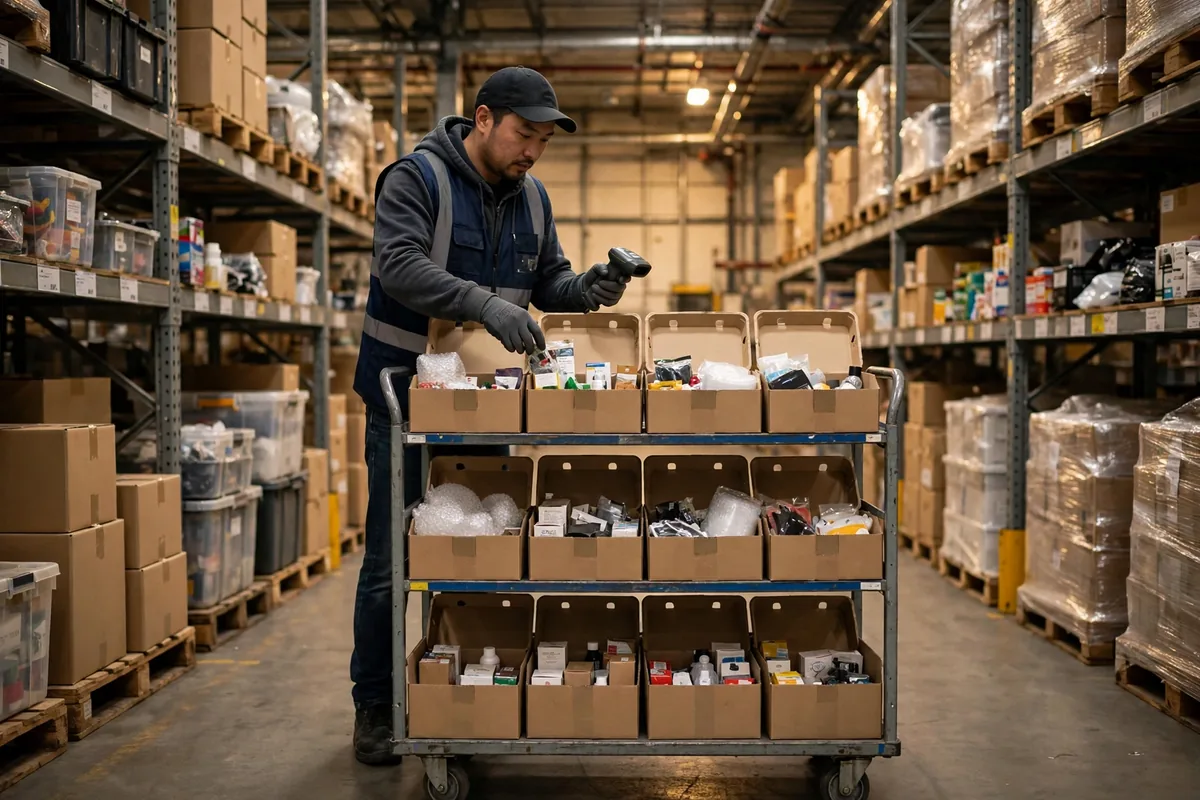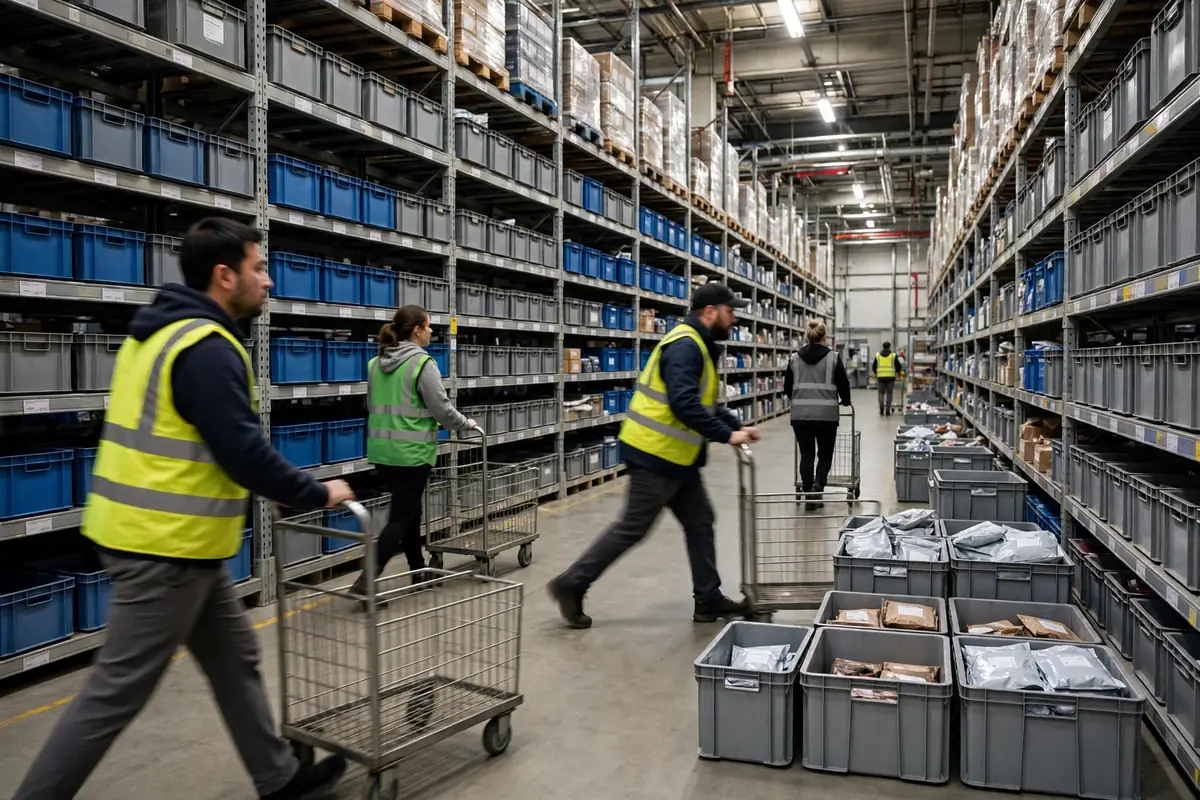
Let me be honest about our starting point in any wave planning vs waveless picking warehouse debate: we are four people plus a part-time packer. When a salesperson walked our aisles last year and told me we were behind because we did not run proper waves, I nodded, smiled, and then did the math. We small warehouses cannot afford to burn money on a setup that looks impressive in a demo and then clogs our only packing bench. This guide is how we learned to choose by looking at our orders instead of the pitch deck.
Wave Planning vs Waveless Picking: Neither One Is the Grown-Up Option
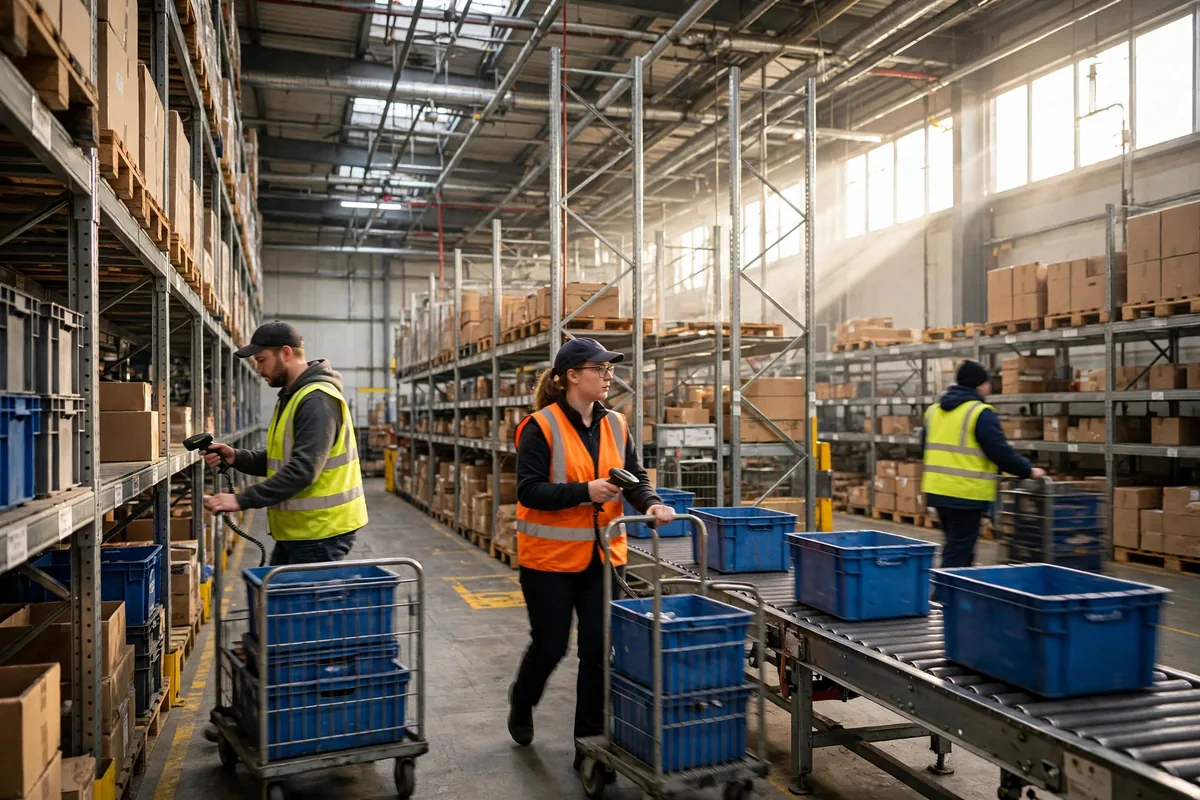
Wave planning means holding orders, grouping them into a batch, and releasing that batch together. The system sorts by cutoff time, carrier, or zone, pickers walk once and grab items for dozens of orders, and then someone sorts everything again at a put wall. It saves walking when orders look alike and leave at predictable times.
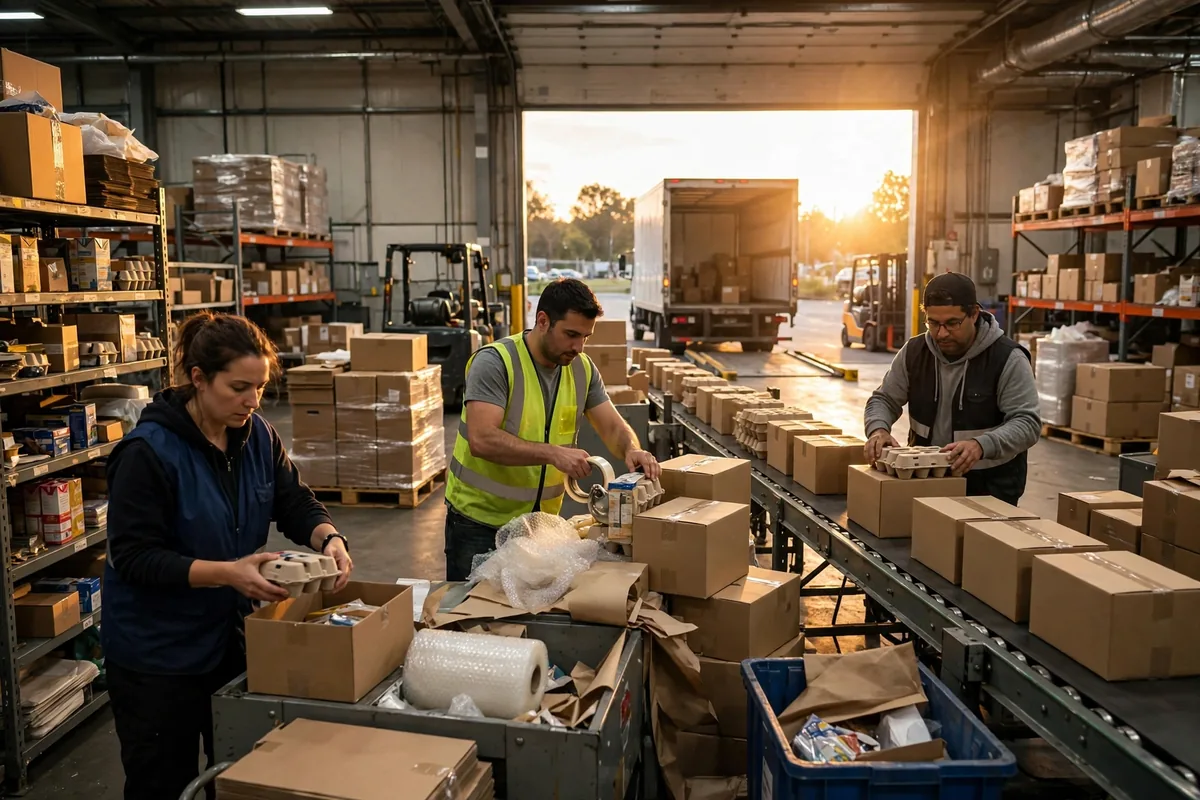
Waveless picking does the opposite. An order arrives, it becomes a task right away, whoever is free takes it, picks it, packs it, and ships it. No holding pool, no waiting for a batch to fill. A decent WMS or WES keeps the work flowing and rebalances priorities when a rush order shows up.
Neither approach is more advanced. That is the first trap. The right question is whether your order profile rewards batching or rewards flow. For us, that came down to three things we could measure from last week's orders: how many orders are single-item, how spiky our cutoffs are, and how spread out our SKU range has become.
Case One: A Three-Person Warehouse That Waved Itself Into a Jam
A neighbor warehouse in our park sells home storage products. Similar size to us, a few hundred orders on a normal day, mostly one or two items per order. In the autumn of last year, as an illustrative example, they paid to switch on a detailed wave module. Orders were split by carrier and zone, and a wave would not release until it reached a target size.
Week one was embarrassing. Their orders trickle in all day. A morning order would sit in the pool while pickers stood around with nothing released, because the wave was not full yet. When it finally released, close to carrier pickup, three people crowded the same aisles, the put wall overflowed, the packer had to sort items that never needed sorting, and a handful of orders went out wrong.
They lowered the wave size. It still felt wrong. A single-item order needs one grab and a box. Forcing it through batching and sorting adds two touches and a wait for zero benefit. After less than a month they turned the complex rules off. What they kept was dumber and better: waveless all day, and one simple grouping pass just before the carrier cutoff, sorted loosely by carrier. Flow came back, mistakes dropped, and nobody had to babysit wave rules.
The lesson stuck. If single-item orders dominate, batching saves little walking because the walk was already short. What it adds, waiting and a second sort, costs more than it saves.
Case Two: When Our SKU Count Blew Up, Pure Waveless Started Hurting
I am not a waveless loyalist either, because we hit the opposite wall. The year before last we took on a general merchandise client and our active SKU count jumped from a few hundred to several thousand, as a hypothetical illustration of scale. Multi-item orders became common, often five or six lines scattered across different zones.
We stayed purely waveless at first. An order arrived, someone took it, and that person crossed the warehouse back and forth to collect every line. A second picker would get blocked in the same narrow aisle. The same fast-moving SKU was visited over and over by different people, each time for one or two units. Everyone walked more, shipments did not leave faster, and by evening we were tired in a way that felt stupid, not productive.
We did not buy a full wave suite. We built a hybrid with tools we already had. Multi-item and cross-zone orders now sit for a short window and form a small wave, so one trip collects everything needed in one zone for several orders. Single-item and urgent orders bypass the wave and flow straight through. Aisle blocking fell, repeat trips fell, and the packing bench stopped swinging between idle and overwhelmed.
That is the counterintuitive part: wave planning is not a big-warehouse luxury and waveless is not a small-warehouse shortcut. A small warehouse with messy, multi-line orders can need small waves. A large warehouse full of single-item rush orders can get slower with big waves. Order structure decides, not headcount.
A Back-of-the-Envelope Test for Wave Planning vs Waveless Picking Warehouse Decisions
We use a rough table, built from pulling one ordinary week of orders. The ranges are experience-based and vary a lot by category and layout, so treat them as a starting point, not a standard.
| What to look at | Leans toward wave planning | Leans toward waveless picking |
|---|---|---|
| Single-item share | Low share, most orders need several locations | High share, one grab and the order can be packed |
| Cutoff rhythm | A few fixed, predictable shipping cutoffs per day | Orders trickle in all day and need to ship as they come |
| SKU spread | Many SKUs spread across zones, repeat visits are common | Compact range, one loop covers most picks |
| Team and space | Enough people and room for sorting without blocking packing | Tiny team, tight space, one extra sort creates a bottleneck |
| Exceptions | Few changes once an order lands | Frequent rush, address, and priority changes |
Then do the time math with an assumed example, numbers for illustration only. A single-item order under waveless has no waiting, one pick, straight to pack. Put it in a wave and you add waiting plus a sorting step. At modest volume, those additions can eat more time than batch walking saves. Now take a multi-line order touching four zones. Waveless sends one person crisscrossing the building. A small wave merges the zone work, so the walking saving becomes larger than the short wait. A wave only pays when the walking it saves clearly covers the waiting and sorting it creates.
Our switching line looks like this. When single-item orders dominate and arrivals are scattered, waveless is the default and waves are only a cutoff cleanup tool. When multi-item orders grow and the SKU map spreads out, we carve those orders into small waves and keep singles flowing. The hybrid is not indecision. For a small operation it is usually the most stable answer, because our order mix itself is hybrid.
Advice From One Small Warehouse to Another
Do not buy for the demo. In a demo, orders arrive in a neat, simultaneous flood, which is exactly the shape waves love. Pull your own last week of orders. If they do not look like that flood, the demo proved nothing.
Fix the cheap physical problems first. A messy location map, best sellers stored far from packing, and a bad bench layout slow you down more than the absence of waves. Moving fast movers closer costs almost nothing. After those fixes, many small warehouses discover they never needed complex scheduling at all. We cannot afford to burn money solving with software what a shelf move solves for free.
Keep any wave you try coarse and reversible. A few simple rules you can turn off in a minute beat a dozen layered rules nobody on a small team has time to maintain. Complexity is a recurring cost, and we pay it in evenings.
Finally, judge by boring outcomes: average time from order arrival to shipment, whether packing swings between idle and flooded, and whether wrong shipments rise or fall. If a new setup does not improve those, it does not fit. Wave planning vs waveless picking warehouse choices are not about keeping up. They are about getting today's orders out correctly, on time, without wearing out a tiny team. Small warehouses have their own way of surviving, and it works.
By Xiao Ma, Small Warehouse Owner