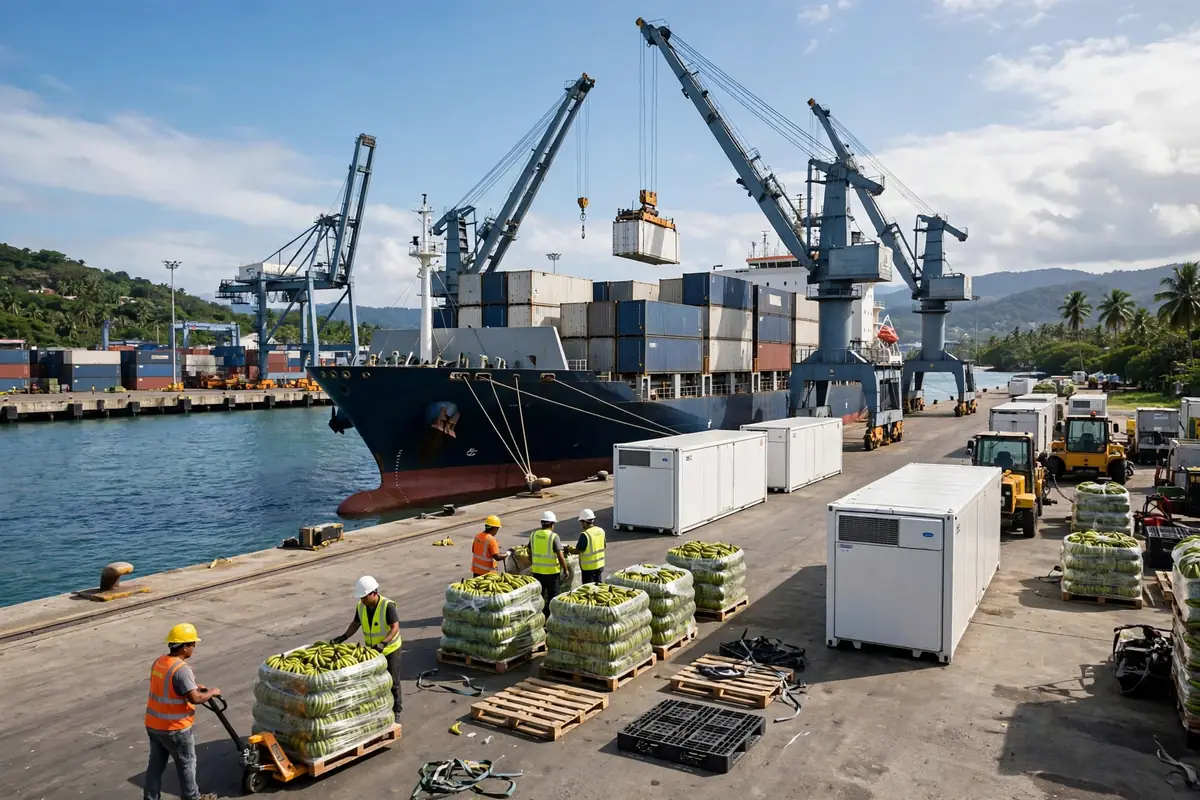
Let me start with our predicament in Posorja port warehouse logistics, because it explains everything else: we run a 3,000-square-meter warehouse, and our bank balance cannot afford the big-company playbook. So when I hear words like "deep-water port" and "new terminal," my first reaction is not excitement — it is to check my wallet. Can a small warehouse get a slice of Posorja Ecuador port warehouse logistics at all?
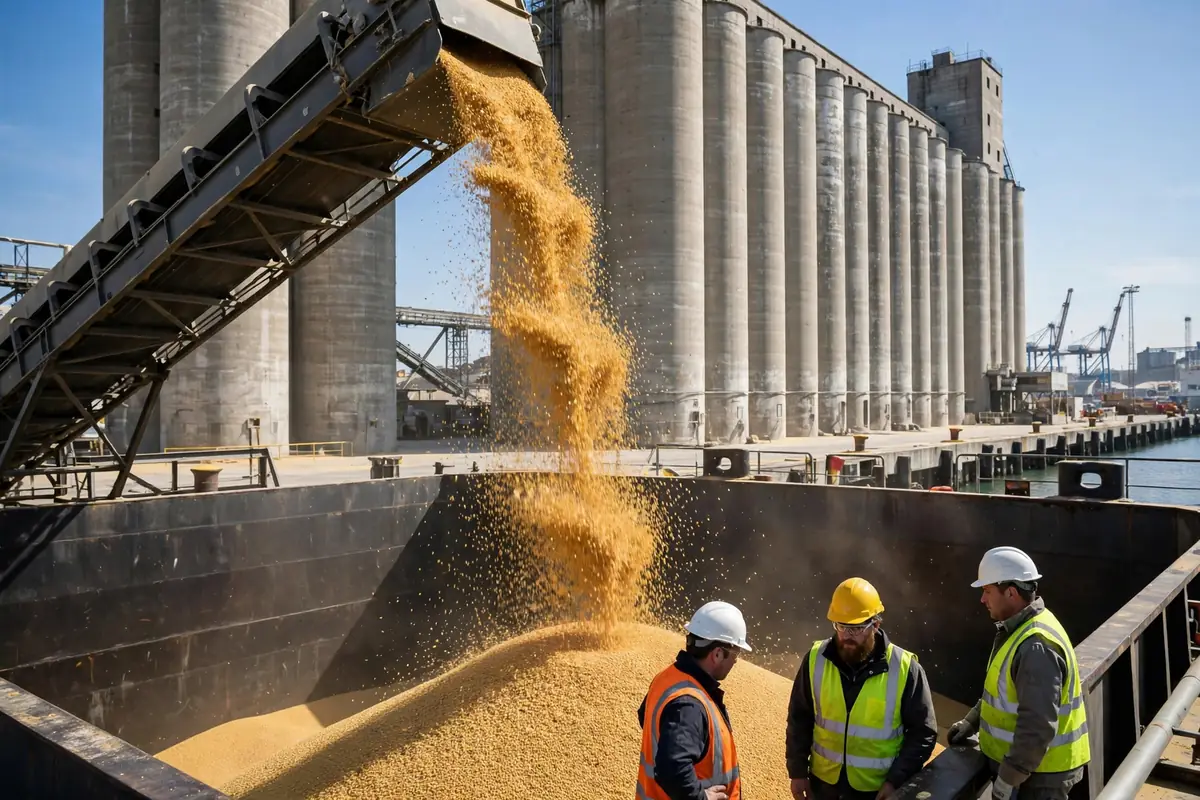
Some background first, so nobody accuses me of making things up. Posorja is a deep-water port near Guayaquil, Ecuador, operated by DP World, and it opened in 2019. In 2024 it handled about 956,000 TEU of containers, making it Ecuador's largest container gateway and a key export outlet for bananas and other farm products. Bananas are delicate cargo: if a reefer container loses power or misses its sailing, a whole container can be ruined. So the business of Posorja looks like containers on the surface, but underneath it is cold chain and time.
Posorja Port Warehouse Logistics From a Small Warehouse: Our Predicament
Honestly, when I first started studying Posorja, I almost closed the document. Big ships, deep-water berths, reefer yards — none of those words sound like they were written for a small warehouse. The proper cold storage facilities around Guayaquil charge rents and demand commitments that would sink us. We small warehouses simply cannot burn that kind of money. And banana exports run on vessel schedules and an unbroken cold chain; if any link in the middle breaks, the cargo owner comes looking for you first.
But then I thought again. Wait a minute. Bananas travel from the plantation to the terminal, and in between, somebody has to receive the fruit, consolidate it, pre-cool the reefer containers, and watch the temperature logs. The big players find that work too fiddly. For a small warehouse, fiddly is exactly our thing. Just because the big-company story has no place for us does not mean the market has no place for us.
I chewed on that 956,000 TEU figure from 2024 for a long time. The bigger the volume, the more small jobs pile up around the edges. The shipping lines and the big terminal eat the meat; somebody still has to drink the soup around the edges. Drinking soup is our job.
The scrappy fix: don't build a cold store, be the "cold chain babysitter"
Our scrappy fix comes down to one line: don't build a cold store — be the cold chain babysitter instead.
Here is how it works in practice. First, watch the temperature, not the cargo. We don't stockpile bananas; we watch the reefer containers for the cargo owner. When a box arrives at our warehouse, we check its temperature and log the pre-cooling, verify the temperature curve box by box during stuffing, and photograph everything the moment something looks off. You don't need much equipment — one reliable temperature logger and a few spare probes — and cargo owners love the paper trail.
Second, race the clock, not the scale. Banana sailings are fixed, harvests are fixed, and the window in between lasts only a few days. Our approach is to align sailing schedules with two or three small forwarders in advance, get the cargo into the box the moment it arrives, and never let it spend a night in our warehouse. One night in storage means reefer power bills and risk, all on us. Speed is our only moat.
Third, cost everything down to a single container. Take a sheet of paper and spread power, labor, trucking, and paperwork across one banana container from arrival to loading. Once you do that, you realize a small warehouse doesn't make money on volume — it makes money on every container going through without a hitch. One clean container is profit; one ruined container wipes out ten good ones. That sounds dramatic, but anyone who has worked cold chain knows it is true.
(The cost breakdown above is an illustrative example for the costing framework only; actual fees depend on local quotes and the latest official policies.)
The Result: Posorja Port Warehouse Logistics, the Small-Warehouse Way
It worked out better than I expected. What does the cargo owner want? Someone watching the cold chain so it never breaks. What does the shipping line want? Boxes at the port on time, not clogging the yard. What do we want? A steady service fee on every container — not much, but real.
Of course there were scares. The worst night, a banana reefer's temperature logger went off at 2 a.m. and the night-shift guy called me straight away. We swapped in a spare probe, re-checked the curve, and sent the report to the cargo owner before sunrise. The cargo was fine; we were the ones who lost sleep. After that we made a hard rule: reefer work means someone is always on watch at night, and the phone always gets answered. That rule is now written into our operations manual, and nobody gets to skip it.
Here is the counterintuitive part: most people think port business means being as close to the port as possible and as big as possible. We think the opposite. Close to the port is nice, but the rent is brutal; big is impressive, but an empty cold store burns money faster. The small-warehouse way is to be close enough — don't chase the "inside the port area" label — and big enough, because every extra square meter is cost. To put it plainly, in port warehousing, surviving a long time matters more than growing big fast.
Three pieces of advice for small warehouses like ours. One: don't build a cold store on day one — start by watching other people's cold chain and build your reputation. Two: the sailing schedule matters more than the rent table; win the time window and the money follows. Three: there is no "close enough" in reefer work — temperature logs, pre-cooling, and alarm response all have to be exact.
Posorja port warehouse logistics has its big-company way of being eaten, and its small-warehouse way. We don't fight the big terminal for the meat. We do the fiddly work around the edges better than anyone, and honestly, we live quite well on it.
By Xiao Ma, Small Warehouse Owner