Let me put the conclusion first: Portugal sardine canned export warehousing cannot be run like fast-moving consumer goods. A normal food warehouse lives by turnover, the faster the better. Sardine tins are the opposite. A properly stored tin can age, and some vintages become more wanted with time. Put plainly, in Portugal sardine canned export warehousing, you are not renting a warehouse. You are renting a cellar. Manage it in the wrong direction and every cent saved on rent comes back as damage and wrong shipments.
The First Lesson of Sardine Canning Warehousing: Tins That Age Are Not FMCG
This cuts two ways. First the cost: once you accept that tins gain value with age, low inventory stops being the goal. You pay for space, you tie up capital, and you pay for the patience of careful picking. Then the benefit: when vintages are managed well, the same stock sells in layers. Current-year tins move in volume, older vintages earn a premium, and when a buyer asks, you have a story to tell instead of just a price list.
I have seen too many people run a sardine tin warehouse like an ordinary dry-goods shed. Goods arrive and get stacked in arrival order. Everything ships first-in, first-out. Labels show the product name and quantity, while vintage information lives only on the paperwork, invisible on the shelf. Then a buyer asks for a specific vintage and the warehouse digs through pallets. What comes out may not even be right, vintages get mixed, and the premium evaporates. The first rule of a tin warehouse is simple: the vintage must be visible on the shelf face, readable, reachable, and impossible to mix up.
Two Pits I Walked Into Myself: The Crushed Bottom Case and the Wrong Vintage
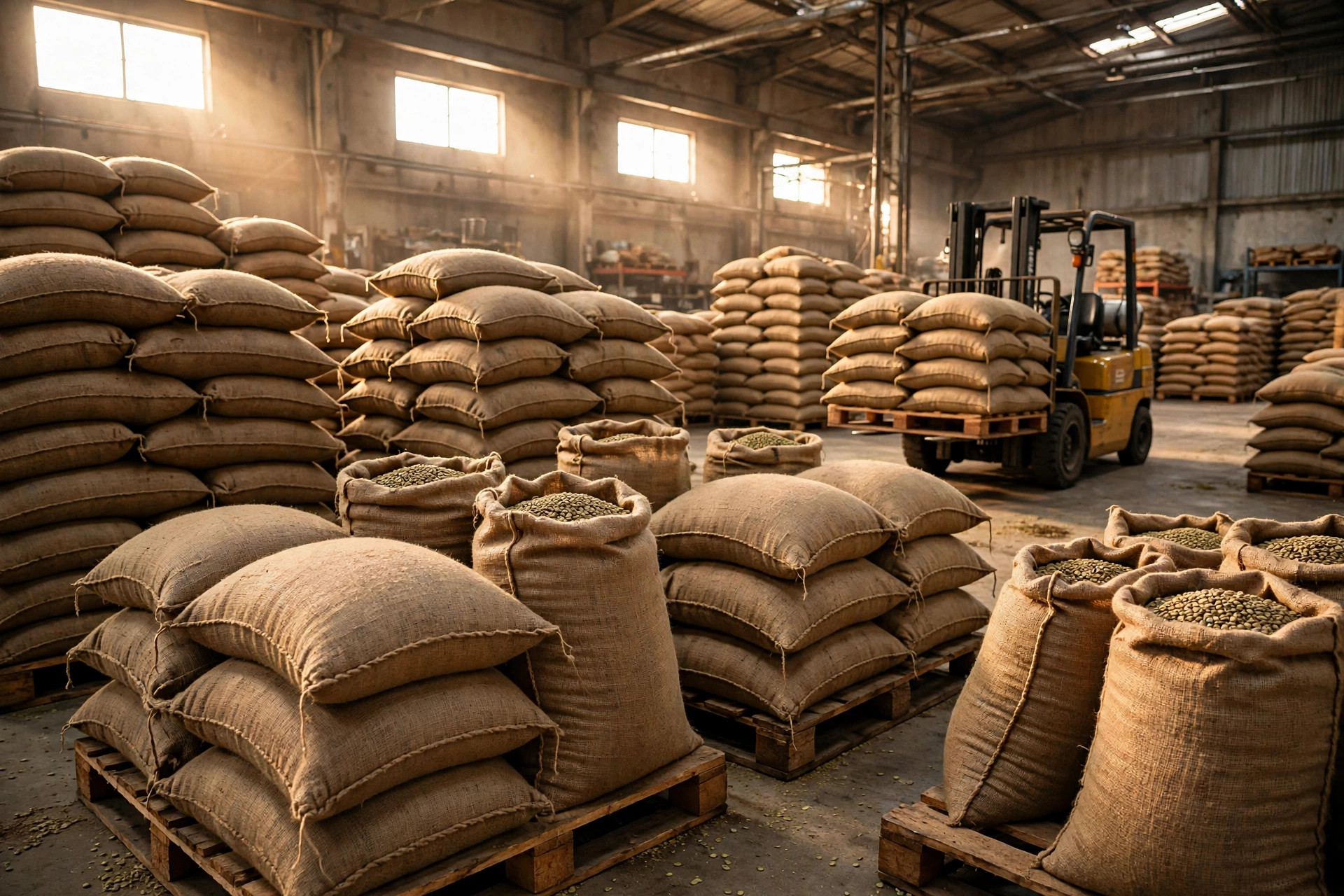
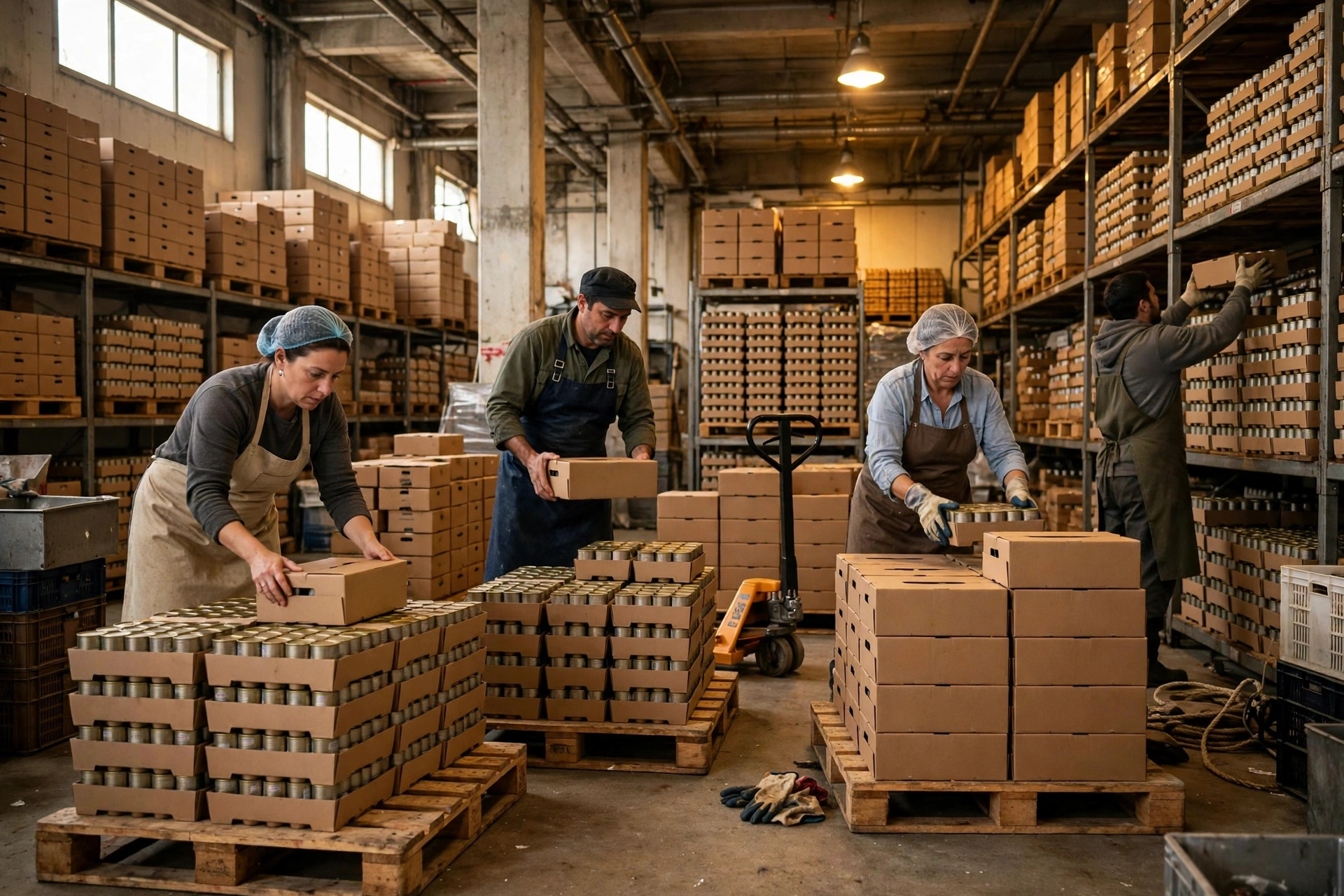
The crushed bottom case first. Several years ago, during a busy export season, I visited a coastal warehouse to look at goods. Sardine tins are heavy cargo. One case weighs as much as several cases of biscuits, and the crew, trying to save space, had stacked the cartons high to squeeze in a few more pallets. The bottom layer of cartons deformed under the weight. Corners collapsed, tins pressed against each other, and dented cans appeared. A dented tin loses its shelf appeal, and the buyer rejected them at inspection. The whole pallet had to be opened and sorted. Worse, that pallet was scheduled for loading, and the container slot was nearly missed. The cleanup is still vivid: workers opened the collapsed pallet case by case, set dented tins aside, repacked what could be sold, logged the rest as loss, and worked most of a night shift to save the loading slot. Put plainly, the few pallet positions saved were not worth one night shift of labor plus the discount on a pallet of goods. The math of a heavy-goods warehouse works like this: stacking high saves floor area, but a collapse costs goods value and reputation, and the two sides are not even close. Since then, my first look in any tin warehouse is at the bottom cases, not at how neat the top looks. If the bottom cases are sound, the warehouse passes. If not, nothing else matters.
Then the wrong vintage. On one occasion, a buyer ordered several vintages, intending to display them separately. The warehouse shipped first-in, first-out to keep things simple, without picking by vintage. When the goods arrived, the vintages did not match the buyer's display plan. The buyer did not shout. He simply cut the premium part of the price. You did not deliver the vintage combination he asked for, so why should he pay vintage prices? That taught me something blunt: for sardine tins, shipping the wrong vintage is the same class of accident as shipping the wrong product. First-in, first-out is a sound general rule, but in this category vintage management outranks it. Special vintages must be stored in separate zones with separate stock records.
There is also the buyer's side of the table, which warehouses often forget. Importers, distributors, and retailers want different things. The importer wants complete batches and paperwork that matches. The distributor wants a vintage combination that supports his display. The retailer cares most about the condition on arrival, because one rusty case makes him doubt the whole supplier. A warehouse sitting in the middle serves three kinds of customers at once, and if the records do not separate vintage, batch, and condition, service will fail one of them. That is why I insist on three separate records for every lot, so an order shows at a glance which batch to pick and which to hold, instead of relying on an old hand's memory. Detailed records slow receiving a little, but wrong shipments and complaints fall, and what you save is real money.
Managing the Tin Warehouse: One Sheet for Vintage, Stack Height, and Moisture
The fix is not complicated. The hard part is sticking to it. My prescription for this kind of warehouse has three lines, all on one sheet posted at the warehouse door.
First, vintage zones. Different vintages occupy different zones, with the vintage written on the zone sign, and stock records kept by vintage. Receiving starts by identifying the vintage, then the quantity; goods with an unclear vintage do not enter stock until clarified. General orders ship first-in, first-out, vintage orders by vintage, and the books stay clear.
Second, a stack-height limit for heavy cases. Sardine cases are heavy, so stacking height must have a cap. Better to use more pallet positions than to punish the bottom case. Cases on a pallet should be interlocked, corners aligned, and damaged or damp cases isolated at once, never mixed into good stock to make up numbers. Before loading, check the bottom cases again. A collapsed case does not go into a container.
Third, moisture and rust prevention. Tins fear damp above all. The warehouse must keep goods away from moisture sources, especially the sea-facing side, and floor edges, walls, and doorways where damp creeps in should hold no stock. During rainy and foggy spells, walk the floor more often. The moment you see a soft carton surface or a rust spot on a tin, isolate it. There is no "good enough" in moisture control. One rusty case mixed into a container changes the buyer's impression of the whole container.
| Decision | General practice | Tin warehouse practice | Cost and payoff |
|---|---|---|---|
| Picking order | Always first-in, first-out | General orders first-in, first-out; vintage orders by vintage | One extra sorting step, keeps the vintage premium |
| Stack height | Stack to the ceiling | Capped height, bottom cases spot-checked | More pallet positions, fewer crushed cases |
| Storage environment | Standard dry-goods rules | Moisture and rust prevention with regular rounds | More inspection labor, fewer rusty returns |
| Inventory target | As low as possible | Planned retention of vintage stock | Tied-up capital, layered selling prices |
One detail that is easy to overlook: aisles and signage. Once vintage zones are drawn, the zone signs must hang where a person can see them at a glance, so a forklift driver does not need to get down and ask, and a picker does not need to guess from memory.
One more word about hand packing, because it shapes receiving. In Matosinhos there is a cannery founded in 1920 that still pre-cooks and then hand-packs, workers placing the fish into each tin one by one. That sounds like romance, but for warehousing it is a hard constraint: hand-packed goods arrive in small batches with a strong batch identity, not in the neat uniform flow of a machine line. The warehouse must receive batch by batch, and the more batches there are, the easier the books get messy. So take it slower at intake, match batch, vintage, and quantity before shelving, and lose half a day there. It saves a whole container of trouble later.
Before loading, I add one final inspection: open a few cases and look at the tins for rust spots and dents, match the case marks against the packing list, and hold the container if vintage, quantity, or batch do not line up. Check the pallets at the container door, and a broken pallet does not load. That checkpoint costs little labor, yet it is the last chance to change your mind before the goods leave. Once goods are on the water, any problem costs an ocean crossing. I have seen too many people save pennies in the warehouse and pay pounds at sea.
So here is my closing question: is your tin warehouse run like a fast-moving goods shed, or like a cellar? Answer that honestly, and the Portugal sardine canned export warehousing calculation finally starts to come out right.
By Lao Mi, Supply Chain Veteran (20 yrs)