Brazil coffee export warehouse storage logistics starts before the beans ever leave the farm. Moisture is the invisible freight charge.
We have a client, a mid-sized exporter out of Minas Gerais, who lost a full container of specialty coffee in 2024. Not to theft, not to a storm at sea. To moisture. The beans left the processing mill testing clean, rode a truck to Santos, sat in a port warehouse for eleven days waiting on a vessel slot, and arrived in Europe with a musty note that no roaster would accept. The claim was settled quietly, but the lesson stayed loud: in Brazil coffee export warehouse storage logistics, the warehouse is not the pause between farm and ship. It is where the money is either protected or quietly lost.
That client is the reason I now open every coffee logistics conversation the same way: show me your storage chain, not your price list. Because the FOB price everyone negotiates so hard over is fiction if the beans degrade before loading.
Moisture Is the Invisible Freight Charge in Brazil Coffee Export Warehouse Storage
Green coffee is hygroscopic. It breathes. It takes on water from humid air, from a damp warehouse floor, from condensation inside a container that swings between a hot Santos afternoon and a cool night at sea. The damage does not announce itself at loading. It shows up weeks later, in a cupping lab on another continent, when it is far too late to fix.
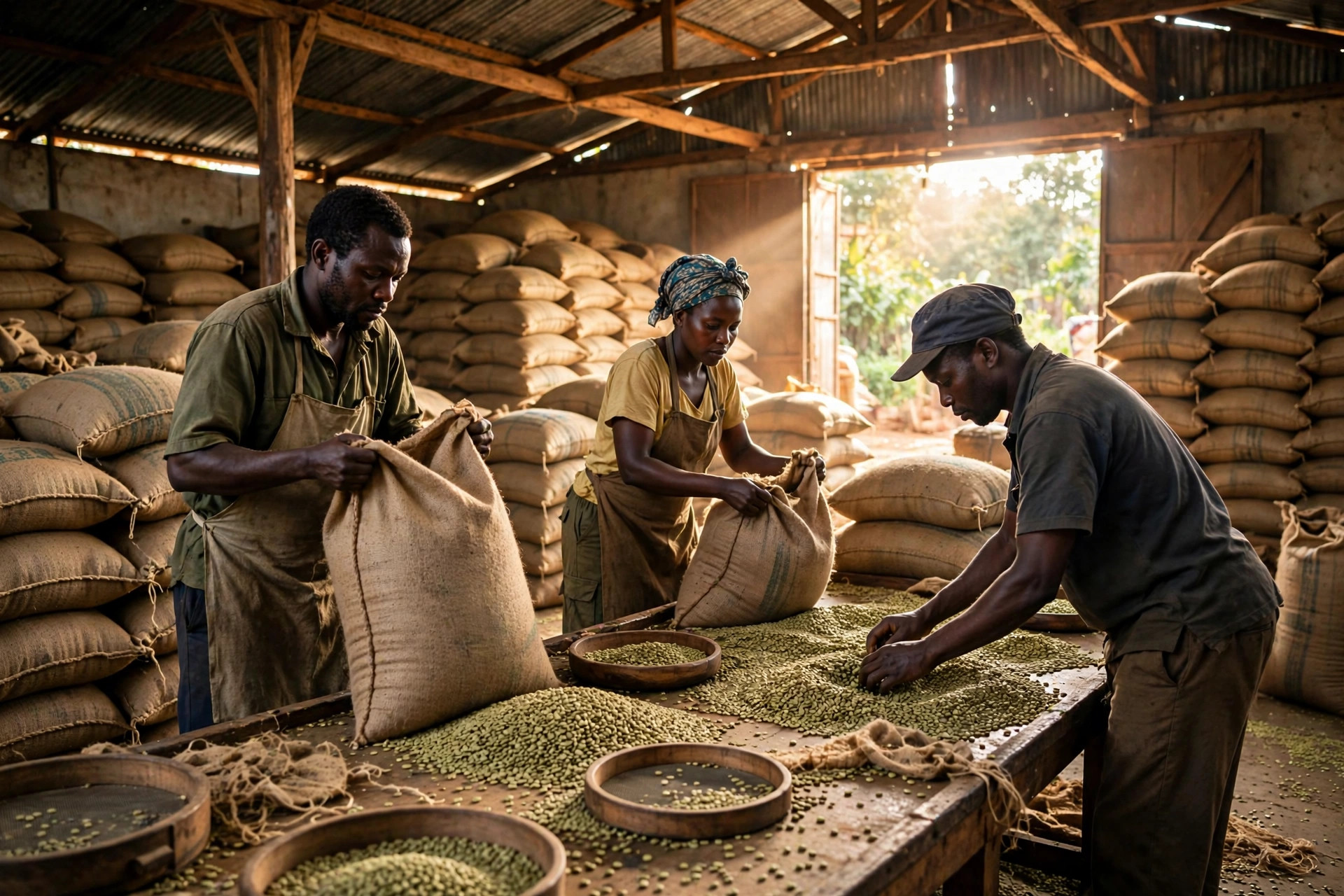
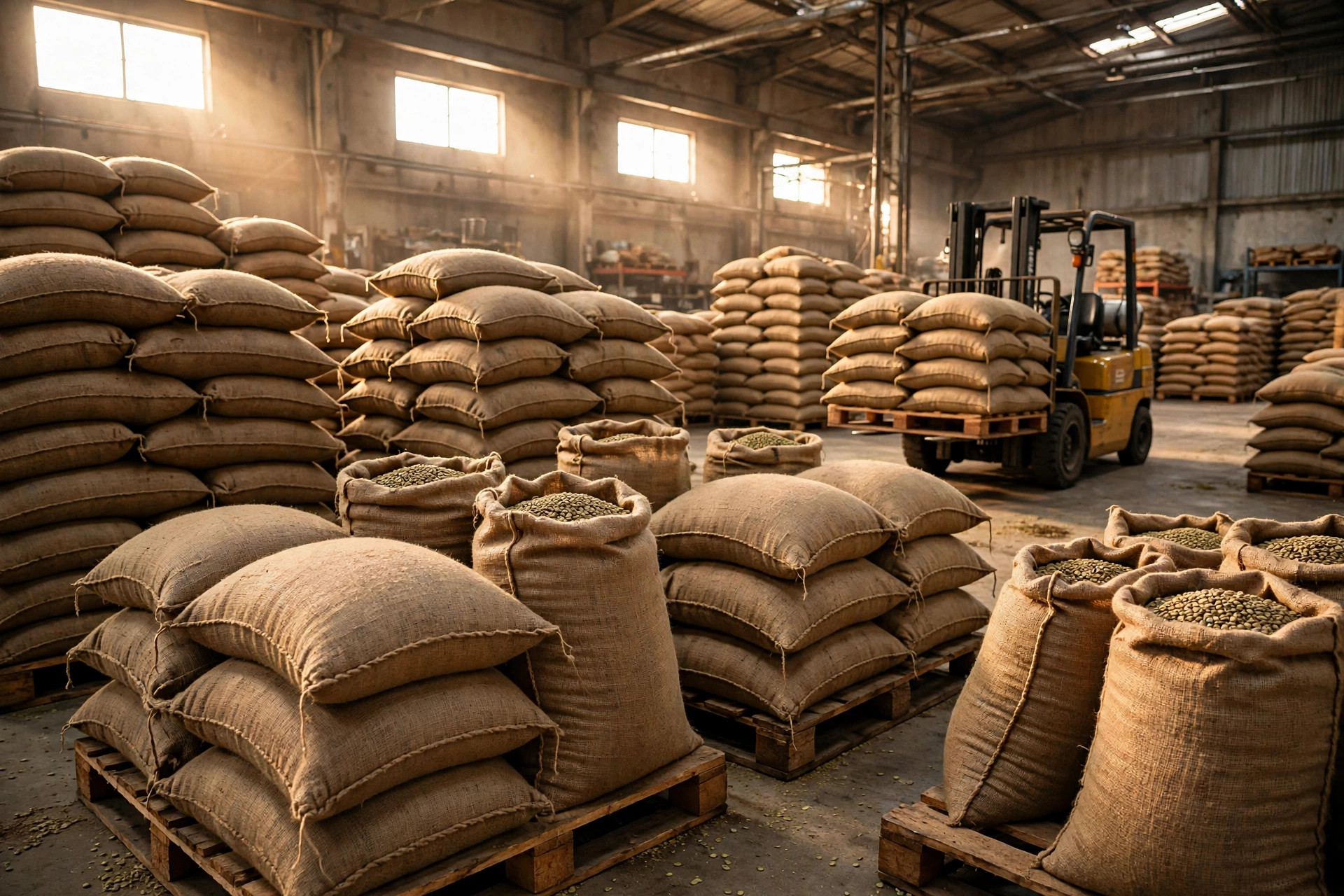
Here is what the careful operators do differently, and it costs less than most exporters assume. First, they measure moisture at every handoff, not just at the mill gate: mill out, warehouse in, warehouse out, container stuffed. One reading at origin proves nothing about what eleven days in a coastal warehouse did. Second, they keep bagged coffee off the floor on pallets, away from walls, with air gaps between stacks, because a wall in Santos sweats. Third, they treat container stuffing as a warehouse job, not a trucking afterthought: desiccants, a proper container lining, and no stuffing during or right after rain.
The counterintuitive part is this: the cheapest warehouse space near the port is often the most expensive storage you will ever buy. A bargain-rate shed with no ventilation control, no moisture monitoring, and a queue of trucks outside means your beans sit longer in worse air. The rent you saved is a rounding error next to a rejected container.
One more spot exporters overlook: the roof. Santos rain comes down hard in season, and I have seen a warehouse where the bags under a skylight took on seepage that only darkened the burlap on the surface. Inside, the beans were already turning musty. The whole stack had to be broken down and re-inspected, labor and time gone. When you tour a warehouse, look up. One visit in the rain tells you more than three visits in sunshine. At intake, do three more things: spot-check moisture on a few bags and photograph the readings, confirm the stack map matches what is actually on the floor, and check that problem lots have a separate quarantine area. Half an hour of work, and it is the only evidence you will have if a claim ever comes up.
Coffee Export Grading Is Not a Label, It Is Pricing Power
Brazil's official grading, administered through MAPA, the Ministry of Agriculture, sorts coffee by bean size, defect count, and cup characteristics. Most exporters treat grading as paperwork that happens somewhere upstream. The smart ones treat the warehouse as the place where grading becomes money.
A second client of ours, a cooperative in the Cerrado region, used to ship everything as one blended lot. Their warehouse team started segregating lots by screen size and defect profile at intake, keeping the top lots physically separate instead of blending them into the general pile. Same harvest, same farms. The top lots now ship under a separate contract at a premium, and the blend lot still sells fine. Nobody grew better coffee. They just stopped letting the warehouse erase the difference between good and great.
The practical rule: if your warehouse cannot tell you, lot by lot, what is sitting where and what grade it holds, you do not have a storage problem. You have a pricing problem wearing a storage costume.
Brazil Coffee Consolidation Saves Money Until the Port Gives It Back
Consolidation, grouping smaller lots into one container, is where many small and mid-sized exporters make their margin. A single-origin micro-lot cannot fill a container on its own, so it rides with others. Done well, everyone shares the freight. Done carelessly, one lot's moisture problem or paperwork delay holds the whole box.
The math exporters should do before agreeing to a consolidation: what does a one-week delay cost you, in warehouse rent, in demurrage risk, in a buyer who moves on? I have watched exporters celebrate saving a few hundred dollars on shared freight, then absorb a delay charge several times that size because one co-loader's documents were not ready. Consolidation is a team sport. Vet your box-mates the way you would vet a business partner, because for the length of that voyage, that is what they are.
One of our clients learned this the expensive way: a co-loader's certificate of origin arrived two days late, the box missed its vessel, and the extra storage and rebooking charges came to more than the freight the consolidation had saved. That client now has a rule: no consolidation until every co-loader's documents are confirmed in hand. Better to wait for the next sailing than to share a box with a delay. The contract now also says that extra costs caused by one party's document delay fall on that party, not split evenly. Before that clause existed, the easygoing shipper always ended up paying for someone else's delay.
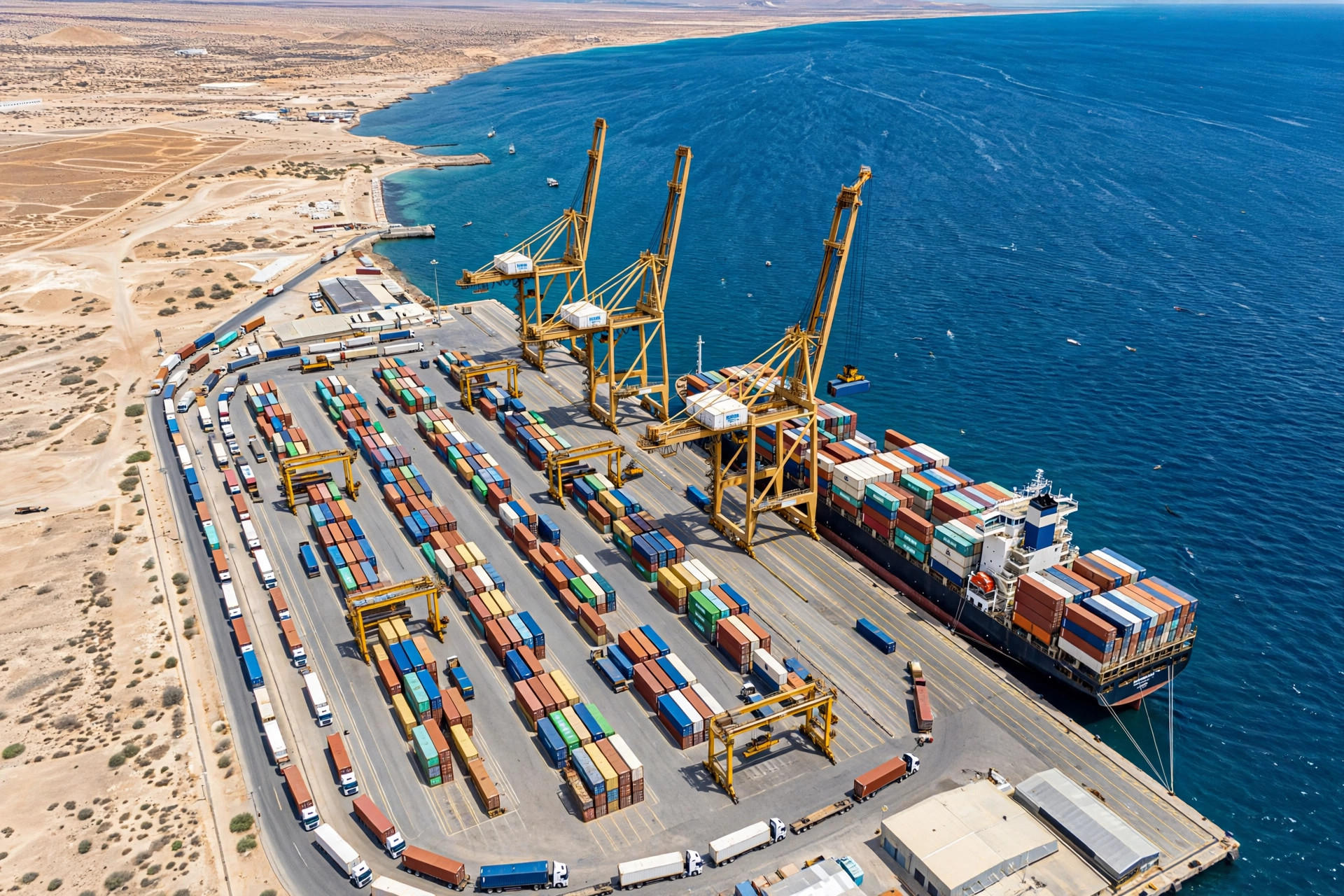
Santos congestion makes this worse. When vessels bunch up, containers wait, and waiting containers are where moisture, demurrage, and missed delivery windows all compound. Build a buffer into your plan: assume the port will not run on your schedule, and price the buffer in before you quote the buyer, not after.
What to Ask Before You Sign the Storage Contract
Coffee warehousing is a service business dressed up as a real estate business. The warehouse sells square meters, but what you are buying is custody of a perishable, graded, high-value product. So negotiate custody, not just rent.
Next time you sit down over a contract, ask these three questions. One: who measures moisture at each handoff, and who pays when a reading fails? Two: how are lots segregated and identified, and can I audit a specific lot's location and history on demand? Three: what happens, in writing, when the port delays loading by a week, who bears the extra storage cost, and what is the cap?
If the warehouse cannot answer all three clearly, you have your answer about the warehouse. And if you are the exporter reading this thinking your current setup is fine, ask yourself when you last checked a moisture reading taken at the port warehouse door rather than at the mill. Most exporters have never seen one. That gap is exactly where the money leaks out.
By Susan, 3PL Sales Director