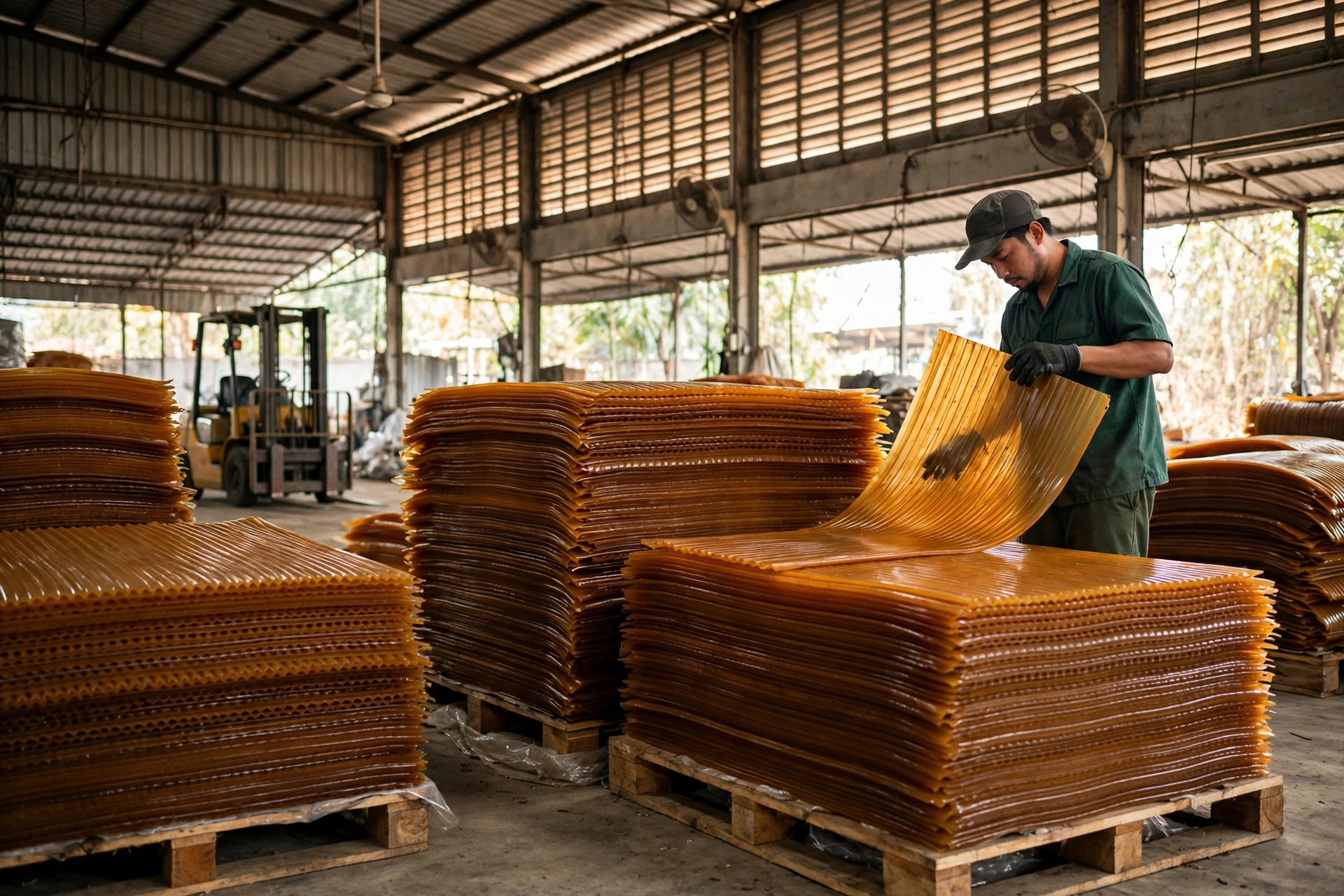
We are a small warehouse, and we cannot afford to burn money. That was the first thing I told myself before taking on Thai rubber. Thailand rubber export warehouse work sounds far from a small operator, but the logic is close to home: ribbed smoked sheets hate sticking, hate mold, and hate being left in a stuffy corner. If ventilation is poor and stacking is careless, the goods lose a grade before they ever reach a container, and a lost grade is lost money.
Thailand Rubber Export Warehouse Trouble Starts Quietly, Inside the Building
Let me start with our embarrassment. One rainy season, we stored a small owner's batch of Thai ribbed smoked sheets in a corner. The owner said it lightly: just stack it in the corner, the ventilation is fine. The corner turned out to be stuffy by day and damp by night, the sheets were stacked high and tight, and the middle sheets stuck together. Pulling them apart left marks on the surface, and the grade did not look good anymore. The owner did not scold us, but his line, "let's talk next time," hurt more than scolding. That was when I learned the first lesson of Thailand rubber export warehouse work: the job is not finding customers first, but keeping the goods in the condition they arrived in.
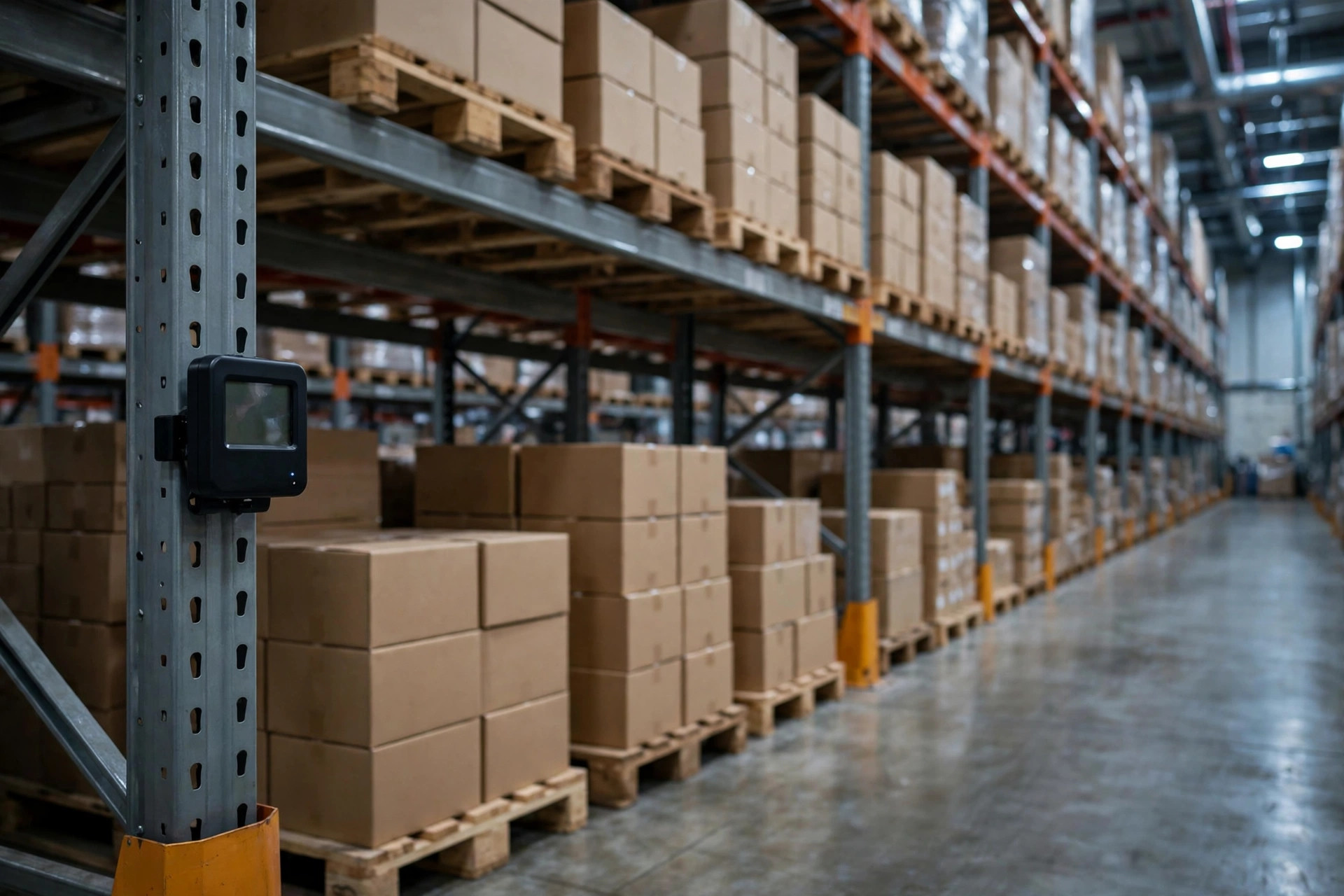
The second lesson came from mold spots. Another batch arrived looking perfect, but the pallets went straight onto the floor. The bottom sheets touched damp concrete, and after a few days the edges showed mold. Mold does not always ruin the whole batch, but a buyer sees it at inspection, and the price negotiation turns against you immediately. We have no climate-controlled mega facility. What we do have are low-cost routines: raise the pallets, leave gaps from the wall, keep rubber out of door and window bays, open up for ventilation twice a day, and inspect before putting goods away in wet weather. These tricks look humble, but they protect the goods, and protecting the goods protects the money.
Sticking, Mold and Grades: Low-Cost Thailand Rubber Export Warehouse Routines
The rule against sticking can be put in one sentence: do not let rubber sheets squeeze against each other in a hot, stuffy place. Keep stacking height within a limit, do not press layers too tightly, and load pallets squarely, because a load leaning to one side takes uneven pressure, and sticking and deformation follow. At receiving, separate the goods by grade and batch. High-grade sheets get their own place. Mix everything together and you cannot explain anything at inspection. Before stuffing a container, check once more, and pull out sheets that are stuck, moldy, or edge-damaged in advance. Do not wait until the container door is closed to discover them.
Our mold-prevention checklist is now pinned to the warehouse wall. First, sheets stay off the floor and away from walls, even when they are not racked. Second, check outer packaging for dampness before putting goods away in the rainy season. Third, never block a vent with clutter. Fourth, never mix grades on one pallet. All of this sounds like common sense, but small warehouses fail exactly where common sense never becomes a daily action. Our routine is a walk at the end of each day: check the vents, check the bottom pallets, check whether anything is spending the night by the door. Ten minutes of walking can save a batch's grade difference.
The arithmetic is also something a small warehouse can follow. Take a worked example: suppose a batch of ribbed smoked sheets is valued at five hundred thousand yuan for illustration, and sticking and mold lead to a five percent downgrade. That is twenty-five thousand yuan lost. Our low-cost routine costs mainly raised pallets, ventilation checks, and one extra inspection round, far less than that figure. The counterintuitive point is that many people assume mold prevention requires expensive equipment, and since a small warehouse cannot afford it, they give up. In fact, getting stacking, ventilation, and separation right first already blocks most of the loss. Equipment is a bonus, not the starting line.
Container loading day deserves the same care. Before sheets go into a container, we check ventilation and stacking inside the box once more: bottom pallets raised, goods loaded squarely, no damp dead corners near the door. A container parked in the sun outside the warehouse heats up fast, so if goods can wait in a shaded place, they should not bake by the door. Drivers in a hurry are when mistakes happen, so that is exactly when we slow down: match the container number, match the piece count, photograph the seal. Loading is not finished when goods leave the door; the way they are loaded is part of the grade.
Small warehouses face one more practical problem with rubber: limited space means goods cannot sit forever. Our answer is staggered receiving. Owners tell us arrival and stuffing dates in advance, we assign bays by date, first in first out, and no batch disappears into a corner for weeks. The longer goods sit, the higher the risk of sticking and mold, so fast turnover is itself a form of protection. Owners may find our rules fussy at first, but over time they like them, because their goods never go missing in our building, and arrival and departure are always clear on the books.
Check the Grade Yourself Before the Buyer Does
Grade management has one point small warehouses especially miss: do not leave inspection entirely to the buyer. Buyer inspection is the final exam; our own inspection is the rehearsal. Before stuffing, sample by grade, mark problem sheets separately, and keep them apart, and the whole batch immediately looks better. Owners trust you more for it, because you are not hiding problems inside a container but putting them on the table early. Over time, an owner would rather store with a small warehouse that finds faults than a big warehouse that says everything is fine.
There is also a trade-off to state honestly. Good ventilation usually means the warehouse cannot be packed to the brim, and a small warehouse is already short of space. Leaving ventilation aisles means a few fewer pallets on the floor. How do I count that? A few fewer pallets is a visible cost; a downgraded batch is a larger invisible loss. Space can be managed with rotation and staggered receiving, but a lost grade is hard to win back. My advice to warehouses like ours is simple: protect the goods first, then talk about taking more orders. A small warehouse has its own way of surviving, and that way is not cutting corners. It is getting every small thing right, so owners feel safe handing you the next batch too.
By Xiao Ma, Small Warehouse Owner