A pilot that "pays for itself" is the most expensive lie in warehouse automation. I don't mean vendors are lying to you. I mean the math you're shown is real, measured, and honest — and it still won't survive contact with your full building. Here's how I know, and what to do about it.
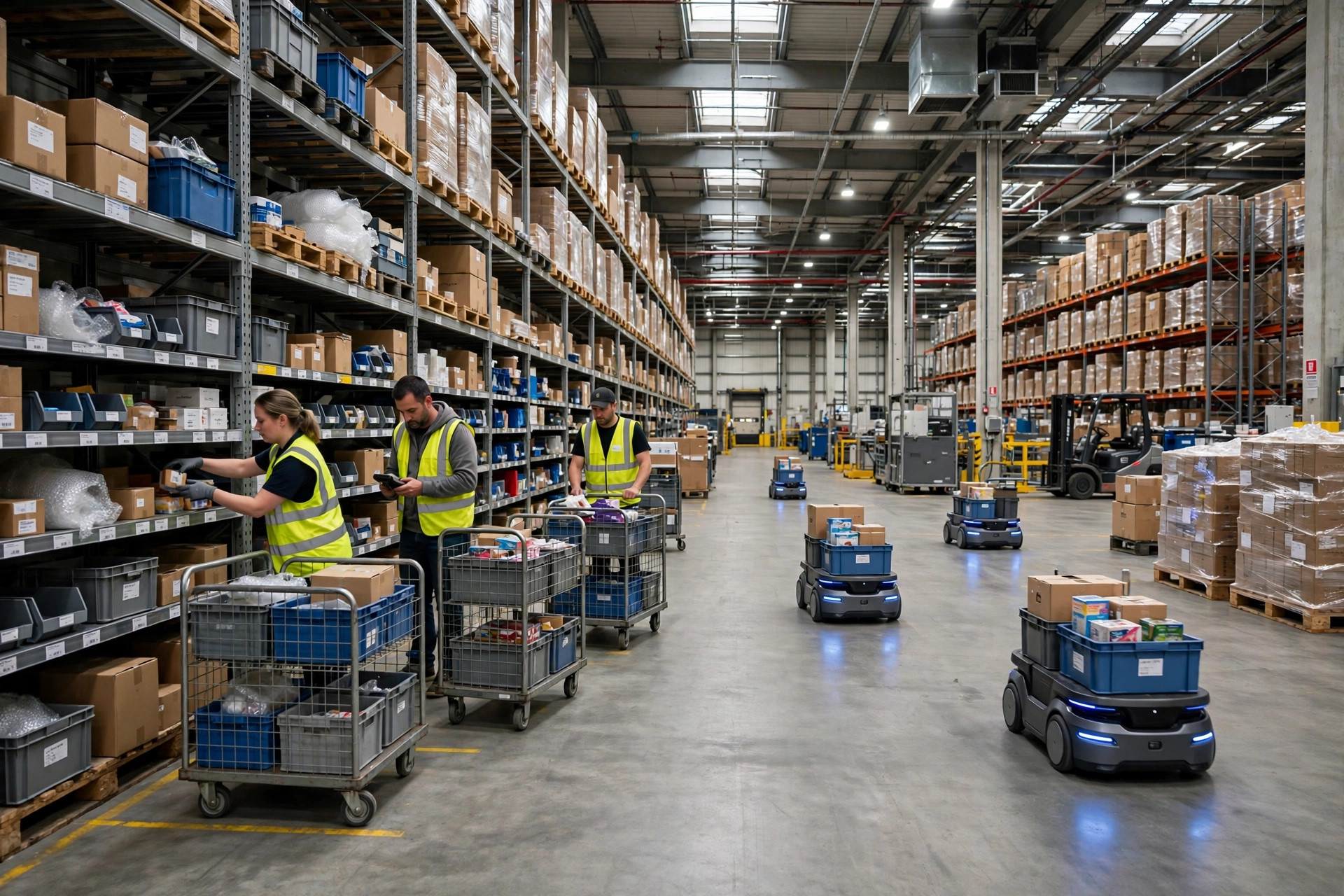
Last spring, a 150,000-square-foot auto-parts 3PL in Fontana, California ran a six-bot AMR picking pilot. Four months of clean data: walking time for pickers cut dramatically, cost per pick down by more than a third, payback in 16 months. The owner green-lit a full rollout — 24 bots. When the final invoices landed, the integrator's bill came in nearly 40% above the "full-scale estimate" from the pilot contract. WMS integration development, a warehouse Wi-Fi overhaul, night-shift charging infrastructure, on-site engineering ahead of peak season — line after line of costs that never appeared in the pilot math. Payback stretched from 16 months to two and a half years. The owner asked me: didn't the pilot prove this works? I told him the pilot proved it works on one lane, under ideal conditions, with the vendor's best people standing next to the robots. That is not your warehouse.
My verdict up front: taking a pilot's ROI and multiplying it by the number of robots is not a calculation. It's a wish. I've watched more than one 3PL learn that the hard way. Four traps below, then a corrected formula you can actually use.
Trap one: the pilot ran on your easiest freight.
Vendors are smarter than you about lane selection. They'll pick the straightest aisle, the fewest exceptions, the most concentrated SKUs — the lane where robots can't lose. One of my clients piloted on a lane that handled just 20% of building volume, all fast-moving SKUs in uniform cartons, one SKU per carton. Of course the numbers looked great. When the rollout hit long-tail SKUs, odd-shaped parts, and multi-item mixed cartons, deadhead travel and human interventions spiked, and that beautiful per-pick cost never came back.
Then there's timing. Pilots run three to six months, usually in the slow season. Peak-season surges, Black Friday volumes doubling or tripling, failure rates after months of continuous operation — none of that shows up in pilot data. Extrapolating a full year from calm-season numbers is like estimating annual fuel costs from a sunny afternoon's mileage.
Trap two: the vendor's A-team was in the building, and you mistook it for "support."
During the pilot, the vendor sends engineers who can actually fix things. A bot gets stuck, someone's on-site in twenty minutes. A software glitch gets a patch that night. Clients walk away thinking this is the service level. After full rollout, you read the contract: four-hour response, 48-hour on-site. The engineer who used to show up in twenty minutes is now covering a dozen projects with a two-week backlog.
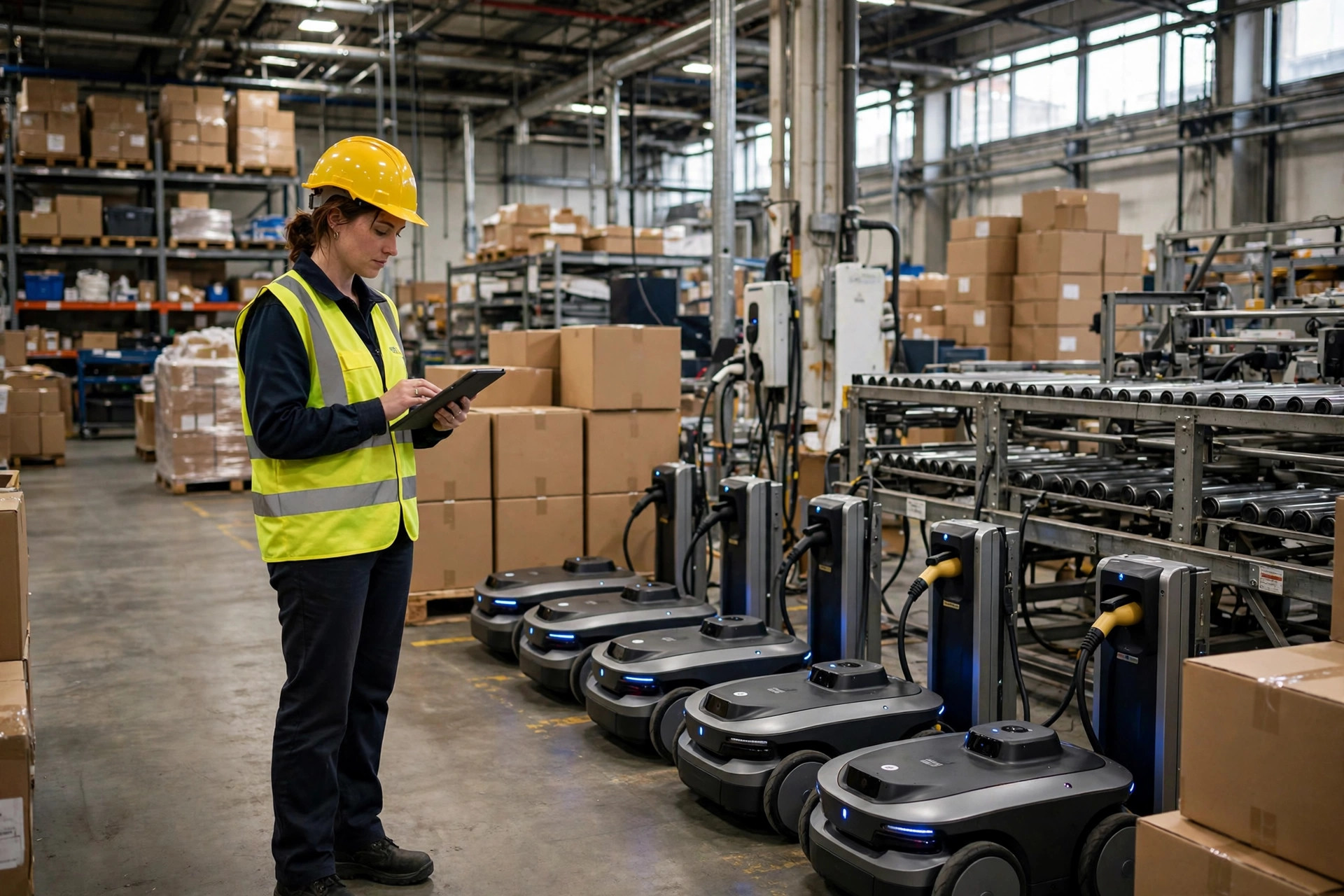
Even Amazon can't escape this. In July 2025, Amazon deployed its one-millionth warehouse robot and acknowledged, through its robotics leadership, that a next-generation robotic site — like the new Shreveport, Louisiana fulfillment center — needs roughly 30% more reliability, maintenance, and engineering staff than a traditional building. If Amazon has to budget 30% more headcount just to keep the robots running at scale, why would your maintenance costs stay flat after rollout? My rule: pilot-period operating costs are fiction. Budget at least 1.3x for the full building.
Trap three: everything the pilot contract didn't mention still has to be paid.
I keep a "costs the pilot never counted" list for clients. Use it to demand line-item quotes before you sign anything:
- WMS/WES integration development. The vendor did it "as a favor" during the pilot. At scale it's a signed development contract, and it won't be cheap.
- Network upgrades. Six bots don't stress your Wi-Fi. Sixty bots going offline every time the network jitters is a building-wide stoppage. My Fontana client spent tens of thousands of dollars on a Wi-Fi 6 overhaul — zero in the pilot math.
- Training and reassignment. Pickers become exception handlers. The productivity dip during training is real labor cost the pilot never counted.
- Cutover downtime. Full rollout happens in phases, and every cutover costs a day or two of capacity. Doing it before peak season hurts.
- Maintenance renewals. Year one free is standard. Get the year-two renewal quote in writing during the pilot, or you'll be negotiating against a vendor who knows you're locked in.
Trap four: utilization was 100% in the pilot, and 75% is a good year in reality.
During the pilot, the bots ran hot — only a handful of them, scheduled to the minute. The vendor's annual savings projection multiplies that utilization by twelve months by N robots. In the real building: charging time, breakdowns, idle time in slow task windows, human-robot friction during peak overtime. If your fleet holds 70% to 80% utilization, you're managing it well. My correction factor for clients is 0.75 — take the per-pick savings the pilot measured, multiply by 0.75, and only then project annual savings.
Worth noting: this is exactly why robots-as-a-service took off. Locus Robotics passed 3 billion cumulative picks in April 2024 on a RaaS model that lets customers avoid the big upfront bet. But lease or buy, do the full math — five years of monthly fees often costs more than buying, and the exit clause matters more than the monthly rate.
So here's the corrected math for a full-scale decision:
True total investment = equipment contract + integration development + network upgrades + training and cutover capacity loss + 3 years of maintenance
True annual savings = pilot-measured savings per pick × true annual order volume × 0.75 (peak and downtime discount)
True payback months = true total investment ÷ (true annual savings ÷ 12)
One more thing the labor market forces into this equation. The U.S. Bureau of Labor Statistics put median pay for hand laborers and material movers at $18.12 an hour in May 2024, and California's minimum wage hit $16.90 an hour on January 1, 2026. Rising labor cost is the honest reason to automate — it just doesn't excuse dishonest math. The pressure to move fast is exactly when the pilot numbers deserve the most skepticism.
Before you approve the rollout, answer these eight questions in writing. If you can't answer one, don't sign:
- What share of building volume did the pilot lane actually represent — order volume, not bot count?
- Were the pilot SKUs your easiest freight? Who handles long-tail SKUs and exceptions, and who pays for that?
- How many vendor engineers were on-site during the pilot — and how many do you get after rollout, at what response time, in the contract?
- Who develops and who pays for the WMS/WES integration? "Done as a favor" doesn't scale.
- Can your network handle the full fleet? Wi-Fi jitter at scale means building-wide stoppages — whose budget covers the upgrade?
- What's the training and reassignment plan? Are heads eliminated or redeployed, and is redeployment cost in the math?
- What utilization is the projection based on? The pilot ran in the slow season for a few months; the year has peaks and maintenance windows.
- When does maintenance billing start? Year one is free — do you have the year-two renewal quote in hand?
A pilot is a rehearsal, not a promise. Run the corrected numbers, answer the eight questions, and then decide. Which of your pilot's numbers are you least sure about? Start there.