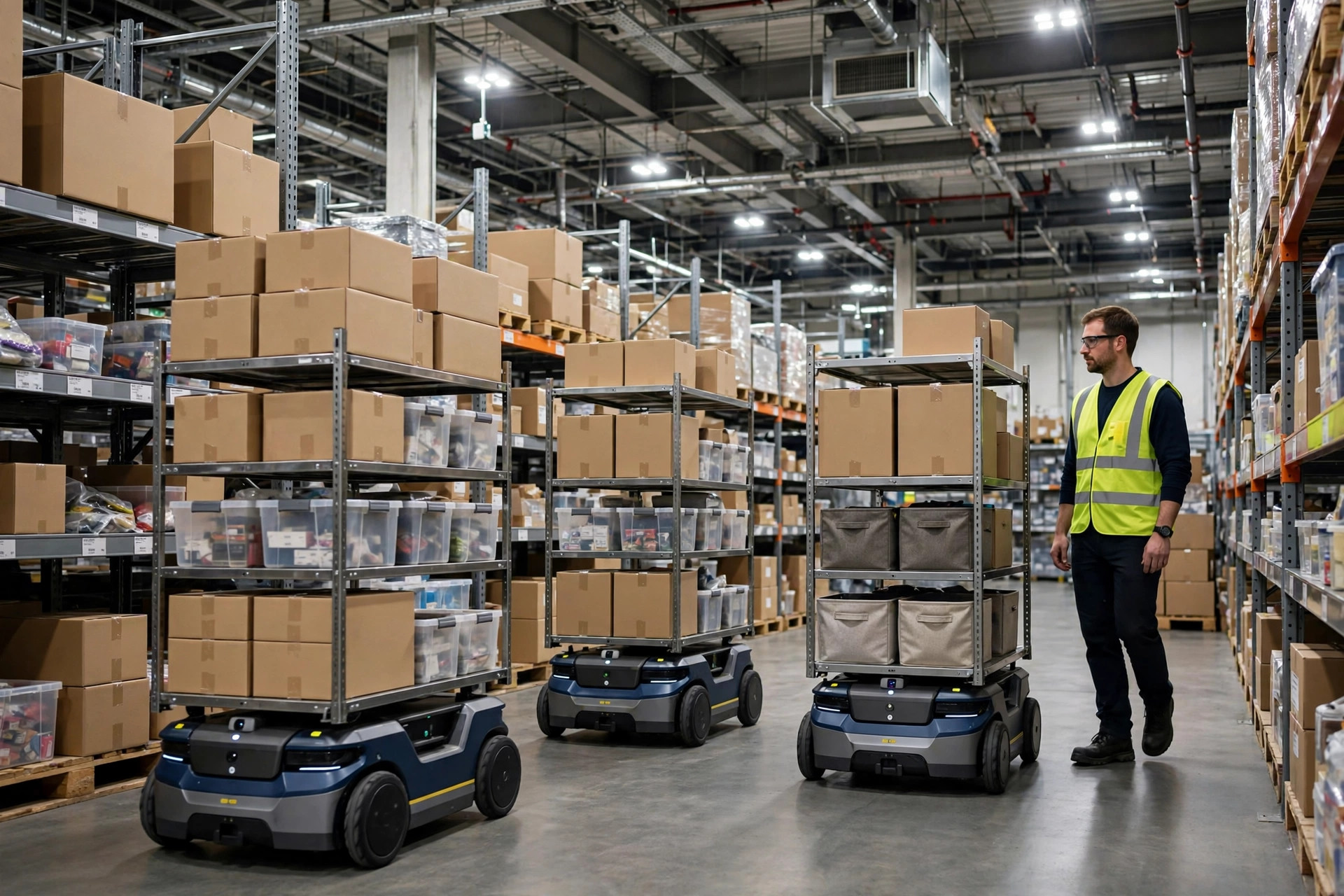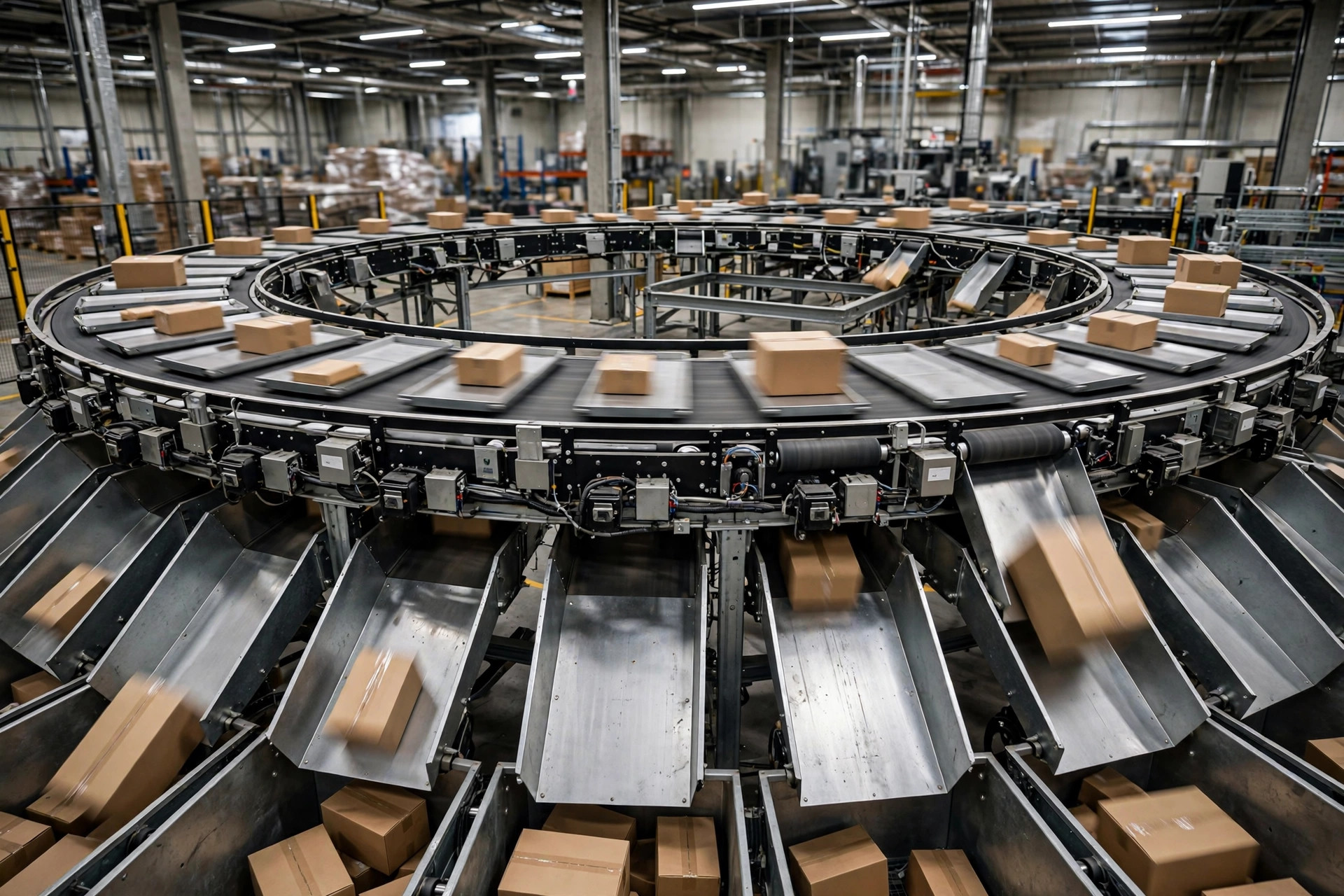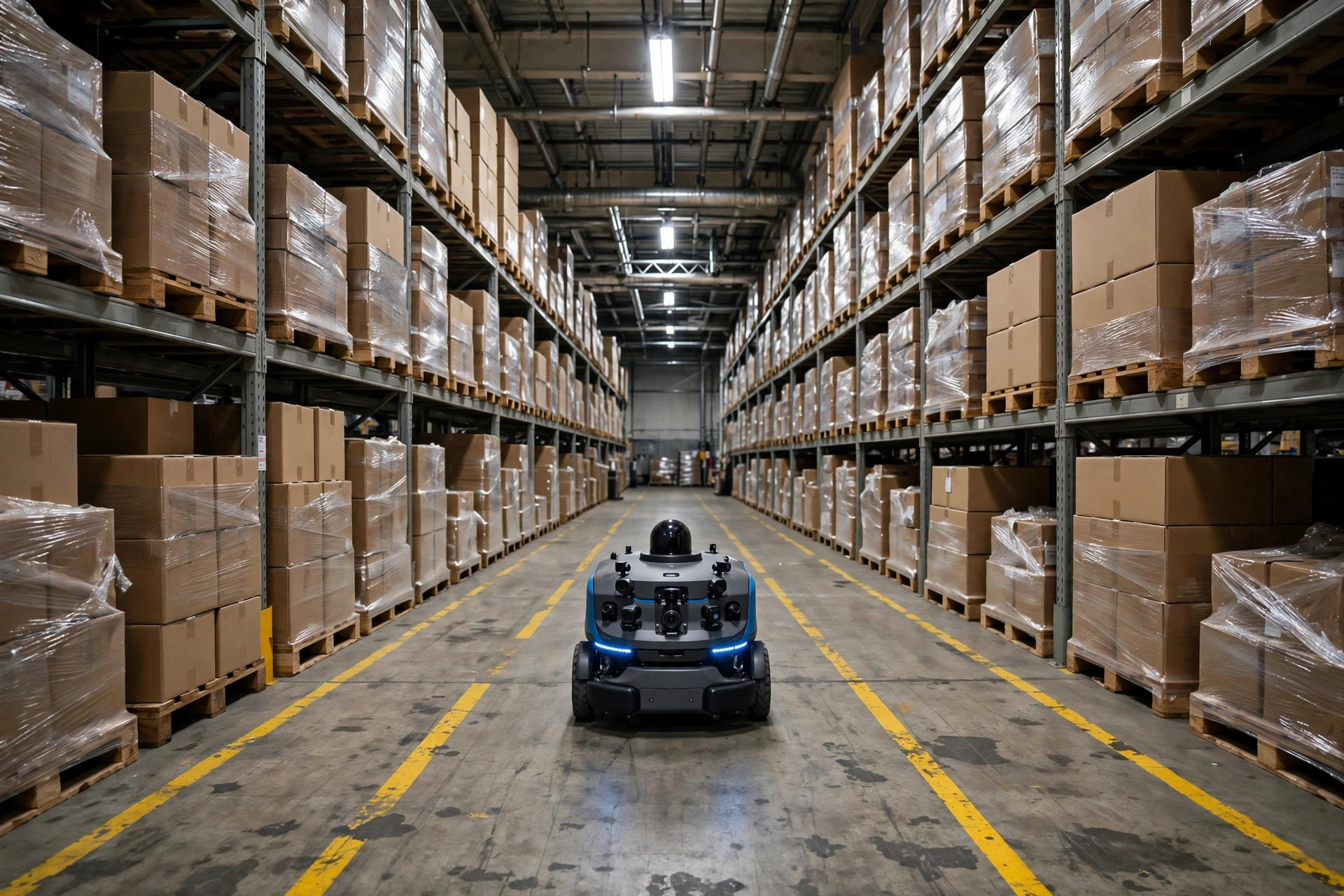
Let me tell you about a 3PL warehouse I visited last year. They bought six AMRs at the end of 2024 and threw all of them straight into outbound shipping — the busiest line in the building, 8,000+ transport tasks a day. One month later, four of the six were parked in a corner gathering dust, and the remaining two got reassigned to the finished-goods line. The owner's exact words: "The thing looks busy, but it doesn't actually get anything done."
Sound familiar? Seven out of ten warehouses buying their first AMR make this exact mistake. Today I'm going to walk through the whole thing — the physics, the line-selection math, and the maintenance traps nobody warns you about.
First, Understand What an AMR Actually Is as a "Worker"
Think of it like hiring a new employee. Before you schedule shifts, you figure out what the person is actually good at.
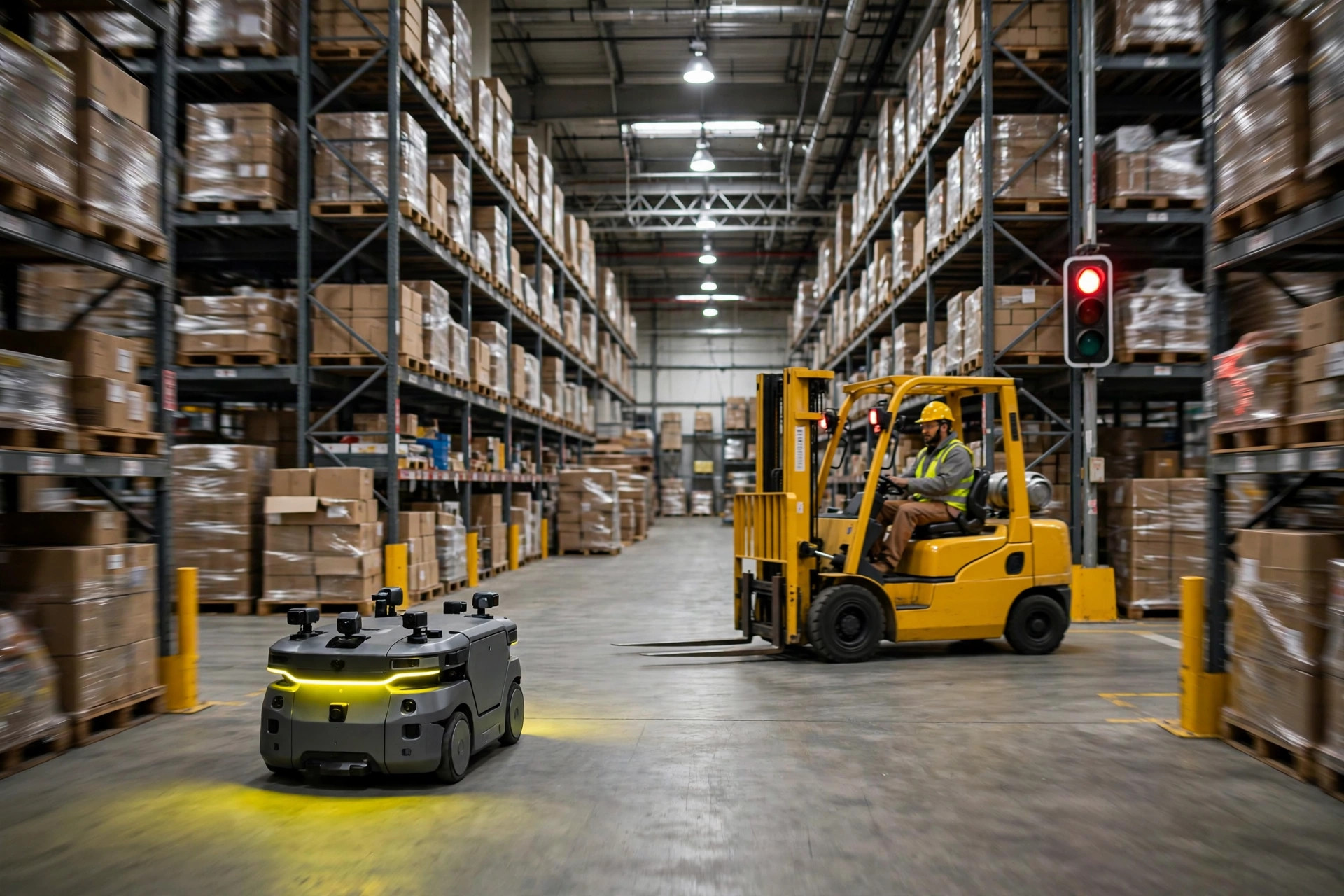
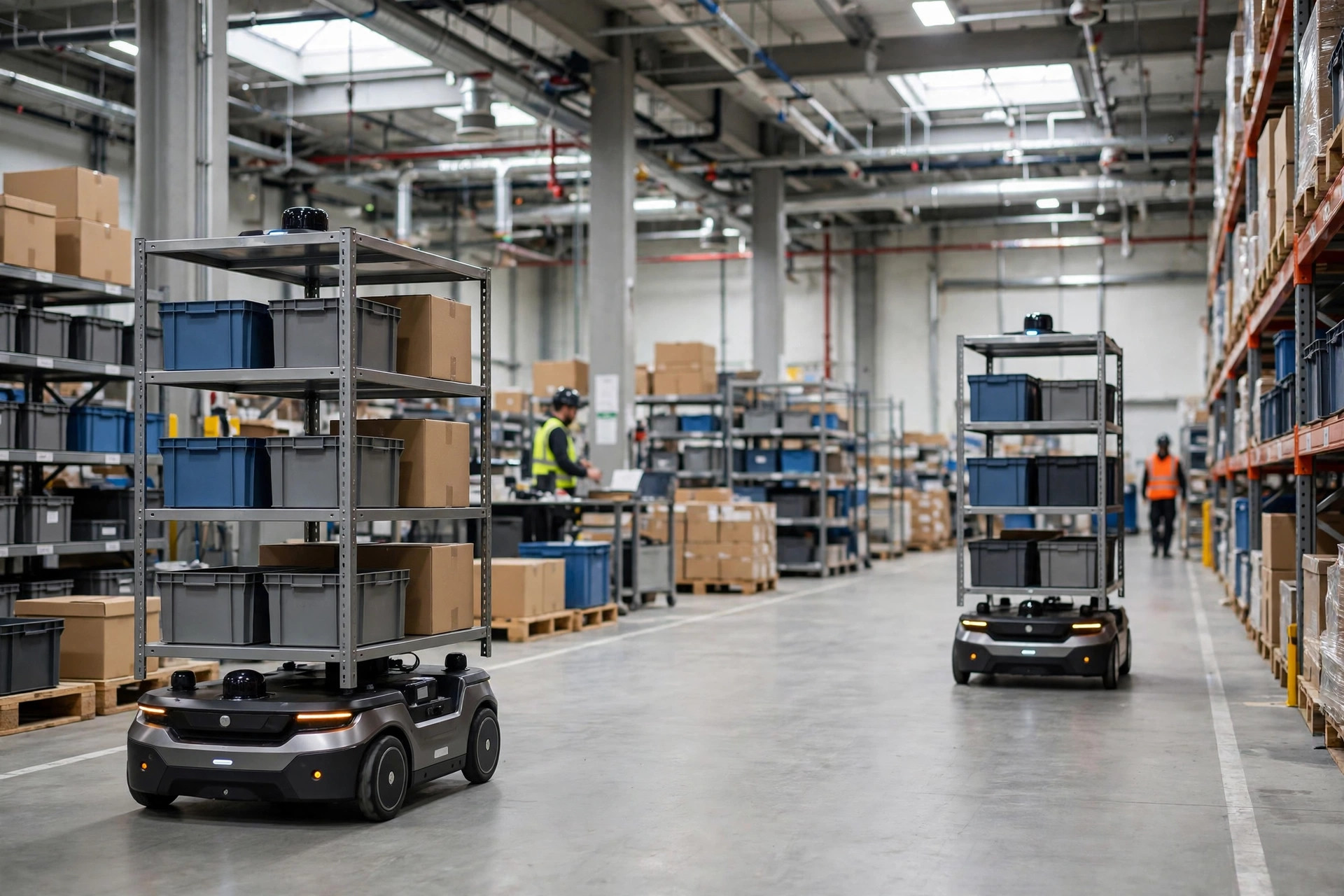
An AMR is, at its core, a worker that moves standard loads on a fixed rhythm. You can think of it as a material handler with infinite stamina but a brain that only walks straight lines. The spec sheet defines its limits: typical warehouse AMRs run 1–2 m/s fully loaded (check the vendor's latest specs), lift anywhere from 500 kg to 1.5 tons, and go 8–10 hours on a charge. It never gets tired, never calls in sick, never clips a rack. But it has three fears: routes that change constantly, throughput that swings wildly, and sharing aisles with forklifts and people.
Understand those three fears and you've understood half of line selection. AMRs excel at one thing: fixed routes, steady takt, medium distances. It's like onboarding a rookie — do you throw them at the most chaotic customer-service desk on day one, or start them on a well-defined data-entry process? Obvious answer.
The Selection Line: A Scoring Matrix That Does the Math
Here's the decision matrix I use with clients. Score each candidate line on four dimensions (1–5 each); the highest total wins the honor of hosting your first AMR:
| Dimension | Weight | High score looks like | Low score looks like |
|---|---|---|---|
| Route stability | 30% | Same A-to-B run, day after day | Routes change daily, ad-hoc tasks everywhere |
| Takt stability | 30% | Volume swings within ±20% | Peak season 5x the slow season |
| Distance economics | 20% | 30–150 m per leg — too far to walk comfortably | Under 10 m, or over 300 m |
| Environment fit | 20% | Wide aisles, flat floor, no mixed traffic | Narrow aisles, damaged floor, human-forklift soup |
Why these weights.
Route stability gets the biggest weight because it is the AMR's defining constraint. Laser navigation with autonomous path planning sounds smart, but constant rerouting means constant map rebuilds and re-planning — efficiency falls off a cliff. Think of it this way: the robot is directionally challenged. Walk the same route a hundred times and it could do it blindfolded; make it learn a new route every day and it panics worse than you would.
Takt stability decides whether the ROI math works. An AMR is fixed capex — six robots cost what they cost. If the line only runs two hours a day in the slow season, your cost per move is absurd. Flip it: on a steady line, one robot can run 16–20 hours a day (minus charging), and the per-move cost finally looks good.
Distance economics is the one everyone forgets. A 10-meter shuttle? A human with a pallet jack does it in 30 seconds. The AMR drives over, lifts, docks, sets down — the whole ceremony takes longer. That's what I call a fake use case: seeing the word "transport" and reaching for a robot is pure hype-chasing. On the other end, 300+ meter runs usually mean crossing zones, fire doors, waiting on elevators — fault rates climb noticeably.
Back to that 3PL: outbound scored 2 on route stability (too many rush inserts), 1 on takt stability, 2 on environment. Weighted total: failing grade. The owner picked it for one reason — "it's the busiest." That's substituting busyness for selection logic, and it's how pilots die.
The Counterintuitive Advice: Don't Start With the Busiest Line
I know it feels wrong. You spent serious money (check current vendor pricing — this class of AMR typically runs in the tens of thousands of dollars per unit), so instinct says deploy it where labor hurts most. But hear me out: your first AMR is a showroom, not a firefighter.
In 2023 I saw the opposite done right at an electronics plant in Guangdong. Their first AMR ran the raw-materials-to-SMT replenishment line. The profile: 80 meters each way, identical every day; 12 moves an hour, like clockwork; 3.5-meter aisles on epoxy flooring. Scores: 5, 5, 4, 5. Weighted: 4.7.
Three months later, on-time replenishment on that line went from 92% to 99.5%. The SMT line never starved for material again. The owner walked into the board meeting with that number and got twelve more robots approved in one shot. Meanwhile a peer company put their first AMR on finished-goods outbound — idle in the morning, queuing in the afternoon — and the three-month ROI came back negative. Project killed.
The deeper lesson: the first AMR's job is to prove "this thing is reliable," not "this thing saves money." A clean pilot with good numbers unlocks the next budget. A failed first shot, and nobody believes anything you say afterward.
The Maintenance Traps: 90% of People Fall Into the Charging One
Physics covered, selection covered. Now the part integrators least like to discuss: maintenance.
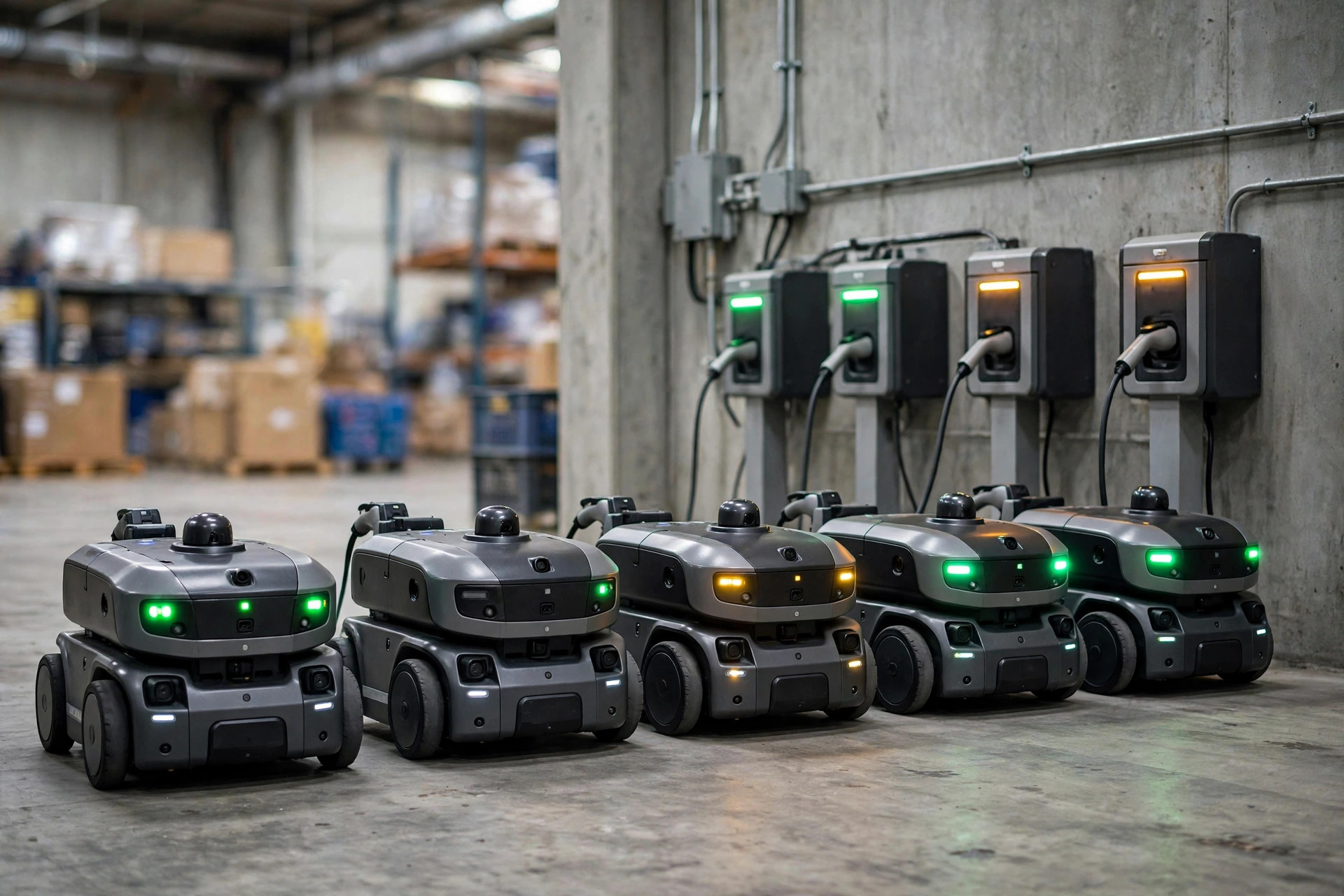
Trap one: charging layout. An AMR isn't a phone — it won't cry for help when it's dying. The standard approach is opportunity charging during task gaps. But most warehouses stick the chargers in some corner. The robot drives over, charges for 20 minutes, comes back to find 30 queued tasks. It's like giving a delivery driver an EV but putting the only charger five miles away — half the shift is spent going to charge.
Do this instead: put chargers next to the task hot zone, and size them at 1.5x your concurrent fleet. Don't believe the vendor line "one charger handles five robots." That's lab data.
Trap two: the floor. Laser navigation is picky about floor flatness. Epoxy is fine, but plenty of older warehouses have cracked, patched concrete. The AMR rolls over a seam, thinks it's an obstacle, emergency-stops, alarms, waits for a human reset. Worst case I saw: 40+ false stops a day, root cause a 2 cm expansion joint. Fix: laser-level the route before deployment and repair the dips. Don't expect the robot to "adapt" to your broken floor.
Trap three: the uptime word game. That 99% uptime on the brochure — ask what it measures. "Powered-on time" versus "productive working time" can differ by ten points. A robot sitting powered-on next to a charger counts as uptime in the first definition and does zero work. Get productive uptime in the contract, with penalties below 95%. Integrators will squirm on this one. Hold your ground.
Trap four: the orphan pilot. Buy one or two units for a pilot, and when one breaks you're waiting on the vendor's field engineer with no spares on hand. I watched a warehouse lose three weeks waiting on a replacement drive wheel — the pilot died of spare-part starvation. My rule: pilot with at least three units, or negotiate vendor-stocked spares on your site. Don't let the first robot die waiting for parts. Too depressing.
The Bottom Line
Don't give your first AMR the busiest line. Give it the most stable one. Run every candidate through that four-dimension matrix and pick the top scorer. Put chargers near the hot zone, level-check the floor first, write productive uptime into the contract, and start with at least three units.
Was the money well spent? Watch one number: three months in, is the per-move cost on that line below 70% of the manual cost? If yes, scale up with confidence. If no, don't blame the robot yet — recheck your line selection. Nine times out of ten, the line was wrong, not the machine.
By Da Liu, Automation Engineer