Let me start with some trash talk: automation integrators lie through their teeth. Contract says six months to go-live; if the thing actually powers on within ten, count yourself lucky. Today we're talking warehouse automation project delay roi — how a late project eats your ROI one month at a time.
Don't get me wrong, I'm not anti-automation. I've put it in my own warehouse. I've burned the money. Everything below was paid for in cash and regret.
My RMB 2 Million, Burned on the Word "Waiting"
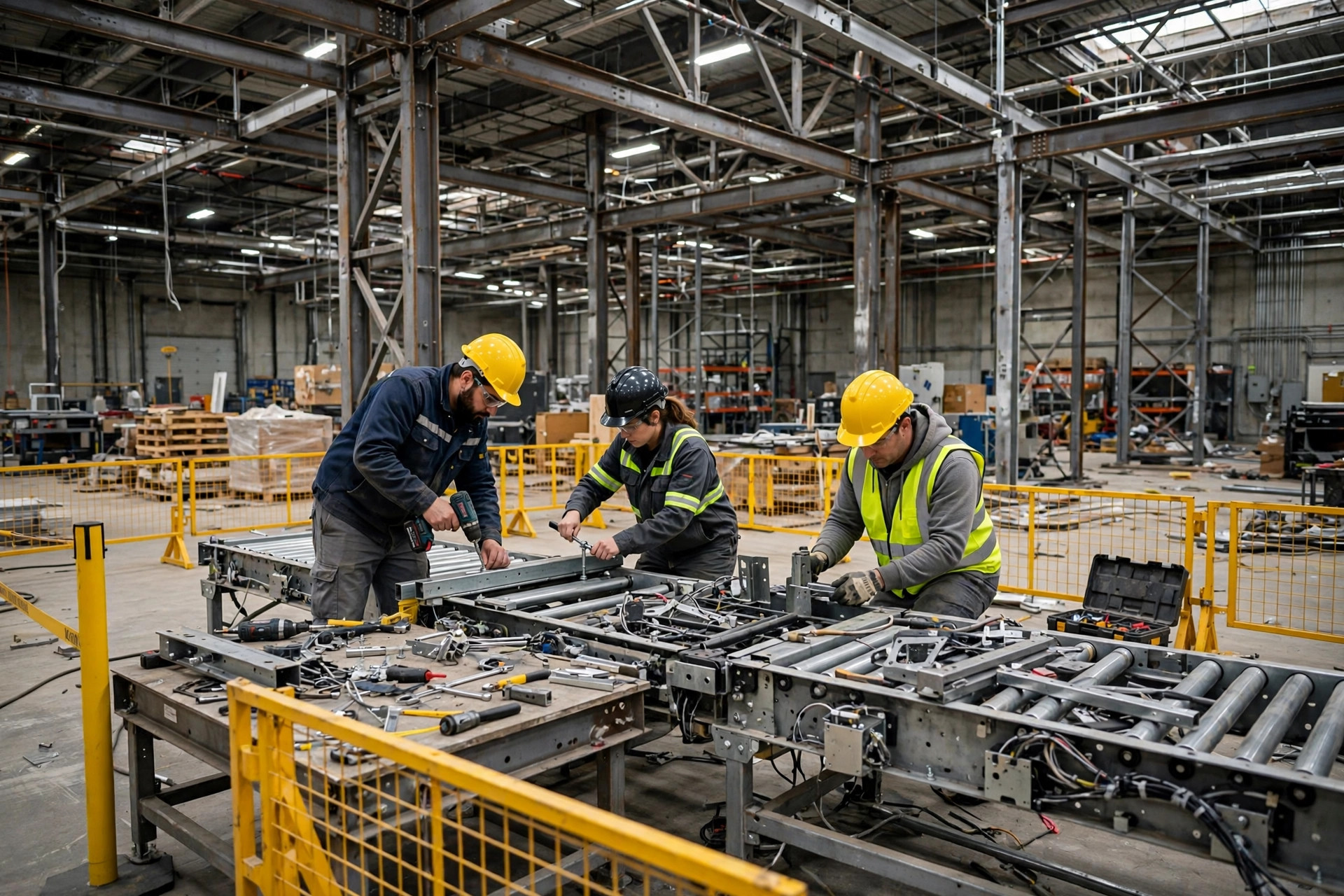
In March 2024, I put a small sortation line into my own warehouse in Dongguan — about 6,000 square meters. Contract value: RMB 2 million. The integrator swore six months to delivery, just in time for the 618 shopping festival. What actually happened? When the equipment arrived, we found out the transformer upgrade hadn't been approved — the power company had a two-month queue. Then the fire inspection held us up another month. Four months of delay, total. The 618 go-live window: gone.
The equipment wasn't there, but the orders still had to ship. I hired 25 temp workers to survive peak season — about RMB 400,000 in extra labor over three months. And the insult on top: the equipment that had arrived sat in the corner collecting dust, eating 200-plus square meters of floor space during the most space-hungry weeks of the year. All in, those four months cost me roughly RMB 500,000 extra. That money hurt: the equipment had produced exactly zero value, and the cash was already gone.
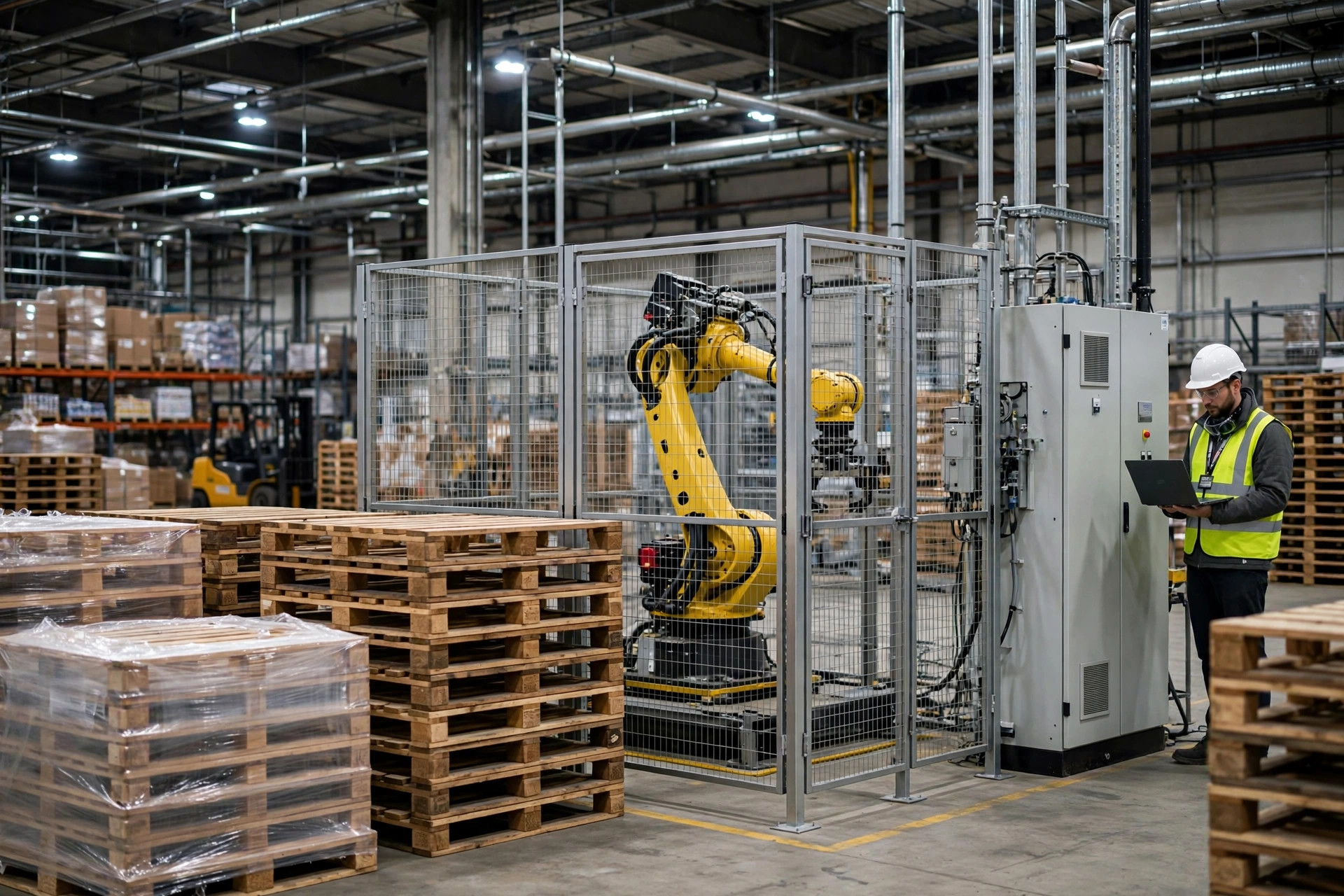
Same story, different friend. In 2023, a buddy's partner warehouse on the US West Coast rolled out 8 AMRs. Hardware arrived in three months, lined up nice and neat. Then the WMS integration failed twice, and system testing dragged on for half a year. The robots stood around doing nothing while the monthly lease payments kept coming out — on time, every time. Half a year of payments bought him exactly one thing: a lesson.
Two stories, one conclusion: the most expensive part of a warehouse automation project delay isn't the extra money you pay the integrator. It's the temp labor you pay while waiting for go-live, and the peak season you miss. Equipment can wait. Orders can't.
Let's Talk Numbers: What 3, 6, and 12 Months of Delay Do
The table below is built on stated assumptions — a simplified model (it treats the RMB 2 million as a lump sum at signing; in reality it's staged), but the magnitudes are right, and you can plug your own project into the same formula:
Assumptions: RMB 2M investment; 12-month planned timeline; RMB 1.2M annual labor savings after go-live; IRR over a 5-year benefit window; each month of delay burns an extra RMB 60,000 (example split: RMB 35k temp labor + RMB 15k on-site project management + RMB 10k equipment storage).
| Delay | Go-live | Total invested | Payback (from kickoff) | 5-year IRR |
|---|---|---|---|---|
| None | Month 12 | RMB 2.00M | 2.7 years | 35% |
| 3 months | Month 15 | RMB 2.18M | 3.1 years | 29% |
| 6 months | Month 18 | RMB 2.36M | 3.5 years | 24% |
| 12 months | Month 24 | RMB 2.72M | 4.3 years | 15% |
Read the last column: twelve months of delay cuts IRR from 35% to 15% — more than halved — and adds 1.6 years to payback. Notice that three months of delay doesn't cost you "3 out of 60." It costs six full points of IRR, because delay is a double hit: revenue moves later AND costs keep burning while you wait.
Here's the counterintuitive bit: most people model automation ROI as "equipment cost vs. labor saved" and leave time out entirely. My expensive formula: true project cost = equipment + (delay months x monthly burn) + the peak season you missed. I can't compute the third term for you, but the first two should be on paper before you sign anything. Time isn't free — it's billed monthly.
The Three Usual Suspects Behind Delays
Every delay I've seen comes down to three culprits — and when it happens, the integrator and the owner always blame each other:
First, civil works and power aren't ready. Transformer upgrades, fire inspections, floor load capacity, compressed air — the equipment arrives and there's no power, no permit, nothing to do but stare at it. This one's usually on the owner: nobody asked the power company and the fire department about lead times before signing.
Second, software integration rework. The WMS integration looks great in the interface spec; at go-live the fields don't match and the logic doesn't match, and two or three rounds of rework are normal. This one's usually on the integrator: the sales demo ran beautifully, the actual integration gets written on the fly.
Third, the peak-season construction freeze. September through December: no hot work, no line shutdowns. Miss the window and you wait three more months. This one's on the schedule: whoever planned it didn't treat the freeze as a hard constraint.
Should you pay to expedite? It's a trade-off, and my answer depends. Outside peak season, paying to pull the schedule in can pencil out — at RMB 60,000 a month of burn, recovering one month is worth RMB 60,000. But one month before a big sale, take the delay over a forced go-live: an unstable system crashing mid-peak costs you by the day, an order of magnitude worse than the delay.
Three Things That Must Be in the Contract
Learned the hard way: if it's not in the contract, it doesn't exist.
-
Milestone payments, with the tail tied to acceptance. Example: 30-30-30-10 — 30% at signing, 30% on equipment delivery, 30% at trial operation, 10% at acceptance, plus a retention amount. Whoever holds the money holds the leverage. Pay most of it up front and you're giving the integrator an interest-free loan.
-
Delay penalties, with real numbers. Example: 0.5% of contract value per week of delay, capped at 10%. Without this clause, delay costs the integrator nothing, so your project goes to the back of his queue. With it, he at least thinks twice when scheduling his engineers.
-
Crisp milestone definitions plus a freeze clause. What counts as "equipment delivered" — at the site gate or inside your warehouse? What counts as "integration complete" — whose signature? Write each one down. And write the annual construction freeze into the contract: the timeline extends automatically during the freeze, but the integrator must warn you in advance — not tell you "can't do it" the week the freeze starts.
This one I've personally tested and it works: add a clause that if any milestone slips more than two weeks, the integrator stations an engineer on-site at his own cost until the schedule is recovered. Don't underestimate it — in Dongguan in 2024, that's how we clawed back part of a month at the final stage. Ink on paper beats any verbal promise.
One last calculation before you go: next time you sign an automation contract, plug "6 months of delay" into the table above first — what's left of your IRR, how many years to payback. If you can't live with that number, either make the penalties hurt or build slack into the timeline. "It won't be delayed this time" is a lesson I paid RMB 500,000 to learn in 2024. Don't pay it again.
By Ah K, E-commerce Seller (5 yrs)