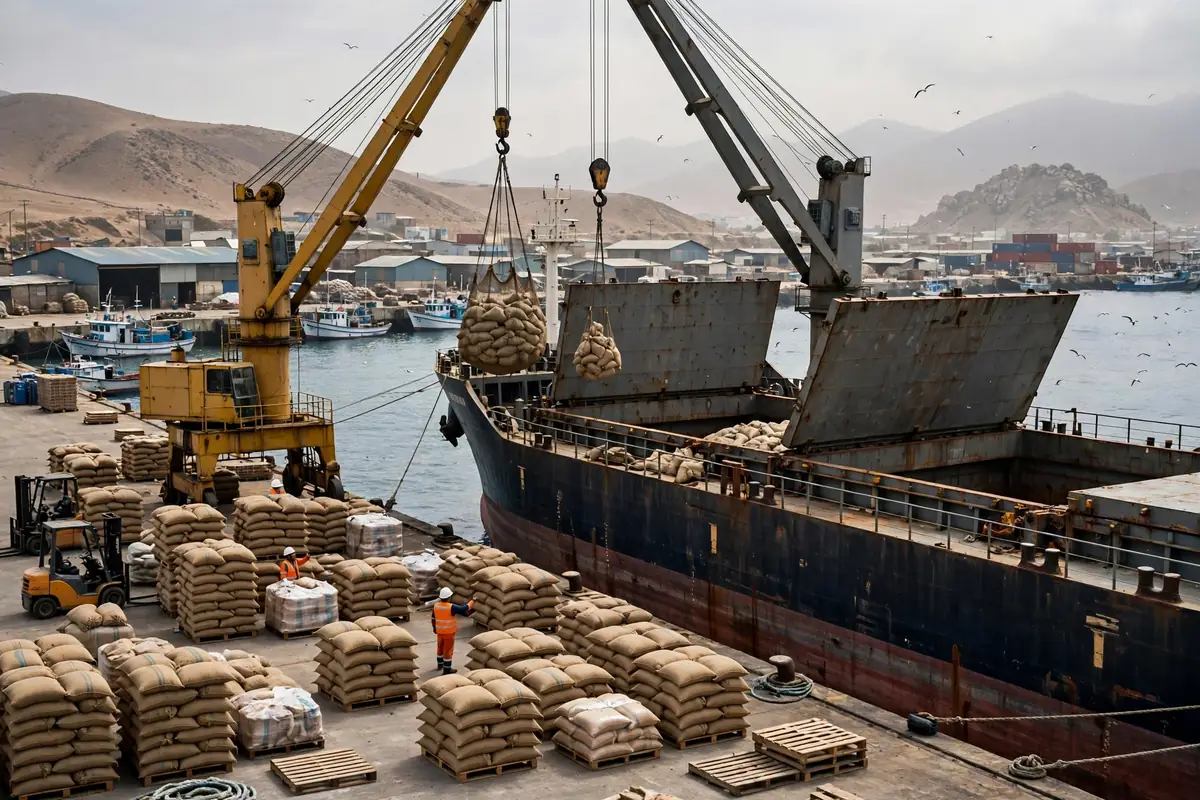
We had a client, an aquafeed maker, who bought two containers of fishmeal out of Peru in the first quarter of 2025. When the boxes were opened in Tianjin, the bags looked fine from the outside. Inside, the meal had set into hard lumps, and the protein test came back two points low. The supplier's reply was polite and useless: everything was fine at the factory gate, the moisture must have got in during transit, not their problem. By the time the client called me, the contract was signed, and there was not a single clause in it about re-testing moisture on arrival. I will not say what that shipment cost him. Enough that he will remember it for the rest of his career.
Peru is the world's largest fishmeal producer and exporter. The US Department of Agriculture put Peruvian fishmeal production for 2024/25 at about 1.1 million tonnes, with exports forecast at 1.08 million tonnes, roughly 20% of world output. In the first quarter of 2025 alone, Peru exported 421,000 tonnes of fishmeal, up 67% on the year before, and about 67% of it went to China, according to FAO.
Fishmeal is afraid of two things. The first is moisture. It is hygroscopic, it drinks humidity out of the air, and once it cakes, mould follows and protein drops. The shipping rules are blunt about it: moisture between 6% and 12%, fat content no more than 15%. Those are not recommendations. They are the line the carrier uses to decide whether your cargo sails at all. The second fear is self-heating, and this is the one that can kill. Residual fish oil oxidises and generates heat. Stack it tight, starve it of air, and the temperature climbs on its own. Industry guidance says act immediately once a stack passes 40°C, and laboratory work has recorded meal held near 40°C surging toward 250°C within about 30 hours in extreme conditions. That is why fishmeal is a regulated dangerous good at sea: untreated meal is Class 4.2, spontaneously combustible, UN 1374; antioxidant-treated meal is Class 9, UN 2216. Which number you declare on the booking changes the freight, the paperwork, and whether the line accepts the box at all.
My client's shipment was a textbook moisture failure. The coast around Chimbote looks dry, but the plant warehouses sit close to the sea, night fog rolls in, and bags stacked on a floor with no damp-proof course soak up moisture from the bottom rows up. Worse, meal often sits in the plant warehouse for weeks waiting for a sailing, and if the contract does not say who measures temperature and moisture, you find out in an argument, after the money is gone.
Peru fishmeal export warehousing: Chimbote storage and Callao consolidation are two different bills
Chimbote is Peru's fishing capital, with around 40 fishmeal plants working the anchovy as it comes ashore, so plant and warehouse are usually one site. The rhythm is brutal. For the 2025 first anchovy season in the north-central zone, the quota was 3 million tonnes; fishing opened on 22 April and closed early on 24 July, with 2.46 million tonnes landed, 81.9% of the quota. The second season's quota was 1.63 million tonnes, opening on 7 November, and the fleet ended up catching 98% of it. When the season runs, the warehouses fill in days. When it stops, they sit empty enough to echo. That pulse is what makes fishmeal warehousing hard: you need space in the peak and you still have to pay for the building and the people in the trough.
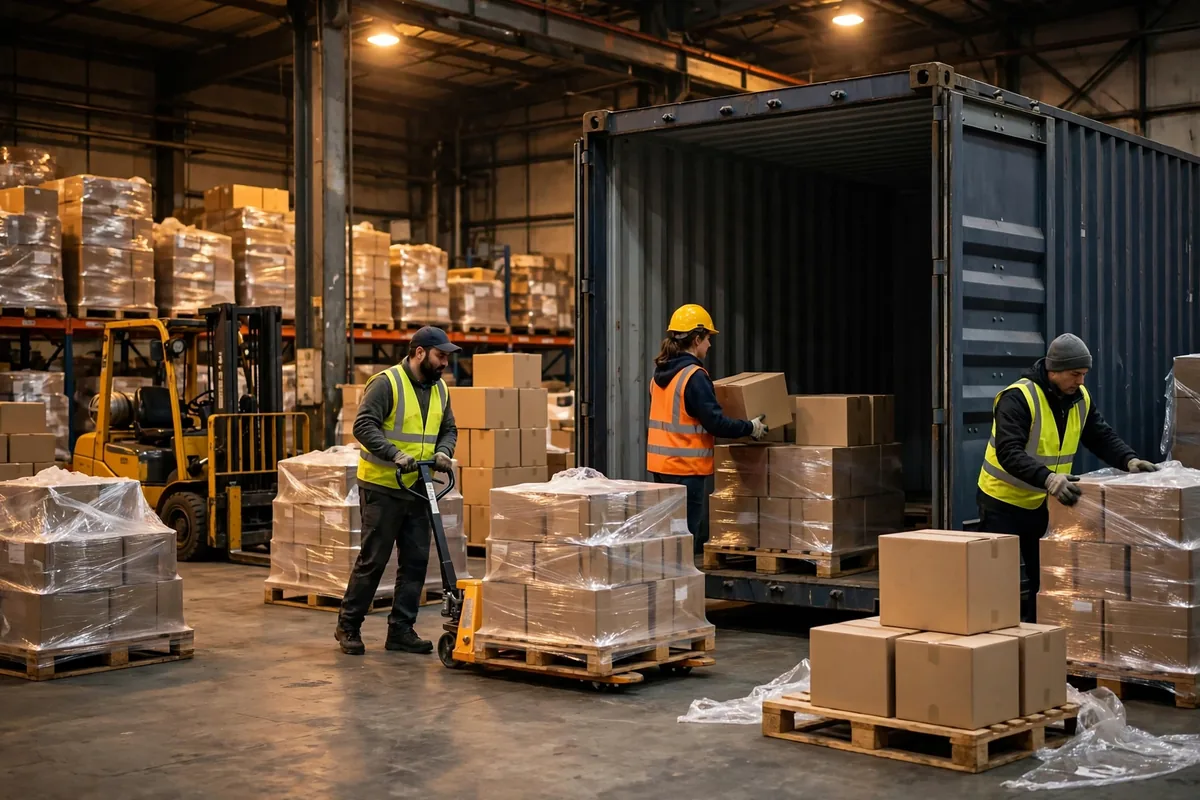
So the first question I ask any client about a Peru fishmeal export warehouse contract: how long does your cargo sit in Chimbote? Three to five days of transit, and an ordinary warehouse with damp-proof pallets and regular temperature checks will do. Three weeks or more, and you need a temperature- and humidity-controlled bay, twice-daily temperature logs, and a written procedure for an overheating stack. Plenty of plant warehouses quote cheap, with temperature checks "periodically" and moisture protection "on a best-efforts basis" in the fine print. What buyers save on rent does not cover one container of claims.
Callao consolidation, the last leg of the Peru fishmeal export warehouse chain, is a different bill again. Most fishmeal moves in containers, and consolidation is the norm: several small buyers sharing a box, or one buyer mixing grades in a single container. It saves freight, but it pools the risk too. If one lot in the box is over the moisture limit, the whole container can be held. Consolidated lots come from different plants, treated with antioxidant at different times, and the shipping rules require antioxidant treatment within 12 months of production, with at least 100 mg/kg of antioxidant remaining at shipment, and ethoxyquin applied at 400 to 1,000 mg/kg. The carrier wants to see the certificates. In a consolidated box, one missing certificate holds everybody up.
There is another rule most buyers never hear about until it bites them: fishmeal is not accepted for loading when the cargo temperature exceeds 35°C, or 5°C above ambient temperature, whichever is higher. If the temperature passes 55°C and keeps rising, ventilation stops and carbon dioxide or inert gas goes into the hold. The warehouse temperature log is the boarding pass: without it, the line measures the cargo at the terminal, finds it too hot, and your container sits in the yard. A missed sailing costs more than three months of warehouse rent.
| Risk | What it looks like on the ground | Control | What the contract must say |
|---|---|---|---|
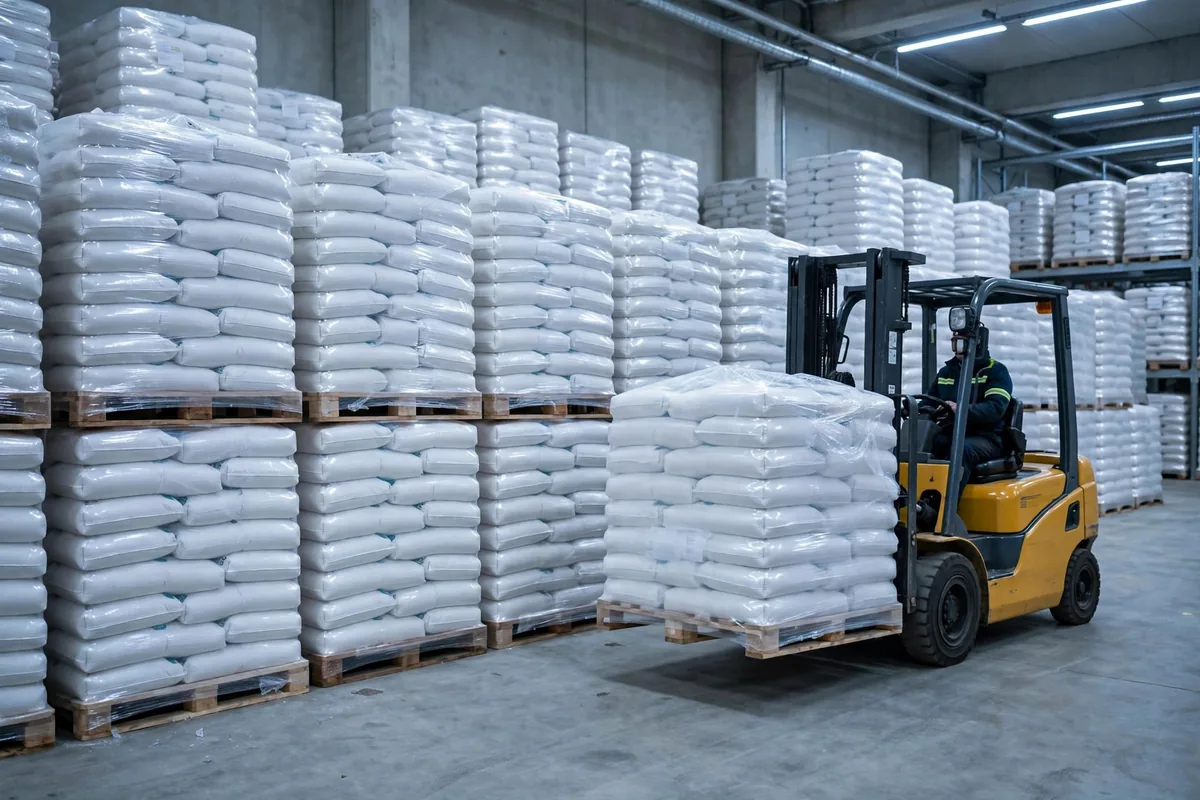
| Moisture and caking | Hard bag bottoms, lumps, musty smell, dark mottled powder | Polyethylene-lined bags, pallets raised off the floor, humidity monitoring | Warehouse owns damp-proofing; agree a moisture re-test standard |
| Self-heating | Stack temperature climbing steadily past 40°C | Twice-daily temperature checks, ventilation gaps, restack and cool on overheat | Who keeps the logs and who can stop loading |
| Antioxidant failure | Old meal, expired certificate, residue below the limit | Check certificates and residue per lot, first-in first-out | Supplier provides certificates; expired lots are the supplier's problem |
| Consolidation contagion | One bad lot holds the whole box | Verify moisture and temperature lot by lot; no certificate, no consolidation | The offending lot pays for the whole container's delay |
| Refused loading | Cargo too hot, container stuck in the yard | Pre-check temperature 48 hours before loading; keep a buffer sailing | Who pays yard fees after a refusal |
Where the Peru fishmeal export warehouse money actually goes
Take a typical Peru fishmeal export warehouse shipment, and treat the numbers as a hypothetical example to show the structure: one container, 25 tonnes of fishmeal, at the Peruvian price of a little over $1,700 per tonne in late 2025, so a cargo value above $40,000. Ocean freight, port charges and insurance together usually run 8% to 12% of cargo value. Warehousing for three weeks in the plant warehouse looks like barely 1% of value. But if moisture cakes the meal and protein drops two points, the buyer docks 5% or more. If self-heating gets the box refused, yard fees plus a rebooked sailing easily eat 3% to 5%. Warehousing is the cheapest line on the invoice and the source of the biggest holes in it.
Counterintuitively, in fishmeal export, warehousing is not a cost centre, it is a risk centre. Buyers love to grind the rate down, but in this trade the saving usually comes out of temperature checks, damp-proofing and certificate verification. The smartest buyer I know pays about 10% more for warehousing and has not had a claim in three years. On total cost, he is the cheapest of the lot.
Bulk saves packaging but leaves moisture protection to the ship's hold; on a long haul to China, bagged is the floor.
Three questions for your next contract negotiation
First: who produces the temperature logs, how often, and who has the right to stop loading when a stack overheats? A fishmeal warehouse without temperature records is a blind box. Second: are antioxidant certificates and moisture reports issued for every lot, or is one certificate doing duty for the whole shipment? In a consolidated box, one lot without papers holds everyone hostage. Third: when moisture, caking or a refused loading causes a loss, does the contract say who pays, or does it hide behind a line about the latest official policy? Get those three answers in writing before you sign, not after the cargo goes wrong.
Anchovy quotas move every year, so treat quota numbers as subject to the latest official release. But one thing does not move: fishmeal fears moisture and heat, and physics does not negotiate. What a contract can negotiate is who takes responsibility for that.
By Susan, 3PL Sales Director