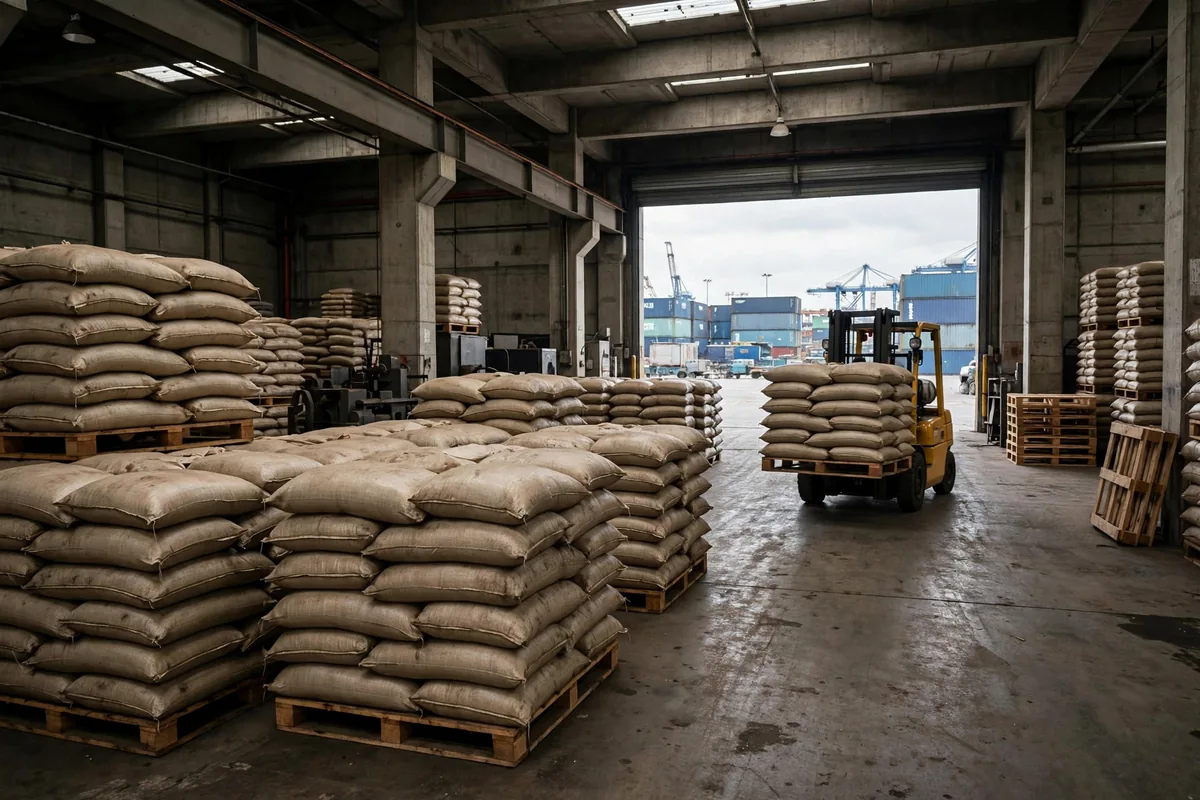
Let me start with the conclusion: in Peru copper export warehouse logistics, the most expensive part of storage is never the rent. It is the grade and weight that copper concentrate loses while it sits in a warehouse and on the road. Concentrate is not soybeans. One rainstorm, one trail of spilled dust, and what you lose is metal, not water.
There are two sides to this. On one side, the volume: the U.S. Geological Survey puts Peru's copper mine production at about 2.6 million tonnes in 2024, third in the world behind Chile at roughly 5.3 million and the Democratic Republic of Congo at about 3.3 million. On the other side, the road: the mines sit thousands of meters up in the Andes, and the cargo has to cross mountains to reach Callao on the Pacific, then sail to China — which takes roughly sixty percent of Peru's copper exports. High altitude, long haul, high cargo value. Put those three together, and any corner cut in storage shows up on the bill fast.
I Have Seen Too Much Concentrate Go Thin in Storage
Moisture is the number that decides everything with concentrate. Too wet, and the shipping line bills you on wet weight — you are paying freight to move water. Too dry, and dust flies everywhere, with losses and environmental trouble following behind. Worse still is the grade dispute: concentrate that sits too long oxidizes on the surface, sampling turns uneven, and when the discharge port re-tests and the grade comes back lower, the buyer's deduction letter arrives the next day.
I have seen too much of this. Once, a trader's concentrate sat in a yard outside Callao for nearly two months through the rainy season, covered by a single thin sheet, with no drainage around the pile. Rain crept in at the edges, the bottom layer caked, and when the loaders dug in, the lumps broke apart and mixed into the good material. The loading sample and the discharge sample disagreed on grade, the buyer docked the price, and when the trader went back to the warehouse operator, the contract said nothing at all about who owned moisture protection. They split the loss in the end, but that one deduction would have paid several years' worth of the rent difference.
Callao's own numbers are worth a look. Regulator statistics show the port's three concessioned terminals handled 44.8 million tonnes in 2025, of which the dedicated mineral concentrate terminal moved about 3.08 million tonnes, and container throughput ran to roughly 3.14 million TEU. The concentrate berth is a purpose-built facility, but most concentrate still passes through transit warehouses and yards before it ever reaches the ship. Nobody covers that stretch for you.
The Mountain Leg of Peru Copper Export Warehouse Logistics
Concentrate leaves the mine by truck, over mountain roads. The big operations — Cerro Verde, Antamina, Las Bambas — sit up on the high plateau, and in the rainy season landslides and road closures are routine. Every extra day the cargo waits at the mine warehouse is a day of financing cost and a day of schedule risk. I have seen too many shippers obsess over the port warehouse and forget there is a warehouse at the mine end too. Conditions there are worse: patchy ventilation, weighing and sampling equipment that may or may not work, and once the cargo leaves the mine gate, the weight and grade rest on a single dispatch note.
My approach is old-fashioned, but it works: independent weighing and sampling at both ends, at the mine and at the port, and if the difference breaks the agreed tolerance, everything stops until someone finds out why. Sampling is not the place to save money. Concentrate isn't a container — you can't spot the problem with your eyes. Write the sampling method, the laboratory, and the re-test procedure for disputes into the contract. Written down, it cuts the arguing time in half, and that discipline is the cheapest insurance in Peru copper export warehouse logistics.
Peru Copper Export Warehouse Logistics: Two Ways to Run the Numbers
Here is the comparison I use. The figures are an illustrative example for comparing options:
| Cost line | Option one: open yard storage | Option two: enclosed shed plus full sampling |
|---|---|---|
| Storage rent | Low, open yard charged by area | Higher, enclosed shed charged by tonne |
| Moisture and loss | Rain caking, dust loss, all on you | Weatherproof, dust-controlled, losses capped by contract |
| Grade disputes | Uneven sampling, high deduction risk | Dual sampling plus independent lab, disputes have evidence |
| Vessel connection | Cargo waits for the ship, port congestion charged extra | Storage term linked to vessel schedule, delays recoverable |
| Total on a 5,000-tonne parcel | Looks cheap until one deduction flips it | Costs more up front, but the risk is capped |
The counterintuitive judgment is this: with concentrate storage, the rent you save is small money, and the grade you lose is big money. Plenty of people calculate storage cost as dollars per tonne per day and never calculate what half a grade point on a full shipload is worth. Concentrate carries that much value. Let the storage conditions slip one notch, and a single deduction can swallow three years of rent savings. Look at it from both sides: the enclosed shed costs more, but it costs more in a way you can see; the open yard costs less, but it costs less in a way you can't.
Chancay Port Deserves Its Own Calculation
There is a new variable: Chancay Port. Inaugurated on November 14, 2024, and in commercial operation since June 1, 2025, it is designed for 1 million TEU and 6 million tonnes of bulk cargo a year, and it cuts the Peru-to-China transit from 35 days to 23 days. For copper concentrate, those 12 days are not just speed — they change cash turnover and schedule flexibility. Callao already moves more than 3 million TEU of containers a year, and as Chancay ramps up, some cargo will divert and ease the congestion pressure at Callao.
Don't rush to move everything to the new port, though. Chancay's road and rail links and its warehouse support are still climbing the curve, and for heavy cargo like concentrate, switching routes before the supporting infrastructure is ready carries risks no smaller than the old route's. My advice: run one small shipment first, watch the weighing, the sampling, and the arrival time end to end, and scale up only once the data behaves. Price the new port on measured results, not on the numbers from the opening ceremony.
Three fixes, that's all. Peru copper export warehouse logistics really comes down to three fixes. First, check moisture protection before the cargo enters the warehouse: enclosed shed first, and if it's an open yard, drainage and covering standards go in the contract, not in a handshake. Second, double up on sampling and weighing: independent checks at the mine and at the port, stop when the difference breaks tolerance, and let an independent lab settle it. Third, link the storage term to the vessel schedule: write extension and recovery into the storage contract when the sailing slips, so cargo doesn't sit at the port burning money.
In this business, the fear isn't spending money. It's spending money and not knowing where it went. Concentrate comes down from the Andes and travels all the way to a ship at Callao, and at every step someone is ready to save you a little trouble. The person who saves you the trouble usually ends up saving you the grade as well.
Have you actually read the moisture clause in your concentrate contract?
By Lao Mi, Supply Chain Veteran (20 yrs)