Here is my conclusion up front: in Penang Malaysia port warehouse logistics, the warehousing business is not at the quay. That is the question this guide answers. Get the warehouse location right and you eat from the electronics trade. Get it wrong and no amount of cheap rent will save you.
I have seen too many people start with the wrong question. They ask about container volume. In 2024, Penang Port handled 1,416,450 TEU, slightly below the 1.44 million TEU of 2023. Read that number alone and you would think the port is sliding. To put it plainly, the number lies. In the same year, vessel calls reached 4,653, up 31.18% year on year. Cargo tonnage hit 32.33 million revenue tonnes, up 0.77%. Ferry passengers reached 2.87 million. A port where box volume dips while ship calls jump by nearly a third is not a port in decline. It is a port where ships got more numerous, services got denser, and cargo kept moving even if it did not all show up as boxes you can count. There are two sides to this: TEU is the face of the business, but service density is the muscle underneath.
Then there is the one line in the 2024 ledger that matters most. The port had been expected to reach 1.55 million TEU that year. Then the Red Sea crisis hit, sailings were rerouted, schedules broke down, and roughly 50,000 to 60,000 TEU simply vanished. In the same year, transshipment business from the Bay of Bengal doubled. Lost volume on one side, doubled volume on the other — that was Penang in 2024, in a single sentence. Nobody controls the Red Sea. What you can control is where your warehouse sits and which side of that split your cargo is on.
Where the Warehouse Goes in Penang Malaysia Port Warehouse Logistics
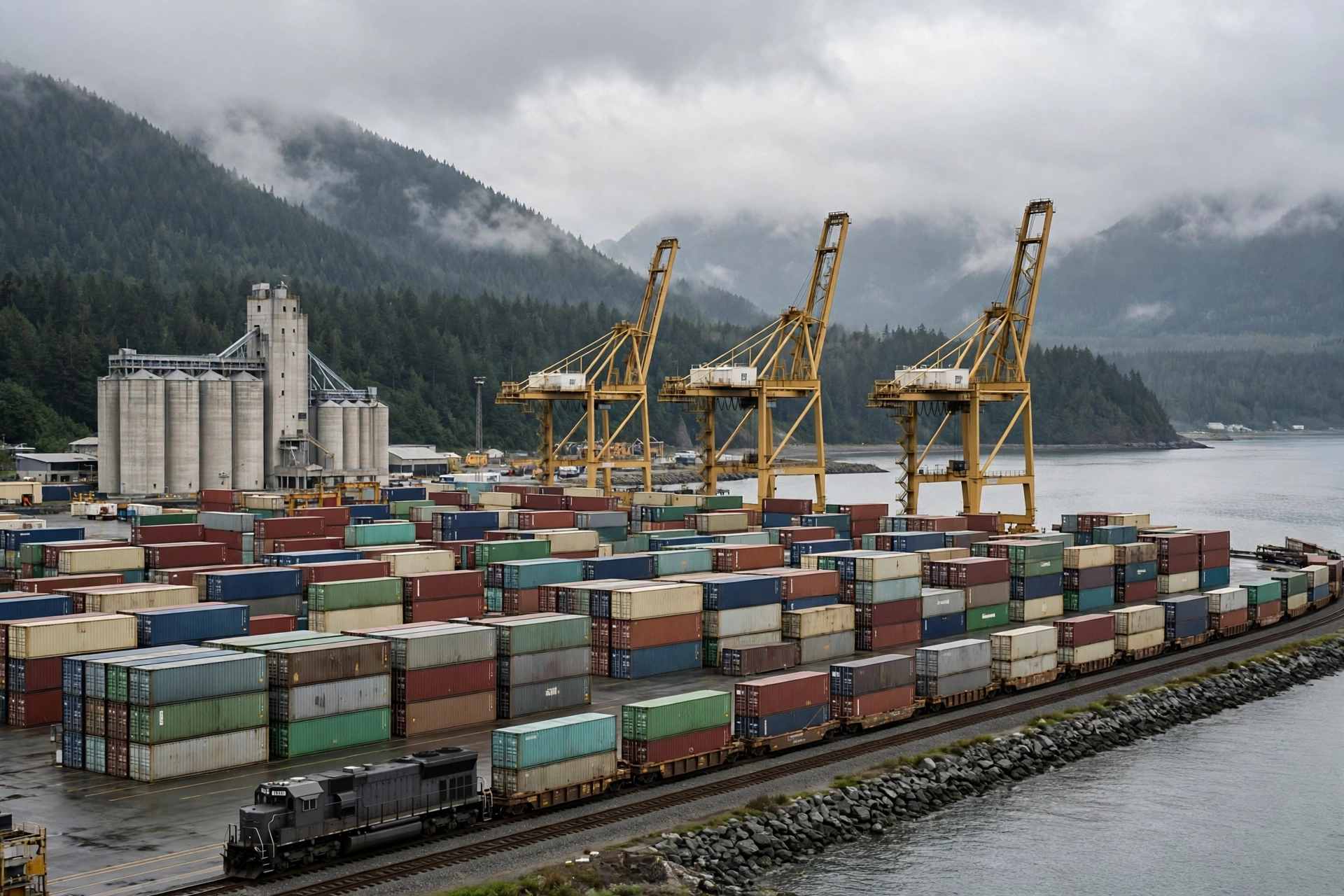
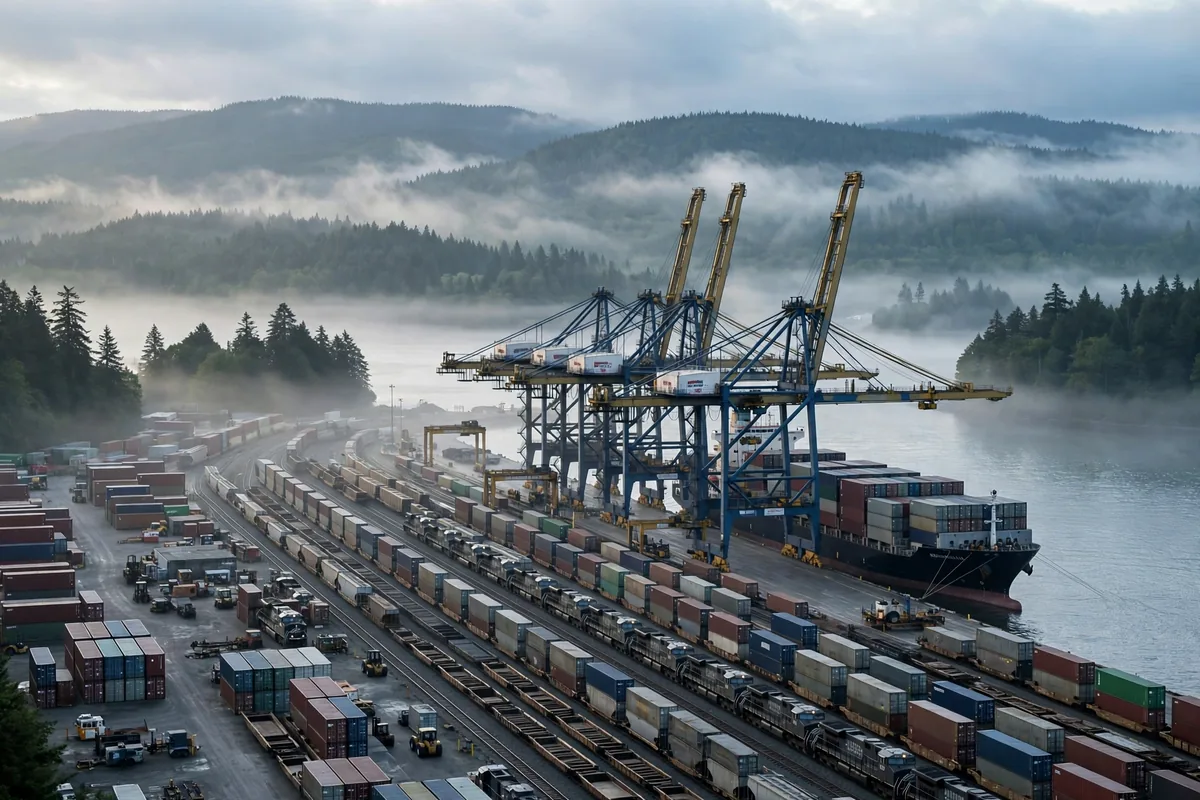
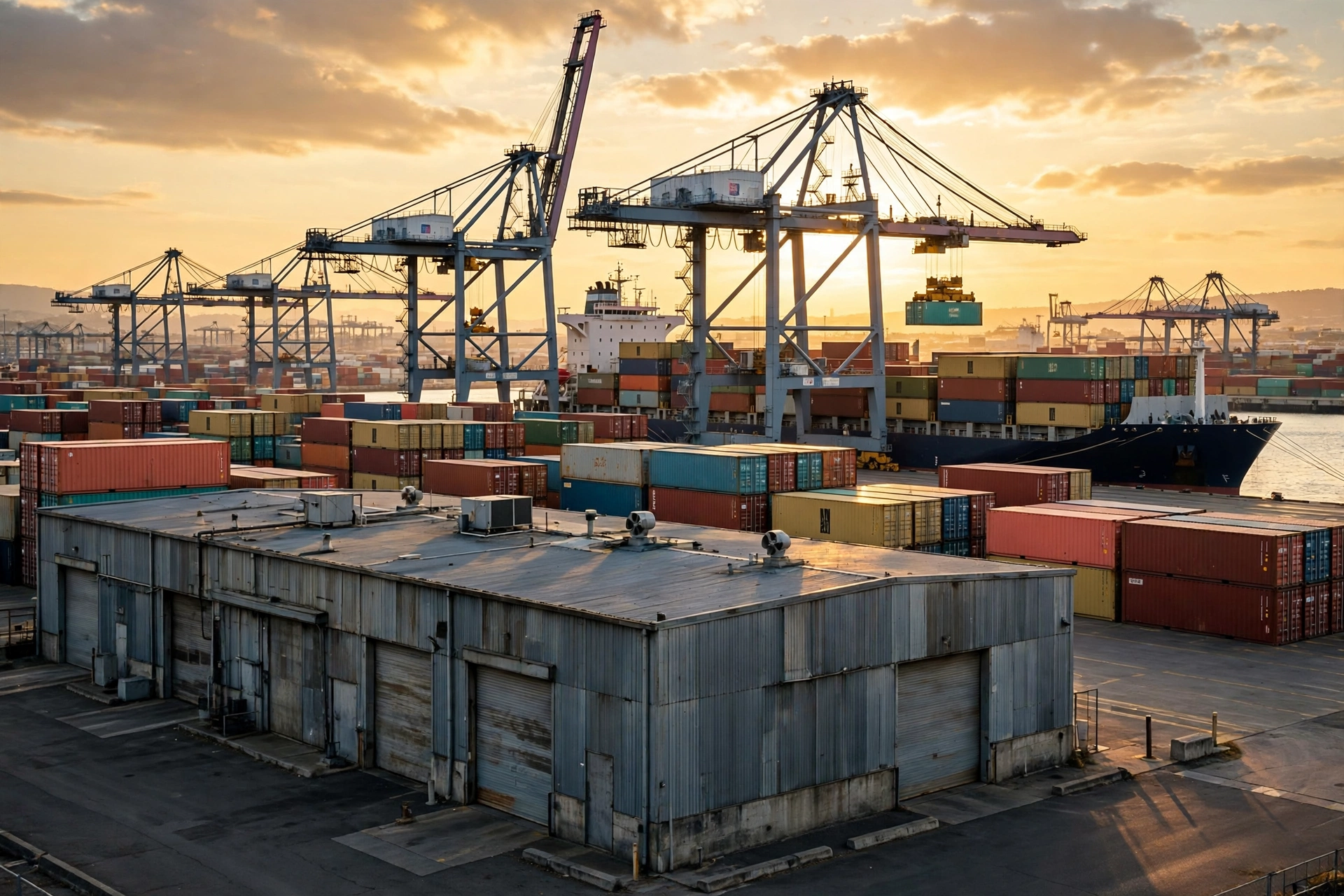
Penang Port is operated by Penang Port Sdn Bhd, part of MMC, and its main container terminal is the North Butterworth Container Terminal, on the mainland side across the strait from Penang Island. The electronics cargo, meanwhile, mostly comes out of the Bayan Lepas Free Industrial Zone in the south of the island. The port is on one side, the factories on the other, and a strait sits between them. That gap is the single most important decision in the whole Penang warehousing business.
I have seen too many people get this wrong. A friend who exports electronic components — picture this as an illustrative scenario — first rented a warehouse right next to the terminal, thinking closeness to the ship was everything. The goods left the factory, crossed the strait to the warehouse, went through checking, consolidation and customs, then came back out to the vessel. The time bled away on the road. He later moved the main warehouse near Bayan Lepas and kept only a small forward facility at North Butterworth for final consolidation and handover. Delivery reliability improved. There are two sides to this: a warehouse next to the quay saves the last mile, but a warehouse next to the factory saves every single shipment at its source. Electronics cargo is about lead time and complete sets, not about who is closest to the berth.
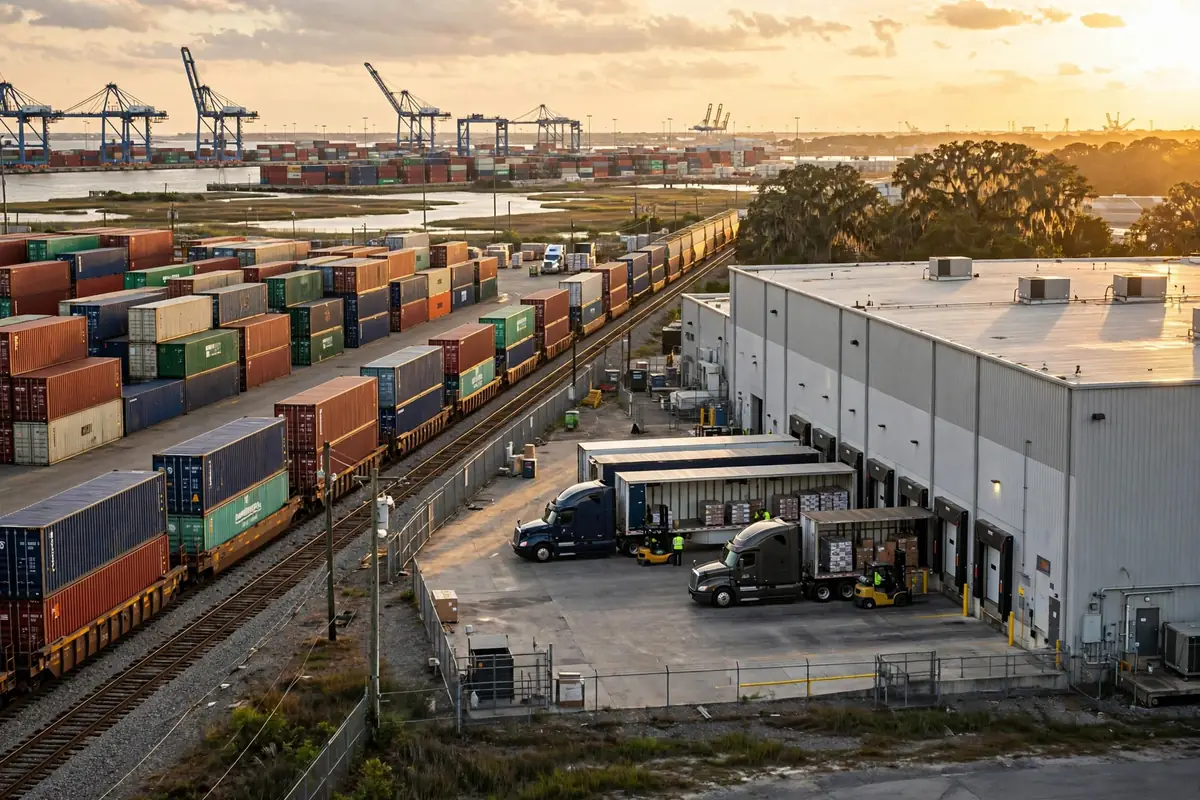
So here is my call, and it is the central rule of Penang Malaysia port warehouse logistics: Penang needs two layers of warehousing. The main warehouse follows the factories, sitting around Bayan Lepas, doing kitting, inspection, labelling and consolidation — the work that actually creates value. The forward warehouse follows the terminal, sitting at North Butterworth, doing final assembly before cut-off. Fixed shuttle runs connect the two, on a timetable written in stone and changed by nobody on a whim. More warehouses are not better. Clearer division of labour is better.
Transshipment vs Local Cargo in Penang Port Warehousing: How the Numbers Work
Half the story in Penang is transshipment. Bay of Bengal transshipment doubling in a year is a louder signal than the total TEU figure. And transshipment cargo and local cargo run on entirely different arithmetic.
Local cargo is simple to price: the factory ships, the warehouse kits, the sailing is fixed, the costs are visible. Transshipment is harder: the cargo arrives from somewhere else, changes vessels in Penang and leaves again. It sits in the warehouse briefly, but it demands a brutal operating rhythm. Miss one sailing and the next vessel's space may already be gone. A transshipment warehouse competes on turn speed and on how tightly it locks onto vessel schedules, not on floor area.
Take a hypothetical example. A transshipment shipment arriving from the Bay of Bengal changes vessels in Penang, needs only break-bulk and short storage, and stays in the warehouse about two days. A local electronics shipment needs kitting and inspection and stays about seven days. The two occupy roughly the same space, but the transshipment cargo turns three or four times a week while the local cargo turns less than once. Same area, several times the output. That is the arithmetic of transshipment warehousing: do not price by the square metre, price by the turn.
The table below lays the two cargo types side by side. Every figure in it is a hypothetical example, shown only to explain the cost structure — do not apply the numbers directly:
| Cost item | Transshipment cargo (per TEU) | Local electronics cargo (per TEU) |
|---|---|---|
| Storage (prorated by dwell time) | Low — short stay | High — long stay |
| Break-bulk and handling | High — almost every shipment is touched | Medium — kitting is concentrated |
| Schedule connection and delay risk | High — one missed sailing breaks everything | Low — sailings are relatively fixed |
| Total cost per box (hypothetical example) | About 100 units | About 140 units |
| Warehouse turns (hypothetical example) | About 3 per week | Under 1 per week |
Do you see it? On unit cost alone, transshipment looks cheaper. On turns, it wins by a distance. But there are two sides to this: transshipment earns its money on turns, and all of its risk sits on turns too. When schedules break down, the transshipment warehouse is the first to suffer. Local cargo is slower, but it is steady. My advice: if you are new to Penang, let local cargo season your warehouse first. Once your operating rhythm and your grip on vessel schedules are solid, take on transshipment volume. I have seen too many people do it the other way round, and every one of them falls apart when peak season hits.
Penang Port Warehousing After the Red Sea Crisis: What Changed in North Malaysia
The Red Sea crisis cost Penang roughly 50,000 to 60,000 TEU. Remember that loss, but do not turn it into panic. Rerouting hit schedules and costs, not the value of the location itself. Malaysia's northern gateway has not moved. The electronics industry in Bayan Lepas has not relocated. Transshipment demand from the Bay of Bengal is still growing. What a crisis like this really kills is the playbook that puts every egg on a single service and a single sailing.
Here is the counterintuitive call: a year without a new TEU record is not necessarily a bad year. In 2024, Penang's vessel calls rose by nearly a third while cargo tonnage still grew, which means the port is shifting from counting boxes to counting services. Denser services mean more choices, more room for shippers to negotiate freight, and more ways to play the warehousing game. People who only watch total TEU will miss that shift entirely.
One last piece of advice. Before you sign a warehouse lease in Penang, do not start with the rent. Ask three questions: which direction does your cargo come from, what does the sailing schedule actually look like, and how many procedures stand between your warehouse and the factory? If you cannot answer those three, the cheapest rent in the port is still a loss. What do you think?
By Lao Mi, Supply Chain Veteran (20 yrs)