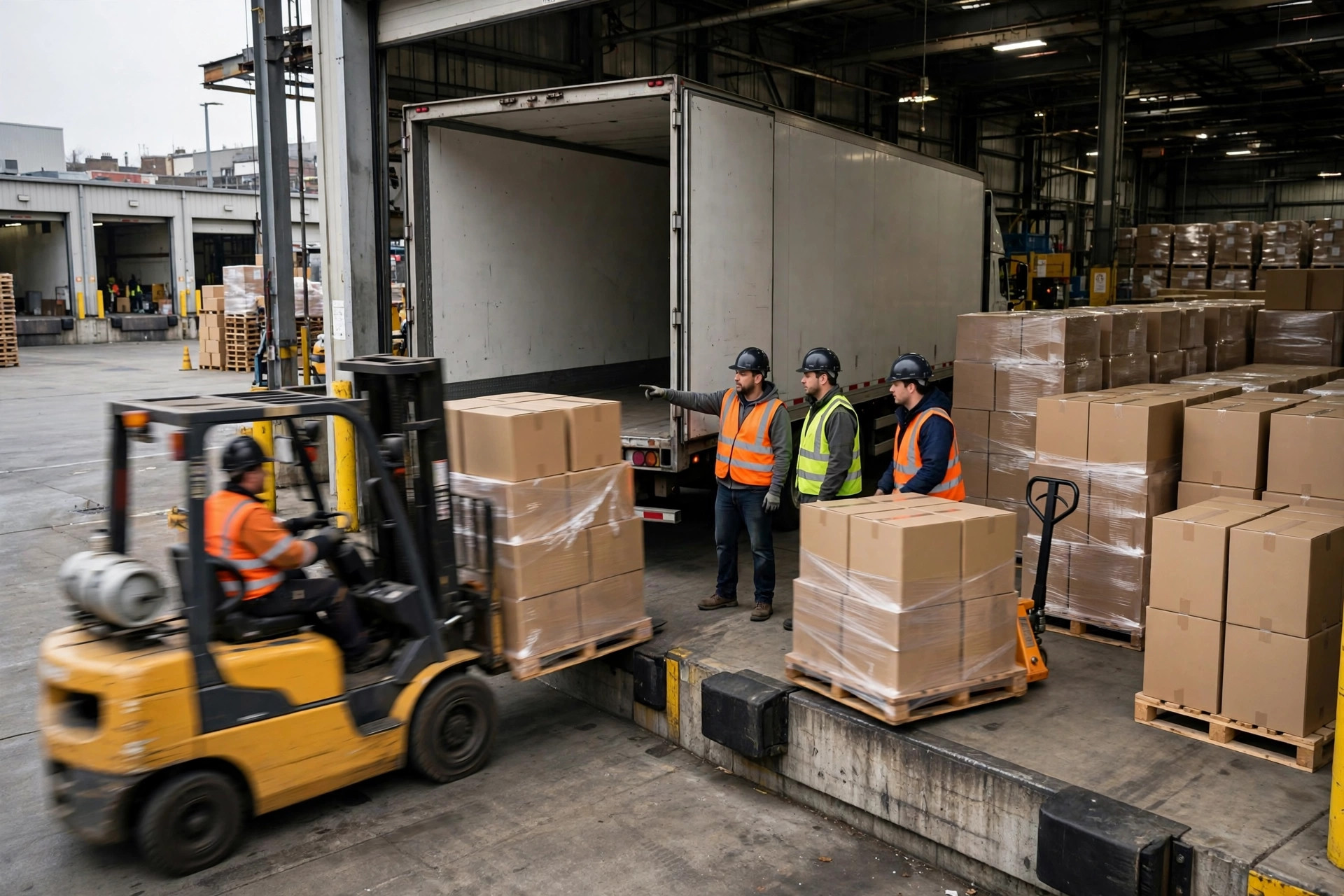
October 23, 2023. Monday. I got to the warehouse at 6:40 in the morning, and there were already nine trucks lined up outside the dock. Drivers were standing around smoking, and the moment they saw me: "Chen, when's my truck getting unloaded?" I told them there were four ahead of them. One old-timer shot back: "I waited five hours here last week. Nearly burned through my fuel."
Folks, that's Q4. Twenty-some trucks a day in normal months, then October hits and inbound volume doubles — forty-plus. Freight doesn't wait for you. You've got so many dock doors, so much staging space, so many putaway people. If any one of the three stages falls behind, the whole building clogs.
Peak-Season Inbound: Where the Clog Really Starts
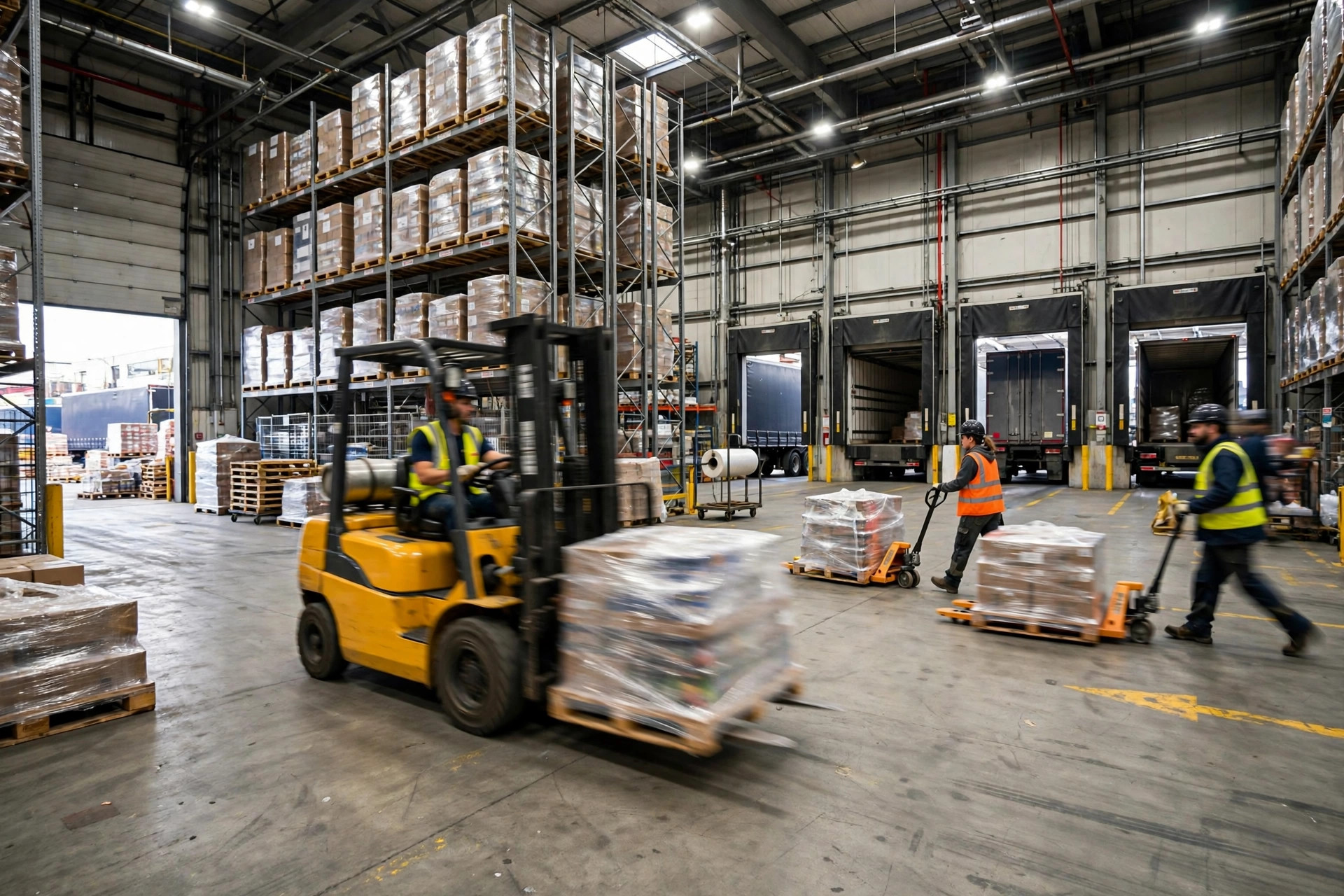
Our building is in Ontario, California: twelve dock doors, sixty staging slots, eight people on the day-shift putaway crew. The first peak wave that year, last week of October — five straight days of 45-plus trucks. The unloading crew went full throttle, 300-plus pallets a day. But putaway topped out around 190. Everything in between piled up in staging.
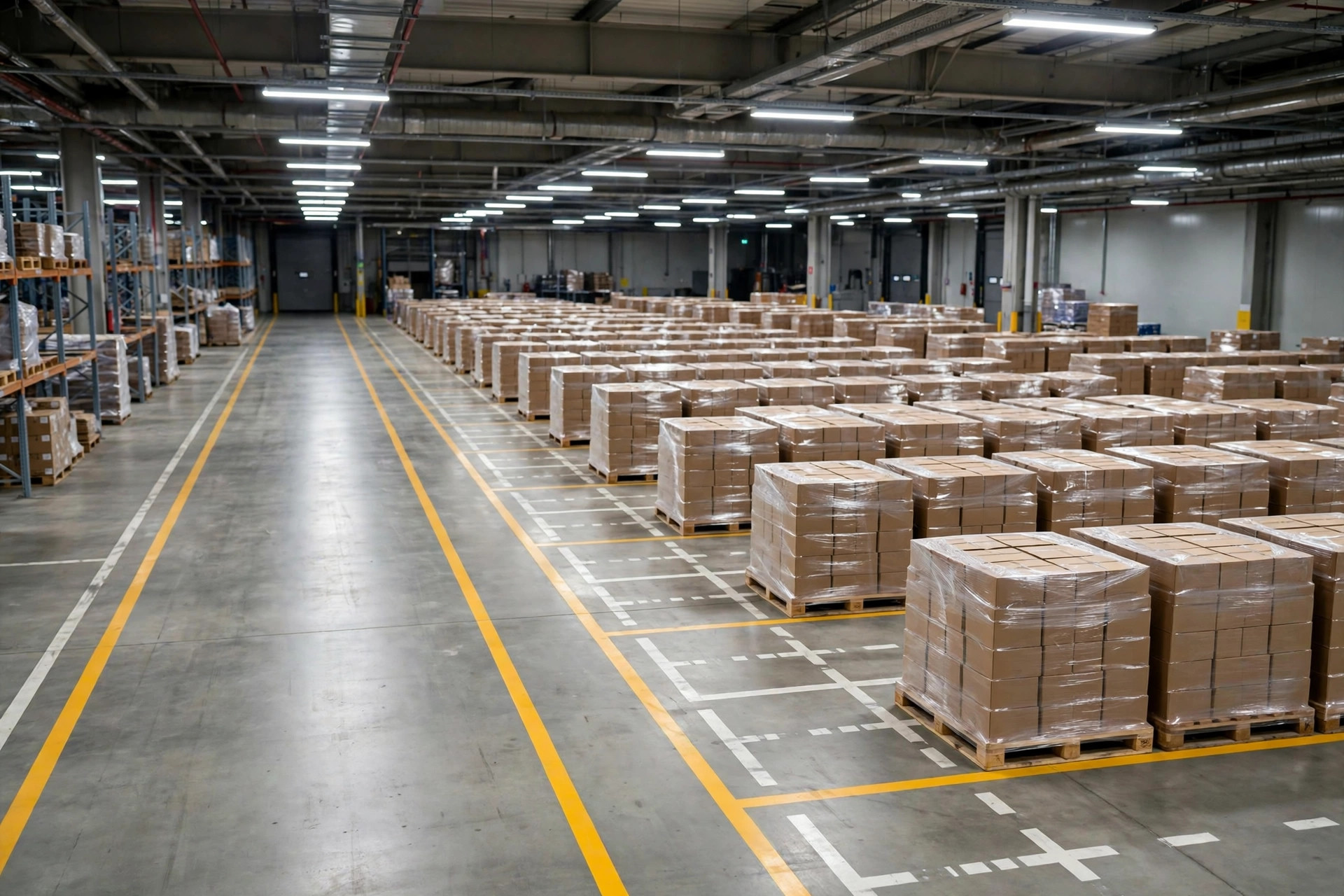
Sixty slots looked fine for two days. On the third morning, staging was full. Forklifts had nowhere to drop pallets, so they started lining them along the main aisle. The aisle narrowed, putaway drivers couldn't turn around, and the pace dropped another notch. Vicious cycle. By Friday there were fourteen trucks outside, three had waited over six hours, drivers were calling to complain, and ops showed up at my office door.
Honestly, my first instinct was to add people. I brought in four temps for unloading. We unloaded faster — and staging died faster. That's when it clicked: in peak season, the clog never starts at the dock. It starts at putaway. Unloading is the inlet, putaway is the outlet. If the outlet is narrow, opening the inlet wider just floods the tank faster.
What We Tried: Three Experiments, Two Keepers
Experiment one: expand staging. We doubled it from sixty slots to 120, figuring a bigger buffer would buy breathing room. Result? Freight sat in staging an average of three days, the longest a full week. Lookup time doubled. We even lost two pallets — the system said "in staging," but they were buried three deep. Two months later we shrank it back to sixty. Lesson learned: the bigger the staging area, the easier it becomes a second dead-stock zone.
Experiment two: night-shift pre-putaway. This one stayed. Day shift only unloads and stages; from 10 p.m. to 2 a.m., four people do nothing but putaway. No receiving, nobody looking for freight, no drivers rushing anyone — four people clear 120-plus pallets a night. Per-person output runs nearly half again what day shift manages.
Experiment three: tighter appointment windows. Also stayed. We used to run "arrive today, unload today" — drivers all showed up in the morning and the dock choked every day before 10. Now it's hourly windows, ninety minutes per truck; show up more than thirty minutes late and you roll to the next open slot. Drivers cursed us for a month. After that, trucks waiting over two hours basically disappeared.
The Fixed Playbook: Matching Peak-Season Dock, Staging, and Putaway Pace
Here's the whole system in one sentence: match the pace of all three stages, and empty staging every single day.
First, the pace math. These are our measured numbers — every building is different, so don't copy them; measure your own:
| Stage | Pace | 8-hour capacity | Notes |
|---|---|---|---|
| Dock unloading (2 forklift teams) | 40 pallets/hour | 320 pallets | Full pallets; loose cartons counted separately |
| Staging (60 slots) | ~1.5 hours of unloading | — | Red light past this: stop unloading, clear the backlog |
| Day putaway (2 reach trucks) | 24 pallets/hour | 192 pallets | The bottleneck lives here |
| Night pre-putaway (4 people) | 32 pallets/hour | 128 pallets / 4 hrs | Zero interference at night — faster, not slower |
The math is simple: 320 unloaded by day, 192 put away, gap of 128 — exactly what four night hours cover. Next morning we start with empty staging, an empty dock, and a clear head. If night shift calls in short, I know before sunrise: cut today's appointment windows by a third.
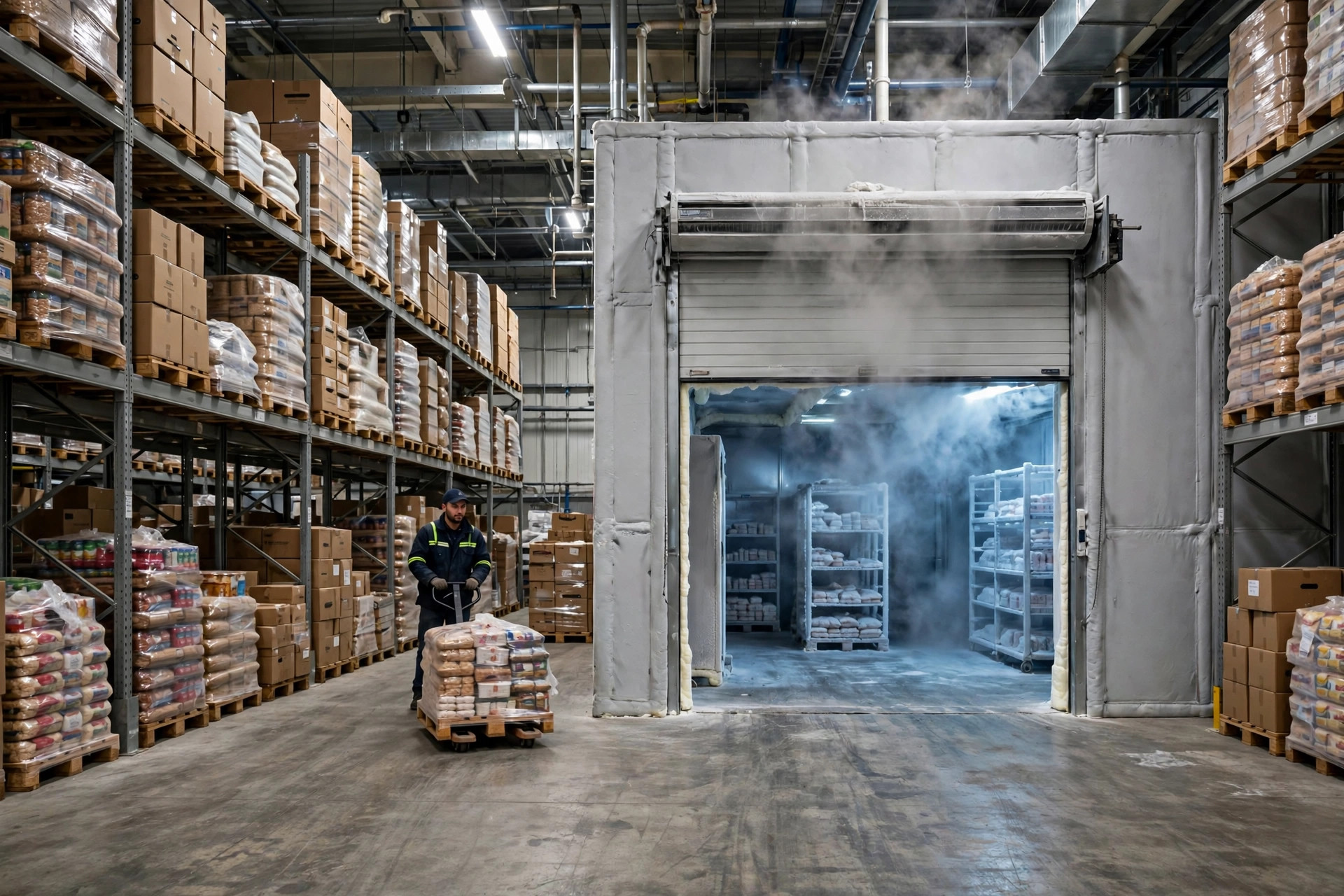
Second, staging discipline. Sixty slots, divided by dock door, painted yellow lines on the floor, one door's freight per square, two high max. One rule: nothing in staging spends the night. Before clock-out, the lead walks the squares; any square still holding freight gets photographed and posted in the group chat, and it's item one at the next morning's huddle. Shame works better than fines.
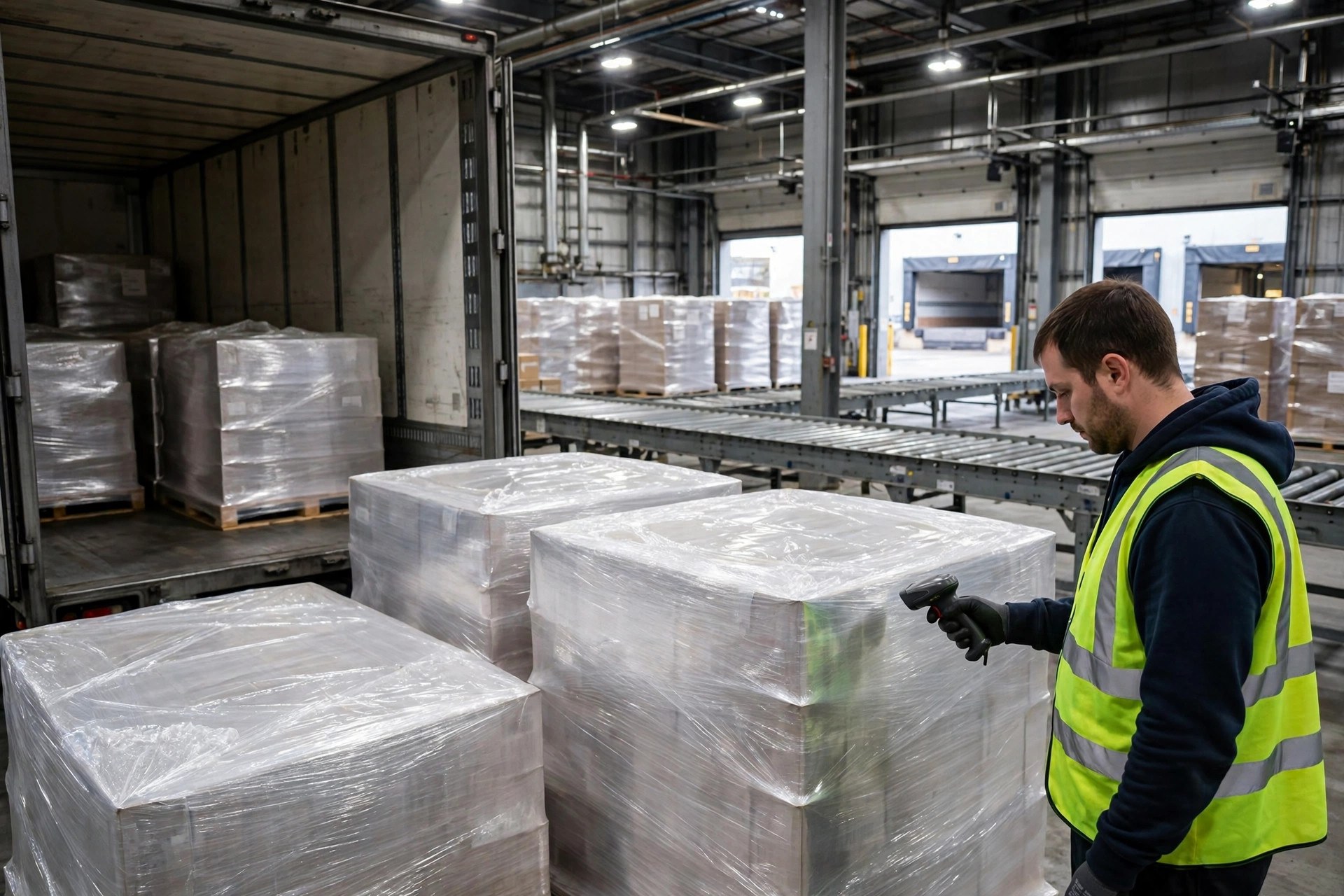
Third, the blind-receiving call. We argued about this one. Full pallets from reliable suppliers go straight to putaway without a piece count — saves enough time for thirty to forty extra pallets a day. But only if the supplier's discrepancy rate has stayed under 0.5% for three straight months. Data talks; anyone above the line gets fully counted. In Q4 about half our pallets went blind, and every hour that saved went straight into closing the putaway gap.
The Counterintuitive Part
After all these years, here's what still surprises people: the first move to survive peak season isn't adding people — it's tightening the inlet and shrinking staging.
Sounds backwards, right? More freight should mean receiving with open arms. But what we measured says the opposite: the looser the inlet, the more the three stages drift apart; the bigger the staging, the longer freight lies there. What decides Q4 is not how many pallets you can unload in a day — it's whether your putaway pace can eat your unloading pace. If it can't, the faster you unload up front, the faster you die in the back.
Folks, Q4 isn't won with muscle. It's won with rhythm. Get the rhythm right and forty trucks feels orderly; get it wrong and twenty trucks will bury you. Before this peak season starts, measure your three stages, find the gap, schedule the night shift, paint the staging lines. On day one, you'll know exactly how the battle goes.
By Chen Feng, Warehouse Operations Manager