Carriers changed the math again — this time it's dimensional weight.
I opened last month's UPS invoice and my blood pressure spiked. Same volume, same SKUs, and the shipping bill was up double digits. Called them up, and the rep casually said: "Since August, the dimension rounding rule changed." Great. Another rule tweak, and guess who pays for it? Us sellers. Let me break this down once and for all: did the divisor change, how the math actually works, and how I fought my bill back down.
Did the DIM Weight Divisor Change? Short Answer: No
Nope. The published dimensional weight divisor for UPS and FedEx US domestic parcels is still 139 — that's been the public standard for years. Disclaimer up front: every rate and rule figure in this post follows the latest published policies on ups.com and fedex.com. Your negotiated rates follow your contract.
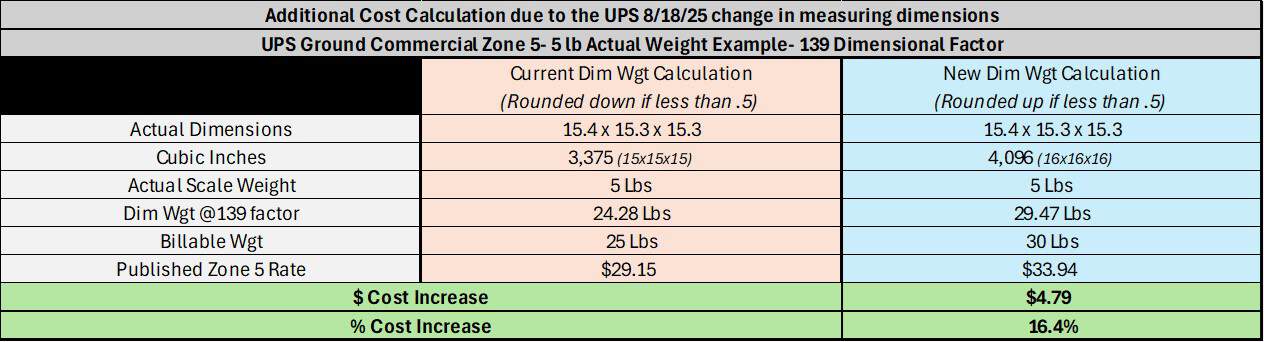
What actually changed, effective August 18, 2025, is the rounding rule. A box measuring 11.1 inches used to round to 11. Now any fraction — 11.1, 8.01, anything — rounds UP to the next whole inch: 11.1 becomes 12, 8.01 becomes 9.
Don't shrug at half an inch. Volume is length x width x height multiplied together, so a little extra on each side compounds fast. The comparison table in this post's cover image shows the same box under the old vs. new math: a 15.4 x 15.3 x 15.3 box used to bill at 25 lbs of dimensional weight; under the new rule it bills at 30 lbs. Same box, 5 more billable pounds.
How Dimensional Weight Actually Works: The Formula Plus Three Real Examples
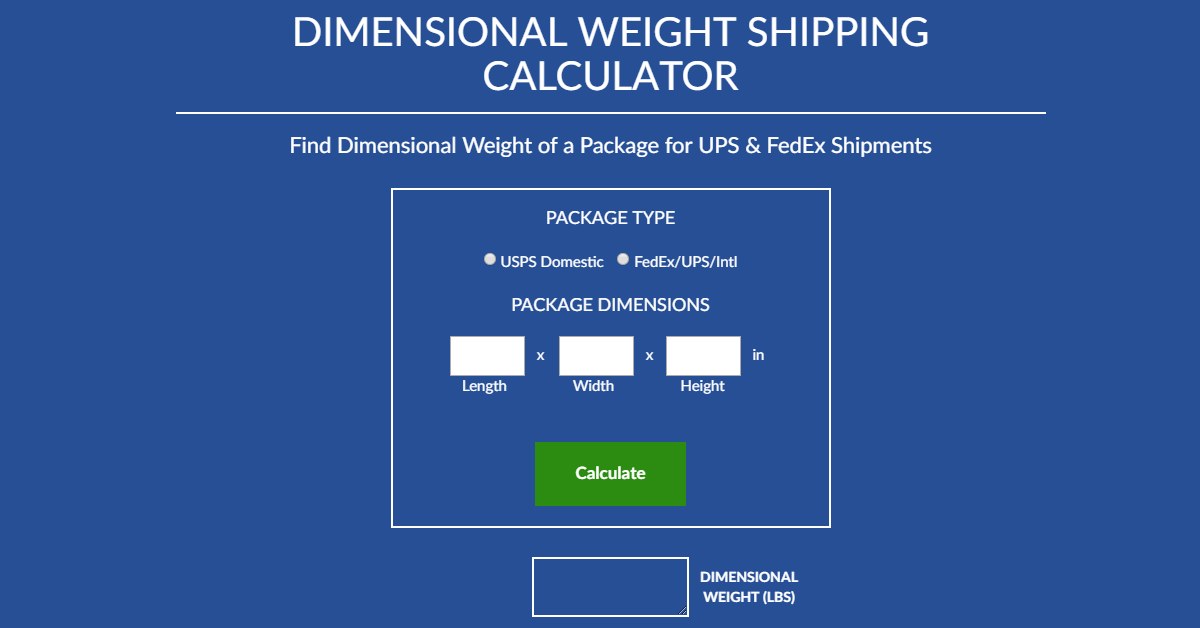
One formula: dimensional weight (lbs) = length x width x height (inches) / divisor. Then the carrier compares it against actual weight and charges whichever is greater. Billable weight also rounds up to the next whole pound.
Example 1, a standard small box: 12 x 9 x 7 inches = 756 cubic inches / 139 = 5.44, so 6 lbs DIM. If the product weighs 4 lbs, you pay for 6. If it weighs 8, you pay for 8.
Example 2, my own box: 14 x 12 x 10 = 1,680 / 139 = 12.09, so 13 lbs DIM. After switching to a 13 x 11 x 9 box: 1,287 / 139 = 9.26, so 10 lbs DIM. One inch smaller on each side, 3 fewer billable pounds.
Example 3, where the new rule bites: a 10 x 10.1 x 10.3 box. Under the old round-to-nearest rule that's 10 x 10 x 10 = 1,000 / 139 = 7.19, billed at 8 lbs. Under the new always-round-up rule it's 10 x 11 x 11 = 1,210 / 139 = 8.70, billed at 9 lbs. Same product, same box, one extra pound on the invoice.
| Box size (in) | Cubic inches | DIM weight (/139) | Billed |
|---|---|---|---|
| 12 x 9 x 7 | 756 | 5.44 lbs | 6 lbs |
| 14 x 12 x 10 | 1,680 | 12.09 lbs | 13 lbs |
| 13 x 11 x 9 | 1,287 | 9.26 lbs | 10 lbs |
| 10 x 10.1 x 10.3 (new rule: 10 x 11 x 11) | 1,210 | 8.70 lbs | 9 lbs |
Understand this table and you're already ahead of 80% of sellers — most have no idea they're paying dimensional weight in the first place.
What I Did: Downsized the Box, Watched the Bill Drop
February 2026, shipping a Bluetooth speaker out of our LA warehouse. The product itself: 4.5 lbs. The box: 14 x 12 x 10. DIM weight: 13 lbs. The carrier billed 13. That's the cruelty of light, bulky goods — two-thirds of what you pay is shipping air.
Here's what I did. Step one: measured the boxes for my top 10 SKUs, re-ran every fractional dimension with round-up math, and listed each SKU's true billable weight. Step two: had the box factory cut a new 13 x 11 x 9 size that just fits the product, swapped EPE foam for honeycomb paper (nearly a centimeter thinner), and it still passed drop tests.
Result: DIM weight dropped from 13 to 10 lbs. At 800+ orders a month, that's 3 fewer billable pounds per order. The savings? Enough to cover half a packer's salary, with change to spare.
A friend's story, late 2025, shipping throw pillows from Shenzhen to the US: product 1.2 lbs, box 18 x 14 x 12 = 3,024 / 139 = 21.76, billed at 22 lbs DIM. He priced it at $19.99 with free shipping based on product weight alone — freight ate most of his margin.
Counterintuitive truth: for light, bulky products, the cardboard box is your most expensive "raw material." A $3 pillow can carry $8 of "air freight." The first battlefield for cutting shipping cost isn't the negotiation table — it's the box factory.
4 DIM Weight Traps New Sellers Always Fall Into
Trap 1: obsessing over the divisor. It didn't change — don't let rumors send you renegotiating for nothing. What actually matters is the rounding rule and the fractions in your box dimensions. A 15.4-inch side now bills as 16. That's the expensive part.
Trap 2: "just barely fits" is the most dangerous box. Rule of thumb: size to whole inches, and when in doubt go smaller. Dropping from 15.4 to a clean 15 can save 2-3 billable pounds.
Trap 3: pricing off product weight alone. For anything light and bulky, back your pricing out of dimensional weight first, or you'll bleed freight on every order without knowing it. Run the DIM math before you list. Non-negotiable.
Trap 4: cushioning eats billable volume. Foam and air pillows feel light but occupy pure billable space. Thinner protective materials save real money without hurting your damage rate.
Before you go haggle with your carrier rep, spend an afternoon measuring your top 10 SKUs' boxes, re-run every fraction with round-up math, and swap the boxes that need swapping. Tested it myself — it works way better than arguing on the phone.
By Ah K, E-commerce Seller (5 yrs)