We have a client — a pet-supply independent store out of Ontario, California — shipping about 420 parcels a month to Europe, roughly 2 kilos each. For three years they used FedEx International Priority for everything. The owner's reasoning was honest: "We're used to it. I have the customer service number saved in my phone." Then after the 2025 peak season, the books told a different story: average cost per parcel was up $11 versus 2024. That's $4,600 extra a month — over $55,000 a year, gone.
The base rate wasn't the problem. It was the three surcharges he had never itemized in three years: fuel, remote area, and peak season. Together they routinely make up 25% to 35% of an international express shipping invoice.
So DHL, UPS, or FedEx? Here's my verdict up front: there is no "best" carrier — only the one whose network fits your lanes. Pick by destination first, then by value and speed requirements. Unit price comes last.
Where DHL, UPS and FedEx Actually Differ: Three International Express Networks
All three are giants, but their home turfs are completely different — and that decides each one's comfort zone.
DHL Express fights on home soil in Europe: the Leipzig hub plus a dense European road network and customs clearance infrastructure means the fastest clearance into Western and Southern Europe. We have a lighting client shipping to Milan, Italy — DHL averages 2.8 days door to door, while the same shipment on other carriers routinely loses half a day to a full day in customs. The trade-off: DHL's US domestic pickup network is thinner, and pickup times from small Midwestern towns lag UPS and FedEx.
UPS plays to its strength with US domestic plus European ground: Worldwide Expedited is essentially "air plus European road" blended together, typically 15% to 20% cheaper than pure-air priority products, at the cost of one to two extra days. A beauty brand in Austin, Texas shipping 600 parcels a month to Germany and France switched to UPS Expedited in September 2025 and saved about $13 a parcel — roughly $7,800 a month. The price was transit stretching from 3 days to 4 or 5 — but beauty is a planned purchase, customers can wait, and the math works.
FedEx's foundation is its own freighter fleet, and International Priority has the best on-time reputation of the three, especially into Northern and Eastern Europe where DHL's road coverage is relatively weaker. But FedEx's published rates are usually the highest of the three, and negotiated discounts are the most volume-sensitive: small sellers under 300 parcels a month basically get nothing meaningful.
One-line summary: Western Europe in a hurry — DHL. Europe on a budget — UPS Expedited. Remote destinations where reliability matters — FedEx Priority.
The Real Math: Hidden Costs in International Express Shipping
The trap small sellers fall into is comparing the three carriers' published base rates head to head. A real invoice looks like this — Los Angeles to London, 2 kg actual weight, 40×30×25 cm box (sample public quotes from one week in mid-2026; rates change often, always check the carriers' current published tariffs):
| Cost item | DHL Express Worldwide | UPS Worldwide Expedited | FedEx International Priority |
|---|---|---|---|
| Base rate | ~$78 | ~$69 | ~$74 |
| Fuel surcharge (~20–28%) | +~$18 | +~$16 | +~$17 |
| Remote-area surcharge (if any) | +~$28 | +~$30 | +~$28 |
| Peak surcharge (Oct–Dec) | +~$5 | +~$4 | +~$5 |
| Estimated total | ~$101 | ~$89 | ~$96 |
See it? The cheapest base rate still wins on total cost, but the gap shrinks from $9 to about $5. And the moment the delivery address falls in a remote-area postcode, a $28–30 remote surcharge wipes out every bit of base-rate difference — at that point the three are nearly identical, and the game becomes whose postcode list doesn't include your customer (the three carriers don't classify postcodes identically, so check parcel by parcel).
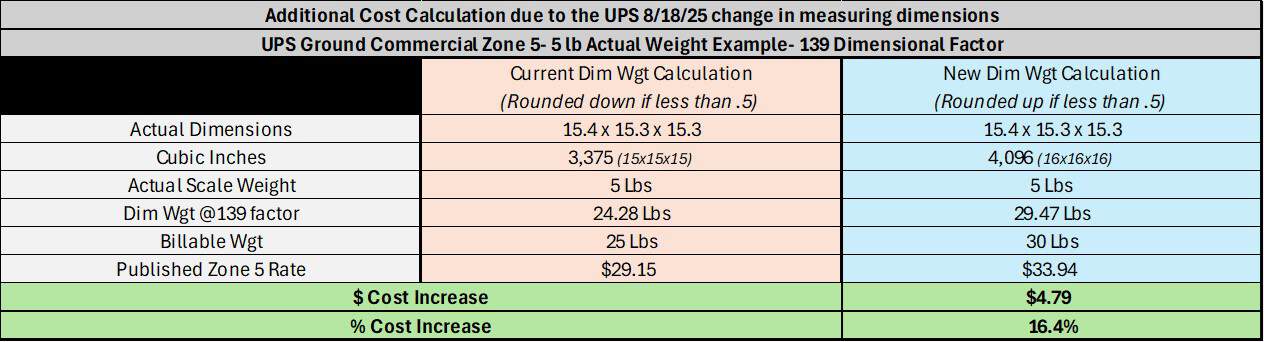
Two more costs live off the invoice. First, dimensional weight: all three international products divide by 139 (inches). A 40×30×25 cm box is roughly 15.7×11.8×9.8 inches — dimensional weight about 13 lbs (~5.9 kg), far above the 2 kg actual weight. You're paying for 6 kilos. Every extra centimeter of box pushes dim weight up a bracket; smart carton sizing saves more money than switching carriers. Second, claims: lost-parcel claims all take process, DHL and UPS online claims run relatively smoothly, FedEx scrutinizes low declared values harder — set your declaration strategy before you ship, not after something goes missing.

Negotiating International Express Rates as a Small Seller: Three Questions Before You Sign
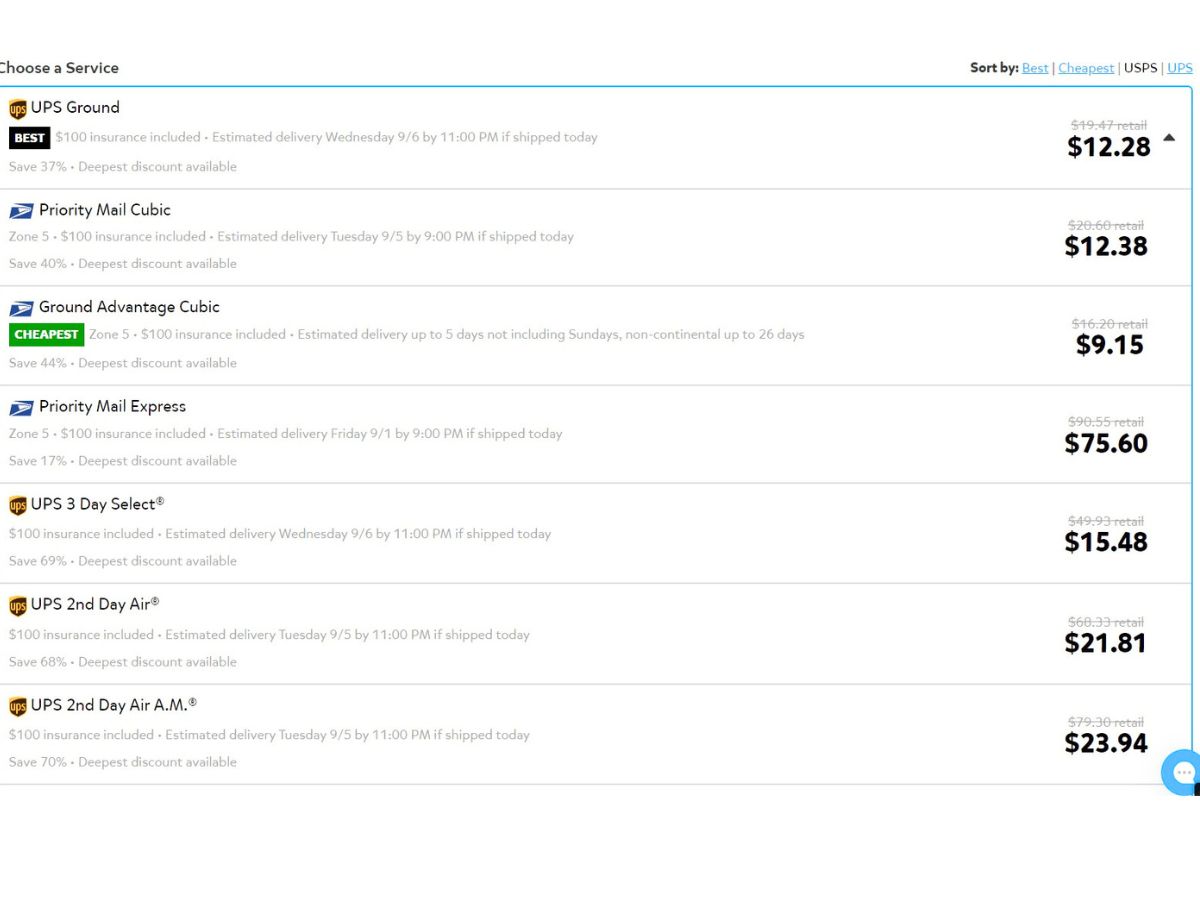
Here's the counter-intuitive part: if you ship under 500 parcels a month, signing direct volume contracts with the big three will probably not get you good rates — third-party aggregator platforms will. Pirate Ship, Shippo and their peers buy at wholesale discounts, and small sellers ride on their volume. That Ontario pet-supply client didn't switch carriers in the end — they moved 300 of their 420 monthly parcels onto an aggregator platform still flying DHL, saving $6–8 a parcel, over $2,000 a month, with the same billing terms and the same service. What changed was the "identity" on the account.
If your volume justifies going direct, remember these three questions. This is the stuff only the sell side tells you:
One: "Is the discount off the published tariff, or off our actual average transacted rate last quarter?" A rep quoting 45% off sounds dramatic — until you learn the base is a published tariff that rises every year, and the "discounted" price beats your current invoice by nothing.
Two: "Which week's fuel index locks our surcharge, and can I get the remote-area postcode list in writing?" The fuel index moves weekly; one week of difference in the lock cycle costs hundreds of dollars a month. Get the remote postcode list on paper, or peak season's first invoice will teach you a lesson.
Three: "Can we put the peak surcharge start and end dates in an addendum?" I've watched a verbal "starts October 15th" move three times. If it isn't in the agreement, it doesn't exist.
One question to take home: is your current carrier the one you picked after a serious comparison three years ago — or just the one you got used to? If it's the latter, spend an hour this weekend breaking down 20 invoices from last month against the table above. That Ontario owner already paid the $55,000-a-year tuition for you.
By Susan, 3PL Sales Director