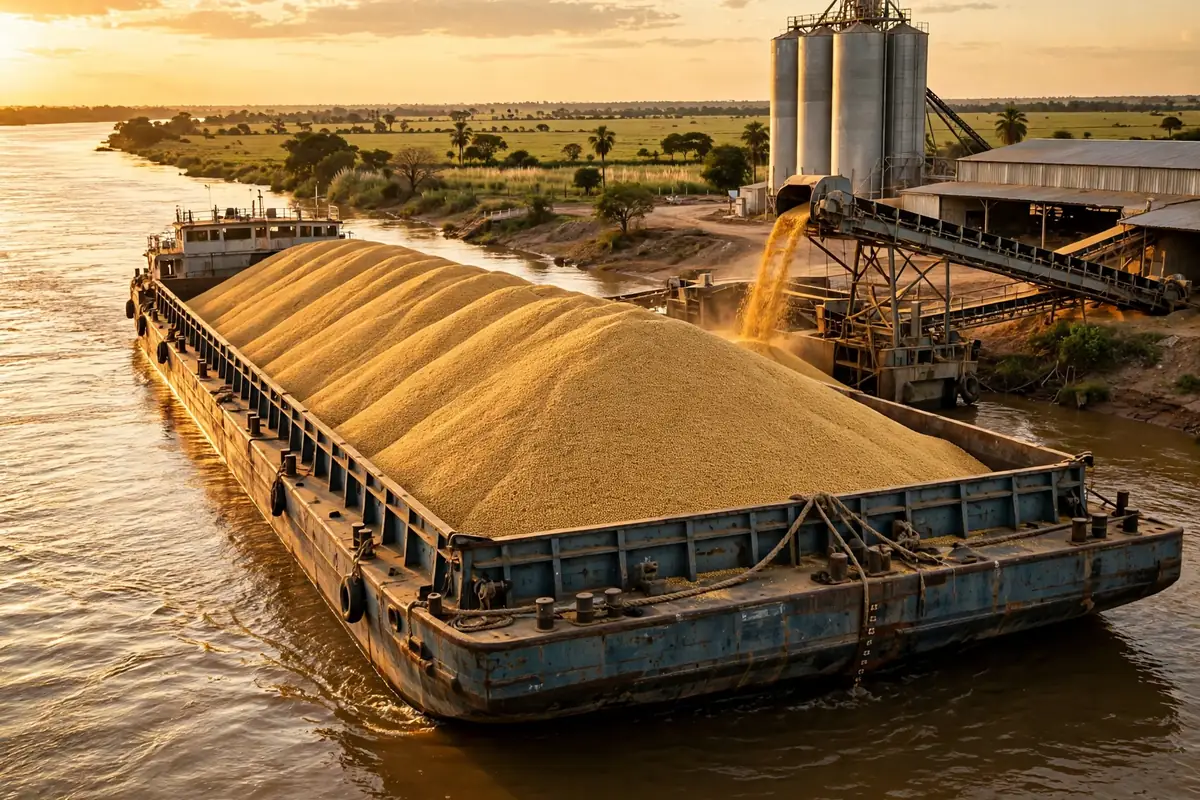
We small warehouses cannot afford to burn money like that. That was my first thought when I looked at the Paraguay soybean export bill. I run a 3,000-square-metre warehouse; my daily maths is forklift fuel and the electricity bill. In Paraguay, people do maths on a whole river's water level.
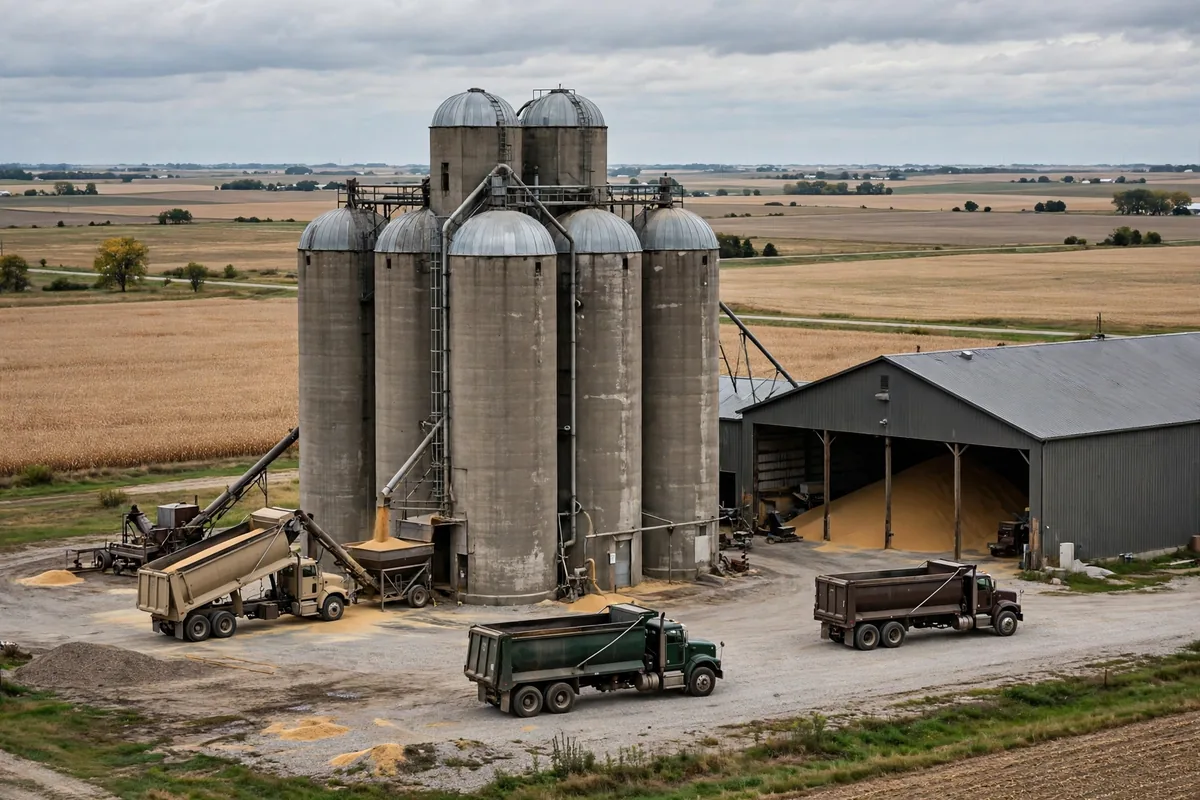
Paraguay is landlocked — no coastline at all — so its soybeans leave the country on barges down the Paraguay River and the Paraná River. The US Department of Agriculture forecasts Paraguay's 2025/26 soybean production at about 10.9 million tonnes, with exports of about 7.2 million tonnes and crushing of about 3.4 million tonnes. Of those exports, Argentina buys roughly 80% and Brazil about 14%. In other words, the way out for Paraguayan soybeans is basically down the river, south, to the neighbours. That is the whole story of Paraguay soybean export warehouse logistics in one paragraph — and the warehouse is where the story gets expensive.
Paraguay Soybean: Two Crops a Year, Six Months Dead, Six Months on Fire
Paraguay grows two soybean crops. The main crop, the zafra, is sown from late August to mid-November and harvested from late December to mid-March. The second crop, the zafriña, is sown from late January to early February and harvested from mid-May to July. The warehouse calendar follows the field calendar, and the field calendar is brutal: dead quiet for months, then everything arrives at once.
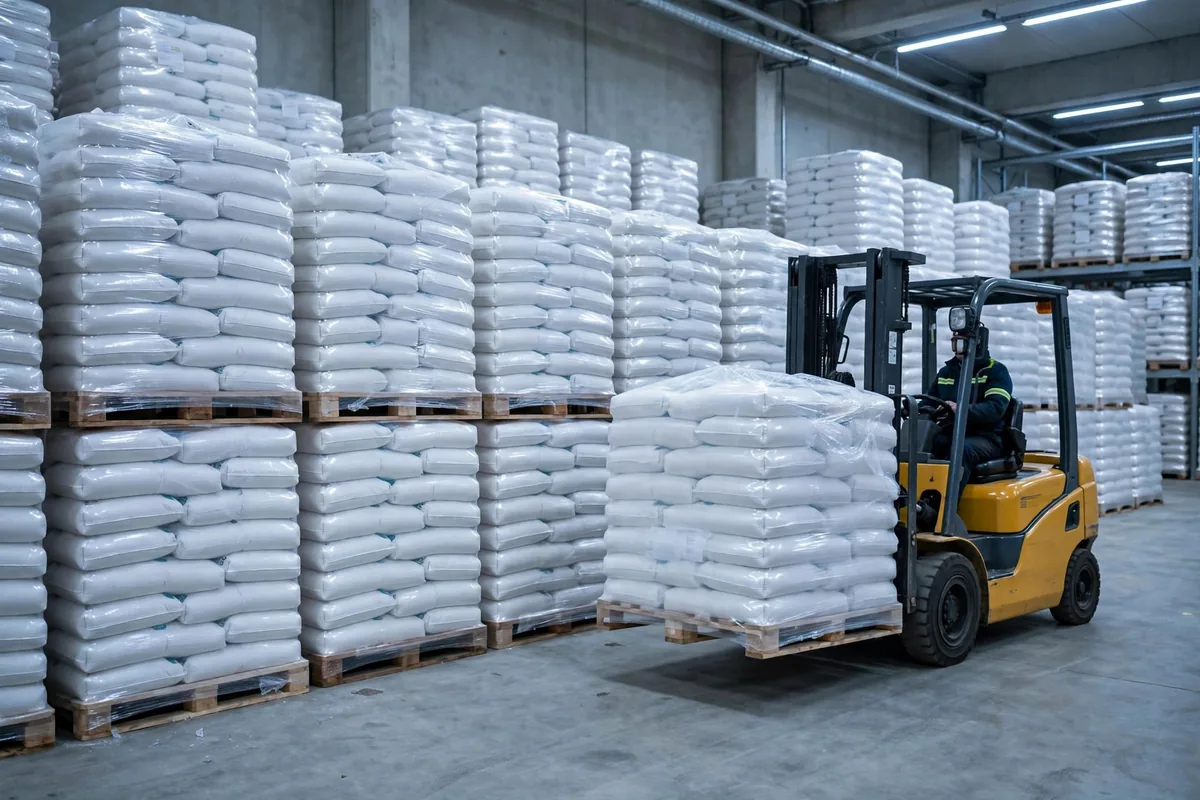
Big operators handle this by owning capacity they can afford to leave idle. We small warehouses cannot burn money like that. Our workaround is gloriously unglamorous: in the off-season we take in fertiliser, bagged cement, anything dry that pays rent by the square metre, and we keep the soybean bays clean and ready. Come harvest, we flip the space back in a weekend. It is not elegant, but the maths works — an empty bay earns nothing, and a bay full of fertiliser in April is better than a bay full of air.
The second workaround is sharing the peak. Two or three small warehouses in the same town can stagger their intake days with the same trucking fleet, so nobody pays for trucks that sit idle. The big guys call this capacity pooling. We call it not going broke in March.
When the River Runs Low, Barges Only Load Seventy Percent
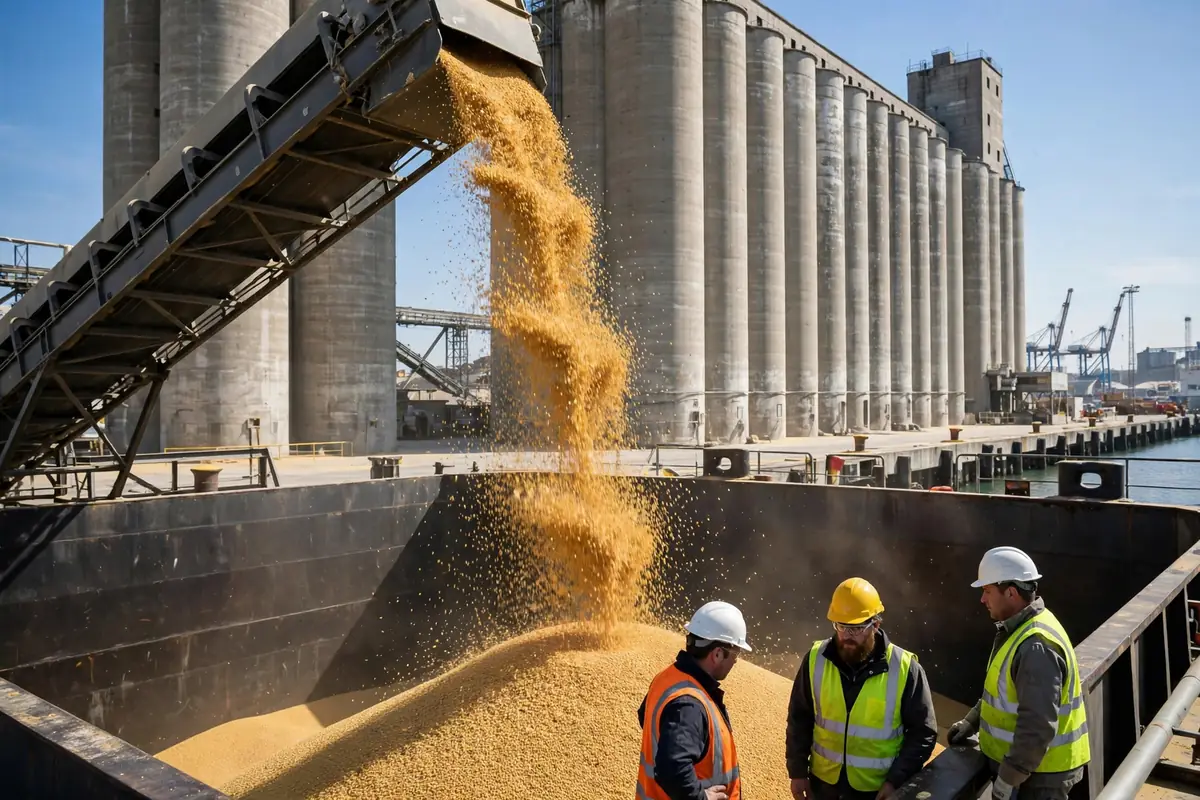
Here is the first lesson of Paraguay soybean export warehouse logistics, and the part the big-company playbook never prepares you for: the river itself. In 2023 the Paraná River ran abnormally low, and barge traffic was thrown into chaos. A barge that cannot float deep enough cannot load full — sometimes only about seventy percent of its normal load. The freight bill does not shrink with the load; the cost per tonne goes up, and somebody has to eat it.
Picture it as a scenario: a barge booked for 2,000 tonnes sails with 1,400. The shipper still pays for the barge, the crew and the fuel, so the per-tonne cost jumps by roughly forty percent overnight. The warehouse feels it first — beans pile up at the river terminal, storage days stretch out, and the queue for the next barge gets longer. Our small-warehouse survival trick is painfully simple: book barge space early in the harvest, keep a buffer of storage so a one-week delay does not become a disaster, and split the risk — part of the stock at the river terminal, part held back at an inland warehouse where rent is cheaper.
The counterintuitive bit? In Paraguay, the most expensive line in the logistics bill is often not the warehouse rent or the barge freight. It is waiting — waiting for water, waiting for a berth, waiting for a slot. Time on the river is money in a way that time in a warehouse simply is not.
Moisture and Fumigation: Two Down-to-Earth Warehouse Jobs
Soybean warehousing comes down to two unglamorous jobs: keeping the beans dry and keeping the bugs out. Moisture meters, temperature probes in the grain pile, ventilation when the air is dry enough — none of it is high tech, and all of it matters, because a hot spot in a silo can spoil tonnes before anyone smells it.
Fumigation is the other one, and here is where small warehouses have an advantage the big guys do not: we can seal and treat one bay at a time without shutting down the whole site. A big terminal fumigates in bulk and waits; we fumigate bay by bay and keep shipping from the next bay over. It is the small-warehouse way — slower on paper, faster in real life.
Meanwhile the crushers keep their own rhythm. Paraguay's crushing plants run at roughly 70% to 80% utilisation, which means there is spare capacity in the system. When export barge space is tight, more beans can go to the crushers; when river conditions are good, more beans go downriver. That flexibility is the shock absorber for the whole chain.
The Paraguay Soybean Bill, Small-Warehouse Style (Illustrative Scenario)
A rough cost sketch per tonne of soybeans from inland storage to the River Plate ports — illustrative scenario figures for planning, not quotations, and actual prices move with the season:
| Cost item | Illustrative figure |
|---|---|
| Inland warehousing and handling | USD 8–15 per tonne |
| Barge freight downriver | USD 20–35 per tonne |
| Port handling and documentation | USD 5–10 per tonne |
| Waiting and demurrage when the river runs low | the wildcard — budget extra |
The last row is the one that wrecks budgets — and it is what makes Paraguay soybean export warehouse logistics different from ordinary warehousing. Warehousing and barges are priced by the tonne; waiting is priced by the day, and nobody quotes you the waiting in advance. Our rule of thumb: whatever the spreadsheet says, add a buffer for a low-water week. If the river behaves, the buffer is profit. If it does not, the buffer is survival.
So what would I tell another small warehouse owner looking at this trade? Do not copy the big companies — their playbook assumes a fleet, a terminal and a balance sheet you do not have. Rent flexible space, share the peak with your neighbours, book the barges early, split your stock between the river and inland, and never let a low-water week catch you with everything in one place. Small warehouses have their own way of surviving, and in Paraguay soybean export warehouse logistics that way is flexibility, not scale.
By Xiao Ma, Small Warehouse Owner